Expert Interviews
Prof. Dr. med. Martin Wachowski: The Knee—A Complex Major Joint with Its Own Challenges

Alexandra Pfitzmann ·
In southern Lower Saxony, a certified knee surgeon has made a name for himself thanks to his exceptional expertise: Professor Dr. med. Martin Wachowski, with his DUO practice in Duderstadt, specializes in a fascinating joint that is used in every form of movement—whether we’re walking, jogging, biking, or swimming. The strain the knee must endure in our daily lives is enormous. When running alone, for example, the joint bears two and a half times our body weight. When we walk down stairs, the load increases to as much as three and a half times our body weight. The editorial team at Leading Medicine Guide spoke with the specialist about interesting aspects of the knee—the largest joint in our body.
 It’s a natural part of aging that joints gradually wear down over the course of a lifetime. When a joint is under stress with nearly every movement, this wear and tear is even less surprising: Because the knee is surrounded by many muscles, tendons, ligaments, and cartilage, it can be bent, straightened, and rotated. However, the versatility afforded by this rather complex internal structure can also lead to problems in this hinge-like joint: for example, osteoarthritis or cartilage damage significantly limits its load-bearing capacity.
Osteoarthritis—that is, wear and tear in the knee—can also occur at a younger age and is often genetically determined. “Osteoarthritis is a condition that affects the entire joint,” emphasizes Professor Dr. Martin Wachowski at the start of our conversation, explaining: “Here, one must distinguish between primary and secondary osteoarthritis. Primary osteoarthritis is genetically determined and involves wear and tear without a clearly identifiable cause, whereas secondary osteoarthritis is either the result of an accident, is exacerbated by a misalignment, or arises from damage to the meniscus or cruciate ligament. Signs of osteoarthritis are perceived individually. The decisive factor is the subjective level of distress resulting from pain and limited joint function. In cases of advanced osteoarthritis, pain at rest or nighttime pain also becomes noticeable,” says Prof. Wachowski, describing the symptoms.
In knee osteoarthritis, the wear-and-tear-related breakdown of cartilage in the knee progresses, causing the joint bones to rub painfully against one another. A distinction is made here between femoropatellar osteoarthritis, which affects the patella; medial knee osteoarthritis, which affects the inner areas of the knee; and lateral knee osteoarthritis, which affects the outer areas of the knee.
Causes of Osteoarthritis
Genetically determined osteoarthritis is more common than one might initially think. “Everyone has their own genetic makeup to contend with,” notes Professor Dr. Wachowski, “so there isn’t a single trigger; rather, we’re talking about a multimodal, idiopathic development—meaning the exact cause of osteoarthritis is unknown.” In other cases, however, a misalignment—such as bowlegs or knock-knees—or knee instability can trigger osteoarthritis. Excessive pressure is, in fact, detrimental to the cartilage, causing it to wear down.”
Treatment Options for Osteoarthritis
Unfortunately, it must be noted right at the outset when discussing treatment options: Osteoarthritis is incurable. It can only be slowed down, and the associated pain minimized. “It is important that the patient takes an active role,” cautions Professor Dr. Wachowski.
“To counteract osteoarthritis, it’s essential that those affected follow the principle of ‘movement without strain.’ Activities like swimming or cycling are beneficial and do not put stress on the joints. Sports such as jogging, tennis, or squash, on the other hand, are not recommended. However, if someone is passionate about jogging, for example, they should at least run on soft surfaces with proper footwear. It’s also possible to offset harmful stress with beneficial exercise. Specifically, this means that if a person is exposed to high physical stress during their work, this can certainly be compensated for by swimming, going to the gym, or cycling,” advises Professor Dr. Wachowski. In any case, it’s important to strengthen the muscles surrounding the knee for stabilization, especially in older age when muscle loss begins.
Another way to counteract osteoarthritis is to try to alter the environment inside the knee. “You can inject synovial fluid in the form of hyaluronic acid into the knee joint—in the short term, cortisone injections can also help, especially in acute situations. Whether this helps, of course, depends on the severity of the osteoarthritis. Some of my patients experience significant relief from their symptoms for months after receiving hyaluronic acid and are largely pain-free,” explains Professor Dr. Wachowski optimistically.
Methods of Cartilage Regeneration
Cartilage can be regenerated using several methods. Here, a distinction must be made between stimulatory and transplant procedures.
“One of the stimulatory procedures is what’s known as microfracturing. This procedure harnesses the regenerative potential of the bone marrow. By lightly drilling into or opening the bone, bleeding is induced. New cartilage forms in the joint space from the stem cells, some of which are present in the blood. This technique is performed entirely arthroscopically—that is, using a keyhole approach—and works well for smaller cartilage defects of up to two and a half square centimeters. Another regenerative procedure is membrane-induced chondrogenesis. Here, too, the bone marrow is drilled into, but the defect is additionally covered with a protein membrane, which improves the quality of the regenerated tissue. “This procedure is effective for cartilage damage ranging in size from two to three square centimeters,” explains Professor Dr. Wachowski.
There are also two methods for transplant procedures. “In the past—that is, about fifteen years ago—cartilage-bone cylinders were frequently transplanted for reconstruction. Today, cartilage cell transplantation is more commonly performed. For this, a cartilage sample is harvested during an initial surgery, which is minimally invasive and of short duration. This sample is then sent to a laboratory for six weeks to cultivate the cells, which are subsequently reintroduced into the patient during a second surgery. Once reimplanted in the joint, the cells continue to multiply there as well,” explains Professor Dr. Wachowski, describing the standard surgical method for cartilage cell transplantation, which has been in use for about twenty to thirty years and can also repair larger defects, as the cartilage produced using this method is of the highest quality.
“Minced Cartilage”—a novel therapy
In this relatively new treatment method for improving cartilage, small pieces of cartilage are harvested, mixed with blood components, and re-injected into the patient during the same session. The advantage is that only one procedure is required. The disadvantage is that the technique is less effective for larger areas of damage.
Knee Replacement as a Last Resort
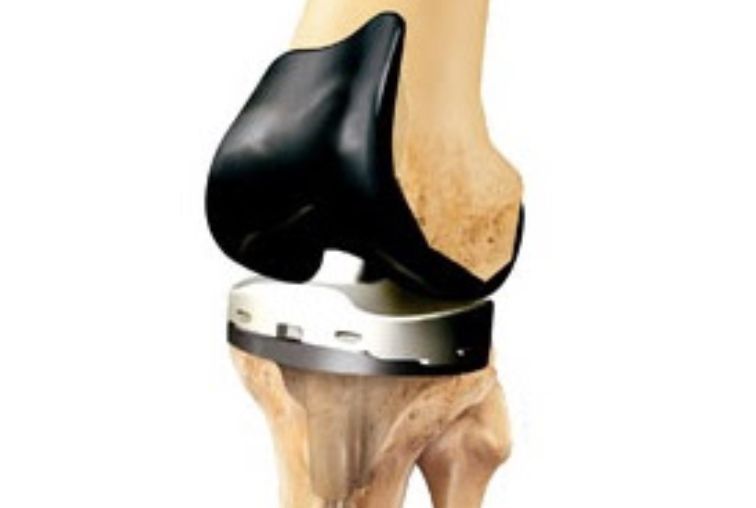
If osteoarthritis can no longer be treated with the options mentioned above, it must be addressed through knee surgery—either a partial or total knee replacement, depending on the severity. When asked about the risk of infection with such a procedure, Professor Dr. Wachowski explains: “There is no particularly increased risk associated with surgery for osteoarthritis. Only half a percent of patients develop an infection, but this can usually be treated without having to remove the newly implanted joint. In the case of a late-onset infection, however—which can occur up to fifteen years after surgery—the joint must be replaced. In principle, an artificial joint must be replaced after a certain amount of time. This is because bone resorption and wear and tear on the prosthesis itself cause loosening and, consequently, renewed pain.”
Regional Anesthesia or General Anesthesia?
General anesthesia is, of course, always a strain on anyone. “Fortunately, many surgeries can now be performed under regional anesthesia. In this case, the anesthetic is administered through the spinal canal, but patients remain awake. They receive, at most, a small amount of sedative for general relaxation,” explains Professor Wachowski, before outlining the disadvantages of regional anesthesia: “Of course, patients can hear the accompanying sounds during the operation, such as tapping and sawing. Also, especially during knee or hip surgery, the patient is jostled, so they definitely notice that something is happening. For anyone who finds this psychologically too stressful and whose body consequently enters a state of stress, general anesthesia is definitely recommended.”
Looking to the future …
When asked about his hopes for the future, Professor Dr. Wachowski expresses considerable satisfaction: “The procedures currently available work well. Of course, there’s always room for improvement. I also want to emphasize that the decision regarding a form of treatment must always be made together with the patients. The patients and their needs play the decisive role here,” concludes Professor Dr. Wachowski, who always takes plenty of time to talk with and counsel his patients, explains the individual steps of a treatment in detail, and provides them with close care both before and after surgery.
We would like to thank Prof. Dr. Wachowski for the detailed and interesting conversation on a topic that affects many people.
You can contact our specialist via his profile page on the Leading Medicine Guide.
Share this article
About the medical author
Alexandra Pfitzmann
Editor
Alexandra Pfitzmann – medical author: expert knowledge, professional articles and medical insights in the Leading Medicine Guide.
More about the medical author →Orthopädie DUO - Duderstadt Trauma Surgery and Orthopedics
ProfileExpert Interviews
Read next
- Expert interview
Cardiogeriatrics: Significance and benefits in the context of hospital reform
Sep 21, 2026
Cardiogeriatrics: Significance and benefits in the context of hospital reform
Read more - Expert interview
Expert Interview with Professor Dr. Amadeus Hornemann, MPH
Sep 18, 2026
Prof. Amadeus Hornemann on Precision Medicine in Gynecology: Modern Surgery, New Techniques, Better Quality of Life
Read more - Expert interview
Expert Interview with Professor Dr. Konstantinos Anagnostakos
Sep 15, 2026
Prof. Anagnostakos on Painful Knee Replacements
Read more