Expert Interviews
Body Contouring After Significant Weight Loss: Expert Interview with Univ.-Prof. Dr. med. Adrian Dragu, MHBA

Alexandra Pfitzmann ·
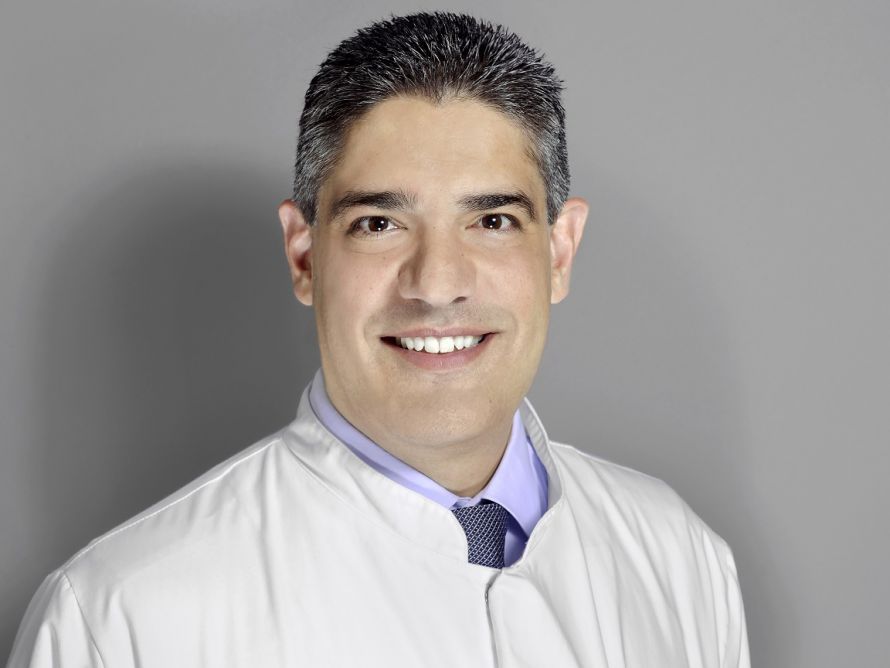
Professor Adrian Dragu, M.D., is a specialist in plastic and aesthetic surgery with a subspecialty in hand surgery, and he heads the Department of Plastic and Hand Surgery at the Carl Gustav Carus University Hospital in Saxony. His areas of expertise include the treatment of burn injuries (burn surgery) and hand surgery.
In addition, Prof. Dr. Dragu completed a second degree program, earning a Master of Health Business Administration. The Department of Plastic and Hand Surgery takes an interdisciplinary approach to treating various injuries and complex cases. A 24-hour replantation service is available for emergencies, such as severely injured or severed body parts, particularly the hand. After the patient has recovered, plastic surgery is often performed to cosmetically restore body parts that may have been disfigured, such as burn scars. Skin tightening following weight loss and breast reconstruction after breast cancer treatment also fall under the purview of Prof. Dr. Dragus’s department.
These procedures may involve, for example, autologous tissue grafts. The Department of Plastic and Aesthetic Surgery and Hand Surgery is also active in research and teaching. Prof. Dr. Dragu is a member of the examination board and plays a key role in research projects, such as those in the fields of obesity research, ischemia and reperfusion research on human tissue, and research on bionic prostheses.
The editorial team of the Leading Medicine Guide spoke with Prof. Dr. Dragu about how to restore the body to an aesthetically pleasing shape after drastic weight loss.
Drastic weight loss—whether through surgical measures such as bariatric surgery or through consistent lifestyle changes—often leads to significant health and aesthetic improvements. However, the joy of weight loss is often dampened by the formation of excess skin, which cannot fully regain its elasticity due to the significant weight loss. This excess skin can not only cause aesthetic and psychological distress but can also lead to physical complaints such as skin irritation, inflammation, or restricted movement. This, in turn, often results in severe functional limitations. In such cases, body contouring surgery offers the possibility of removing excess skin and restoring the body’s contours, thereby sustainably improving both functionality and body image. Modern plastic and reconstructive surgery takes a holistic approach to address functional and medical aspects as well as aesthetic considerations equally.
Excess skin following significant weight loss is a common phenomenon influenced by several factors.
“First, I must note that obesity has become an enormous problem in societies worldwide. One in three people is overweight, and unfortunately, childhood obesity is also on the rise. People are becoming increasingly obese, which in turn means that morbidity is also rising. Even simple surgeries are significantly riskier for obese patients. The heavier a person is, the more complicated the surgeries become, hospital stays are prolonged, complication rates rise, and the often-necessary use of medications increases. “Overweight patients often suffer from high blood pressure and/or diabetes,” emphasizes Prof. Dr. Dragu at the start of our conversation, and goes on to explain:
“Once someone has decided to lose weight, the first step is to determine whether this should be done through conservative methods—that is, with the help of diets or medications such as semaglutide—or whether bariatric surgery, such as a gastric bypass or gastric sleeve, should be considered. Once someone has chosen one of these paths and actually lost a significant amount of weight—which can be ‘only’ 10–20 kilograms or even more than 150 kilograms— I myself have had a patient who lost 193 kilograms. In such cases, the situation is similar to that after pregnancy: for some people, the skin retracts well, but for others, it does not. Especially in formerly severely obese patients, the reduction of excess skin often can no longer occur naturally. However, when there is a massive excess of skin, skin quality suffers enormously. The skin becomes irritated, fungal infections frequently develop, skin folds rub against each other, there is a constant risk of infection, and severe functional limitations can even lead to physical disabilities. This is by no means merely a matter of cosmetic concerns—rather, the focus is on restoring social participation. Many patients with obesity are already permanently unable to work by their mid-20s, as they miss up to 150 days of work annually. If the functional limitations are medically documented and objectively assessed through plastic surgery, this documentation can be submitted to the respective health insurance provider. Unfortunately, however, it is often difficult to obtain coverage for such procedures, as health insurance providers and MDK assessors mistakenly classify body-contouring surgeries as purely aesthetic measures across the board. These are highly complex procedures with significant risks, such as large scars, wound healing complications, lymphatic fistulas, or postoperative bleeding—they cannot be compared to a traditional cosmetic abdominoplasty. The latter typically involves only a small amount of tissue that is removed, tightened, or suctioned for purely aesthetic reasons.”
With increasing age, the production of collagen and elastin—which are responsible for the firmness and flexibility of connective tissue—decreases. As a result, older people are more affected by excess skin than younger people. Likewise, the duration of being overweight affects the appearance of the skin, as prolonged stretching of the skin significantly limits its ability to retract. Significant weight loss, especially over a short period of time—such as that which occurs after bariatric surgery—often leads to pronounced excess skin. Genetic predisposition also plays a role, as skin texture varies from person to person.
“Areas of the body where fat has accumulated more heavily during periods of excess weight are particularly commonly affected. On the abdomen, excess skin most commonly appears as an apron of fat that extends forward and downward, often covering the entire genital area, and a significant amount of fat also accumulates on the inner thighs. Next are the breasts, in both women and men, where a loss of firmness and a sagging appearance can occur, sometimes extending down to the navel. This constant friction between the skin often leads to pain and moist, irritated areas of skin. The upper arms tend to develop loose, sagging skin, which becomes visible as “flabby arms,” though this can sometimes improve significantly,” explains Prof. Dr. Dragu.
After significant weight loss, there are various options available to remove excess skin and improve body contours.
The most effective and long-lasting method is the surgical removal of excess skin, which is performed as part of plastic surgery procedures. These operations aim to improve the aesthetic appearance and, above all, to alleviate functional complaints such as skin irritation or restricted movement. “It is often mistakenly suggested that these complex body contouring procedures are merely simple ‘fat-removal’ surgeries. Unfortunately, it is also increasingly common to see surgeons from unrelated specialties ‘taking on’ this field. As a result, these procedures are irresponsibly performed by general surgeons, dermatologists, or even oral and maxillofacial surgeons. In this context, it must be clearly stated that body contouring falls exclusively within the scope of expertise of plastic surgery. The treating physician must be a board-certified specialist in plastic, reconstructive, and aesthetic surgery. Only then can the patient be certain that the necessary specialist standards are met, thereby guaranteeing specific surgical techniques and the ability to manage large wound areas. An experienced plastic surgeon must know exactly where to make incisions in these compromised soft-tissue conditions so that complications can be avoided or at least minimized. If necessary, different procedures must be combined, such as liposuction and plastic surgical resection. It is also important to consider whether the patient has undergone previous surgeries, particularly in the abdominal area—such as appendectomies, cholecystectomies, or cesarean sections—because these can result in scar tissue that further complicates the surgical procedure or alters the individual incision pattern. “An experienced plastic surgeon will make incisions very differently and knows how to take all these factors into account. Traditional resection techniques are performed with a scalpel and, in the abdomen and thighs, are often combined with liposuction,” explains Prof. Dr. Dragu, who then gives an example to illustrate his point:
“The largest abdominal fat apron I’ve ever removed weighed 25 kilograms. Typically, an abdominal fat apron weighs 3–5 kilograms; on the thighs, the amount is approximately 500–1,500 grams per side, and on average, 500–1,000 grams per side on the chest. Most of the time, however, it’s not the weight that matters, but the surface area. This also varies from patient to patient.”
In order to medically perform body-contouring surgery following weight loss, certain criteria must be met to ensure both the safety of the procedure and the long-term success of the treatment.
“It is very important that the patient is mentally stable. If, for example, someone has a distorted body image—a condition known as dysmorphophobia, also referred to as body dysmorphic disorder (BDD)—the patient must first be able to realistically assess their body weight. Obese individuals often have co-occurring addiction issues in other areas. Here, care must be taken to ensure that people who have overeaten due to addiction do not swing to the opposite extreme—becoming anorexic or engaging in excessive exercise. Some also get the idea to get covered in tattoos or suddenly take up an ultra-extreme sport. We notice in some patients that they exhibit a kind of “addiction shifting.” In this regard, before undergoing body-contouring surgery, a patient must realistically assess their body, understand what to expect, and recognize that the body can never be restored to its original state. And because the surgery is very extensive, complex, and ultimately high-risk, we try to minimize the risk as much as possible. This means that smokers are advised to quit or at least cut back on smoking. If the patient has a history of thrombosis or embolism, or has had a pulmonary embolism, such a procedure cannot be performed; alternatively, this must be urgently clarified beforehand to rule out coagulation disorders. This important information about the patient must be gathered as part of a detailed medical history. Ultimately, this is a highly elective surgery—it is not an emergency procedure! Therefore, careful consideration must be given to whether a patient is suitable for the procedure. And as mentioned, health insurance providers require that functional limitations be described, and the patient’s body weight must have remained stable for six months prior to surgery. When approving treatment, health insurance providers never consider the psychological or aesthetic distress that a patient with significant excess skin may well experience. “But that doesn’t count, and at most, a recommendation for mental health treatment would be made,” explains Prof. Dr. Dragu regarding the criteria. The only factors that count toward positive cost coverage by health insurance companies are the objectively verifiable functional limitations.
Before the procedure, the patient undergoes a comprehensive examination, including a physical assessment of the excess skin, a medical history review, and, if necessary, imaging tests. The goal is to tailor the surgical strategy to the individual and minimize the risk of complications such as wound healing disorders or infections. Taken together, these criteria ensure that the procedure can be performed in a way that is not only aesthetically but also medically justified, sustainable, and safe.
Body contouring procedures following weight loss are complex surgeries associated with specific risks and potential complications.
“In addition to the classic surgical risks such as embolisms, postoperative bleeding, and infections, unsightly, long, visible scars may result. Asymmetries may also occur, particularly around the navel, simply because it is not easy to find the exact midline during surgery. Of course, we always try to perform the procedure as evenly and gently as possible, but perfect symmetry is not achievable. Overall, however, we’re talking about a very manageable complication rate when the surgeon truly knows what they’re doing. As for the duration of the surgery, it takes about 3 hours for the breasts, about 2–3 hours for the abdominal wall, and about 1–2 hours for a thigh lift. “The hospital stay usually lasts about 7 to 10 days,” says Prof. Dr. Dragu.
Close postoperative care is also crucial. Regular follow-up appointments make it possible to detect and treat complications early on. Patients should be thoroughly informed about postoperative care, including the proper use of compression garments, avoiding physical exertion during the first eight weeks, and scar care. In the long term, a healthy lifestyle—including a balanced diet and moderate exercise—helps maintain the results of the surgery and reduce the rate of complications.
Postoperative care plays a central role in ensuring the long-term success of body-contouring procedures, as it supports the healing process, prevents complications, and optimizes both the aesthetic and functional outcomes.
“Postoperative care follows a very specific protocol. Patients who have undergone abdominoplasty wear an abdominal binder for eight weeks. Sometimes a compression garment or compression pants are also needed. The sutures are removed after about two weeks, and the patient must not lift anything heavier than five kilograms for a period of eight weeks. Occasionally, thrombosis prophylaxis is necessary. Lymphatic drainage can also help relieve pressure on the lymphatic vessels. “As for adopting a healthier and more balanced diet in the future, this ‘homework’ is done at the respective obesity center or with nutritionists before treatment, because plastic surgery is, after all, the last step,” explains Prof. Dr. Dragu.
Aesthetic measures such as scar care also play a crucial role. The targeted use of scar creams, silicone patches, cortisone injections, or laser therapies can improve the appearance of scars and counteract hypertrophic scarring. Depending on the individual healing process and skin type, these measures may be necessary for several months to achieve the best possible result.
Regarding follow-up visits, Prof. Dr. Dragu explains: “We see the patients who have undergone surgery, of course, after the operation and then again after approximately six and twelve months to review their progress. During these follow-up visits, we usually find that the patient’s quality of life has improved dramatically, that previously elevated blood pressure has stabilized, and that medication dosage has been reduced. Their self-image is much better. However, a small number of these patients do fall back into old patterns and habits after about five to six years. Unfortunately, the initially positive postoperative effect diminishes in this small patient cohort and is eventually forgotten. It is therefore immensely important to convey to the patient that they have a lifelong commitment to maintaining their condition and must consistently work on it. It should not be forgotten that patients often have a history of suffering spanning 15 to 20 years before they come to me,” and he expresses his hope for the future:
“It’s very important that patients are well-informed and educate themselves. There should be a legal regulation stipulating that these body-contouring surgeries may truly be performed exclusively by specialists in plastic, reconstructive, and aesthetic surgery. After all, I don’t perform allergy tests or extract teeth, remove appendices, or perform gallbladder surgeries. When it comes to plastic surgery, unfortunately, many doctors proclaim themselves to be so-called experts, and it’s all about making money—not about patient safety and certainly not about medical expertise. The law could be a bit stricter and clearer in this regard. Patients should also do much more research when choosing a doctor—ideally, just as they would when buying furniture: visiting multiple stores, comparing options, and asking tough questions! I recommend asking questions such as: 1.) Are you specifically a board-certified specialist in plastic, reconstructive, and aesthetic surgery? 2.) When did you become a board-certified specialist? and 3.) How many of these surgeries have you performed so far? At the same time, it would be important for health insurance companies to show more understanding for the physical discomfort experienced by patients who have lost weight but are left with excess skin. We’re talking about seriously ill patients who have come a long way and want to return to social life and their careers. These patients have significant, objectively measurable functional limitations—and that has nothing to do with cosmetic surgery.”
Thank you very much, Professor Dragu, for this informative conversation!
Share this article
Expert Interviews
Read next
- Expert interview
Expert interview with Professor Dr Elmar Herbst, PhD
Oct 15, 2026
Patient-centred and personalised knee surgery
Read more - Expert interview
Cardiogeriatrics: Significance and benefits in the context of hospital reform
Sep 21, 2026
Cardiogeriatrics: Significance and benefits in the context of hospital reform
Read more - Expert interview
Expert Interview with Professor Dr. Amadeus Hornemann, MPH
Sep 18, 2026
Prof. Amadeus Hornemann on Precision Medicine in Gynecology: Modern Surgery, New Techniques, Better Quality of Life
Read more