Expert Interviews
Complex knee surgery focusing on the posterior cruciate ligament and the collateral ligaments

Alexandra Pfitzmann · March 24, 2026
Each year in Germany, approximately 223,000 people are hospitalized for knee and lower leg injuries, including numerous injuries to the posterior cruciate ligament and the collateral ligaments. Complex injuries to the posterior cruciate ligament and the collateral ligaments are among the most demanding challenges in knee surgery. They require precise diagnostics, a deep understanding of biomechanics, and surgical expertise that only a few centers offer in this form. The editorial team of the Leading Medicine Guide spoke with one of Germany’s leading specialists, Professor Karl-Heinz Frosch, M.D., about this topic.

“Complex knee injuries usually occur when not just a single ligament is affected, but multiple structures are damaged simultaneously—such as the anterior cruciate ligament together with the medial collateral ligament, or the posterior cruciate ligament in combination with the posterolateral corner or the lateral collateral ligaments. Such injuries can often be identified through a thorough history-taking and a careful clinical examination, because the direction of the instability makes it very easy to determine which ligament is torn. MRI is extremely helpful, especially in the acute phase—for example, with the posterior cruciate ligament—and provides a high degree of diagnostic certainty. However, in cases of long-standing instability, the accuracy rate drops significantly, which is why the clinical examination plays the most important role here,” explains Prof. Dr. Frosch, beginning with a discussion of knee injuries and pointing out the unique characteristics of the posterior cruciate ligament:
“The posterior cruciate ligament differs from the anterior cruciate ligament in many ways. It rarely tears as a result of a typical twisting injury, but rather usually due to high-energy accidents—for example, when the lower leg is forced backward by the impact of a motorcycle accident, or when a person falls directly onto the lower leg with the knee bent. Less common are hyperextension injuries, in which the knee is overextended backward; these are almost always accompanied by additional ligament injuries. Overall, these are injuries that are usually associated with considerable force. Because injuries to the posterior cruciate ligament and the posterolateral corner are rare, there are only a few centers in Europe that deal with them intensively, both clinically and scientifically. Over the years, these centers have developed specialized expertise, and many patients are specifically referred there because complex knee injuries require specialized experience.”
The posterior cruciate ligament stabilizes the knee by preventing the lower leg from sliding backward relative to the thigh. Especially at 90 degrees of flexion, it plays a central role in stability and works closely with the popliteal complex, which helps absorb a large portion of the rotational and drawer forces. Together, these structures ensure that the knee is guided in a controlled manner under load, that abnormal movements are prevented, and that the articular cartilage remains protected in the long term.
Complex injuries to the posterior cruciate ligament can affect anyone—from children to the elderly. However, in practice, there is a clear pattern: very active people between the ages of 20 and 30 are particularly frequently affected. From around age 50 onward, the incidence decreases significantly, and posterior cruciate ligament injuries are very rare in older patients.
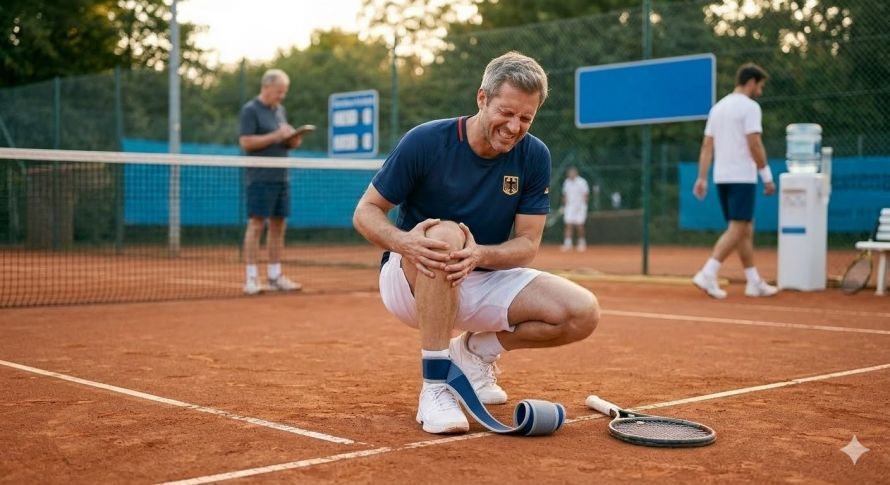
Prof. Dr. Frosch comments on this: “When such an injury occurs, it typically manifests as a combination of instability and pain. It’s interesting that injuries to the posterior cruciate ligament are usually significantly more painful than those to the anterior cruciate ligament, even though we don’t know exactly why—jokingly, it’s sometimes even referred to as ‘PCL—P for Pain.’ It’s also important to note that a posterior cruciate ligament injury does not automatically require surgery. An isolated tear can often be successfully treated conservatively. The problem, however, is that most posterior cruciate ligament injuries involve associated injuries—especially at the posterolateral corner. And it is precisely these additional instabilities that are often overlooked. A large British study shows that such associated injuries are, on average, not recognized until 30 months after the first visit to a specialist. This explains why posterior cruciate ligament injuries are considered particularly challenging and why specialized centers play an important role here,” he adds:
“If a posterior cruciate ligament injury is truly isolated, it can be treated effectively with conservative measures. The problem is that even experienced colleagues frequently overlook the associated injuries to the posterolateral corner. And when these are overlooked, the surgery generally does not go well. Many posterior cruciate ligament reconstructions fail not because the posterior cruciate ligament was poorly repaired, but because additional instabilities were simply not recognized. However, if there is indeed only an isolated injury—which is rare—it can be treated effectively without surgery. Conservative treatment, however, is significantly more challenging than for the anterior cruciate ligament because it requires a special brace that actively guides the lower leg forward and prevents the knee from healing in a fixed posterior drawer position. Yet this is exactly what often happens when conservative treatment is mismanaged. It is estimated that about 30 percent of conservative treatments fail, leaving the knee in this posterior drawer position—which leads to pain and functional problems. That is why a truly effective conservative treatment regimen, consistently followed, is essential. Such therapy primarily involves restoring mobility early on and consistently wearing the special brace for six weeks. This is quite manageable for most people. Surgery is generally required when, in addition to the posterior cruciate ligament, other structures are injured—most commonly the popliteal complex or the lateral collateral ligament. As combined injuries, these accompanying injuries usually do not respond to conservative measures. In such cases, surgical treatment is necessary. And yes, it is possible to treat even these complex structures using minimally invasive techniques. We are among the few centers worldwide that perform arthroscopic reconstruction of the posterolateral corner. This is technically very challenging, but we’ve been performing it with great success since 2014. Functionally, the results are just as good as with open surgery, but with smaller incisions, a lower risk of infection, and a faster recovery.”
Whether a complex knee injury can be stabilized using conservative methods or whether multiple ligament structures must be reconstructed depends on a series of finely tuned biomechanical factors that determine whether the knee can still achieve functional stability despite the injury, or whether the load-bearing axes are so disrupted that only surgical reconstruction can restore physiological joint alignment.
Whether arthroscopic reconstruction is sufficient or open surgery is necessary is determined by a series of clear structural and biomechanical criteria that indicate just how complex and extensive the injury actually is. The decisive factors are not only which ligament is torn, but also how many structures are affected simultaneously and whether the anatomical conditions can be restored at all using minimally invasive techniques.
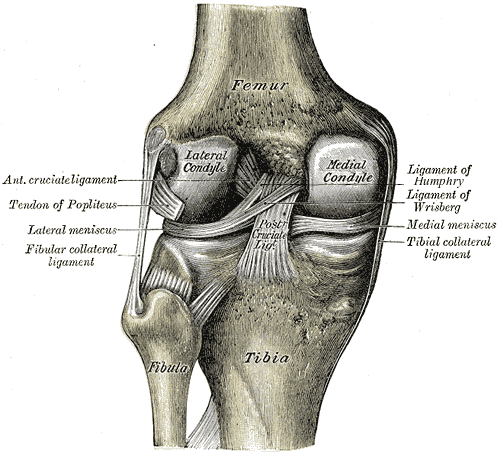
View of the knee with the posterior cruciate ligament._Henry Vandyke Carter, Public domain
The central question is how well the three essential components of stability—anterior/posterior translation, varus/valgus stability, and rotational control—are still preserved in the injured knee. If the posterior cruciate ligament or the collateral ligaments are injured, the knee can only compensate for these functions if the remaining structures—especially the muscles—are sufficiently strong, intact, and working in coordination. If posterior translation cannot be controlled despite muscular activation, the knee loses its central braking function, making reconstruction virtually imperative. Another crucial factor is the interaction of the ligamentous structures under load. The posterior cruciate ligament works closely with the posterior oblique ligaments, the posterolateral complex, and the collateral ligaments. If several of these structures are injured simultaneously, combined instability results, which generally cannot be corrected through conservative measures.
“The greatest challenge in surgical procedures is that one is working with very sharp instruments in an anatomically highly sensitive area—the popliteal fossa. Important nerves and blood vessels run through this area, whereas with the anterior cruciate ligament, they lie completely outside the surgical field. For this reason, anterior cruciate ligament surgery is hardly comparable to posterior cruciate ligament surgery, and that, in turn, is significantly less complex than arthroscopic repair of the posterolateral corner. This region has a complex anatomy, and one must prepare the site arthroscopically with extreme precision and care in order to operate safely. The fact that only a few surgeons have mastered this is evident from the frequency: statistically, for every twenty anterior cruciate ligament tears, there is one posterior one. And before attempting a posterior cruciate ligament repair, one should have performed 100 to 200 anterior cruciate ligament surgeries. Accordingly, there are in fact only a good dozen surgeons who truly perform these procedures routinely. For patients, this means they should specifically seek out a specialized center. While high-quality care for the anterior cruciate ligament is widely available throughout Germany, the same is true for the posterior cruciate ligament only in select locations. Combined ligament reconstructions are so important because the posterior cruciate ligament almost never tears on its own. In most cases, the lateral ligament and parts of the popliteal complex are also affected. The popliteus stabilizes the knee against external rotation at 90 degrees of flexion and bears about half of the force generated during a posterior drawer test. So if the posterior cruciate ligament is reconstructed but the popliteal complex is overlooked—which, unfortunately, happens frequently—the new cruciate ligament becomes overloaded and quickly loosens again. “That is why combined procedures are necessary, in which the posterior cruciate ligament is stabilized or reconstructed together with the popliteal complex and often the lateral collateral ligament as well,” explains Prof. Dr. Frosch.
Detecting early on whether a posterior cruciate ligament injury also affects the posterior oblique ligaments or collateral ligaments is only possible if the typical biomechanical patterns of these combined injuries are consistently taken into account. The knee then exhibits not only pure posterior instability but also loses its ability to control rotations and varus/valgus forces. It is precisely these changes that provide the decisive clues.
Knee joint instabilities should therefore be assessed in a highly differentiated manner. It is crucial to identify all components of instability through clinical examination. This requires a great deal of experience. All of these components of instability should then be addressed surgically, which can also be technically very challenging. In cases of combined injuries, isolated reconstruction of individual structures is generally insufficient to restore physiological joint guidance.
“Whether arthroscopic reconstruction is sufficient or open surgery is necessary is determined by a series of clear structural and biomechanical criteria that indicate just how complex and extensive the injury actually is. The decisive factors are not only which ligament is torn, but also how many structures are affected simultaneously and whether the anatomical conditions can be restored using minimally invasive techniques at all. The benefit of combined reconstruction is particularly evident in injuries to the posterior cruciate ligament, which almost never occur in isolation. If the posterolateral complex, the posterior oblique ligaments, or the collateral ligaments are also affected, this results in complex rotational and lateral instability that cannot be corrected conservatively or with a single reconstruction. Patients who undergo reconstruction of only one ligament in such situations often develop persistent instability, an unsteady gait, and progressive overloading of the medial or lateral joint compartment. Even in cases of high-energy trauma—such as traffic accidents or severe sports injuries—patients benefit from a combined reconstruction, as multiple ligament structures typically fail simultaneously in these situations. If only part of the injury is addressed, joint mechanics remain compromised, leading to secondary meniscal damage, cartilage wear, and ultimately premature osteoarthritis. Another important group consists of patients with significant rotational instability. If the knee buckles during rotational movements, “opens outward,” or exhibits a pronounced “giving-way” sensation, more than one ligament is almost always affected. “A combined reconstruction then restores the coordinated function of the ligament complexes and prevents the tibia from rotating uncontrollably under load—a key mechanism underlying cartilage damage,” emphasizes Prof. Dr. Frosch.
Age, activity level, and associated injuries act like three interlinked adjustment screws that determine whether a conservative approach still promises sufficient stability or whether surgical reconstruction is necessary to maintain long-term knee function. Each of these variables alters the biomechanical demands placed on the joint—and thus the prospects for success of the respective treatment approach.

Receiving a sled prosthesis after a tibial tuberosity fracture—as was the case with competitive skier Lindsey Vonn—and then returning to world-class skiing is indeed something that impresses even experts. Prof. Dr. Frosch comments on this: “This is only possible through an extraordinary combination of willpower, athleticism, and body awareness. While a sled prosthesis restores good functional knee movement, it does not replace a natural joint. The menisci are missing, the sense of touch in the knee is altered, and certain movement cues that a healthy knee automatically provides are reduced. This makes it all the more astonishing that Lindsey Vonn was able to compete at the very top of the World Cup with it. This demonstrates both her personal abilities and the fact that modern prosthetic technology can enable an astonishingly high level of function. The fact that her career is likely over after her latest fall comes as no surprise, given the physical demands of alpine skiing. Although a ski boot stabilizes the ankle and provides some overall guidance for the leg, the knee does the crucial work when skiing. Especially at high speeds, during rapid changes of direction, and under enormous forces, the knee is the central joint. That makes it all the more remarkable that she was able to compete at this level at all with a sled prosthesis. For patients who aren’t competing in the World Cup, her story is nonetheless encouraging. It shows that with the right treatment, a good prosthesis, and—above all—consistent commitment to rehabilitation, a great deal can be achieved. Successful rehabilitation requires the restoration of strength, mobility, and coordination, while at the same time, inflammation in the knee must be gradually reduced through physical therapy. The real art lies in experienced physical therapists accurately recognizing which phase the patient is in and what is beneficial or harmful to the knee at that moment. Rehabilitation is highly individualized, and no two patients follow the same path. The process isn’t over after rehabilitation. The patient continues to receive specialist care, because the first six months are crucial in determining how well the knee will function in the long term. The joint should be checked regularly within the first year, but the course of recovery is usually set in the first six months.”
Robotics certainly plays a major role in knee surgery—though primarily in total knee replacements, not in cruciate ligament surgeries. In total knee replacements, a robot can compensate for minor inaccuracies on the part of the surgeon and make the implantation significantly more precise.
“The robot doesn’t operate autonomously like a car in assist mode; rather, it requires a highly experienced surgeon to guide it. Nevertheless, it provides a few crucial degrees of additional precision, and that’s exactly what makes it so valuable. We use a system from DePuy, the VELYS robot, which we’ve been using for several months now. It’s particularly helpful in cases of post-traumatic knee osteoarthritis, such as that which occurs after workplace accidents or old tibial head fractures. In such cases, the anatomy is often so severely altered that orientation becomes difficult. Here, the robot can achieve a level of precision that even very experienced surgeons can hardly match, because it operates independently of deformed structures and aligns the prosthesis precisely. However, it takes a long time to master such a system with confidence. Training takes months, involving courses, practice on models, and exercises on cadavers before working on patients. This only works if you’re already a very experienced knee surgeon—otherwise, you have no business using the robot. Not every surgery is performed robotically. In cases of simple osteoarthritis without significant axial deviation, the robot isn’t strictly necessary. It becomes useful when there’s an axial deformity of about ten degrees or more, and generally in post-traumatic cases, where it’s almost always used,” says Prof. Dr. Frosch, emphasizing at the end of our conversation:
“Robotics is based here at the BG-Klinikum (Occupational Health Clinic), while treatment of the posterior cruciate ligaments is provided at a high level both there and at the UKE. Together, the two hospitals perform around 1,600 knee surgeries per year. The number of tibial head fractures is particularly impressive—we are among the leading institutions in Germany in this area. And there are only five hospitals nationwide that perform more than 50 surgeries for posterior cruciate ligament tears per year; both the UKE and the BG-Klinikum are among them, which is remarkable because this injury is rare overall. For the future, I hope for less bureaucracy and more genuine patient-centered care—and a smart hospital structuring policy that strengthens specialization rather than hindering it.”
Thank you very much, Professor Dr. Frosch, for this insight into complex knee surgery with a focus on the posterior cruciate ligament!
- Director of Trauma Surgery and Orthopedics at the UKE, he is one of Germany’s leading knee specialists.
- An expert in complex knee surgery, cruciate ligament and meniscus injuries, osteoarthritis treatment, patellar dislocations, and severe lower extremity injuries.
- He prioritizes joint-preserving therapies and avoids artificial knee joints whenever possible—which is particularly relevant for competitive and elite athletes.
- High level of expertise in arthroscopic knee surgery, corrective osteotomies, meniscus replacement, cartilage cell transplantation, and osteochondral cylinder (OTC) transplantation.
- Performs approximately 70% of revision surgeries, particularly on the posterior cruciate ligament.
- One of the few specialists who performs purely arthroscopic surgery on the posterior oblique ligaments.
- Many years of experience in treating congenital and post-traumatic deformities.
- Former competitive athlete with close ties to the Hamburg/Schleswig-Holstein Olympic Training Center.
Share this article
About the medical author
Alexandra Pfitzmann
Editor
Alexandra Pfitzmann – medical author: expert knowledge, professional articles and medical insights in the Leading Medicine Guide.
More about the medical author →Expert Interviews
Read next
- Expert Interviews
Expert Interview with Professor Dr. Amadeus Hornemann, MPH
Sep 18, 2026
Prof. Amadeus Hornemann on Precision Medicine in Gynecology: Modern Surgery, New Techniques, Better Quality of Life
Read more - Expert Interviews
Expert Interview with Professor Dr. Konstantinos Anagnostakos
Sep 15, 2026
Prof. Anagnostakos on Painful Knee Replacements
Read more - Expert Interviews
Expert Interview with Professor Karl Philipp Kutzner, M.D.
Sep 11, 2026
Prof. Kutzner on Cutting-Edge Endoprosthetics at ENDOPROTHETICUM Mainz
Read more