Expert Interviews
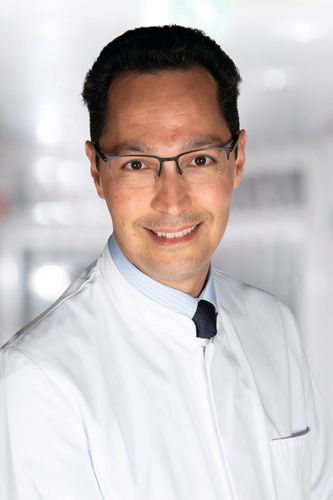
Expert Interview with Guest Professor (Buenos Aires) Dr. med. Thorsten Gehrke - Complications of Joint Replacement with a Focus on Infection

Alexandra Pfitzmann ·
Dr. med. Thorsten Gehrke is a nationally and internationally renowned specialist in the field of joint surgery who has established himself through his many years of experience and outstanding expertise, particularly in the area of hip and knee joint replacement. Since 2005, he has served as Medical Director and Chief of Orthopedics and Surgery at the renowned ENDO Clinic in Hamburg, one of the world’s leading specialty clinics for bone, joint, sports, and spinal surgery.
In this role, Dr. Gehrke oversees a wide range of orthopedic treatments that extend far beyond the scope of traditional joint replacement surgery. A particular focus of his work is the implantation and revision of hip and knee prostheses—for both aseptic and septic conditions. He is regarded as one of the world’s leading experts, particularly in the field of infected endoprostheses. In addition to these complex procedures, the ENDO Clinic also performs realignment osteotomies, arthroscopies, and ligament reconstructions.
The range of endoprosthetic treatments also extends to shoulder and elbow joints. The clinic’s extensive surgical expertise is also evident in the treatment of foot conditions and injuries—such as through fusion, realignment, or the implantation of ankle prostheses—as well as in spinal surgery, particularly in decompression procedures, fusion procedures, and disc surgeries—the extensive surgical expertise of this world-renowned specialty clinic is evident. The ENDO Clinic in Hamburg, where Dr. Gehrke practices, looks back on decades of history as a center for highly specialized joint replacement care. Since its founding in 1976, more than 165,000 joint prostheses have been implanted there.
Each year, over 8,000 patients from Germany and abroad seek the clinic’s expertise. With this high volume of cases, an interdisciplinary team, and an uncompromising commitment to quality, the ENDO Clinic ranks among the world’s leading institutions of its kind. In his daily work, Dr. Gehrke places great emphasis on providing individualized and holistic care to his patients. His goal is to restore the freedom of movement and quality of life that have been limited by joint diseases or the consequences of accidents. In doing so, he combines surgical precision with innovative technology, a scientific foundation, and a high degree of empathy. The editorial team of the Leading Medicine Guide spoke with Dr. Gehrke about complications in endoprosthetics, particularly regarding potential infections.

Joint replacement—that is, the surgical replacement of joints with artificial implants—is now one of the most successful and frequently performed procedures in modern orthopedics. Hip and knee replacements, in particular, enable many people with advanced joint wear to experience a significant improvement in quality of life, mobility, and freedom from pain. Despite high success rates and medical advances, however, this procedure is not entirely risk-free. As with any surgery, complications can arise—one of the most serious being a periprosthetic infection, that is, an infection in the area surrounding the implanted prosthesis. Such infections pose a major challenge in joint replacement surgery and require specialized diagnosis and treatment.
Periprosthetic infections are among the most serious complications in joint replacement surgery and pose a significant challenge for both the patient and the treating team.
Despite major advances in implant technology, surgical techniques, and perioperative care, infections cannot be completely prevented. They can lead to severe impairments in quality of life and often require lengthy revision surgeries as well as intensive antibiotic therapy. This makes it all the more important to comprehensively assess the individual risk of infection prior to joint replacement surgery and to minimize it in a targeted manner.
“One of the most common and significant risk factors, for example, is being overweight—specifically, we’re talking about morbid obesity. We know that the risk of infection increases exponentially when the BMI exceeds 40. Another major risk factor is malnutrition—that is, when nutritional status is poor, or when a person’s diet is unbalanced or unhealthy. This can, for example, lead to bacteria colonizing the bile—and these bacteria can then, indirectly, colonize a prosthesis and trigger an infection there. Nutrition therefore plays a truly central role. This also involves diets or dietary changes in the run-up to surgery—though we’re still relatively in the early stages when it comes to recommendations.
Smoking is a crucial factor. There are now clear recommendations that patients should quit smoking three months before surgery. Of course, putting this into practice isn’t easy. In countries like the U.S., this is sometimes enforced very strictly—they even measure the nicotine level in the blood, and if it’s too high, the surgery simply isn’t performed. Here, we can’t enforce that in the same way. But the link is very well established scientifically: smoking significantly increases the risk of infection. Interestingly, depression is also among the risk factors. At first, many people wonder: What does one have to do with the other? But depressed patients, for example, tend not to be as consistent with hygiene or to follow recommendations less strictly overall—which then also means an increased risk,” explains Dr. Gehrke, adding:
“Another important issue is joint injections. If patients have received an injection—such as cortisone—directly into a joint within the last three to six months before surgery, the risk of infection is massively increased. Many people aren’t even aware of this. Another significant factor is diabetes. Poorly controlled diabetes is a real risk factor. There are parameters, such as the HbA1c level, that indicate whether blood sugar is well controlled. If the level is too high, the risk of infection increases significantly here as well. These are all factors that can definitely be influenced—if one is disciplined. Patients can help significantly reduce their risk. Of course, there are also fundamental risks that can’t be influenced, such as when someone is seriously ill or has a generally weakened immune system. But on the whole, the following applies: Most relevant risk factors can be influenced.”
When it comes to being overweight, this is particularly interesting—because it raises the question: Why is the risk so high in this case? The exact cause is not 100 percent known.
Dr. Gehrke explains this particular aspect: “In severely overweight patients, blood flow in the tissue surrounding the joint is often poorer. As a result, the body’s own antibodies cannot reach the critical areas effectively enough. In addition, the surgical incisions are generally larger, which in turn increases the entry point for germs. Incidentally, this applies to all joints—whether the hip, knee, shoulder, or foot. The spine is, in a sense, a special case. And that brings us back to the issue of bacterial colonization in the gallbladder—this is indeed a relevant point, and the evidence on this is very clear. Patients with a BMI over 40 have an eight- to tenfold increased risk of infection compared to patients of normal weight. And this doesn’t just affect the severely obese—underweight, very thin, and cachectic patients with a BMI below 18 are also at significantly higher risk. Both extremes—being overweight and underweight—substantially increase the risk.”
So-called “hospital germs”—that is, nosocomial infections—still exist. Anyone who is admitted to a hospital is, in principle, at risk of contracting an infection there.
“In specialized clinics like ours, the risk is significantly lower than in a general hospital. Simply because we treat only patients who are well prepared. We don’t see emergencies or patients coming directly from the street, from nursing homes, or after falls—as is often the case in other facilities. Our patients are generally in optimal medical condition. But even here, there’s always a residual risk. That’s why we go to great lengths to ensure hygiene. This begins even before surgery. Patients who are at increased risk—for example, because they come from long-term care facilities, work in agriculture, or are employed in the veterinary field—undergo what we call swab tests. These tests check whether the nose, throat, or other body regions are colonized by problematic bacteria. If so, these patients are treated in advance with special ointments or medications to prevent infection.
In addition, we instruct all patients to wash themselves thoroughly with antiseptic soap the evening before surgery and again on the morning of the procedure—truly from head to toe. This is standard practice for us. So we go to great lengths to minimize the risk. Nevertheless, the issue of infections remains highly relevant. It’s clear that about one-third of all complications that can occur after a procedure are infections. This is and remains a central issue in surgical medicine,” notes Dr. Gehrke.
The clinical symptoms and diagnostic criteria for a periprosthetic infection differ significantly depending on whether the infection is acute or chronic. Both forms represent a serious complication in joint replacement surgery, but they differ in terms of symptoms, time course, and diagnostic challenges.
“The primary symptom of any infection is pain—that’s generally the case. Of course, pain can also have many other causes, but if there is initially a pain-free period after surgery and then pain suddenly returns, one should be on high alert. That is a classic warning sign. An infection is usually not yet detectable on the first, second, or third day after surgery—it takes some time to develop.
It is extremely rare for an infection to become apparent immediately—that is, on the same day or right after surgery. This only happens in exceptional cases. Most often, an infection first manifests at the wound site. If the wound is red, oozing, or even continuing to bleed, this can be a clear indication of an incipient infection. This should always be taken seriously. In addition, infections can be detected through certain blood test results. One of the most important markers of inflammation is CRP. This is routinely monitored after surgery. An increase in this level can be another warning sign. General physical symptoms such as fatigue, fever, or night sweats may also occur. “These are often the first systemic signs that something is wrong,” explains Dr. Gehrke.
However, most infections do not occur immediately after surgery, but only later—often after one or two weeks. The majority are so-called late-onset infections, which can occur even months or years after the procedure. “A distinction is made between acute and late infections: Acute infections develop within the first three to four weeks after surgery. Anything that occurs after that is classified as a late infection. But regardless of the timing, pain is almost always the main symptom. So if pain recurs or worsens, the treating physician must take action. This is followed by targeted diagnostics—for example, through blood tests or an analysis of the synovial fluid—to determine the cause and, if necessary, treat the infection early on,” explains Dr. Gehrke.
Biofilms play a central role in the pathogenesis of periprosthetic infections and represent one of the greatest challenges in treating these complications.
A biofilm is a complex collection of microorganisms that colonize the surface of an implant and are embedded there in a self-produced matrix of extracellular polymers. This structure protects the pathogens from the body’s immune system as well as from the effects of systemically administered antibiotics, since these substances often cannot penetrate the biofilm sufficiently.
“The biofilm really plays a central role—ultimately, that’s what it’s all about. To explain this briefly: Every implanted prosthesis—whether a hip, knee, shoulder, or other joint—poses a potential risk of infection. And by the way, this doesn’t just apply to prostheses—foreign bodies such as heart valves or indwelling catheters can also be affected. The reason is quite simple: these are materials that are foreign to the body. Prostheses are usually made of metal. And metal has no defense mechanisms—it cannot defend itself against bacteria. The body itself actually has very effective defense strategies: phagocytes, immune cells—all of these work very well within the body’s own tissues. But none of this applies to a prosthesis. There, a so-called foreign-body infection can occur.
The bacteria reach the prosthesis, attach themselves to the metal surface—there are various ways they do this—and begin to form a mucous coating around themselves. This is what’s known as a biofilm. Bacteria thrive in mucus, warmth, and moisture—and they create precisely this environment for themselves on the surface of the prosthesis. Once they’ve established themselves there, they produce this mucus, in which they can multiply optimally. Essentially, they gradually coat the entire prosthesis with this biofilm. At first, the patient doesn’t notice anything. The real problem arises when bacteria break out of this slime and spread throughout the body. Then they can release toxins that lead to severe infections—sometimes even life-threatening ones,” says Dr. Gehrke, adding:
“Now, of course, the question arises: Can this biofilm be combated with antibiotics? And here’s the bitter truth: No. The bacteria are extremely well protected within this slime—they are up to a thousand times more resistant to antibiotics than bacteria circulating freely in the blood. An antibiotic dose high enough to reach them within the biofilm would be completely intolerable for humans. It simply doesn’t work. This means that as long as the bacteria remain in the biofilm on the prosthesis, no antibiotic in the world will help. In such cases, there is only one solution—the prosthesis must be removed. This is the only way to truly and completely eliminate the biofilm along with the bacteria. However, it all depends on when the infection occurs. If the infection is detected within the first three weeks after surgery, the biofilm has not yet fully formed.
In that case, it’s still possible to open the wound, thoroughly flush the joint, remove all infected tissue, and apply antiseptic solutions. With a bit of luck and targeted treatment, the infection can be brought under control without replacing the prosthesis. However, if the infection occurs later—that is, after three or four weeks—the biofilm is firmly established. In that case, irrigation alone is no longer sufficient. In such cases, the only option is complete replacement of the prosthesis. This shows how important it is to detect infections early. The earlier you intervene, the greater the chance of preserving the prosthesis.”
The evaluation of the effectiveness of one-stage versus two-stage revision procedures for infected knee and hip prostheses is a central point of discussion in the treatment of endoprosthetic infections.
“Anyone with a prosthesis is fundamentally at risk if they develop a bacterial infection in their body. Take a urinary tract infection, for example—something many women experience quite frequently. That’s a bacterial infection—we’re really only talking about bacteria here, not viruses or the flu. When such bacteria are present in the body, they can travel through the bloodstream to the prosthesis and colonize it, thereby infecting it. That’s why any bacterial infection poses a real risk to prosthesis wearers. That’s why such infections—such as a urinary tract infection—must always be treated quickly and thoroughly with antibiotics.
An important point: When we talk about replacing a prosthesis, many people think that the new prosthesis will still be at risk. And unfortunately, that’s true. There’s no other option but to remove the infected prosthesis. Afterward, the goal is to eliminate risk factors as much as possible. There are two surgical options: First, the one-stage replacement—in which the old, biofilm-covered prosthesis is removed, the surrounding area is cleaned, and a new prosthesis is immediately implanted during the same surgery. Second, the two-stage replacement—here, the prosthesis is removed, everything is thoroughly cleaned, and the patient is then left without a prosthesis for several months until it is certain that the infection has been eliminated. Only then is a new prosthesis implanted.
Our clinic is known worldwide for perfecting the single-stage replacement to the point where the success rates are just as good—or even better—than those of the two-stage procedure. This is a great relief for patients, as going several months without a hip or knee is, of course, very stressful. However, this procedure requires a high level of expertise. It’s not just the surgeon who plays a role, but an entire team: infectious disease specialists, microbiologists, nursing staff, physical therapists—all working closely together. This collaboration is known as the multidisciplinary approach, which, unfortunately, is implemented so consistently in only a few specialized centers worldwide,” emphasizes Dr. Gehrke.
In the worst-case scenario, infections can lead to the loss of a leg or even life-threatening sepsis. That’s why this issue must not be taken lightly.
“With such a commonly performed surgery—we’re talking about several hundred thousand cases per year in Germany—it’s all the more important to prepare every patient as thoroughly as possible. This includes strict hygiene measures before and during surgery, careful monitoring of risk factors such as blood sugar levels, and targeted preparation of patients from high-risk groups, such as those in nursing homes or working in agriculture.
Nevertheless, the infection rate for initial procedures is not one percent, but rather about one in a hundred cases. That may sound low, but it means there are several thousand infections per year—a significant number. Especially in severely obese patients—for example, those with a BMI over 40—the risk of infection is so high that I consistently insist on achieving weight loss before surgery. This may mean recommending bariatric surgery (such as gastric bypass surgery) or using new weight-loss injections.
As the surgeon in charge, I cannot justify performing surgery under these circumstances. The patient may be suffering greatly, experiencing severe pain, and barely able to walk, but without weight loss, the risk would be too great. Of course, there are exceptions: If someone who is severely obese is virtually immobile and suffering greatly, one must weigh the options on a case-by-case basis—discussing the risks and benefits in detail. In such cases, surgery can be performed earlier, provided there is thorough patient education and strict adherence to all hygiene protocols. But that is the exception, not the standard. In most cases, we are able to prepare patients within three to six months so that the surgical risk is significantly reduced and the prosthesis can be safely implanted,” explains Dr. Gehrke.
As a general rule, the more specialized a hospital is in such surgeries, the lower the risk of infection. It is well known that there is a clear correlation between the number of surgeries performed and the infection rate.
Hospitals that perform such procedures only rarely generally have significantly higher infection rates. That is why the choice of hospital is an important factor in reducing infection. In facilities like the Endo-Klinik, where primarily elective surgeries take place, the bacterial load is different and significantly lower than in hospitals that treat many emergency patients, such as accident victims. In those settings, the prevalence of bacteria is much higher, which increases the risk.
“For patients with infections, it is therefore important to seek care at a specialized center. There aren’t many such centers in Germany, and the Endo-Klinik is one of the largest in the world. The issue is also gaining increasing importance internationally. In the U.S., but also in Europe—for example, in France and Spain—efforts are being made to centralize the treatment of infection cases and to treat patients with severe complications in specialized clinics staffed by experienced teams. There have been repeated attempts to coat prostheses with antibacterial layers such as antibiotics, iodine, or silver. So far, however, these approaches have not been successful. This is primarily because bacteria are very clever. There are countless species that are constantly developing new resistances and behave differently within the body, making it impossible to simply eliminate them all.
While silver or gold are effective against many bacteria, a prosthesis made entirely of gold is unrealistic, and silver is toxic to the surrounding tissue and has side effects. That is why there is no truly practical solution yet. This makes it all the more important to take good care of your health in general and to prepare your body as best as possible before surgery. The average infection rate is about one percent, at most two percent. “In highly specialized clinics such as the Endo-Klinik, it’s even lower—usually under one percent,” notes Dr. Gehrke.
Dr. Gehrke—thank you very much for your important insights and explanations!
Share this article
Expert Interviews
Read next
- Expert interview
Expert interview with Professor Dr Elmar Herbst, PhD
Oct 15, 2026
Patient-centred and personalised knee surgery
Read more - Expert interview
Cardiogeriatrics: Significance and benefits in the context of hospital reform
Sep 21, 2026
Cardiogeriatrics: Significance and benefits in the context of hospital reform
Read more - Expert interview
Expert Interview with Professor Dr. Amadeus Hornemann, MPH
Sep 18, 2026
Prof. Amadeus Hornemann on Precision Medicine in Gynecology: Modern Surgery, New Techniques, Better Quality of Life
Read more