Expert Interviews
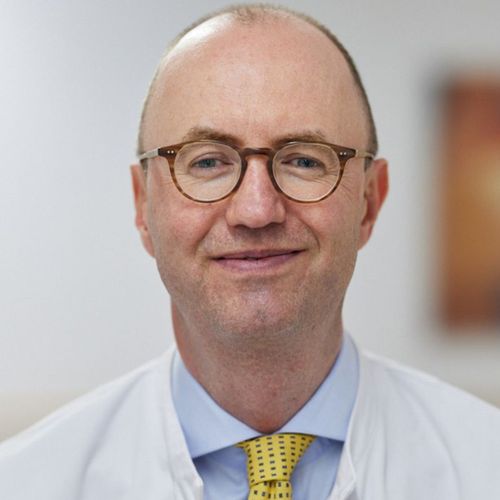
Prof. Dr. Dr. med. Matthias Heuer: A Closer Look at the Thyroid Gland and Diaphragmatic Hernia

Alexandra Pfitzmann ·
He is the chief physician of the Department of General and Visceral Surgery and Coloproctology at St. Elisabeth Hospital in Herten—and he enjoys a particularly strong reputation as a specialist in hernias and thyroid disorders: Professor Dr. Dr. med. Matthias Heuer has put the Westphalian hospital of the PROSELIS Foundation Clinic on the map of modern high-performance medicine through his innovative surgical procedures: Using advanced minimally invasive and robot-assisted surgical techniques, he is known for particularly gentle procedures—even when it comes to heartburn and hernia surgery. For this expert interview, the editorial team of the Leading Medicine Guide selected two specific areas to explore in greater detail with Professor Dr. Heuer: hyperthyroidism and hypothyroidism, as well as diaphragmatic hernias. Both are very common conditions, but they can be effectively treated today.
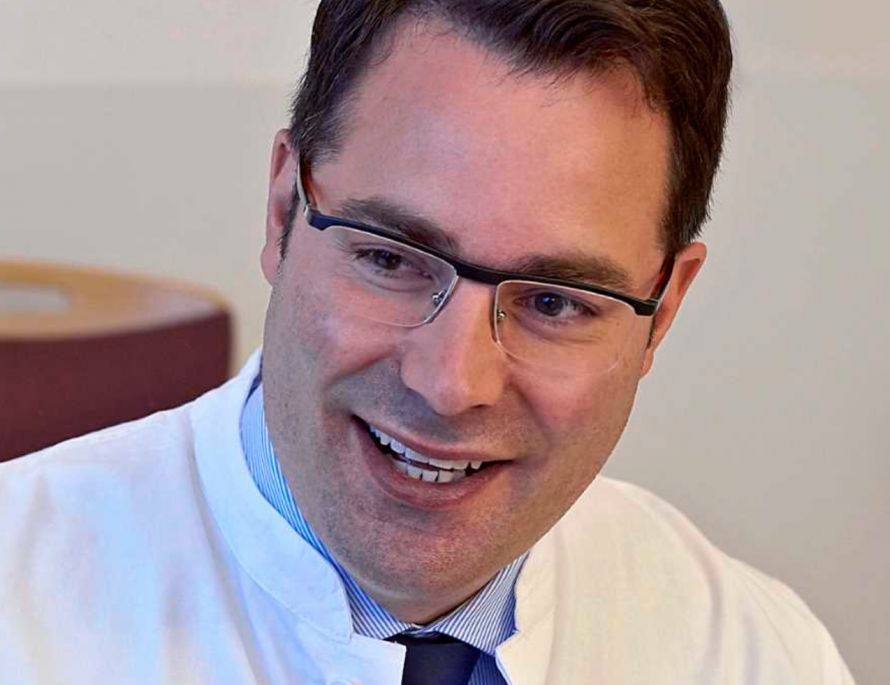 Graves’ disease, a condition named in German-speaking countries after its first describer, Carl Adolph von Basedow, is an autoimmune disorder that causes hyperthyroidism but is not actually caused by the thyroid gland itself. “In this condition, antibodies are produced abnormally, and the thyroid gland is consequently constantly stimulated,” explains Professor Dr. Heuer, describing the effects of the disease. Too many thyroid hormones in the blood consequently lead to a high basal metabolic rate, “which means the person burns more calories, usually develops a very red complexion, and is nervous. “You can spot these patients right away in the waiting room,” says Prof. Dr. Heuer, commenting on the symptoms.
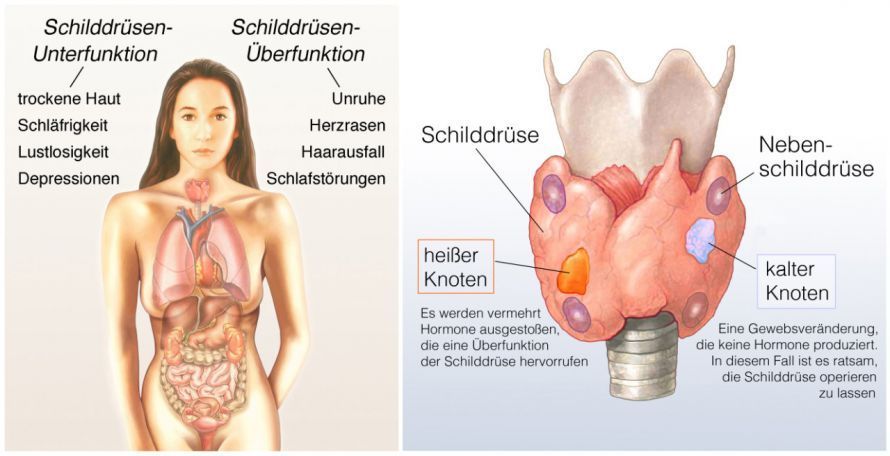
The thyroid is a complex and extremely active organ that triggers different symptoms in each person. One person gains weight, another loses it; one experiences hair loss, while another does not. “As a rule, people tend to lose weight when too many thyroid hormones are produced, and others gain weight when too few hormones are produced. What’s really concerning is that some models in New York take thyroid hormones without a medical indication just to stay slim—but that’s just a side note,” explains Professor Dr. Heuer.
About half of the patients experience what’s known as the Merseburg triad, which is characterized by a rapid heartbeat, protruding eyes, and a goiter
“Diagnosing Graves’ disease is not complicated. First, a blood sample is taken. The goal is to determine the so-called TSH level—thyroid-stimulating hormone—which provides information about the condition of the thyroid gland and indicates whether it is producing sufficient hormones. Of course, a medical history is taken, and an ultrasound is usually performed to detect inflammation and scarring. In some cases, a thyroid scintigraphy—a nuclear medicine procedure—is performed. “In this procedure, a tracer is administered to the patient intravenously to better distinguish between cold and hot thyroid nodules and to assess the morphology or tissue structure,” says Prof. Dr. Heuer, describing the diagnostic procedure.
For example, if a patient’s TSH level is 11 instead of the desired 2, this indicates hypothyroidism, since the thyroid-stimulating hormone level then rises to stimulate the thyroid gland more. “The causes of hypothyroidism can be complex; they can result, for example, from an iodine deficiency or from non-functional parenchyma—that is, thyroid tissue. You can try to correct the levels by changing your diet. In most cases, however, this is not enough, and hormone replacement—that is, the administration of hormones—must be provided externally, i.e., via tablets,” recommends Professor Dr. Heuer.
When the thyroid gland produces too few hormones, this is referred to as hypothyroidism. Often, this is due to an iodine deficiency. Additionally, when the thyroid is underactive, it is unable to absorb sufficient amounts of iron. Iron deficiency, in turn, leads to a disruption of thyroid peroxidase (TPO), an enzyme that stimulates the production of thyroid hormones. Resulting symptoms can include fatigue, lack of energy, constipation, or skin changes.
Approximately one in three people in Germany has pathological changes in the thyroid gland. About 20–25% of these people have clinically significant thyroid nodules. 80% do not require surgery and can be treated with medication.
In cases of hyperthyroidism, common medications such as thyreostatics are used to inhibit the production of thyroid hormones, thereby avoiding the need for surgery. “At our clinic, we always make every effort to spare patients from having to undergo surgery. In this regard, hyperthyroidism can initially be treated with medication for up to one year. The patient then returns for a follow-up, and we assess whether the treatment is sufficient. If it is not, then surgery is indicated—that is, the thyroid gland must be removed, and thyroid hormone replacement therapy is initiated, which must then be continued for the rest of the patient’s life. Instead of completely removing the thyroid gland, radioiodine therapy can also be performed. This can shrink the thyroid gland and make medication or surgery unnecessary,” says Prof. Dr. Heuer, describing the various treatment methods.
Radioiodine Therapy
The thyroid gland requires iodine to produce thyroid hormones; this iodine comes from food and is absorbed by the thyroid gland via the bloodstream. The radioiodine test shows how much iodine is being absorbed. For this test, the patient swallows a capsule containing an individually calculated amount of radioactive iodine, which then enters the thyroid via the bloodstream and irradiates it from the inside. This leads to a reduction in thyroid function and also to a reduction in the gland’s size. This very gentle treatment takes several weeks to take full effect.
Professor Dr. Matthias Heuer is also a hernia specialist at the PROSELIS Foundation Clinic
In the case of a hernia—also known as an intestinal hernia or simply a hernia—the peritoneum or internal organs usually protrude through a gap in the abdominal wall. Professor Dr. Heuer explains the diaphragmatic hernia—also known as a hiatal hernia—as an example of this type of hernia: “First, it’s important to understand that the diaphragm is a muscle that supports the respiratory muscles, much like a bellows. The esophagus passes through an opening in the diaphragm. If parts of the stomach move from the abdominal cavity into the chest cavity through this opening for the esophagus in the diaphragm, this is referred to as a diaphragmatic hernia.” Men are affected more frequently than women.
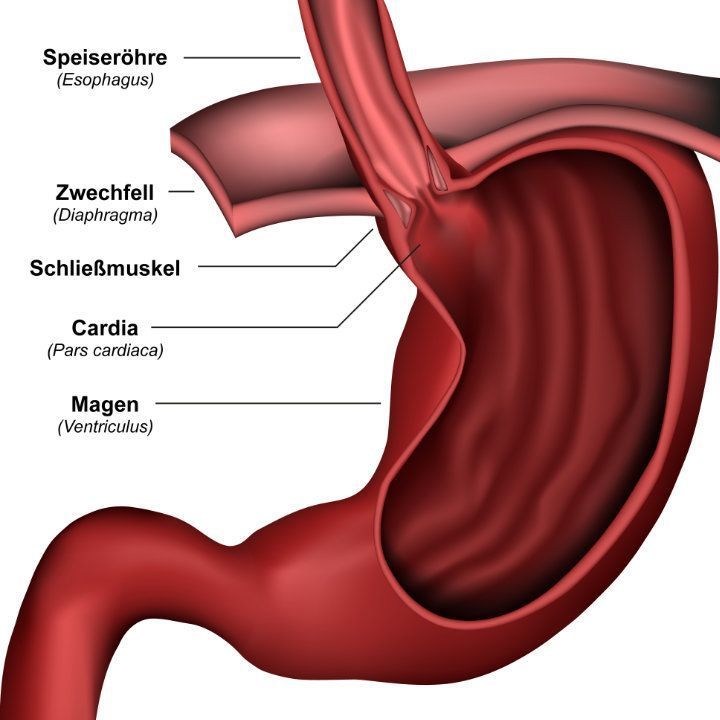
Healthy transition from the stomach to the esophagus. The diaphragm surrounds this junction © bilderzwerg / AdobeStock
Many people with a hiatal hernia suffer from weak connective tissue. If this coincides with severe obesity or pregnancy, the diaphragm becomes overstrained. The risk increases with age.
Reflux is often the result of a diaphragmatic hernia
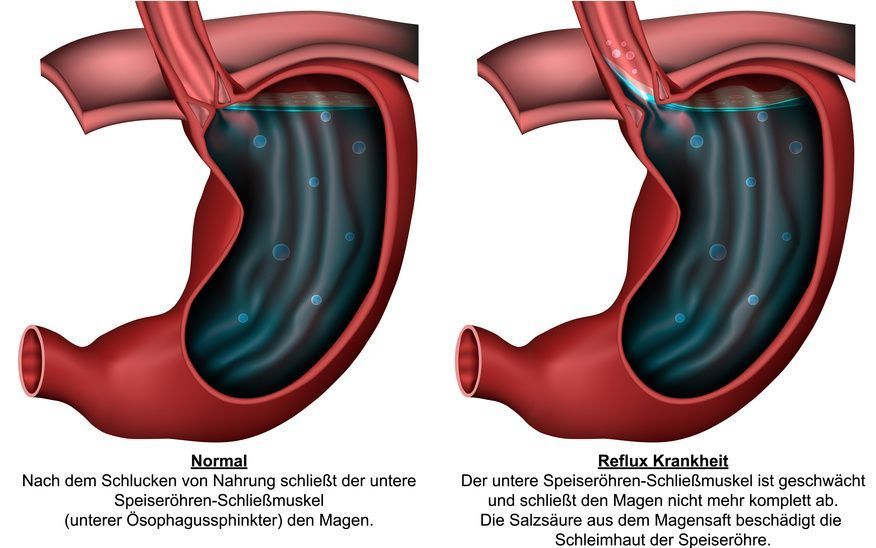
“As a result of a hiatal hernia, the patient often develops reflux. This means that stomach acid rises into the esophagus because the sphincter muscle between the stomach and the esophagus no longer functions properly. A classic symptom of reflux is heartburn, which should be treated,” says Prof. Dr. Heuer, who initially recommends conservative therapy with acid-reducing medications in these cases.
With a prevalence of 10–20% in Western Europe and North America, gastroesophageal reflux disease (GERD) is one of the most common disorders of the upper gastrointestinal tract. If reflux disease persists over a longer period of time, the risk of developing esophageal cancer also increases.
If the patient does not tolerate conservative treatment or if inflammatory changes occur in the esophagus, esophageal surgery must be considered. The reflux surgery, performed using a laparoscopic technique, is carried out at the lower end of the esophagus and at the junction with the stomach, with the goal of preventing stomach contents from flowing back into the esophagus. The most established surgical procedure for reflux is fundoplication. In this minimally invasive procedure, the upper part of the stomach is wrapped around the esophagus like a loop—forming what is called a “sleeve”—which is intended to prevent reflux.
 © bilderzwerg / Fotolia
The LINX® Reflux Management System is a laparoscopic procedure that offers advantages over established sleeve procedures in terms of side effects
“We are fortunate to have magnetic band implants available at our clinic, which are used instead of the standard cuffs. The LINX® implant consists of a small, flexible ring made up of approximately ten to fourteen titanium beads with magnetic cores—which in turn are made of rare earth elements (neodymium-iron-boron)—and is placed around the esophagus,” explains Professor Dr. Heuer.
The band, which is adapted to the circumference of the esophagus, is closed at rest; the small titanium spheres rest against one another, thereby providing resistance against unwanted openings of the sphincter. If pressure increases, the band opens to allow passage, enabling the swallowing process to proceed unimpeded. “The magnetic band is particularly suitable for patients who have a relatively small diaphragmatic hernia. The surgery usually takes three-quarters of an hour and typically proceeds without complications,” explains Professor Dr. Heuer.
The PROSELIS Foundation Hospital
The major advantage of the PROSELIS Foundation Hospital is that it comprises eighteen medical departments spread across two facilities, with 2,000 employees who treat approximately 35,000 to over 60,000 outpatients each year and constitute the largest healthcare provider in the northern Ruhr region. “I hope that we can return to where we were two and a half years ago, before the pandemic. Because of the pandemic, patients very often arrive at our hospital too late. We would like to be able to help them sooner. Fortunately, we’re able to work in an interdisciplinary manner at the Stiftungsklinikum, which should be the case in many more hospitals, as this forms the foundation for today’s highly specialized medicine,” Professor Dr. Heuer concludes our conversation.
“Overall, Germany needs to become more innovative—for example, by providing more support for robotics, since this can lead to much better results,” says Professor Dr. Heuer.
Dear Professor Dr. Heuer, thank you very much for this informative conversation!
You can contact our expert directly via his profile page on the Leading Medicine Guide.
Share this article
Knappschaft Kliniken Gelsenkirchen-Buer
ProfileExpert Interviews
Read next
- Expert interview
Expert interview with Professor Dr Elmar Herbst, PhD
Oct 15, 2026
Patient-centred and personalised knee surgery
Read more - Expert interview
Cardiogeriatrics: Significance and benefits in the context of hospital reform
Sep 21, 2026
Cardiogeriatrics: Significance and benefits in the context of hospital reform
Read more - Expert interview
Expert Interview with Professor Dr. Amadeus Hornemann, MPH
Sep 18, 2026
Prof. Amadeus Hornemann on Precision Medicine in Gynecology: Modern Surgery, New Techniques, Better Quality of Life
Read more