Expert Interviews
Stem Cell Therapies in Joint Regeneration and Modern Medicine

Alexandra Pfitzmann ·
Stem cell therapy is a promising approach in modern medicine that aims to repair or replace damaged or diseased tissue through the targeted use of stem cells. Stem cells are characterized by their ability to differentiate into various cell types and to self-renew, making them a unique tool for treating numerous diseases.
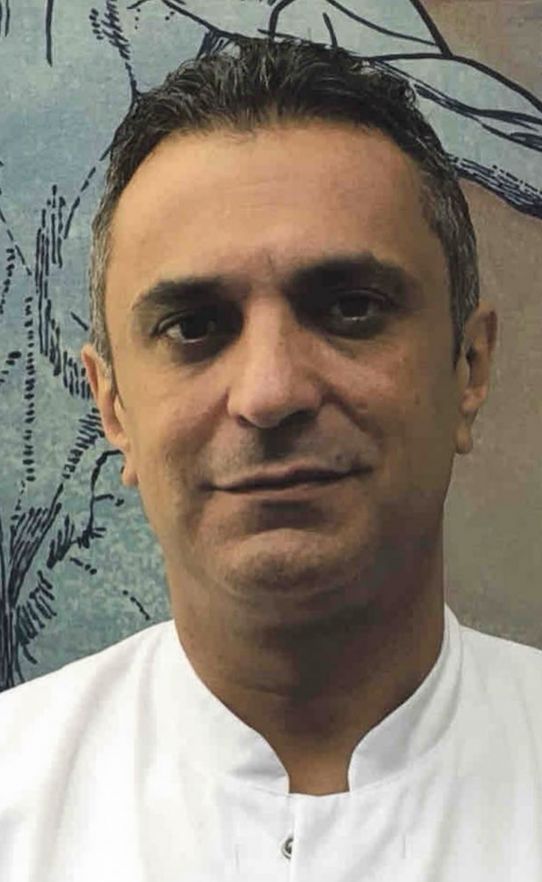
The editorial team at Leading Medicine Guide learned about the applications of stem cell therapy in modern medicine—and specifically in joint regeneration—during a conversation with the sought-after specialist Professor Dr. Aristoteles Kaisidis.
Stem cells are particularly well-suited for repairing or replacing damaged tissue because they possess unique properties that no other cell type has to this extent. For one thing, they can self-renew over a long period of time, producing an infinite number of new stem cells in the process.
This ability to self-regenerate ensures that a long-term reservoir for tissue renewal is available, which is of great importance, particularly in cases of chronic diseases or severe injuries. Second, stem cells have the ability to differentiate, meaning they can develop into various specialized cell types, such as cartilage cells, muscle cells, or nerve cells. This allows them to be specifically deployed to replace exactly the type of tissue that has been lost due to disease or injury.
Another key advantage is their adaptability to different environments and signals within the body. Stem cells respond to chemical, physical, and biological stimuli from their surroundings, enabling them to integrate into existing tissue and support its healing processes.
This property makes them particularly valuable for tissue types that naturally regenerate only to a very limited extent, such as heart muscle, nerve tissue, or joint cartilage. In practice, this means that stem cells not only replace damaged cells but can also actively promote the body’s own repair mechanisms.
The treatment of joint diseases with stem cells differs significantly from conventional therapeutic approaches, as it takes a regenerative approach, whereas traditional methods are primarily symptomatic.
Conventional therapies, such as pain relievers, anti-inflammatory medications, cortisone injections, or physical therapy, are primarily aimed at alleviating symptoms, reducing inflammation, and maintaining joint mobility.
They address the symptoms of the disease, such as pain and stiffness, but do not treat the underlying damage to the joint cartilage or other tissue structures. In contrast, stem cell therapy targets the root cause of the damage directly.
Stem cells—which are harvested, for example, from the patient’s own blood, bone marrow, or adipose tissue—have the ability to differentiate into cartilage cells or other relevant tissue types.
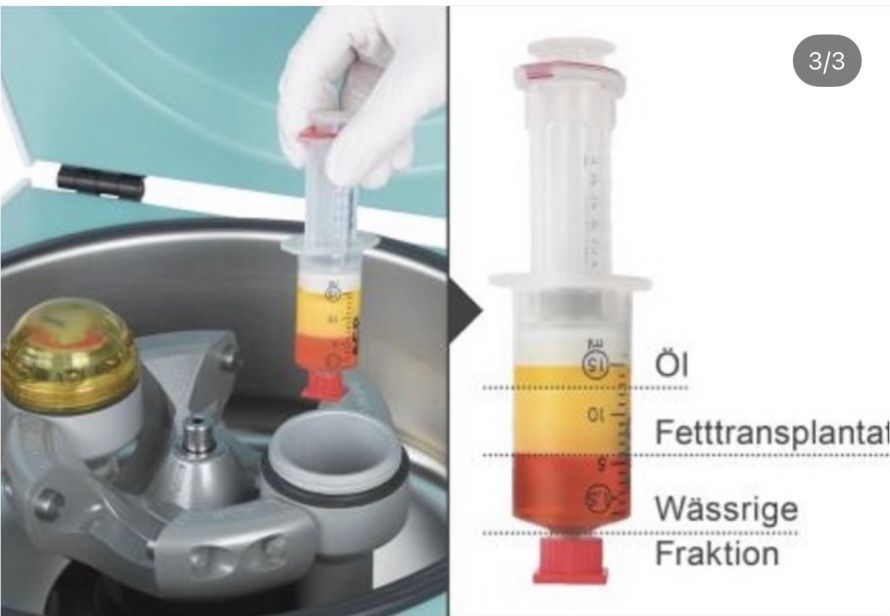
“The stem cells are harvested using a procedure known as liposuction. This involves removing fat from the superficial tissue directly beneath the skin, usually from the abdomen. This is done with syringes, without any incisions, and under local anesthesia only. The extracted fat is then processed in special devices, which takes about 30 to 40 minutes.
During this process, the stem cells are filtered out of the fat—about two to two and a half million. These stem cells are then injected into the affected joint; in our practice, this is often the shoulder, but it can also be the knee or hip. The method can also be used for muscle disorders—or, more generally, it can be applied to soft tissue as well.
Essentially, this is a cell transplant. The entire procedure takes about an hour and a half, after which the patient can go home. “The procedure carries very low risk,” explains Prof. Dr. Kaisidis, but he also points out that there are patients for whom the procedure cannot or should not be used:
“There are indeed some cases in which this procedure cannot be performed. One example was an extreme athlete who had practically no fat in the abdominal area—absolutely none. That’s extremely rare, even among elite athletes. In his case, we had to use fat from the buttocks region instead, which is technically possible, even though we normally prefer the superficial fat directly under the abdominal skin.
That’s because there are about 200 times more stem cells there than in bone marrow, for example. Stem cells from bone marrow are typically harvested for severe diseases such as leukemia, i.e., blood cancer. However, there are clear exclusion criteria for the procedure described here: It should not be performed on severely ill, multimorbid patients, nor on people with known cancers.
Patients taking two different blood thinners are also unsuitable, as hematomas can easily develop in the abdominal region otherwise. These are the main situations in which the treatment is not performed.”
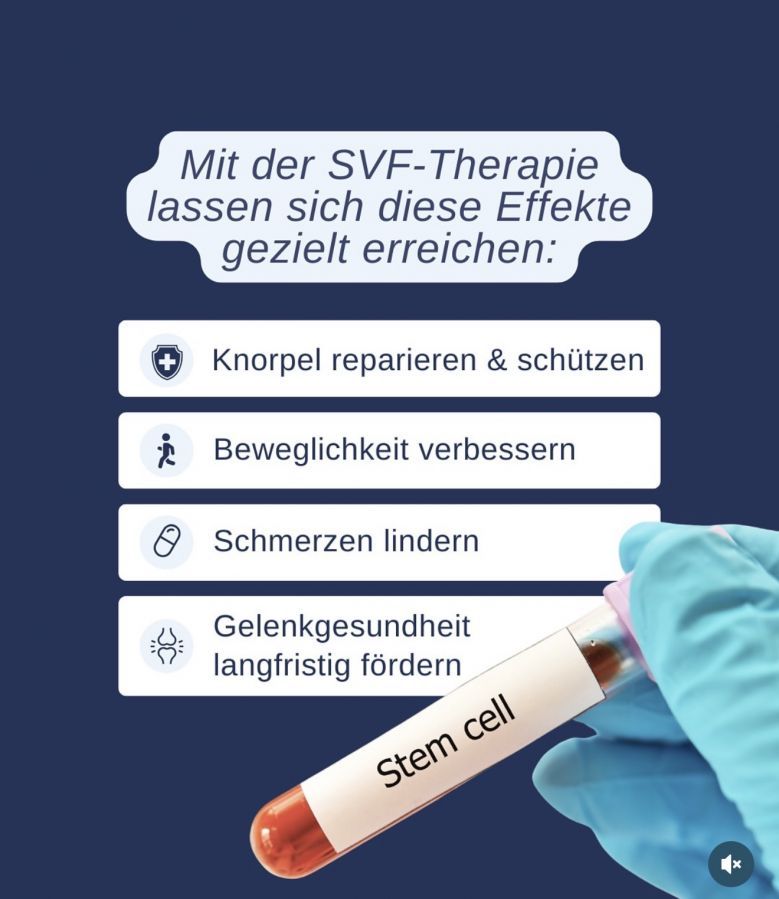
The treatment follows the same principle for all joints—whether the shoulder, knee, hip, or ankle.
“The injected stem cells are delivered directly into the affected joint. These are so-called progenitor cells—that is, cells from which all other cell types in the body can develop. It is precisely this potential that they utilize: they can transform into the cell types that are missing in the damaged tissue. Once in the joint, the stem cells recognize where a defect exists—such as cartilage damage in osteoarthritis, where the original cartilage cells have already worn away or disappeared completely.
Via specific receptors, the stem cells attach to the bone at the affected site and begin to transform into cartilage cells. With a probability of about 72 to 75 percent, a single-layered cartilage layer is thus re-formed. “This procedure therefore offers a way to treat osteoarthritis without joint replacement and to naturally regenerate the worn-out tissue,” says Prof. Dr. Kaisidis, describing the treatment process.
The patient usually notices an improvement relatively quickly—at least the initial effects. However, the actual remodeling process in the joint takes time—it is largely complete after about one to three months.
Prof. Dr. Kaisidis comments: “The newly formed cartilage cells do not last ‘forever’; rather, like all other cells in the body, they are subject to normal wear and tear. The extent of this wear and tear depends heavily on lifestyle: Someone with an office job or moderate physical activity wears down the cartilage significantly less than a tradesperson, a tile setter, or someone who engages in intense sports.
So wear and tear is highly individual, but fundamentally quite normal. Older patients can also benefit from the treatment. An example would be someone in their early 70s with shoulder problems and limited mobility—such patients can often regain enough stability after therapy that, assuming they are in good overall health, they can even play tennis again.
In general, the therapy is suitable for people of all ages: elite athletes, competitive athletes, recreational athletes, manual laborers, or patients with cartilage damage resulting from accidents. In professional sports in particular, a major advantage is that it is not a medication and therefore does not constitute doping. In addition, recovery time is often significantly shortened, which is enormously valuable for athletes and sports teams.”
To perform this type of stem cell therapy, the treating physician does not need additional specialized training in the traditional sense, but must hold an official state license.
“The necessary authorization to perform stem cell therapy is granted by the relevant state authority—such as a state government or a health department. Without this formal application and the corresponding authorization, the therapy may not be performed. There are both ethical and technical reasons behind this authorization.
The goal is to prevent someone from simply seeing the method once and then thinking they can just apply it. There are clear spatial, hygienic, and organizational requirements that must be met. Only when these conditions are demonstrably met and the physician possesses the necessary knowledge is the authorization granted.
If the conditions are not met, the therapy may not be administered. The therapy itself has been around for several years. It has become virtually standard practice, particularly in the United States, and it has also been used for significantly longer and more frequently in many other European countries. It has been available in Germany for about eight to ten years.
Numerous studies worldwide demonstrate the effectiveness and scientific basis of the method. It is therefore not an experimental procedure, but a well-researched form of therapy, with many published papers on the subject in scientific journals.”
Many patients are actually unaware that this form of stem cell therapy even exists. Out of a hundred affected individuals, perhaps one or two know about this option—if any at all.
“In practice, no patient has yet reported having heard of it before. The number of clinics in Germany that offer this procedure is also extremely small. You can literally count them on one hand. And of these few centers, only two—Bonn and us here in Frankfurt—actually have a high volume of cases.
The rest perform the therapy only sporadically, if at all. So there are hardly any truly specialized centers. Nevertheless, there isn’t a huge rush of patients because the method is simply not well known—even in professional sports, where one might expect interest to be particularly high. Here at the Red Cross Clinics in Frankfurt, we perform about 750 to 850 such treatments annually.
“Patients usually travel here from all over Germany,” emphasizes Prof. Dr. Kaisidis, and with that, we conclude our conversation.
Thank you very much, Professor Dr. Kaisidis, for this interesting insight into stem cell therapy!
- Specialist in Orthopedics and Trauma Surgery
- Chief of Shoulder Surgery, Red Cross Clinics Frankfurt
- Specialist and pioneer in modern shoulder surgery
- Areas of expertise: Shoulder arthroplasty, arthroscopy, shoulder stabilization, rotator cuff tears, sports and trauma injuries
- Expert in tendon transfers (latissimus dorsi and pectoralis major transfers) and complex revision surgeries
- Developer and patent holder of the Kaisidis Plate (anatomical mini-plate for tendon ruptures and fractures)
- Use of state-of-the-art minimally invasive surgical techniques, including arthroscopic prosthesis implantation
- Innovator in regenerative medicine: SVF autologous fat-derived stem cell therapy for osteoarthritis and shoulder conditions
- Director of a highly specialized shoulder clinic with state-of-the-art equipment
- Approximately 700 shoulder surgeries and 5,000 outpatient shoulder patients annually
- Sought-after consultant for complex cases and second medical opinions
Share this article
Expert Interviews
Read next
- Expert interview
Expert interview with Professor Dr Elmar Herbst, PhD
Oct 15, 2026
Patient-centred and personalised knee surgery
Read more - Expert interview
Cardiogeriatrics: Significance and benefits in the context of hospital reform
Sep 21, 2026
Cardiogeriatrics: Significance and benefits in the context of hospital reform
Read more - Expert interview
Expert Interview with Professor Dr. Amadeus Hornemann, MPH
Sep 18, 2026
Prof. Amadeus Hornemann on Precision Medicine in Gynecology: Modern Surgery, New Techniques, Better Quality of Life
Read more