Expert Interviews
Expert Interview with Prof. Dr. med. Markus Knupp on High-Precision Care: The Modern Ankle Prosthesis

Alexandra Pfitzmann ·
Professor Markus Knupp, M.D., is an internationally recognized specialist in ankle disorders and surgery and the director of “Mein Fusszentrum AG” in Basel, Switzerland. With many years of experience and several thousand successful procedures to his credit, he has specialized in the treatment of degenerative ankle conditions, particularly ankle osteoarthritis.
His focus is on individually tailored, scientifically sound treatment plans that offer patients the most advanced treatment options available. He uses innovative techniques such as precise 3D planning and patient-specific instruments to achieve an anatomically appropriate and long-lasting solution for advanced osteoarthritis. As a leading foot surgeon, Prof. Dr. Knupp places great importance on striking a balanced approach between joint-preserving measures and surgical interventions.
He pays particular attention to the implantation of artificial ankle joints, which he performs using the latest available technology. In addition to implanting ankle prostheses, he also offers the proven procedure of joint fusion (arthrodesis), which is the appropriate solution in certain cases. He is also skilled in complex conversion surgeries—such as converting a fusion to a prosthesis or vice versa—which require specialized biomechanical expertise. Extensive reconstructive procedures on the ankle joint round out his area of expertise.
At his practice, “Mein Fusszentrum,” in Basel, Prof. Dr. Knupp works with state-of-the-art medical infrastructure and an interdisciplinary team to ensure comprehensive diagnostics, precise surgical planning, and individually tailored postoperative care. As a professor at the University of Basel, he plays a key role in shaping the future of ankle surgery and regularly publishes scientific studies that reflect the current state of the art. This makes him a leading voice for innovative and sustainable solutions to ankle disorders.
The editorial team of the Leading Medicine Guide had the opportunity to speak with Prof. Dr. Knupp about this and learn more.

An ankle replacement is an advanced treatment option for patients suffering from severe osteoarthritis or other ankle conditions. Thanks to innovative technical procedures and custom-fitted implants, it is now possible to significantly improve mobility, reduce pain, and enhance quality of life in the long term. In this context, precise planning and modern surgical techniques play a crucial role in achieving optimal results and enabling a lasting recovery.
An ankle replacement is generally necessary when the joint is so severely compromised by advanced osteoarthritis, serious injuries, inflammatory conditions, or structural damage that conservative treatment is no longer sufficient. Typical causes include chronic cartilage damage, persistent pain, limited range of motion, and increasing joint instability, all of which significantly impair quality of life.

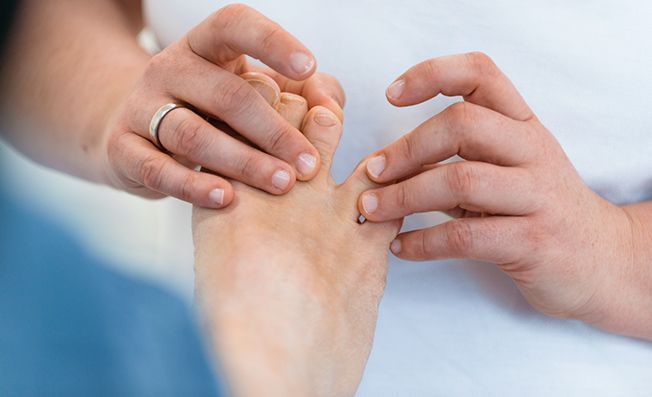
“The causes of osteoarthritis in the ankle joint can be divided into three groups. The largest group, about 80 percent, consists of what is known as post-traumatic osteoarthritis. This means that the condition develops following an injury, such as an accident in which a ligament was torn or an ankle fracture occurred. These injuries are the main cause of osteoarthritis. The second group accounts for about ten percent of cases. These are patients with an underlying condition, such as polyarthritis—a rheumatological disorder—or hemochromatosis, which involves blood disorders and clotting disorders.
Diseases such as psoriasis can also cause osteoarthritis. This group therefore primarily consists of chronic inflammatory or systemic diseases. The third group is referred to as primary osteoarthritis. These are cases in which medical science can hardly identify a clear cause. These patients have neither a known underlying condition nor a previous injury. “It could therefore be genetic factors or other unidentified causes that ultimately lead to osteoarthritis. Although we do not yet know everything about it, in these cases the disease appears to develop simply without a clear trigger,” explains Prof. Dr. Knupp.
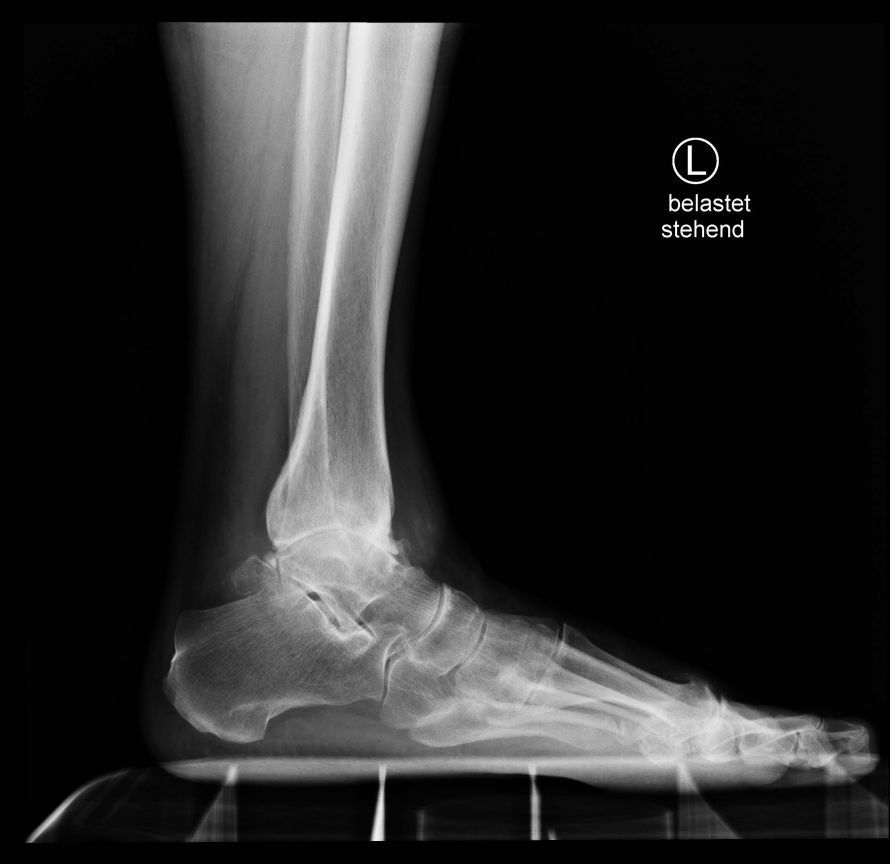
The diagnosis is made through a thorough clinical examination, during which the doctor assesses the joint’s range of motion, pain points, and stability. Imaging techniques, primarily X-rays, are also used to visualize cartilage damage, bone changes, or deformities. If necessary, MRI or CT scans may also be used to better assess the soft tissues and the exact extent of the damage.
“When a patient comes to see us, the diagnostic evaluation begins with a detailed medical history. We determine how the symptoms developed, how long they have been present, and the severity of the impairment. We ask about limitations in daily life, leisure activities, and sports caused by the pain. It’s also particularly important to ask whether the symptoms affect the patient’s professional life or limit their ability to work.
We also inquire whether certain types of shoes can no longer be worn—in Switzerland, patients often report that they can barely participate in sports anymore, but skiing is still possible because they use stiff ski boots. Such details help us better understand the extent of the strain. It is also relevant to us whether there have been any past accidents, injuries, or surgeries that might have contributed to the symptoms. We determine whether there have been previous infections, ligament surgeries, or wound-healing issues. We also inquire about health factors from childhood, such as misalignments, flat feet, or high arches. Additionally, we’re interested in what measures the patient has already taken—whether medication, injections, ointments, physical therapy, or other methods—and whether these have helped.
During the clinical examination, we take a close look at the foot: Is the skin intact? Since the skin must be closed again during a planned ankle joint replacement, this is very important. We also check for signs of infection, particularly in cases where previous surgery was performed less than two to three years ago, as there is a risk that bacteria may still be present in the tissue. Joint stability is another key focus. Is the joint stable? Are the ligaments intact?
If the ligaments are weak or damaged, they may need to be corrected during the surgery. We test the ligaments and tendons—how do they feel? We also determine the leg’s alignment: Is it straight or crooked? Misalignment can lead to uneven wear, similar to a tire mounted at an angle, which compromises the prosthesis’s longevity. We can also tell this by looking at the shoes: If they’re more worn down on one side, that’s an indication of an axial misalignment,” explains Prof. Dr. Knupp, before discussing the necessary imaging:
“Of course, imaging is also part of the diagnostic process. We take X-rays with the patient standing because the foot looks much more realistic in this position than when lying down or sitting. It can sometimes be difficult for patients to understand this, since they’ve often already had X-rays taken by their primary care physician, but the standing images are necessary to assess the actual conditions. In addition, we take a full-leg X-ray to rule out possible misalignments in the knee or hip and to ensure that the leg is aligned along the ideal axis. If abnormalities such as cysts or other anomalies are visible in the joint, we supplement the diagnosis with an MRI or a CT scan. CT scans, in particular, have become very important to us, especially in complex cases, as they enable 3D planning. For this, we need a CT scan of the foot, the upper and lower ankle joints, and the knee joint. Using these images, we can create a patient-specific plan and prepare for the surgery optimally.”
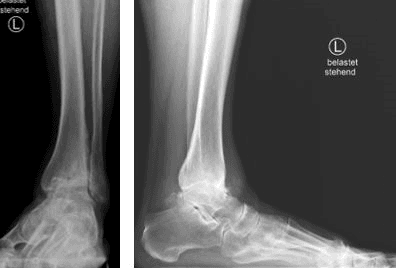
For an ankle prosthesis to be successfully implanted, several prerequisites and criteria must be met to ensure optimal function and long-term durability. The bones in the ankle region must be stable and sufficiently strong to allow the implants to be securely fixed in place. This means that there must be no severe bone loss, bone atrophy, or osteoporosis; otherwise, there is a risk that the prosthesis will become loose or that the implant cannot be adequately anchored.
Prof. Dr. Knupp comments on this: “When we have patients for whom we cannot implant a prosthesis, there are usually specific reasons for this. In particular, when a ligament complex has also been reconstructed but we recognize that this will not lead to success, we sometimes consider joint fusion as an option. These cases are characterized by very poor bone quality. You often see bone with huge holes in it. In such cases, there are two options: Either we attempt a two-stage bone reconstruction—for example, with a bone graft—or we opt directly for joint fusion.
Another reason we do not implant a prosthesis is an existing infection. In such cases, it is possible to treat the infection first and then still implant an ankle prosthesis. Nerve function is also an important factor. Patients with impaired nerve function—particularly diabetics with neuropathy—often experience altered sensation in the foot. If sensation in the foot is severely impaired, we are more cautious in our decision-making and tend to opt for fusion rather than a prosthesis to avoid complications. With advances in technology, particularly 3D planning, the surgical procedure has become significantly more customized. In the past, off-the-shelf prostheses were typically used—that is, standard models that were assembled. Today, there are still various prosthesis models consisting of a multitude of components that can be individually combined—there are certainly over 30 variants.
However, the greatest challenge with ankle joint prostheses lies in achieving precise implantation, as the joint is very small. Even a deviation of just a few degrees can impair function. This is where 3D planning comes in, as computer-assisted techniques allow us to design the surgical approach and implantation with greater precision. Although the prostheses are still standardized, individualized planning using 3D technology enables a significantly better fit and greater accuracy during surgery. For the ankle joint, however, the customization of the prosthesis plays a secondary role, as the conventional models already work very well for this application.”

The patient’s overall health plays an important role. The body must be able to tolerate the surgery well and cope with the subsequent rehabilitation phase. This applies above all to older or multimorbid patients with underlying conditions such as heart, lung, or other chronic diseases.
Robotics is currently of no interest whatsoever for the ankle joint because it simply does not offer a reliable solution in this area. This may seem unusual at first glance, since the ankle is a very small and delicate joint where one might have thought a robot could offer advantages due to its precision.

“That is precisely the problem: Robot-assisted surgery requires reference points to determine the exact position in space. With the knee or hip, you can insert large pins that serve as fixed reference points and use 3D sensors to track their positions. With the foot, however, it’s completely different. There are 26 small bones here, all of which push against one another and move. There are no reliable reference points because the bones are constantly shifting relative to one another.
The only reliable reference point would be the tibia or possibly the fibula, but the bones beneath them move in all directions, making precise control impossible. For this reason, the use of robotics for the ankle joint is not feasible at the moment and is unlikely to be developed in the coming years. “The complexity is too great, and the industry is not currently working in this direction because it simply isn’t a practical solution,” explains Prof. Dr. Knupp, describing the progress made in recent years:
“The development of ankle prostheses has changed significantly in recent years, especially since around 2018. About ten years ago, when the first generation of these prostheses was implanted, the results were still mixed. Many patients—about one-third—still reported significant discomfort even after surgery. Today, with the new implants, the results have improved significantly. Patient satisfaction and the longevity of the prostheses have developed comparably to those of knee prostheses, and in some cases have even slightly exceeded them.
This is primarily due to advances in the precision of implantation. Improved techniques have made it possible to place the prosthesis more precisely, which has significantly improved outcomes. While the material of the prostheses has also been optimized, the major progress lies more in the improvement of surgical techniques and a better understanding of comorbidities. The ankle joint is a complex, so-called “sandwich” between the foot, the subtalar joint, and the knee joint above it—all of which must be taken into account in terms of their function and biomechanics to ensure that the prosthesis functions optimally. “Increased knowledge of the biomechanics and the interrelationships of these joints has contributed to prostheses delivering significantly better results today.”
Various risks and complications can arise during ankle replacement surgery; however, these can be minimized through careful planning and professional execution.
“The main risk associated with ankle surgery is primarily infection. This poses a greater problem than with knee or hip surgeries because the soft tissue in that area is very thin, and the foot has often already been compromised by previous injuries or surgeries. Many patients have a history of accidents or previous surgeries, which further weakens the skin and increases the risk.
Over the past ten years, however, we have learned a great deal about improving infection prevention. While nearly five percent of patients still developed an infection after ankle replacement surgery in 2012, that figure has now dropped to less than one percent. This is comparable to the standard risks associated with knee or hip surgeries. By adapting surgical techniques and gaining a better understanding of how infections develop, we have been able to significantly minimize these risks. “So these are hardly unusual complications anymore; rather, they are the classic, expected risks associated with such procedures,” emphasizes Prof. Dr. Knupp.
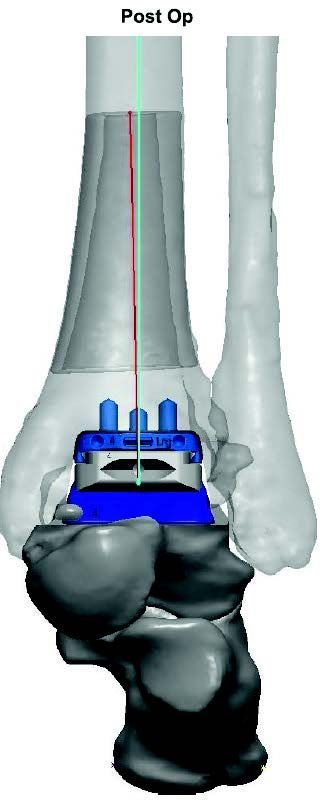
Postoperative care following ankle replacement surgery is crucial for promoting optimal healing and ensuring the long-term stability of the implant. The surgery is initially followed by close monitoring to check the wound, minimize the risk of infection, and manage pain as effectively as possible.
“Follow-up care after ankle surgery is definitely a long-term process. Patients must wear a special orthosis—a so-called boot—for the first six weeks after surgery. They are allowed to bear full weight and walk without crutches as soon as they are able to do so. Wearing the orthosis is a significant advantage over fusion or a traditional orthosis, as it makes follow-up care much less complicated. Nevertheless, caution is advised: During the first six weeks, care must be taken to avoid improper weight-bearing or excessive stretching of the ligaments.
There were considerations to shorten the duration to four weeks, but this did not improve the results. When the orthosis is removed after about six weeks, follow-up care typically continues. Patients are re-examined after one year, and we generally stay in touch, even if treatment is taken over by local orthopedic surgeons. They send us the X-rays, and I often call the patients myself to check if everything is okay and how they’re feeling. We’re always on standby in case problems arise, and in such cases, the local doctors take X-rays again and send them to us. “For patients who live farther away, we usually see them after half a year to a year, and we also recommend follow-up appointments after five and ten years to monitor their progress,” says Prof. Dr. Knupp.
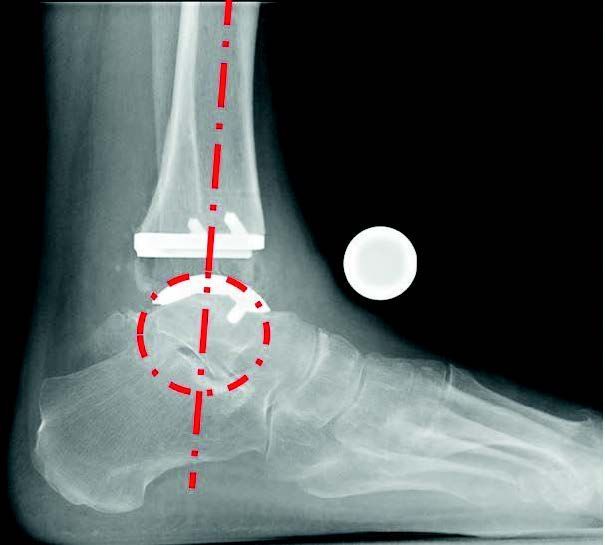
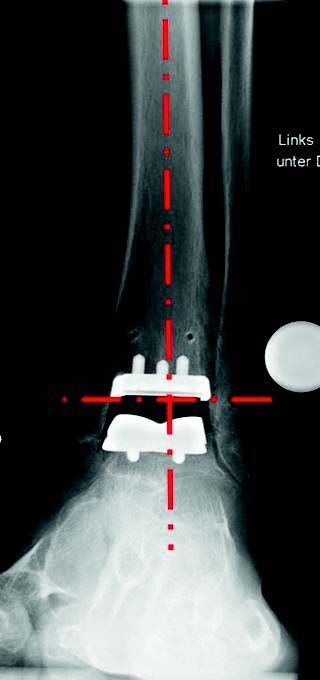
With earlier prostheses—that is, the older models—durability was rather limited. It was estimated that after about ten years, around 80 percent of the prostheses were still functioning more or less well, while about one-fifth had to be removed. The new prostheses, on the other hand, are designed to last approximately 15 to 20 years.
Prof. Dr. Knupp explains: “I personally know patients who have had their prostheses for over 20 years and still have no problems. This is comparable to the results for knee and hip replacements, although we generally see even better long-term results with hip and knee joints. Hip replacements are among the most successful surgical procedures of all. With ankle replacements, the results are good, but not quite as reliable as with hip or knee replacements. If symptoms recur after twelve years—for example, due to loosening or other problems—a patient can certainly expect to undergo revision surgery.
Fortunately, we now have the option of implanting what are known as revision prostheses. In this procedure, we remove the old prosthesis and insert a new one, sometimes with fusion if no other solution is possible. Ideally, however, a revision prosthesis is implanted, which—thanks to modern technology, particularly 3D planning—can be done very precisely and efficiently. Planning with 3D technology makes it much easier to assess the situation, shortens the duration of the surgery, and leads to a better outcome. Of course, it is also possible to “reactivate” a joint that was previously fused. There are patients who suffered severe accidents 20 years ago, resulting in joint fusion, and who now wish to reverse the fusion and have a prosthesis implanted. “That, too, is possible these days,” he says, and then explains the range of activities available to a patient who has undergone surgery:
“A patient with an ankle prosthesis can generally resume sports, though certain activities are more highly recommended. Particularly with regard to the strain on the joint, we advise favoring doubles matches in sports like tennis—that is, athletic activities where the distances covered are shorter. However, experience shows that many patients—especially when they’re pain-free—don’t always strictly follow these recommendations and also participate in other sports. Tennis is generally possible, but we advise against it because the forces on the joint are too great.
Skiing is also possible, but snowboarding is generally not recommended, as the stress on the joint is too high. Hiking is usually not a problem. Prolonged, intense jogging—such as marathon running—is hardly realistic and is generally not recommended. Light interval training or moderate running, on the other hand, is feasible. As for the timeline: After about three to four months, longer hikes and similarly moderate activities are possible again. The final outcome—what the patient can achieve after the healing phase and rehabilitation—can usually be assessed after one year, though sometimes not until one and a half years. The actual rehabilitation period is therefore quite long—in most cases, patients need between three and six months to regain most of their functions.”
Thank you very much, Professor Dr. Knupp, for this detailed explanation!
Share this article
Expert Interviews
Read next
- Expert interview
Expert interview with Professor Dr Elmar Herbst, PhD
Oct 15, 2026
Patient-centred and personalised knee surgery
Read more - Expert interview
Cardiogeriatrics: Significance and benefits in the context of hospital reform
Sep 21, 2026
Cardiogeriatrics: Significance and benefits in the context of hospital reform
Read more - Expert interview
Expert Interview with Professor Dr. Amadeus Hornemann, MPH
Sep 18, 2026
Prof. Amadeus Hornemann on Precision Medicine in Gynecology: Modern Surgery, New Techniques, Better Quality of Life
Read more