Expert Interviews
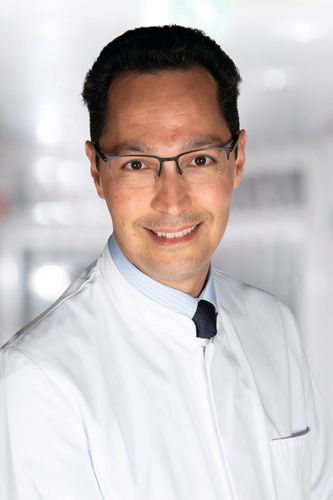
Prof. Michael K. Stehling: “An MRI scan is the most reliable diagnostic method for prostate cancer!”

Claudia Dechamps ·
“I want to provide excellent medical care!” says Prof. Dr. med. Dr. phil. Dr. med. habil. Michael K. Stehling, who has earned a reputation in his field that extends far beyond the country’s borders: Especially when it comes to prostate issues, he is considered exactly the right specialist. His high level of expertise is no accident—Professor Stehling has received extensive national and international training. Among other roles, he served as a Clinical Fellow at Harvard Medical School in Boston, Associate Professor of Radiology at Boston University, and Visiting Scholar at the University of California, Berkeley; he also worked as a research associate with Sir Peter Mansfield, Professor of Physics and winner of the 2003 Nobel Prize in Medicine. In 2010, Prof. Stehling founded the Prostate Center in Offenbach, now known as the VITUS Private Clinic. The center is regarded as a global leader in the minimally invasive treatment of prostate cancer, particularly using the IRE/NanoKnife® procedures.
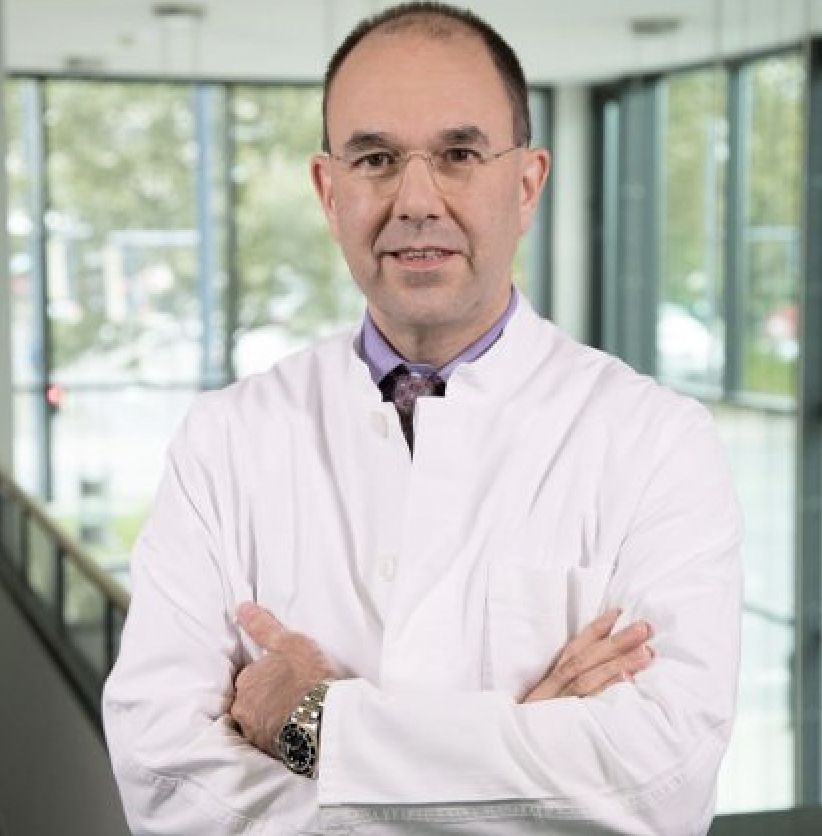
Leading Medicine Guide: Professor Stehling, over ten years ago you founded the Prostate Center in Offenbach, which is now called the VITUS Prostate Center. Has men’s awareness of prostate cancer and screening changed over the past ten years?
Prof. Dr. Michael Stehling: The answer to that is complex. Generally speaking, more and more men—and their wives—are seeking information online, regardless of medical recommendations. And that’s a good thing. Because what’s offered as the standard for prostate cancer screening in Germany is medieval: Only the digital rectal exam—that is, the palpation—is covered by health insurance. And, to put it simply, it’s useless. There are studies showing that 97 percent of all urologists’ index fingers are too short to palpate the entire prostate—and no study demonstrating any survival benefit from the digital rectal exam.
Leading Medicine Guide: That’s not good news…
Prof. Dr. Michael Stehling: Yes, and the PSA test alone causes more problems than it solves. Because in most cases, an elevated PSA level isn’t caused by prostate cancer, but by other factors, such as inflammation. However, when PSA levels are elevated, tissue samples are taken—in the standard procedure, through the rectum, i.e., via transrectal ultrasound-guided biopsy—which results in the deaths of one to two out of every thousand men due to antibiotic-resistant bacteria. As a result, a ban on TRUS biopsies is currently being discussed in some countries.
Leading Medicine Guide: Yet there is a highly informative diagnostic procedure that is rarely used in this country.
Prof. Dr. Michael Stehling: Yes. Magnetic resonance imaging (MRI) of the prostate. Prostate MRI makes it possible to detect or rule out clinically relevant prostate cancers with over 90 percent certainty. And it has been doing so for about 15 to 20 years. Experts are now certain that prostate MRI can prevent many unnecessary biopsies. Studies in England and the U.S. clearly demonstrate the superiority of prostate MRI over the PSA test and biopsy. And prostate MRI is even more cost-effective than conventional screening tests for prostate cancer.
Magnetic resonance imaging (MRI) has the advantage over other imaging techniques, such as ultrasound, in that it can produce precise, high-resolution images of the prostate and surrounding organs with excellent multiparametric soft-tissue contrast. MRI is therefore an excellent diagnostic method for detecting changes in the prostate at an early stage and classifying them accurately—in particular, distinguishing between benign changes and cancer.
In addition, the examination is completely painless and involves no radiation exposure. The interior of the body is visualized layer by layer using magnetic fields.
Leading Medicine Guide: You worked for some time as a research assistant to Sir Peter Mansfield, who was awarded the Nobel Prize in 2003 for the development of magnetic resonance imaging. Today, you are one of the world’s most experienced experts in the field of clinical MRI. However, MRI is only slowly gaining acceptance in Germany as a diagnostic method for the early detection of prostate cancer.
Prof. Dr. Michael Stehling: MRI examination of the prostate has been the most precise and informative diagnostic method for prostate cancer for many years, including in the field of early detection. We’ve been doing this for 15 years and maintain that there’s no way around it if you want to provide good medical care. Meanwhile, MRI diagnostics for the prostate have finally made it into medical guidelines—albeit to a limited extent—so that established methods such as digital rectal examination, ultrasound, and biopsy will remain in use for a while longer—some people simply don’t want to give them up.
Of course, MRI can also provide precise images of all other tissues and organs in the body, such as the spine, joints, and brain, as well as the heart and blood vessels. In breast cancer screening for women, MRI mammography has far surpassed X-ray mammography—which is still used for breast cancer screening in Germany—and is the equivalent of prostate screening for men.
In our radiology department, we are able to offer “tailored” MRI examinations based on the specific clinical question at hand in order to arrive at the correct diagnosis. As far as I can tell, this is unique to our department.
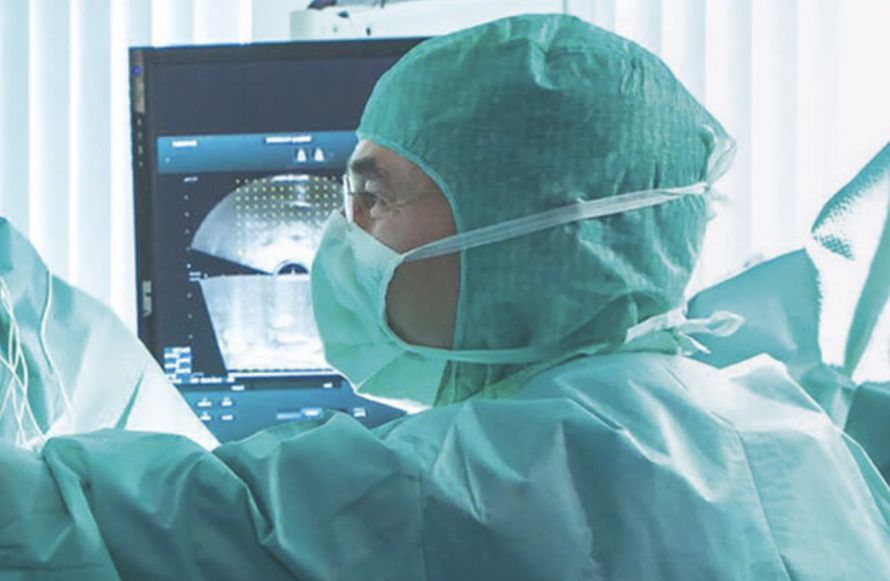
Leading Medicine Guide: You have a Ph.D. in physics and two in medicine. To become a research assistant to Sir Peter Mansfield, you really have to know exactly what you want, don’t you?
Prof. Dr. Michael Stehling: I’m a very curious person, and of course, as a young man, I was also very ambitious. After completing my studies in medicine and physics in Frankfurt, the most important step for me was to leave Germany. Once I arrived in England, I suddenly understood how universities were really supposed to function and what I had missed out on in Germany—especially personal mentorship. I was initially fortunate to be supported in Manchester by Prof. Ian Isherwood. He then introduced me to Sir Peter Mansfield, the physicist and future Nobel laureate in Medicine. Peter Mansfield then took a keen interest in me and offered me a position as a doctoral student. This allowed me to work with him as a research assistant on the technical development of magnetic resonance imaging. Peter Mansfield is, alongside Paul Lauterbur, one of the two inventors of magnetic resonance imaging. I also greatly enjoyed this unique Anglo-American academic environment while working in the U.S., where I was at Harvard Medical School, Boston University, and most recently at UC Berkeley.
Leading Medicine Guide: At the VITUS Prostate Center, you not only use state-of-the-art diagnostic methods, but you also treat patients with specialized procedures, one of which is IRE, also known as the NanoKnife® procedure. Could you explain that in a bit more detail?
Prof. Dr. Michael Stehling: IRE—irreversible electroporation—also known as NanoKnife® after its manufacturer—is a procedure that allows for the treatment of cancer in a way that is very gentle on tissues and organs. It was invented a good 15 years ago by Prof. Boris Rubinsky at the University of California, Berkeley, in the U.S. Boris and I have since become good friends. Our joint research and development in the field of electroporation—which has given rise to several medical technology startups—has helped us thoroughly understand IRE and successfully apply it to the treatment of prostate cancer. With over 1,500 patients successfully treated, we at the VITUS Private Clinic are now global leaders in this field.
To understand why a new method for treating prostate cancer is needed at all, one must look at the established methods: surgery and radiation therapy. Not only are these methods ineffective—meaning they can cure prostate cancer in only a very small number of cases—but they also have severe side effects that irreversibly impair quality of life. In radical prostatectomy (RPE), the entire prostate is surgically removed. Unfortunately—to put it bluntly—a lot gets damaged in the process: After surgery, up to 50 percent of all men experience incontinence—they lose control of their bladder—and 70 to 80 percent become impotent—they lose the ability to achieve an erection.
In contrast, the electroporation procedures we use at the VITUS Private Clinic—such as IRE—cause virtually no side effects. IRE removes the cancer with a reliability comparable to that of surgery. However, electroporation procedures also trigger additional immune responses that stimulate the body’s own immune system to identify and destroy cancer cells throughout the body.
IRE is an interventional procedure, meaning it does not require surgery. Thin electrodes are simply inserted into the prostate through the pelvic floor, through which electrical impulses are then delivered to the tissue. These impulses destroy cells in a targeted and selective manner. Other tissue components that do not consist of cells—such as fibers—remain intact. However, there are different types of electroporation procedures: IRE stands for irreversible electroporation, which means that the treated cells are irreversibly—that is, permanently—destroyed. Reversible electroporation (RE), on the other hand, only temporarily creates pores in cell membranes and does not kill the cells. However, these pores can be used to deliver medications into the opened cells. This is the basis of electrochemotherapy (ECT), which we also use. It is even more selective and gentler than IRE.
With all electroporation treatments, there is a lower likelihood of side effects than with surgical removal of the prostate, since essential anatomical structures—such as the sphincter muscle and the neurovascular bundle responsible for erections—are not damaged. At VITUS, we have treated over 1,500 patients, including those with advanced tumors, and have never caused incontinence; the impotence rate is less than ten percent.
Leading Medicine Guide: That sounds like a good procedure. In the treatment of breast cancer, for example, the entire breast is no longer removed in most cases today. Up to what stage can you treat prostate cancers with IRE?
Prof. Dr. Michael Stehling: We can use it to treat small carcinomas, but just as effectively for inoperable T4 tumors that have already spread to surrounding organs. Precisely because of this broad treatment spectrum and the more than 1,500 patients we have successfully treated to date, we are recognized worldwide as leaders in this field. For example, Prof. Mark Emberton from London—one of the world’s leading urologists—regularly refers patients to us who can no longer be treated in London.
IRE is also highly effective for treating recurrences following radical prostatectomy and radiation therapy. After prior radiation therapy, the tissue becomes so fragile that further surgical interventions are virtually impossible. IRE often serves as a solution here, allowing recurrences within the radiation field to be treated with virtually no side effects. This also applies to prostate cancer recurrences following brachytherapy or HiFU (High-Intensity Focused Ultrasound) treatment.
Another general advantage of IRE is that it can be repeated as often as needed. This is not possible with standard treatments for prostate cancer, such as surgical removal of the prostate, radiation therapy, and hormone deprivation therapy: each of these can only be used once.
Leading Medicine Guide: A large part of your work involves providing comprehensive patient education; you spend one to two hours with each patient. This is because study results on prostate cancer show that—in short—conventional therapies such as surgery and/or radiation therapy rarely increase life expectancy in cases of low-aggressive prostate cancer and, according to available statistics, do not increase it at all for many men with aggressive prostate cancer. At the same time, conventional treatments have serious side effects such as erectile dysfunction, impotence, and incontinence.
Prof. Dr. Michael Stehling: In my view, a great deal of education is needed here. Prostate cancer is extremely complex. And unfortunately, I find time and again that even the medical community at large often has little understanding of it, let alone of medical advances in diagnostic and treatment methods.
These problems mean that most patients are either inadequately or incorrectly informed about prostate cancer. Some are panicking because they’ve been told that once prostate cancer is diagnosed, the prostate must be removed immediately and without delay to prevent metastases and death. That is, of course, complete nonsense. Prostate cancer develops extremely slowly. Most men carry prostate cancer within them for five to ten years before it is detected. The most important recommendation for men diagnosed with prostate cancer is this: You have time—usually months—to thoroughly inform yourself. In fact, most men with prostate cancer die from heart attacks, strokes, or other cancers—but not from their prostate cancer! And for men with low-grade cancer, treatment is usually not necessary at all. The probability of dying from a Gleason 6 carcinoma within the next fifteen years is less than one percent!
So there is a lot for those affected to learn and decide. This should not be rushed. And in addition to methods like IRE, there are now a number of advanced treatment options available, such as photodynamic therapy, lutetium-177 radioligand therapy, or CyberKnife radiation therapy (not to be confused with NanoKnife®), as well as immunotherapy approaches that, depending on the situation, enable effective and gentle treatment. In most cases, however, patients must pay for these newer therapies out of pocket. Private health insurance companies, for example, are only slowly beginning to cover IRE treatment.
Leading Medicine Guide: So, with the VITUS Prostate Center and the VITUS Private Clinic, you can practice the kind of medicine that is close to your heart.
Prof. Dr. Michael Stehling: Exactly—I want to provide good medical care. To do that, you have to be professional and always stay up to date with the latest scientific developments. But you also have to be responsive to the patient—to their level of understanding, their worries, and their concerns. And then you have to do what’s best for the patient, develop the right treatment plan for them, and treat them using the best possible methods.
We would like to express our sincere thanks for these highly interesting insights into such an important field of medicine—and for the glimpse into the innovative solutions that modern high-performance medicine already offers us today. Anyone wishing to contact Prof. Dr. med. Dr. phil. Dr. med. habil. Michael K. Stehling directly can easily do so via his profile page in the Leading Medicine Guide.
Share this article
About the medical author
Claudia Dechamps
Editor
Claudia Dechamps – medical author: expert articles, professional insights and medical knowledge in the Leading Medicine Guide.
More about the medical author →Expert Interviews
Read next
- Expert interview
Cardiogeriatrics: Significance and benefits in the context of hospital reform
Sep 21, 2026
Cardiogeriatrics: Significance and benefits in the context of hospital reform
Read more - Expert interview
Expert Interview with Professor Dr. Amadeus Hornemann, MPH
Sep 18, 2026
Prof. Amadeus Hornemann on Precision Medicine in Gynecology: Modern Surgery, New Techniques, Better Quality of Life
Read more - Expert interview
Expert Interview with Professor Dr. Konstantinos Anagnostakos
Sep 15, 2026
Prof. Anagnostakos on Painful Knee Replacements
Read more