Expert Interviews
Modern Treatment for Rectal Cancer: An Expert Interview with Prof. Dr. med. Robert Rosenberg

Alexandra Pfitzmann ·
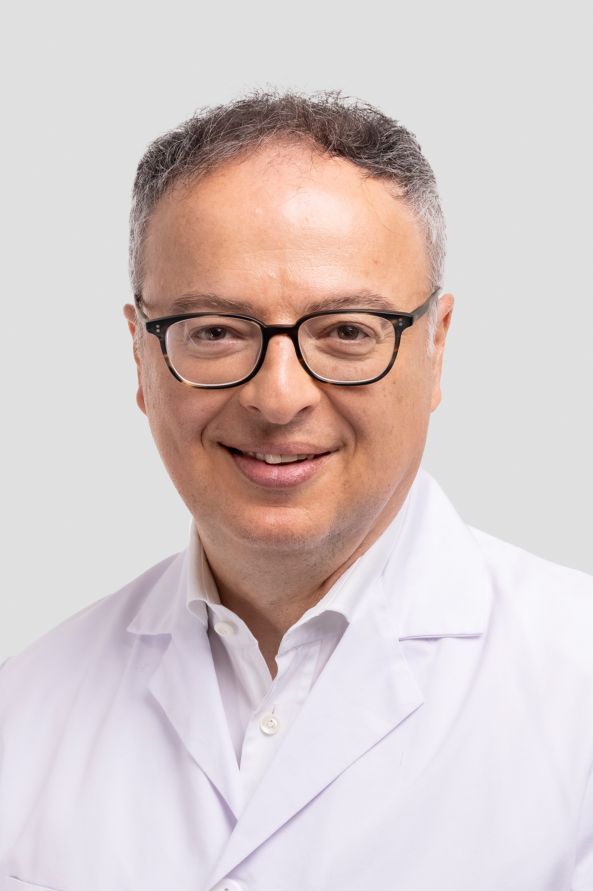
Professor Robert Rosenberg, M.D., is an expert in visceral and oncological surgery and serves as chief of the Department of General and Visceral Surgery at the Baselland Cantonal Hospital. In addition, he is the director of the Center for Abdominal Health and heads the certified colorectal cancer center there, which is one of the leading facilities in Switzerland. As a senior colorectal surgeon with extensive experience in oncological surgery, he has proven expertise in the treatment of malignant diseases of the gastrointestinal tract.
Prof. Dr. Rosenberg completed his training at the Klinikum rechts der Isar in Munich, as well as at renowned hospitals in the United States, which underscores his well-founded, internationally oriented surgical expertise. His range of treatments covers the entire field of general and visceral surgery, with a particular focus on minimally invasive surgery, tumor surgery, gastric surgery, and colon and rectal surgery. He is also regarded as an experienced surgeon in the region in the field of robot-assisted surgery using the Da Vinci system.
The decision to perform surgery and the procedures themselves are based on current scientific standards as well as national and international guidelines, always tailored individually to the needs of each patient. The surgical department in Liestal and at Bruderholz, right next to Basel, offers comprehensive care at the highest medical level thanks to its broad range of services and a well-coordinated interdisciplinary team.
Prof. Dr. Rosenberg provides further insights into his work and his commitment to colorectal health in a follow-up interview with the editorial team of the Leading Medicine Guide, this time focusing on modern therapies for rectal cancer.
Rectal cancer, a malignant tumor of the rectum, most often develops from benign changes in the mucous membrane, such as adenomas or polyps, which can progress to cancer over the course of several years. The causes of this degeneration are varied. In addition to genetic factors, such as a family history or hereditary conditions like Lynch syndrome or familial adenomatous polyposis, lifestyle factors and the environment also play a significant role.
Professor Dr. Rosenberg explains this at the beginning of our conversation: “The term ‘rectal carcinoma’ is not very familiar to the general public. The terms ‘rectal cancer’ or ‘cancer of the rectum’ are more commonly known. Ultimately, however, we are talking about the same condition: a malignant tumor of the intestine affecting the last 16 centimeters—measured inward from the anus. We group everything located in this section under the term ‘rectal cancer’ and treat it accordingly. The rest of the intestine—that is, the section located further up—falls under the category of colon cancer, which is what is traditionally understood as colorectal cancer. The causes of rectal cancer are varied. Much is still not fully understood, but we know that our Western lifestyle plays a major role. A diet low in fiber and high in fat, with a lot of red meat, has been shown to increase the risk. Lack of exercise, obesity, regular alcohol consumption, and smoking are other known risk factors. Genetic factors also play a role. We estimate that about 10 to 15 percent of patients have a genetic predisposition. While we are aware of some specific gene mutations, there are also genetic variants whose exact effects are not yet fully understood. Chronic inflammatory bowel diseases such as ulcerative colitis also increase the risk.”
Symptoms usually do not appear until the disease has reached an advanced stage. This is what makes rectal cancer so insidious. “In the early stages, the disease usually presents with few symptoms, which underscores the importance of screening. Colonoscopy is the most important procedure here; it is recommended in Switzerland, as well as in Germany, to detect the disease in its early stages. When symptoms do appear, they are usually classic warning signs such as blood in the stool, changes in bowel habits—for example, alternating between diarrhea and constipation or pencil-thin stools—unintentional weight loss, fatigue, abdominal pain, or bloating,” explains Prof. Dr. Rosenberg, outlining how the diagnostic process works and which age groups are most likely to be affected:
“The diagnostic process involves several steps. It usually begins with a colonoscopy. During this procedure, the tumor is located and visualized, and tissue samples can be taken. Once the tumor has been detected, the next step is to determine how far the disease has progressed. This involves imaging techniques such as computed tomography (CT) to assess metastases—for example, in the lungs or liver—magnetic resonance imaging (MRI), or even an endorectal ultrasound to assess the extent of the rectal tumor. Today, molecular genetic diagnostics are also part of the standard evaluation, because certain markers can provide insights into the optimal treatment. As far as age is concerned, rectal cancer is typically a disease of older people—we most commonly see it in people aged 70 and older. Unfortunately, however, there are alarming indications that an increasing number of younger people—those under 50—are also being affected. This makes it clear that no one is automatically “too young” for this disease. The causes of this are not yet fully understood, but I personally attribute it largely to changes in dietary habits—and to external factors that we often cannot directly influence. “Many people today hardly take the time to prepare fresh meals anymore; they quickly turn to processed foods, which are often not very beneficial to their health.”
Neoadjuvant therapy plays a central role in the modern treatment of rectal cancer, particularly for locally advanced tumors in the middle and lower rectum.
“Treatment strategies for rectal cancer are significantly more complex than those for classic colon cancer. While in the latter case, surgery is usually performed immediately in a non-metastatic situation, the focus with rectal cancer—especially for locally advanced tumors—is often initially on what is known as neoadjuvant therapy. This means that a combined preoperative treatment with radiation and chemotherapy is administered before any potential surgery. This approach has become the standard, particularly for medium-sized tumors that were not detected as early-stage findings through screening but have already shown some local spread. The goal of this neoadjuvant therapy is to shrink the tumor before surgery or, ideally, to make it disappear completely. In about 30 to 40 percent of cases, modern treatment protocols now make it possible to achieve a complete tumor response—with the result that, under certain circumstances, surgery may no longer be necessary. A key advantage of this approach lies in improved local tumor control and a significantly reduced recurrence rate. Furthermore, in selected cases, successful neoadjuvant treatment may even allow for the preservation of the rectum. “For affected patients, this means not only a cure but also an improvement in quality of life,” said Prof. Dr. Rosenberg.
Neoadjuvant therapy has been in use for over two decades. It was originally introduced because it was found that oncological outcomes for rectal cancer were worse than for colon cancer.
Prof. Dr. Rosenberg comments on this: “Initially, radiation therapy was therefore used to reduce the risk of recurrence. At the same time, the concept of so-called total mesorectal excision (TME) was introduced—a standard surgical procedure in which the tissue surrounding the rectum is removed as completely as possible. The combination of precise surgical technique and radiation therapy has significantly improved local control. In recent years, the concept of neoadjuvant therapy has evolved further: Today, chemotherapy—which used to be administered only after surgery—is now used before surgery. These intensified protocols not only improve relapse control but also open up new options, such as the possibility of forgoing surgery in cases of complete tumor response. This development demonstrates just how dynamic and nuanced modern treatment of rectal cancer has become—with the clear goal of balancing cure and quality of life.”
The decision between organ-preserving therapy and radical rectal resection for rectal cancer is now made on an individualized and interdisciplinary basis—carefully weighing oncological safety, functional outcomes, and the patient’s quality of life.
This decision is based primarily on the precise tumor characteristics, the response to neoadjuvant therapy, as well as the patient’s general condition and personal wishes. Accurate preoperative diagnosis is of central importance. “Organ-preserving” in this context means that no surgery in the traditional sense is performed—that is, no organ, in this case the rectum, is removed. However, there are various situations in which the term ‘organ-preserving’ can be applied. In cases of very early-stage tumors, known as early-stage carcinomas, it is indeed possible to remove the tumor without extensive surgery. In such cases, the gastroenterologist can remove the tumor during a colonoscopy. This procedure is also possible surgically, provided the tumor is clearly localized and in an early stage. However, once the tumor has reached a more advanced stage—that is, an intermediate stage—the situation becomes more complex. In these cases, there is a risk not only from the primary tumor itself but also from possible spread to neighboring lymph nodes. These potential lymph node metastases make it necessary to remove an entire segment of the rectum to ensure oncologically safe treatment. In such cases, it is no longer possible to speak of organ-preserving therapy. A different approach arises from neoadjuvant therapy, which can cause the tumor to shrink completely—in other words, to literally “melt away.” In such cases, surgery may no longer be necessary at all. Instead, close monitoring can be implemented, with patients undergoing regular checkups. “This approach now makes it possible to spare many patients the need for rectal resection,” Prof. Dr. Rosenberg explains.
Ultimately, the decision on treatment is based on a careful risk-benefit assessment and discussion within an interdisciplinary tumor board that includes surgeons, oncologists, radiation oncologists, gastroenterologists, and radiologists. The patient’s life circumstances, functional expectations, and individual preferences are also increasingly factored into the decision.
Robot-assisted surgery has fundamentally transformed the surgical treatment of rectal cancer in recent years and set new standards in precision, preservation of sensitive structures, and patient experience. This technique demonstrates its strengths particularly in the deep pelvis, where anatomical conditions are confined and important nerve and vascular structures are located in a very tight space.
“Robot-assisted surgery now plays a major role in the surgical treatment of rectal cancer, particularly in specialized centers. In such facilities, where the robot is operated with a high level of technical expertise, there are clear advantages over conventional procedures. A key aspect is the significantly higher precision. By using an optical system with 10x magnification and three-dimensional visualization, surgeons gain an excellent overview of the surgical field. This is particularly relevant because the rectum is located in the anatomically confined pelvic cavity, where a clear view is of critical importance. Another advantage lies in the superior fine motor control of the robot-assisted instruments. The movements of the robotic arms are more precise than those of the human hand, which leads to increased safety and control, particularly during more complex procedures in the pelvis. Last but not least, robotic technology helps to treat surrounding structures as gently as possible. This can reduce the risk of complications, which ultimately also contributes to improved patient recovery,” explains Prof. Dr. Rosenberg, adding important information regarding the risk of incontinence or the need for a colostomy:
“In particular, bowel function, bladder function, and sexual function can be better preserved through this minimally invasive surgical technique. Nevertheless, there are situations in which, despite all advances, a more radical surgical approach is necessary. Whether a patient loses continence depends largely on the location and stage of the tumor. If the tumor affects the sphincter muscle or the pelvic floor, a cure must be the top priority. In such cases, the sphincter muscle cannot be preserved, which means the patient will lose continence after surgery. If the tumor is located just above the sphincter muscle, every effort is made to preserve continence, even if this is only possible with very narrow safety margins. Thanks to improved surgical techniques, this is now achieved much more frequently than it was a few years ago. Another factor influencing continence is the functionality of the nerve fibers responsible for bowel control. If these are damaged—for example, by radiation therapy or during the procedure—impairments can occur even independently of the sphincter muscle. For this reason, the patient’s bowel continence is carefully assessed even before treatment begins. This evaluation is essential, particularly for older patients, who often already exhibit some degree of weakness. “The goal is to develop, in close consultation with the patient, a personalized treatment plan that is both appropriate and effective—one that ensures oncological safety while also preserving quality of life as much as possible.”
For many patients, the topic of a colostomy is initially associated with shame and fear. However, significant positive changes have taken place in this area over the past few decades. “In only about 10 to 15 percent of cases of rectal cancer is a permanent colostomy necessary. And even though this diagnosis comes as a shock to most people at first, recent studies and patient feedback show that a very good quality of life can be achieved with today’s care systems and professional support. Certified colorectal cancer centers offer optimal conditions for this. They provide access to specialized ostomy therapists, as well as support groups that help patients cope. “Sharing experiences with people who have gone through a similar situation can play a crucial role in alleviating fears and enabling a largely normal life even with a stoma,” emphasizes Prof. Dr. Rosenberg.
Molecular biological markers and personalized treatment approaches are becoming increasingly important in the modern treatment of rectal cancer and play a key role in making therapies more targeted, effective, and at the same time less invasive.
They enable a better understanding of tumor biology, the creation of individual risk profiles, and, as a result, the ability to tailor treatment strategies more precisely to each individual patient. Central to this is the analysis of specific genetic and molecular alterations within the tumor tissue. These markers provide valuable insights into how a tumor will respond to specific therapies or what prognosis is associated with a particular molecular profile.
“Immunotherapy now also plays a major role in rectal cancer. As we’ve already mentioned, we now perform molecular genetic testing on every tumor as soon as the diagnosis is made. And we now know that microsatellite-unstable rectal cancers respond very well to immunotherapy. Unfortunately, most rectal cancers are not microsatellite-unstable—according to the literature, the probability is about five to ten percent. But if a tumor is microsatellite-unstable, we see that a cure can actually be achieved with immunotherapy alone. These patients then need neither chemotherapy nor surgery. This is a practice that hasn’t been around for very long, but developments are happening rapidly. These molecular markers are part of the concept of precision oncology. This means that today we can genetically analyze the tumor—essentially creating a genetic fingerprint—and use that to specifically select the appropriate drug therapy. New treatment options are constantly coming onto the market that target precisely these genetic characteristics. Whether this will eventually lead to rectal cancers being treated exclusively with oncology—that is, with medication—is certainly conceivable for certain subgroups. There are specific tumors where this will certainly be the case. Whether this will truly apply to all tumors, however, remains to be seen. Of course, we would hope so, but as a colorectal cancer specialist, I don’t have to worry about becoming unemployed just yet,” states Prof. Dr. Rosenberg.
The goal is for patients to be able to return to their normal daily lives quickly after surgery. They should be able to eat and drink again soon and move around independently at an early stage.
“Typically, patients stay in the hospital for four to five days after surgery before being discharged home. Some patients undergo rehabilitation after discharge, and the decision on whether further therapy is necessary is made based on the tumor stage and the course of treatment. If no additional treatment is required, follow-up care is provided, which has improved significantly in recent years. The goal of follow-up care is to detect recurrences early and to better manage treatment-related long-term effects. Imaging and diagnostic techniques have advanced considerably in this regard. In addition to computed tomography (CT), high-resolution magnetic resonance imaging (MRI) and positron emission tomography (PET) are also used today. PET involves the use of radioactively labeled sugar particles that accumulate in tumor cells, thereby enabling early detection. A particularly new method involves testing for circulating tumor DNA in the blood, which allows us to detect tumor cells in the body and identify a possible recurrence at an early stage. Follow-up care is tailored to individual risk and stage of the disease, based on the current guidelines of the Swiss and German Societies of Surgery. These guidelines specify the recommended intervals for follow-up examinations. Today, however, we place importance not only on tumor follow-up but also on patients’ quality of life. This is because it is well known that patients who have undergone treatment for rectal cancer, particularly after chemotherapy and radiation therapy, often experience problems with bowel movements—a condition known as Low Anterior Resection Syndrome (LARS). For the treatment of patients suffering from such symptoms, it is very important to have a specialized pelvic floor team to care for them. Another promising approach is gut microbiome therapy. There is preliminary evidence that targeted microbiome therapy can help improve bowel function and digestion. “This is a relatively new approach that is currently being further investigated in research,” explains Prof. Dr. Rosenberg regarding follow-up care.
Patients benefit from the fact that their treatment is not planned according to a rigid protocol, but rather on an individualized basis, taking all available options into account. This structured, multidisciplinary approach is now considered the gold standard in oncological care and is crucial for treatment success, especially in complex and advanced stages of cancer.
In Switzerland, it is recommended that people begin colorectal cancer screening—that is, a colonoscopy—at age 50. If there is a family history of colorectal cancer, screening should begin no later than ten years before the age at which the family member was diagnosed. Younger people should also be vigilant if they notice blood in their stool, as this does not always indicate hemorrhoids but, in cases of doubt, may also point to a serious illness. Colorectal cancer is curable in many cases, and there are now very effective treatment options available. Early colonoscopy remains the best preventive measure.
“Most people, however, are reluctant to undergo this examination, usually out of embarrassment or fear of pain. It’s important to note, though, that thanks to modern anesthesia techniques, the procedure is no longer considered uncomfortable. The only part that’s really not so pleasant is the preparation, which involves drinking a high-salt solution to cleanse the colon,” explains Prof. Dr. Rosenberg, turning his attention to the future as our conversation draws to a close:
“As for the future, an incredible amount has happened in recent years, and I’m convinced that there will be even more progress in the coming years to treat patients with colorectal cancer even more effectively. There’s still a lot of room for improvement, especially in diagnostics. Currently, many treatments rely on MRI scans, but in 20 to 30 percent of cases, these are not yet precise enough to accurately determine the tumor stage. Here, I would like to see better diagnostic methods that provide us with more accurate information. There is also significant potential in identifying genetic mutations that can be targeted for treatment. I am confident that considerable progress will continue to be made in this area as well. In the field of surgery, the focus remains on minimizing surgical trauma. We’ve already made great strides here in recent years, but there’s still plenty of room for improvement so that procedures can be performed even more gently. At the Baselland Cantonal Hospital, we are proud to be a certified colorectal cancer center with a mandate for highly specialized medicine. In Switzerland, only hospitals with this mandate are authorized to perform surgery for rectal cancer. We are among the 15 hospitals in the country that have received this designation. Our team is highly specialized and cares for patients with great compassion and professionalism. Our patients feel this, and we are convinced that it leads to better treatment and better outcomes.”
Thank you very much, Professor Dr. Rosenberg, for this helpful information!
Share this article
Expert Interviews
Read next
- Expert interview
Expert interview with Professor Dr Elmar Herbst, PhD
Oct 15, 2026
Patient-centred and personalised knee surgery
Read more - Expert interview
Cardiogeriatrics: Significance and benefits in the context of hospital reform
Sep 21, 2026
Cardiogeriatrics: Significance and benefits in the context of hospital reform
Read more - Expert interview
Expert Interview with Professor Dr. Amadeus Hornemann, MPH
Sep 18, 2026
Prof. Amadeus Hornemann on Precision Medicine in Gynecology: Modern Surgery, New Techniques, Better Quality of Life
Read more