Expert Interviews
Modern shoulder surgery using minimally invasive techniques and innovative joint replacement

Alexandra Pfitzmann ·
The editorial team of the Leading Medicine Guide learned more about modern minimally invasive procedures in shoulder surgery and innovative joint replacement during a conversation with Prof. Dr. Markus Scheibel.
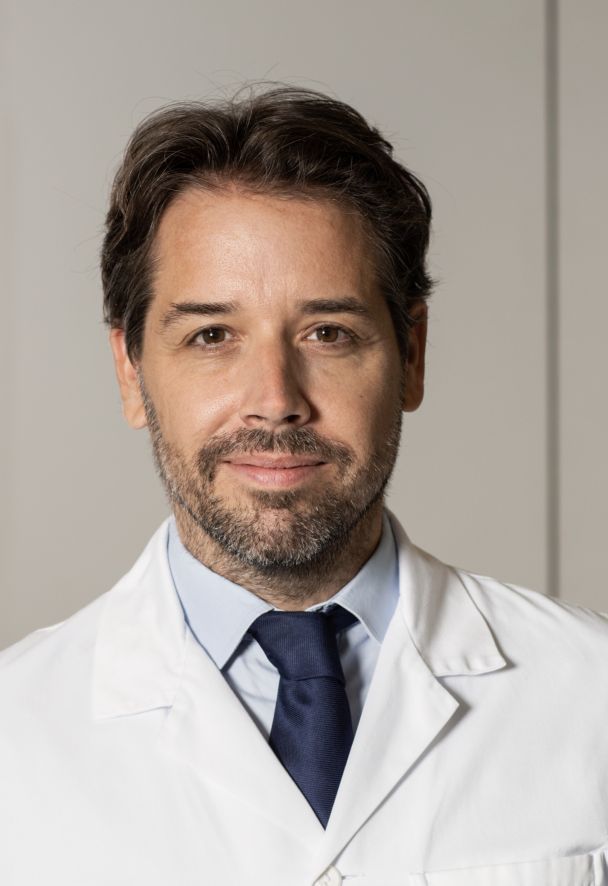
Minimally invasive surgical techniques and new technologies in the field of joint replacement have significantly transformed the treatment of shoulder conditions in recent years. Thanks to less invasive procedures, improved implant options, and more precise surgical methods, it is now possible not only to significantly reduce the burden on patients but also to achieve lasting improvements in functional outcomes.
Shoulder surgery becomes necessary when conservative treatments such as physical therapy, pain medication, or injections are no longer sufficient to alleviate symptoms or restore joint function. In addition to acute injuries such as fractures or tendon tears, there are a variety of non-traumatic causes that can lead to persistent shoulder problems.
“Our shoulder and elbow surgery department at the Schulthess Clinic in Zurich covers the entire spectrum of orthopedics and trauma surgery for these joints—we see ourselves as general joint specialists. While many joint specialists treat only specific areas—such as the knee’s cruciate ligaments, meniscus, or realignment surgeries—we offer the full range of procedures for the shoulder and elbow: from fracture management and tendon repair to arthroscopy, endoprosthetics, and revision arthroplasty.
This enables us to comprehensively treat both acute injuries and degenerative conditions. Aside from trauma-related injuries, degenerative conditions are the primary reason for shoulder surgery. Rotator cuff tendon tears are the most common, usually beginning with the supraspinatus tendon. Larger tears can affect multiple tendons, making tendon reconstruction the most common surgical procedure on the shoulder—our “blockbuster surgery.” Shoulder osteoarthritis also occurs, though less frequently than in the hip or knee, since the shoulder is subjected to less stress in daily life.
In addition, there are other age-related conditions such as bursitis, calcifications in the shoulder, or what is known as frozen shoulder syndrome. All of these conditions share typical symptoms: pain, limited range of motion, and often a noticeable loss of strength. These are frequently caused by age-related wear and tear, chronic overuse, or inflammatory processes.
Conditions such as rotator cuff tears, osteoarthritis of the shoulder joint, impingement syndrome—which involves painful compression of tendons beneath the acromion—or calcium deposits in the tendons, known as calcific tendinitis, are among the typical clinical presentations. Chronic shoulder instability, such as that caused by congenital ligament laxity or repeated dislocations, can also lead to severe limitations.
The symptoms of these conditions usually manifest as persistent pain, which often occurs during overhead movements or at night, especially when lying on the affected side. Patients often report increasing limitations in movement, loss of strength, and sometimes a feeling of instability in the joint. Noises or a sensation of friction when moving the shoulder can also indicate structural changes,” explains Prof. Dr. Scheibel at the beginning of our conversation, adding regarding diagnosis:
“We generally begin with a clinical examination and a detailed interview with the patient. This combination of medical history and physical examination already allows us to assess the underlying condition with a high degree of certainty—for example, whether it is bursitis, a tendon tear, or osteoarthritis. Further diagnostic tests are conducted based on this assessment. In most cases, a standard X-ray is taken first. For tendon problems, this is often followed by an ultrasound or an MRI, while a computed tomography (CT) scan may be useful in cases of bony abnormalities.”

Minimally invasive procedures have fundamentally transformed shoulder surgery in recent years and offer a number of significant advantages over traditional open surgical techniques, both from a medical and a patient-centered perspective.
The key difference lies in the method of accessing the surgical site: While open surgery requires larger skin incisions and a wide-angle view of the structures, minimally invasive procedures—particularly arthroscopy—use very small skin incisions and a camera that transmits high-resolution images of the surgical field to a monitor. This allows for very precise assessment and targeted treatment of structures within the shoulder joint without unnecessarily damaging the surrounding tissue.
“Various strategies are available when it comes to surgical techniques. As a general rule, not every condition requires surgery—conservative treatment methods are always preferred whenever possible. Surgical procedures are used for tendon tears or advanced osteoarthritis that cause significant distress.
A commonly performed procedure is minimally invasive tendon reconstruction, also known as arthroscopic tendon repair. The keyhole technique yields excellent results while significantly reducing complications such as infections. Scar formation and the associated secondary frozen shoulder also occur less frequently, allowing patients to regain mobility and strength more quickly.
Many tendon reconstructions can now be performed on an outpatient basis, allowing patients to return home the same day. In some cases, the surgery is performed on an inpatient basis, depending on the individual findings and treatment needs,” explains Prof. Dr. Scheibel.
Intraoperative monitoring and precision also benefit from the technical capabilities of minimally invasive procedures. The arthroscopic camera provides magnified, high-resolution images from inside the joint, allowing for a detailed assessment of even the smallest injuries. This enables the early detection and simultaneous treatment of associated injuries that might otherwise be overlooked during open surgery.
This is particularly beneficial in cases of complex shoulder conditions such as combined tendon and cartilage damage, joint instability, or inflammatory processes. Last but not least, minimally invasive surgeries also offer advantages for certain high-risk groups, such as older patients or those with pre-existing conditions, for whom a procedure that spares as much tissue as possible is the goal.
In recent years, both the technologies and the materials used in shoulder prostheses have advanced significantly, which has had a direct impact on the durability, functionality, and customizability of the implants. Advances in materials science, implant design, and computer-aided planning have made it possible to better tailor modern shoulder prostheses to the anatomical characteristics of individual patients while also extending their lifespan.
Prof. Dr. Scheibel explains: “Shoulder replacements are used whenever a patient is experiencing severe distress and conservative treatment options have been exhausted. Ideal candidates are patients with severe osteoarthritis, in whom X-rays show significant shoulder damage, and who complain of pain, limited range of motion, and muscle weakness.
The goal of the prosthesis is to relieve pain, improve mobility, enhance quality of life, and help patients actively reintegrate into daily life. In recent years, the materials and design of prostheses have advanced significantly. Prostheses are increasingly designed to preserve bone, particularly in the upper arm, and many anatomical prostheses are now stemless, requiring less metal for fixation.
The glenoid cavity also benefits from new developments that improve the longevity of the prostheses. Traditional materials include cobalt-chromium alloys for the head and polyethylene as the bearing surface. In practice, significantly more inverse prostheses are used than anatomical prostheses—approximately 85–90% inverse prostheses compared to 10–15% anatomical prostheses. Registry studies show that inverse prostheses last longer and that anatomical prostheses are more prone to loosening, particularly at the plastic component of the glenoid.
Another recent development is the use of pyrocarbon heads. These softer surfaces can be used in partial prostheses, improve long-term patient outcomes, and reduce the risk of loosening.”
Difference Between Anatomical and Inverse Prostheses
The anatomical prosthesis is modeled after the natural structure of the joint: the humeral head is replaced by a metal ball, and the shoulder socket is fitted with a plastic cup. This system is particularly suitable when the rotator cuff and other tendons are still intact, as the joint functions as usual. The inverse prosthesis, on the other hand, reverses the joint geometry: the ball is attached to the shoulder socket, and the socket to the humerus. This allows the deltoid muscle to take over movement when the rotator cuff is severely damaged.
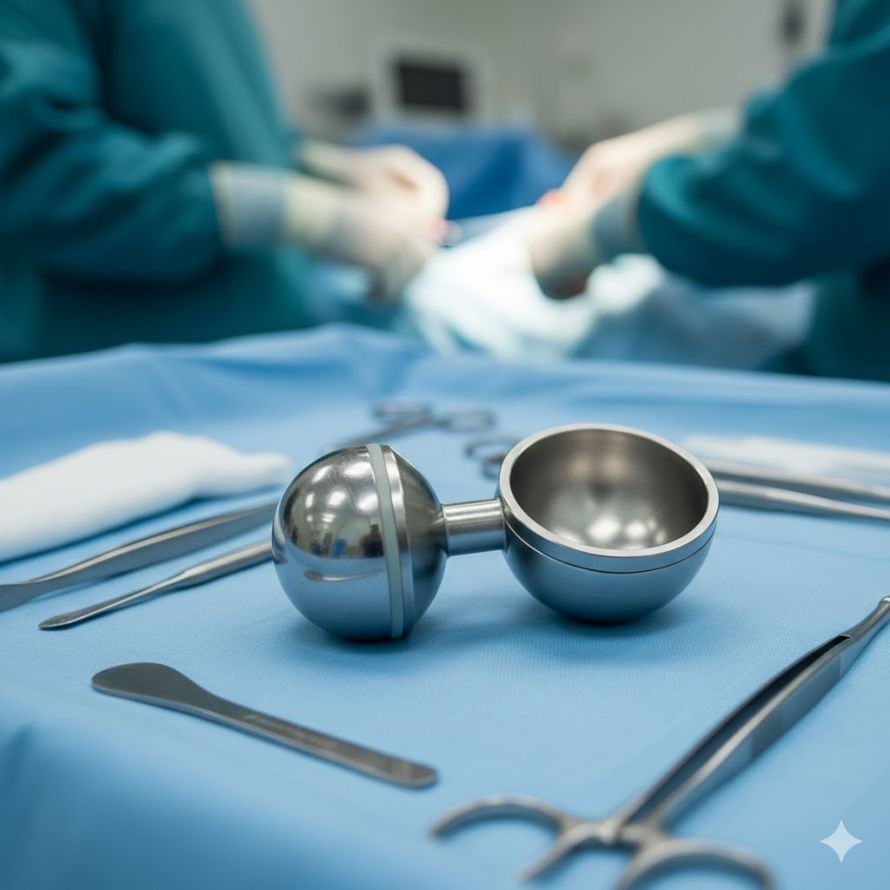
Regarding the longevity of prostheses today, Prof. Dr. Scheibel states: “The durability of shoulder prostheses varies depending on the type. Anatomical prostheses often show the first signs of loosening between five and 15 years. However, this does not mean that the prosthesis must be replaced immediately; rather, it indicates that the system is resilient during this period but more susceptible to loosening.
Fixation techniques remain a limiting factor for anatomical prostheses. Inverse prostheses, on the other hand, show survival rates of over 90% after ten years of follow-up. Due to these favorable long-term results, inverse endoprostheses are now used significantly more frequently, while anatomical prostheses—with the exception of special pyrocarbon variants (a carbon compound that resembles natural bone in some properties)—are used less often.”
Preoperative planning using modern imaging and computer-assisted navigation plays an increasingly important role in shoulder surgery and can significantly improve surgical outcomes. High-resolution imaging techniques such as computed tomography (CT) or magnetic resonance imaging (MRI) allow for a detailed, three-dimensional assessment of the anatomical structure of the shoulder joint.
Robotics is becoming increasingly relevant in shoulder surgery, particularly in joint replacement.
Prof. Dr. Scheibel comments on this: “The first applications are already in use in the U.S., where robots precisely prepare the joint surfaces. The surgeon can then implant the prosthesis using a minimally invasive technique that spares the tendons. However, the technology is still in an early stage of development and is nowhere near as advanced as it is in knee surgery.
Artificial intelligence (AI) plays a role at every stage—before, during, and after surgery. The current focus is on preoperative planning: AI can use patient data and joint changes to provide recommendations for the selection, positioning, and components of a prosthesis. Intraoperative and postoperative applications are also being developed, for example, for follow-up care or prognosis assessment. However, scientific evaluation of these AI concepts is still pending.”
Postoperative rehabilitation plays a central role in minimally invasive shoulder surgeries and is a decisive factor in long-term treatment success. Because of the gentler surgical method, which causes less tissue damage and reduces pain, rehabilitation can often begin earlier and be more active than after conventional open surgeries.
Prof. Dr. Scheibel explains what happens with the patient after shoulder surgery: “Shoulder surgery, especially following the implantation of a prosthesis, is typically followed by a targeted rehabilitation phase.
The goal is to gradually restore the shoulder’s range of motion, strength, and coordination. With modern prosthetic systems, it is now possible to achieve nearly normal shoulder function—many patients report a range of motion that feels 95 to 98 percent like a healthy shoulder. Nevertheless, in isolated cases, a slight functional limitation may persist. Consistent follow-up care, collaboration with physical therapists, and patience during the healing phase are crucial to success.
Studies and follow-up examinations show that the majority of patients resume sports activities after receiving an inverse shoulder prosthesis. About 85 to 90 percent are able to resume activities such as golf, tennis, or skiing without restrictions. Even under increased stress, there are generally no elevated rates of prosthesis loosening, which underscores the stability and durability of modern implants.”
Finding the optimal individual balance between rest and physical activity is crucial to avoid compromising the healing process while simultaneously restoring the function of the shoulder joint as fully as possible. In any case, close collaboration between the treating medical team, physical therapists, and the patients themselves is necessary to ensure a successful rehabilitation process and long-lasting treatment outcomes.
Prof. Dr. Markus Scheibel currently works primarily at the renowned Schulthess Clinic in Zurich—the largest facility for shoulder and elbow surgery in Switzerland. There, approximately 1,800 shoulder and elbow procedures are performed annually—a figure that is remarkable even by international standards and underscores the clinic’s high level of specialization.

“Previously, I worked for many years at Charité – Universitätsmedizin Berlin, where I helped establish the department of shoulder and elbow surgery. I remain connected to Charité to this day: I continue to perform surgeries there once a month and also care for patients. At the Schulthess Clinic in Zurich, where I now work as chief physician, we place great emphasis on quality assurance. All of our patients are systematically recorded in a registry and followed up over the long term.
This allows us to objectively evaluate treatment outcomes and make targeted improvements—a commitment to quality that is not yet widespread in Switzerland in this form. I would also like to highlight our organ-specific approach: At the Schulthess Clinic, all colleagues specialize in a specific joint or body region—such as the shoulder and elbow, knee, hip, or hand.
“This focus enables us to diagnose conditions and injuries with exceptional precision and treat them on an individual basis—regardless of whether they are the result of an accident or degenerative in nature,” emphasizes Prof. Dr. Scheibel, and with that, we conclude our conversation.
Thank you very much, Professor Dr. Scheibel, for your important insights into shoulder surgery!
- A recognized expert in shoulder and elbow surgery, a leader in the German-speaking world.
- Treats acute injuries, degenerative conditions, and the consequences of accidents affecting the shoulder, shoulder girdle, and elbow at Charité Berlin.
- Specializes in modern conservative therapies as well as complex surgical procedures.
- Experience with arthroscopic and minimally invasive procedures as well as joint replacement surgery, including revision surgeries.
- Many years of clinical experience; a sought-after speaker at national and international conferences and a member of scientific committees.
- Secretary General of the D-A-CH Association for Shoulder and Elbow Surgery (DVSE), committed to the further development of the specialty and professional exchange.
- Focus on the continuous improvement of patient care.
- Organizes and presents at numerous professional events, promoting the dissemination of innovative treatment methods.
- Expertise in minimally invasive shoulder procedures and innovative joint replacement.
Share this article
Expert Interviews
Read next
- Expert interview
Expert interview with Professor Dr Elmar Herbst, PhD
Oct 15, 2026
Patient-centred and personalised knee surgery
Read more - Expert interview
Cardiogeriatrics: Significance and benefits in the context of hospital reform
Sep 21, 2026
Cardiogeriatrics: Significance and benefits in the context of hospital reform
Read more - Expert interview
Expert Interview with Professor Dr. Amadeus Hornemann, MPH
Sep 18, 2026
Prof. Amadeus Hornemann on Precision Medicine in Gynecology: Modern Surgery, New Techniques, Better Quality of Life
Read more