Expert Interviews
Expert Interview with Prof. Dr. med. Peter Vajkoczy: News from the Department of Neurosurgery at Charité Berlin – Recent Developments in Head and Spine Surgery

Alexandra Pfitzmann ·
Professor Peter Vajkoczy, M.D., is one of the world’s leading figures in neurosurgery and a prominent authority in the treatment of complex disorders of the nervous system. As Director of the Department of Neurosurgery at Berlin’s Charité, the renowned university medical center, he combines decades of experience, scientific excellence, and surgical precision at the highest level. Each year, he performs approximately 800 highly complex surgeries, including microsurgical procedures for brain tumors—such as gliomas, pituitary adenomas, and vestibular schwannomas—surgeries for skull base tumors, which pose a particular challenge due to difficult access within the skull, as well as the treatment of cerebral vascular malformations such as aneurysms and angiomas.
His expertise also includes the minimally invasive treatment of herniated discs and stenosis, as well as the stabilization of spinal deformities and the surgical treatment of spinal tumors. His approach is characterized by a combination of microsurgical precision, innovative technologies, and holistic patient care. This makes him one of the world’s leading specialists, achieving the highest success rates even in the most difficult brain and spinal surgeries.
In addition to his surgical practice, Prof. Dr. Vajkoczy is also the author of the book *Kopfarbeit*, in which he describes his daily work and the fascinating world of the brain. The book offers insights into the intense, often lengthy, and highly complex work of a neurosurgeon—shaped by passion, responsibility, and science. His work is driven by a deep passion for research and continuous improvement, aimed at developing innovative therapies and enhancing treatment outcomes. As a scientist, he regularly publishes high-impact papers, actively participates in international conferences, and is committed to training future generations at Berlin’s Charité.
His expertise, combined with state-of-the-art technology and a highly qualified team, enables him to achieve excellent results even in the most difficult cases. He consistently demonstrates his surgical brilliance, particularly during challenging procedures such as the surgical removal of large or hard-to-reach brain tumors, aneurysm surgeries, or the treatment of cancer in the brain or spine. His credo is to combine responsibility, empathy, and the highest level of professional expertise in his care of patients.
The editorial team of the Leading Medicine Guide spoke with Prof. Dr. Vajkoczy and learned more about the latest developments at Charité Berlin as well as recent advances in head and spinal surgery.
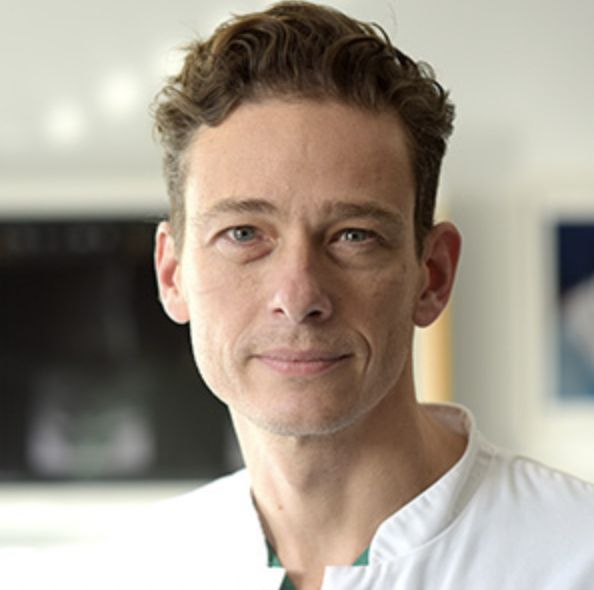
“The latest developments in neurosurgery at Charité Berlin primarily focus on improving the safety and efficiency of brain tumor surgeries. To this end, a platform has been developed that is used both before surgery and during the procedure. This enables a very detailed examination of the so-called eloquent areas—that is, the important regions of the brain that play a central role in relation to the tumor. Innovative methods are also employed, some of which utilize ‘machine learning’—that is, artificial intelligence (AI)—to visualize the nerve fiber tracts in the brain. This means that the most important functions and their pathways can be precisely mapped out before surgery, allowing for optimized surgical planning. During the procedure, intraoperative MRI helps to precisely monitor the course of the surgery and verify the extent to which the tumor has been completely removed. The goal is to further increase the rate of complete tumor removal. In addition, there are novel methods for diagnosing tumors even more accurately during surgery. If necessary, radiation therapy can also be administered directly during surgery using special intraoperative radiation techniques. These innovative approaches are intended to help make brain tumor surgery even safer and more efficient. “This lays the groundwork for patients to be optimally integrated into subsequent therapies—such as chemotherapy or radiation therapy,” explains Prof. Dr. Vajkoczy at the beginning of our conversation. 
Intraoperative magnetic resonance imaging, a procedure used during surgery, offers significant advantages in the treatment of brain tumors.
“It enables improved intraoperative diagnostics through specialized spectral techniques that allow tumors to be distinguished from healthy tissue and, in some cases, even enable a diagnosis to be made during the operation. In addition, the function of brain tissue is localized—for example, through navigated transcranial magnetic stimulation—which significantly increases surgical precision. This allows the surgery to be tailored specifically to the respective tissues in order to remove as many tumor cells as possible without damaging functionally important areas. Another significant advance is the ability to keep the patient awake during the procedure to monitor important functions such as speech and motor skills in real time. This allows, for example, speech or movement disorders to be detected immediately, enabling the surgery to be adjusted accordingly. In addition, understanding other brain functions—such as personality, memory, and motivation—is becoming increasingly important. Special monitoring methods used during surgery protect these functions, which improves the long-term prognosis. Such procedures have already represented a major step forward in neurosurgery and enable significantly more precise surgeries that preserve the brain’s functional integrity as much as possible. “This significantly reduces the risk of complications and promotes postoperative recovery,” explains Prof. Dr. Vajkoczy. 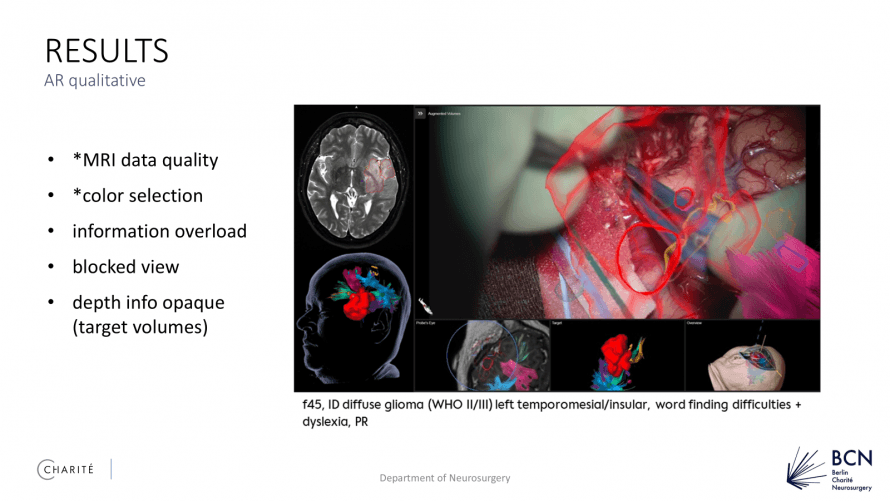
One of the greatest challenges in diagnosis is that many patients have already been searching for a solution before seeing a specialist. They often do not come to us as their first point of contact, but rather after they have already consulted several doctors and may even have undergone surgery.
Prof. Dr. Vajkoczy comments: “This means that the disease is often already advanced or that there are indications requiring a more detailed examination. However, there are also patients who come to us with unexplained symptoms such as pain in the leg, back, or head. These patients are specifically seeking a concrete diagnosis because previous examinations have failed to identify a cause. The goal of our platform is to reach these patients early on so we can offer them a specialized center with state-of-the-art diagnostics and treatment. It is very important to seek out the right facility as soon as possible, before any procedures or scarring have occurred. Because once patients have already undergone surgery and still have questions or symptoms afterward, the window of opportunity for effective intervention has often already passed. As far as treatment is concerned, it is generally easier to perform successful and lower-risk procedures on so-called “virgin” patients—that is, those who have had no or only a few previous surgeries. Patients who have already undergone previous surgeries and are still recovering from scarring carry a higher risk of complications. That is why early and precise diagnosis to determine the optimal treatment path is always a central goal for us.” 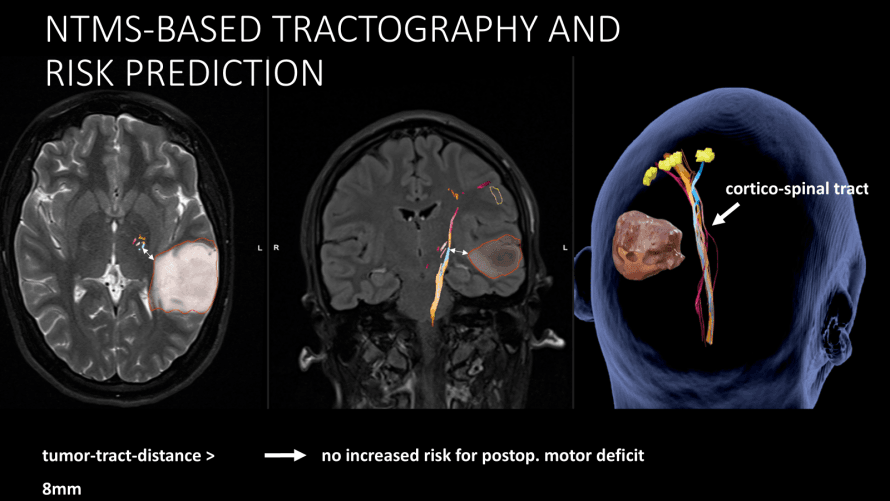
The integration of artificial intelligence (AI) into neurosurgical practice primarily supports training and surgical preparation, but not directly during the actual procedure.
“We use modern technologies such as virtual reality headsets to improve training and simulate complex surgical scenarios in a realistic manner. AI is increasingly being used to support treatment decisions; for example, it can perform risk assessments for brain tumor patients. By analyzing various parameters evaluated through ‘machine learning,’ doctors can, for instance, calculate the risk of complications or better assess the likelihood of a successful surgery. These technologies are expected to spread slowly but steadily, with the focus on supporting treatment. For example, tumors that were previously considered inoperable are now being surgically removed in some cases thanks to improved assessment systems. In the field of robotics, applications for spinal tumors and biopsies are now also well established. Particularly in biopsy procedures—such as those for brain tumors—robotics facilitates precise sample collection when complete surgical removal of the tumor is not possible. “Robotics is thus already helping to make procedures safer, more precise, and less risky,” notes Prof. Dr. Vajkoczy.
The greatest challenge with brain tumors is treating patients through complex surgeries involving advanced technology without causing them to suffer functional impairments.
“The goal is to make the procedures as safe as possible and to significantly reduce the likelihood of complications. The surgical team focuses on integrating innovative techniques directly into the operating room to increase the safety of surgeries while minimizing risks to patients. Over the next five years, this dynamic development is expected to continue gaining importance. It is anticipated that more and more methods will be developed to treat individual tumors locally and using minimally invasive techniques. In addition, research will make progress toward compensating for functional deficits as effectively as possible in the event of complications and improving rehabilitation. Technologies such as neuromodulation and the enhancement of brain plasticity play a key role in restoring or improving functions following surgery. Following treatment, the neuro-oncology department takes over further follow-up care, which typically takes place during a certified neuro-oncology clinic. “The interdisciplinary tumor board, which operates within the Comprehensive Charité Cancer Center, reviews cases both at the start of treatment and as it progresses, whenever new aspects or changes arise,” says Prof. Dr. Vajkoczy, adding:
“In the case of a benign tumor, a short recovery period is often sufficient: After about two weeks, for example, the patient can usually start planting flowers again. For malignant tumors, especially when radiation therapy or chemotherapy is necessary, the follow-up period usually lasts several weeks to months. Overall, the duration of follow-up care—typically two to three months—is part of an individually tailored, continuous treatment plan, where the goal is always to facilitate the best possible return to as normal a daily life as possible.” 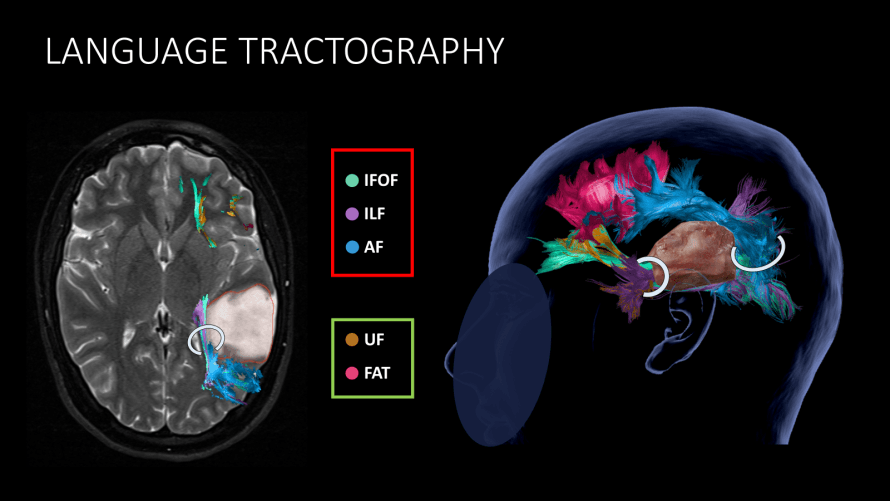
Optimal care and continuous advancement in neurosurgery at Charité Berlin.
“An important request regarding the medical infrastructure in Germany is to focus the funding of highly specialized centers more strongly on the high case volumes and complex requirements of our leading centers. In neurosurgery in particular, surgeries require a high degree of digitalization, modern imaging technologies, and highly qualified staff. These resources must be appropriately taken into account and reflected in the budget so that we can ensure the quality of care in the long term. At the same time, I believe it is essential to further promote medical research in these leading centers in order to develop innovative treatment methods and continuously improve therapies. I also view the operating room as a place where learning and discovery are possible. This is enormously important to me because here we not only treat individual diseases but can also expand our understanding of brain functions. In particular, I actively take advantage of the opportunities offered by awake surgeries to learn more about brain function during the procedure. These experiences help us make surgeries even safer and further develop innovative procedures,” explains Prof. Dr. Vajkoczy, emphasizing:
“With more than 20,000 head and spine surgeries over the course of 18 years, I have been driven above all by the desire to continually redefine the boundaries of my field. For me, working in this area is also a form of creativity and constant self-improvement. I want not only to master the challenges that complex surgeries present, but also to discover new ways to make treatment even better and safer. Addressing my patients’ fears is a central part of my work. I strive to identify these fears early on, discuss them openly, and provide the best possible support during and after surgery. Individualized care is essential, especially for serious conditions such as glioblastomas, which we treat several times a week. In these cases, I also see it as my responsibility to take the right steps early on in the hospital to ensure optimal treatment. This gives patients valuable leeway to receive the best possible therapy and maximize their chances of a good quality of life.” 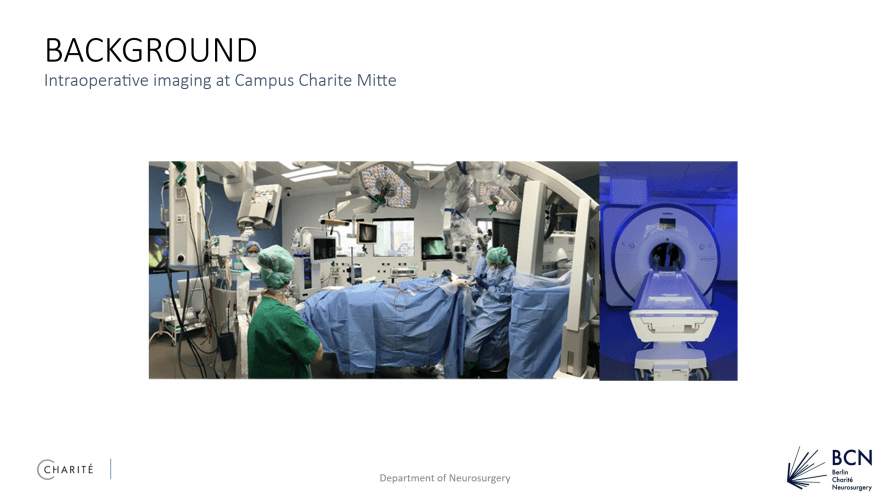
Significant progress is currently being made in the treatment of spinal tumors. New therapeutic approaches and innovative technologies are helping to improve the prognosis for affected patients and make treatment outcomes more sustainable.
“In recent years, the care of patients with spinal tumors has evolved significantly. Three advances are particularly important in this regard:
Multidisciplinary tumor centers: Patients are increasingly being treated in specialized centers where neurosurgery, oncology, radiation therapy, and pathology work closely together. Discussions in interdisciplinary tumor boards improve the quality of care, optimize the prognosis, and facilitate access to clinical trials.
Individualized and minimally invasive surgery: Similar to personalized drug therapy, we also rely on tailored strategies during surgery. Depending on the situation, the surgical approach can be escalated or de-escalated to reduce morbidity and mortality. Minimally invasive techniques reduce complications and allow for a faster return to adjuvant therapies.
Technological innovations: New implants cause fewer artifacts in MRI imaging, allowing for more precise radiation therapy planning and better follow-up care. Advances in neuronavigation and robotics increase precision and safety while making procedures less invasive.
Together, these developments have not only increased immediate surgical safety but also improved the long-term prognosis for patients. Furthermore, spinal oncology is becoming increasingly academic in nature—with growing research activity in both clinical and basic science fields,” explains Prof. Dr. Vajkoczy.
Various innovative approaches are currently being developed to more effectively treat and correct advanced signs of wear and tear, misalignments, and instabilities of the spine. These procedures aim to improve treatment outcomes and enhance patients’ mobility and quality of life. 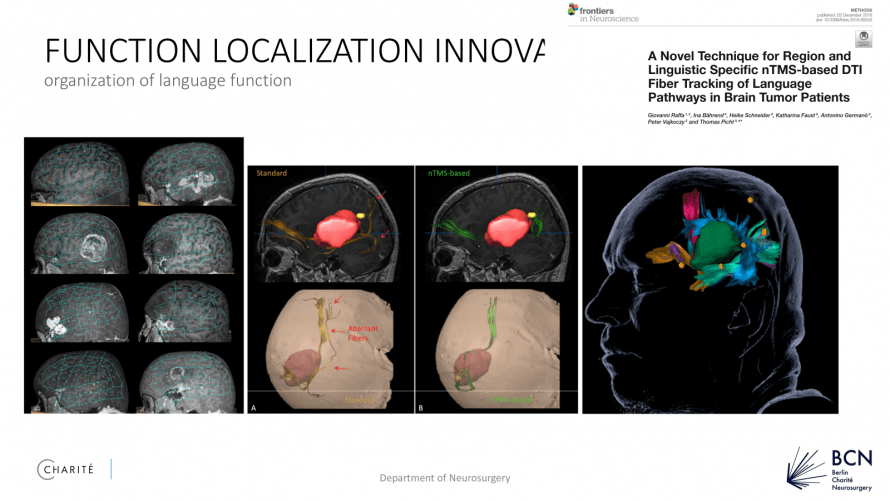
“We have made significant progress in recent years in the treatment of advanced degenerative changes and spinal deformities:
Minimally invasive and digital surgery: Thanks to modern navigation and robotics, procedures have become safer, more precise, and at the same time less invasive. Patients benefit from smaller incisions, less blood loss, and a faster recovery.
Combined surgical approaches: Anterior and posterior surgical approaches are increasingly being combined. This allows for the minimally invasive correction of misalignments without the need for major osteotomies. This reduces the physical strain on the patient, shortens the hospital stay, and improves recovery.
Personalized implants: With the help of artificial intelligence, implants are increasingly being designed specifically for each patient. This leads to more stable constructions, fewer material failures (e.g., rod fractures), and better correction outcomes.
Optimized complication management: We now have a better understanding of how to reduce risks such as wound healing complications. This, too, contributes significantly to improving outcomes in these complex procedures.
“These innovations ensure that even severe spinal deformities and instabilities can now be treated much more effectively, safely, and with greater patient comfort,” explains Prof. Dr. Vajkoczy.
Interdisciplinary collaboration between neurosurgeons, spinal surgeons, and oncologists plays a crucial role in improving treatment outcomes for complex spinal conditions. Through the shared exchange of expertise and experience, individualized treatment plans can be optimized and tailored to the specific needs of patients.
“First, let’s be clear: the distinction between neurosurgeons and spine surgeons, as it currently stands, is not accurate. Today—in line with the German Spine Society’s position—anyone who is certified in spinal surgery and performs high-quality work in this field is considered a spine surgeon, regardless of whether they originally came from neurosurgery, orthopedics, or trauma surgery. The successful treatment of complex spinal conditions is now only possible through a team approach. In interdisciplinary settings, spinal surgeons, oncologists, radiation oncologists, radiologists, and pathologists work closely together. Cases are discussed in tumor boards prior to surgery, allowing surgical strategies, oncological therapies, and radiation therapy to be optimally coordinated. The result is a customized, individualized treatment plan that takes the entire course of treatment into account. Patients thus benefit from higher quality of care, greater safety, and, at the same time, better access to innovative clinical trials and modern therapies. “This close interdisciplinary collaboration has significantly improved the prognosis for complex spinal disorders in recent years,” Prof. Dr. Vajkoczy concludes.
Thank you very much, Professor Dr. Vajkoczy, for this detailed insight into your work!
Share this article
Expert Interviews
Read next
- Expert interview
Expert interview with Professor Dr Elmar Herbst, PhD
Oct 15, 2026
Patient-centred and personalised knee surgery
Read more - Expert interview
Cardiogeriatrics: Significance and benefits in the context of hospital reform
Sep 21, 2026
Cardiogeriatrics: Significance and benefits in the context of hospital reform
Read more - Expert interview
Expert Interview with Professor Dr. Amadeus Hornemann, MPH
Sep 18, 2026
Prof. Amadeus Hornemann on Precision Medicine in Gynecology: Modern Surgery, New Techniques, Better Quality of Life
Read more