Expert Interviews
Innovative Approaches to Cartilage Damage: Modern Cartilage Therapy for Greater Mobility

Alexandra Pfitzmann ·
Millions of people in Germany suffer from cartilage degeneration—the editorial team of the Leading Medicine Guide spoke with Prof. Dr. Wachowski about modern cartilage therapies.

Cartilage damage is one of the most common joint conditions and can significantly limit mobility and quality of life. Modern therapeutic approaches aim to promote natural cartilage regeneration and alleviate chronic symptoms. Thanks to new scientific approaches and innovative treatment methods, there are now better prospects for the long-term restoration of joint cartilage.
The main causes of cartilage damage are varied and often result from a combination of mechanical stress, injuries, and degenerative processes.
“Cartilage damage can have various causes. In many cases, it occurs spontaneously—that is, due to genetic factors—as a result of early wear and tear at specific points in the joint that are either overloaded or subjected to irregular stress. Another common cause is improper loading due to misalignment—for example, in people with bowlegs or knock-knees—which increases the load on the inner or outer side of the joint, leading to wear and tear and cartilage damage over time. In addition, there are accident-related causes, such as a blow, a dislocated kneecap, traffic accidents, or other external impacts. “We distinguish between diffuse damage and localized injuries in otherwise healthy joints,” explains Prof. Dr. Wachowski at the start of our conversation, adding:
“Many people also wonder whether overexertion during sports—for example, from strength training or improper movements—can damage the cartilage in the long term. People often think that stress on the joint is inherently harmful, but that’s not entirely correct. If the stress is consistent and sustained over many years, the tissue usually adapts, and no damage occurs. Of course, with extreme stress—such as that involved in heavy physical labor, like laying tiles—it can become more problematic. In sports, however—especially with consistent, controlled training without sudden overexertion—the risk of cartilage damage is relatively low. There’s even an interesting study from Nepal that examined porters. Despite daily heavy labor involving high levels of stress, these people have hardly any joint damage because the stress was always constant. This shows that continuous, steady stress is generally beneficial, while sudden overexertion or abrupt changes in stress levels can be harmful. It is therefore important to gradually increase and then reduce the load regularly to avoid overexertion.”
The symptoms of cartilage damage usually develop gradually, but can also occur acutely. Typical symptoms include pain during movement, especially after a prolonged period of rest (so-called “start-up pain”), as well as pain during exertion or with certain movements. Sometimes there is a “grinding sound” in the joint, joint noises, or a sensation of the joint getting stuck. In addition, patients often report a feeling of insecurity or instability in the joint, which can occur during sports or while walking. Especially with progressive wear and tear, swelling, limited mobility, twinges, or stiffness may develop. In later stages, joint inflammation may develop, which exacerbates the symptoms. If left untreated for a prolonged period or treated inadequately, additional problems such as cartilage wear, loss of articular cartilage, and the development of osteoarthritis may occur. 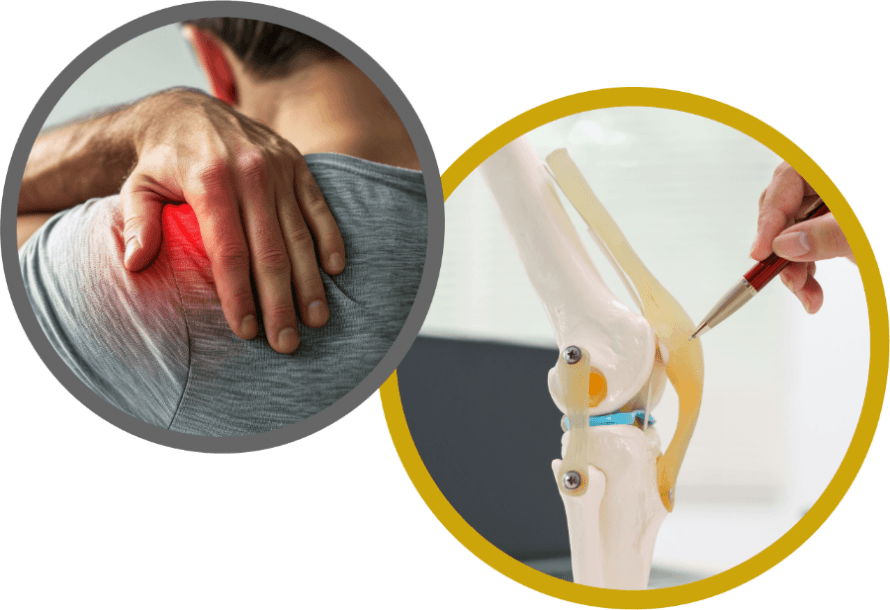
Diagnosing cartilage damage is quite a challenge because the symptoms can present in very different ways.
“Even at first glance and based on the medical history—that is, the patient’s account of their symptoms—it becomes clear that cartilage damage is a true chameleon. The symptoms can change, sometimes being more pronounced, sometimes less so. Swelling may occur in the joint and then subside, or there may be a period of remission without symptoms. Compared to cruciate ligament or meniscus tears, where symptoms are usually very typical, this is often not the case with cartilage damage. The symptoms tend to be diffuse and variable. In cases of advanced damage, X-rays can sometimes reveal indirect signs, such as the bones in the joint moving closer together, which indicates extensive cartilage damage. Following accidents in which pieces of cartilage or bone have been knocked off, X-rays may also show signs of damage. However, an MRI is essential for a definitive diagnosis. It is the most important tool for truly detecting cartilage damage and assessing the exact extent of the damage. “It’s almost impossible to do without an MRI when it comes to deciding on the right treatment,” emphasizes Prof. Dr. Wachowski regarding diagnosis.
Conservative treatment is generally sufficient when the cartilage damage is minor, superficial, and does not yet cause significant limitations in movement or severe pain.
Prof. Dr. Wachowski explains: “Whether a conservative approach is sufficient for cartilage damage depends largely on the extent of the damage. A distinction is made between non-full-thickness damage, such as diffuse thinning, and full-thickness damage, in which the entire cartilage is affected or even the underlying bone. For less severe, diffuse damage, conservative therapy is often recommended. However, especially in young patients, the underlying cause should also be investigated more closely—for example, a misalignment such as bowlegs or knock-knees, which can lead to chronic overloading and thus promote the progression of the damage. In such cases, correcting the misalignment may be advisable to reduce the load and slow the progression of the damage. For complete, localized damage that is well-defined, surgical treatment—such as cartilage reconstruction—is an option,” he continues:
“As far as conservative therapy is concerned, hyaluronic acid injections are more of a symptomatic measure that is primarily temporary—especially in cases of diffuse damage—and can alleviate symptoms. It improves joint lubrication and reduces painful irritation, but it does not repair the damage itself and has only a short-term effect. As a rule, the goal of such measures is symptom relief. Personal initiative is also important: Exercise therapy—such as cycling, swimming, low-impact sports, or Nordic walking—can help reduce symptoms because exercise keeps the joint healthy and subjectively reduces pain. In addition, there are dietary supplements such as hyaluronic acid in tablet form, collagen, or oyster shell calcium. However, there is no clear scientific evidence that these are consistently effective. For this reason, most health insurance plans do not cover such products. Anyone who still wants to try these products should view it more as an experiment, since they generally do no harm, but their benefits have not been proven. There’s currently quite a bit of hype on social media surrounding supplements like collagen or creatine, but it often makes more sense to invest in a gym membership, where you can exercise regularly and in a targeted manner. This usually yields better results than buying expensive pills.”
However, if symptoms persist despite conservative measures, worsen, or the extent of the damage increases, surgical cartilage therapy should be considered. Especially in cases of damage that leads to significant limitations in movement, impingement, or recurrent joint inflammation, early surgical treatment is advisable to prevent further deterioration, such as the development of osteoarthritis.
Cartilage therapies are particularly suitable for patient groups in whom the articular cartilage is still only moderately damaged—that is, in cases of small to medium-sized defects where the joint’s natural range of motion is still largely preserved.
Today, a wide range of modern procedures are used to treat cartilage damage; these aim to specifically regenerate cartilage-like tissue and significantly improve the chances of healing.
“When discussing cartilage regeneration, it is essential to clarify whether we are actually talking about restoring or regenerating cartilage tissue. In principle, it can be said that true cartilage regeneration can only occur where no cartilage remains. If, for example, the cartilage thickness has been reduced by 50 percent, it is not possible to restore the original, complete cartilage through conservative or surgical measures. However, in cases of extensive, full-thickness damage—where even the bone is exposed—it is possible to surgically induce the growth of new cartilage. There are various techniques for this, such as microfracturing, in which the remaining cartilage layer is removed during arthroscopic surgery to expose the bone. Small drill holes are then made in the bone to allow blood to seep out and form a cartilage substitute—though this is inferior fibrocartilage that only provides short- to medium-term relief from symptoms. For small defects that are not heavily loaded, this may be sufficient. If the damage is more extensive, other procedures may be considered, such as the so-called acellular matrix technique, in which the defect is covered or filled with a resorbable membrane to isolate the stem cells from the rest of the joint and facilitate better regeneration. This approach is suitable for defects up to approximately five square centimeters. There is also the minced cartilage procedure, a single-stage cartilage transplant in which healthy cartilage is harvested from a non-weight-bearing area of the joint, minced, and implanted into the damaged site. This method is relatively new and the body of research is still limited, but it shows promising results, especially for medium-sized defects between 2.5 and 4 square centimeters. For larger defects exceeding 5 square centimeters, the standard cartilage cell transplantation is used, in which the patient’s own cartilage cells are harvested, cultured in the laboratory, and then reimplanted several weeks later during a second surgery. “This procedure is well-researched but complex and requires a longer recovery period. True regeneration is only possible for small to moderate damage; for extensive defects, reconstruction is usually only achievable through surgical procedures,” Prof. Dr. Wachowski clarifies, adding the following regarding the patients’ recovery phase:
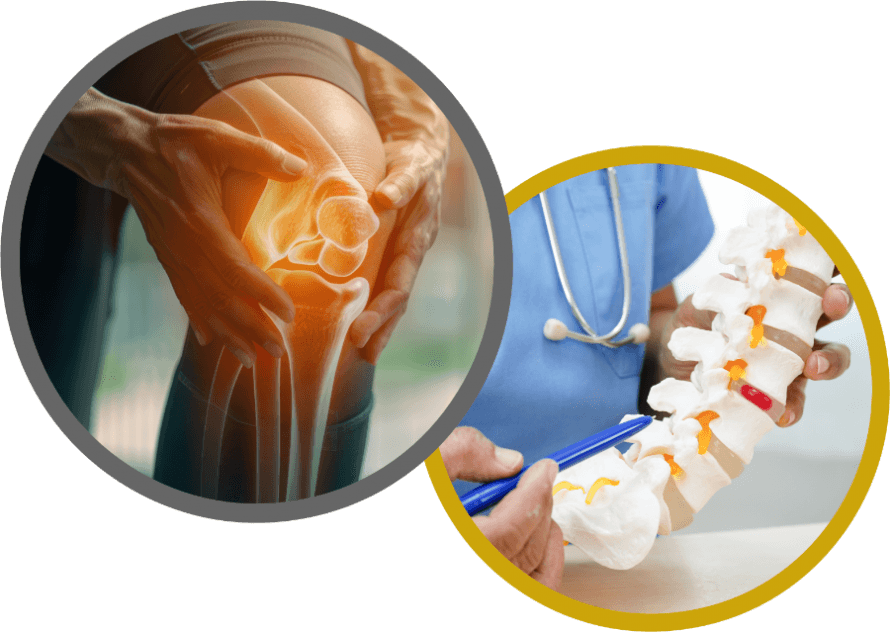
“When patients are in the healing phase following cartilage or joint surgery, walking aids are generally necessary for a period of six to eight weeks. During this time, for example, in the case of patella surgery, the knee generally must not be fully bent so as not to interfere with the healing process. After this phase, there is a gradual increase in load, which also includes the step-by-step resumption of athletic activities. Activities involving frequent stop-and-go movements can be resumed no earlier than nine to twelve months later. For patients who already suffer from osteoarthritis, the situation is different, as osteoarthritic changes affect the entire joint and make the regeneration of cartilage cells significantly more difficult or impossible. The osteoarthritic environment is characterized by inflammatory and signaling molecules that severely limit the joint’s regenerative capacity. Therefore, traditional cartilage-regenerating procedures are usually no longer effective in cases of osteoarthritis. For younger patients with osteoarthritis who do not yet have extensive damage, leg realignment may be a sensible option to reduce the load on the joint. In cases of advanced, extensive damage, however, various types of joint replacement may be considered. These include custom-made, tailor-made implants, partial prostheses for specific joint components, and, finally, total knee arthroplasty. These procedures range from small, specialized implants to more complex prostheses designed to restore joint function and relieve pain.”
With regard to cartilage therapies, there are generally no specific risks or side effects beyond the usual risks associated with surgery. Most procedures use the patient’s own tissue, which virtually eliminates the risk of allergic reactions.
“The only thing that happens outside the body is the proliferation of the patient’s own tissue for transplantation. These are routine procedures that carry the usual surgical risks, such as infections, bleeding, or wound-healing complications. The most significant risk is that the therapy will fail—that is, it will not yield lasting success. While this is relatively rare, it is nonetheless important information that must be explained to patients in any case. Even with successful treatment, the fact remains that cartilage damage creates a certain predisposition to premature joint wear, so even a treatment that goes well cannot completely prevent wear,” says Prof. Dr. Wachowski, offering tips on prevention:
“However, there are basic measures that anyone can take to protect the cartilage. Joint-friendly sports, such as cycling, have a protective effect because they promote joint cartilage through moderate stress, while activities that frequently cause microtrauma, such as soccer or basketball, can be harmful in the long term. Chronic overuse due to repeated microtraumas can lead to damage over the years. That’s why it’s important to stay active and find the right balance between exercise and rest. If you’re particularly passionate about sports that are hard on the joints, you should try to balance them out with other, joint-friendly activities. This helps keep the joints in good condition and makes it easier to tolerate the strain. “Active movement is therefore generally better than complete inactivity.”
The DUO Practice—Duderstadt Trauma Surgery and Orthopedics—is distinguished above all by its comprehensive range of treatments.
“This begins with conservative measures, such as counseling, physical therapy, and rehabilitation, which serve as the first steps toward promoting mobility and reducing pain. In addition, medication can play a role, such as hyaluronic acid injections, to relieve pressure on the joint and alleviate symptoms. Orthopedic aids, such as weight-bearing orthoses, can also play an important role, especially when certain parts of a joint are under increased stress. Through these measures, we can often preserve years of pain-free quality of life. If conservative approaches are insufficient, we have the full spectrum of surgical options at our disposal, ranging from minimally invasive arthroscopic procedures to open surgeries such as cartilage reconstruction, cartilage cell transplantation, and, ultimately, joint replacement. Even in cases of advanced damage, we can sometimes reduce the stress on the joint through axial correction. Our goal is to find the best possible individualized solution for each patient—whether conservative or surgical—to ensure long-term function and quality of life.”
Thank you very much, Professor Dr. Wachowski, for your insights into cartilage therapy procedures!
- Expert in Knee Surgery: Professor Dr. med. Martin Wachowski is considered one of Germany’s leading specialists in knee surgery, joint replacement, and sports orthopedics.
- Praxis Duo in Duderstadt: A renowned practice known for innovative treatment methods and scientifically sound approaches.
- Minimally Invasive Surgical Techniques: Use of keyhole techniques and modern implants for rapid recovery and lasting joint regeneration.
- Complex Procedures: Use of advanced surgical techniques such as ALL augmentation for revision of cruciate ligament reconstructions and reconstruction of collateral ligaments.
- Scientific Work: Numerous publications, research projects, and the development of physiological knee endoprostheses.
- Leadership at the University Medical Center Göttingen: Former Head of Knee and Shoulder Surgery; has supervised over twenty doctoral dissertations since 2006.
- Involvement in professional societies: Active in national and international organizations, including the German Society for Biomechanics and the German Knee Society.
- Teaching Awards and Events: Recipient of the University of Göttingen Teaching Award in 2015; delivers lectures and teaches courses.
- Sports Medicine: Collaborates with elite and recreational athletes to treat sports injuries and tailor training methods.
- Patient-Centered Care: A holistic approach featuring personalized counseling and comprehensive care before and after surgery.
- The First Choice for Knee Problems: A trusted practice for patients with knee injuries, osteoarthritis, meniscus tears, and cruciate ligament issues.
Share this article
Expert Interviews
Read next
- Expert interview
Expert interview with Professor Dr Elmar Herbst, PhD
Oct 15, 2026
Patient-centred and personalised knee surgery
Read more - Expert interview
Cardiogeriatrics: Significance and benefits in the context of hospital reform
Sep 21, 2026
Cardiogeriatrics: Significance and benefits in the context of hospital reform
Read more - Expert interview
Expert Interview with Professor Dr. Amadeus Hornemann, MPH
Sep 18, 2026
Prof. Amadeus Hornemann on Precision Medicine in Gynecology: Modern Surgery, New Techniques, Better Quality of Life
Read more