Expert Interviews
Knee Surgery 2.0: Preserve or Replace?

Alexandra Pfitzmann · June 25, 2026
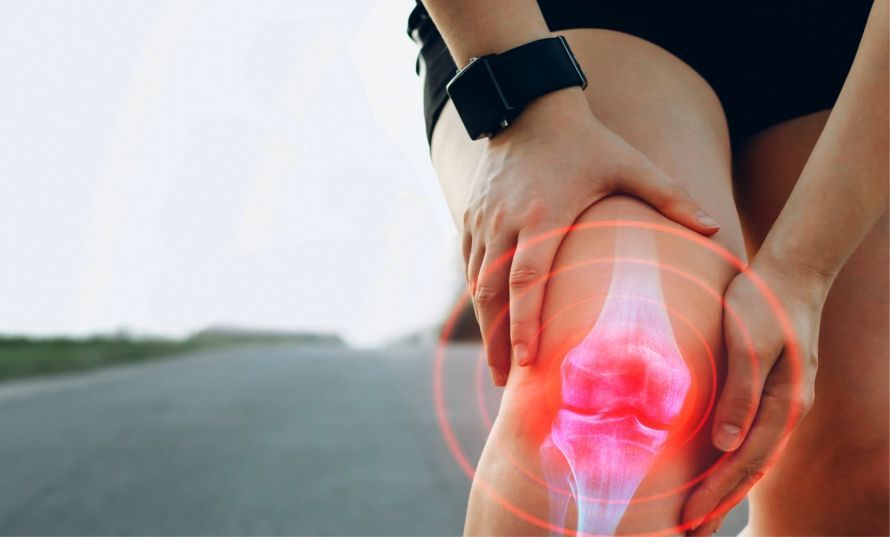
The knee is the body’s most heavily loaded major joint—and at the same time one of the most prone to injury. Approximately 20 million people in Germany regularly suffer from knee problems, whether due to osteoarthritis, sports injuries, or structural instability. Against this backdrop, the question of which approach is best for long-term restoration of function becomes increasingly important: reconstruction of the damaged joint or replacement with a knee prosthesis. Modern knee surgery now offers highly advanced procedures for both approaches, which can be tailored to the individual needs of each patient.

Whether joint-preserving reconstruction of the knee will be stable enough in the long term can only be assessed through a combination of clinical examination, modern imaging, and a precise analysis of the injured structures. The key factor is whether the joint is, in principle, restorable after the injury—or whether the damage or wear and tear is so severe that a replacement procedure represents the more reliable solution.
“When a patient is presented with a more complex knee injury, the evaluation always begins with the medical history. The discussion about exactly what happened, what symptoms are present, how long they have persisted, and in which situations the knee causes problems already provides much of the diagnostic direction. Combined with the physical examination, this often provides a very clear picture of which structures are affected and how further diagnostic testing should be structured. As a basic diagnostic step, an X-ray is usually performed to assess the bony structure.
This is important for ruling out fractures, especially after trauma, but also for identifying degenerative changes that can sometimes occur at a surprisingly young age—whether due to previous injuries or genetic predisposition. If misalignments such as bowlegs or knock-knees are suspected—which can lead to asymmetrical stress and thus unilateral wear and tear—a full-leg X-ray is recommended. Depending on the clinical presentation, an MRI often follows. This is the most important procedure, especially for younger patients where joint preservation is the primary goal. This is because the problems in these cases rarely lie in the bone, but rather in the soft tissues: cartilage, menisci, or ligaments.
“MRI provides detailed images of these structures and enables precise planning to determine whether and how the knee can be preserved, stabilized, or reconstructed,” explains Prof. Dr. Wachowski at the start of our conversation.
Whether a knee can be reconstructed or whether joint replacement is the better long-term solution depends on a whole range of structural factors that must be considered in conjunction with one another.
“The overall condition of the bone plays a particularly important role when it comes to joint replacement. Poor bone quality is, in most cases, associated with advanced age, and especially in cases of osteoporosis, it can influence the decision regarding which type of prosthesis is appropriate. For example, if a partial joint replacement were a possible solution but the patient is also overweight and has osteoporosis, it may be necessary to rule out that option. The soft bone, the small contact surface of a partial joint replacement, and the higher body weight simply aren’t compatible, because the bone could fracture under the strain.
In joint reconstruction, on the other hand, bone quality usually plays a lesser role. This is primarily because these procedures naturally involve younger people more often, whose bone structure is generally sound. Even in middle-aged patients who, in exceptional cases, have already developed osteoporosis due to genetic factors, joint preservation is usually not fundamentally limited as a result. Reduced bone density is more likely to limit treatment options when it comes to selecting the appropriate joint replacement. “However, in most cases, it does not play a decisive role in joint preservation itself,” notes Prof. Dr. Wachowski.
Pronounced bowlegs or knock-knees lead to chronic overloading of certain joint segments. As long as the resulting signs of wear are moderate and the pre-existing, underlying misalignment is clear, it can be corrected as part of joint-preserving surgery—such as a realignment osteotomy—which restores an even distribution of stress. However, if the joint is already severely affected by osteoarthritis, this tends to favor joint replacement.
The decision regarding treatment is always made jointly with the patient. Treatment without the patient’s active participation is not possible, because any decision that the patient does not fully understand or support is doomed to fail from the outset.
Prof. Dr. Wachowski explains: “If someone cannot grasp the consequences or does not truly support the procedure, the risk increases that they will be dissatisfied later on and experience a poorer outcome, both subjectively and objectively. That is why it is crucial that the patient understands the decision, supports it, and explicitly requests it. This is particularly important when it comes to joint replacement.
There is no turning back here: Once the artificial joint is implanted, it remains in place with all its consequences, risks, and outcomes. That is why the patient is asked very clearly whether they are certain that this step is necessary and whether their current situation is so burdensome that continuing to live in this condition is out of the question. Only when the level of suffering is so great that a fundamental change appears absolutely necessary, and the patient is willing to accept the associated risks, can joint replacement be the right decision.
In principle, the guiding principle is that—much like with teeth—we should preserve whatever can be preserved. However, there are situations in which joint preservation is simply not possible. “When wear and degeneration have progressed to the point where biological structures can no longer be rebuilt or improved, joint preservation reaches its limits,” he adds,
“For example, cartilage regeneration is not realistic if there is opposing or diffuse cartilage damage affecting large portions of the joint surface. In such cases, the only choice is between thoroughly exhausting conservative therapy or—if a fundamental change is truly necessary—joint replacement. It is important that the patient understands why joint preservation is not possible. It is not enough to simply say that it cannot be done; the reasons must be explained in a way that is easy to understand so that the decision can be made jointly and on a clear basis.”
Age, activity level, and comorbidities are three of the most important factors when deciding whether a knee should be reconstructed or replaced with an endoprosthesis. They determine not only how much stress the joint will need to withstand in the future, but also how well it can regenerate after surgery and how stable the long-term outcome will remain.
Finally, comorbidities influence both the healing process and the joint’s load-bearing capacity. Conditions such as diabetes, rheumatism, osteoporosis, or vascular problems can complicate recovery after reconstructive procedures. Severely limited mobility, advanced osteoarthritis, or inflammatory joint diseases also tend to favor joint replacement, because the biological structures can no longer be reliably reconstructed. Conversely, for patients with an increased surgical risk or limited load-bearing capacity, a joint-preserving, less invasive reconstruction may be appropriate if it adequately alleviates symptoms.
Modern surgical techniques—for example, in cases of patellar instability, such as MPFL augmentation (MPFL = medial patellofemoral ligament), trochlearplasty, or anatomical cruciate ligament reconstruction following a traumatic injury, have in recent years enabled longer-term preservation of the knee joint with good function, because they can correctly address biomechanical problems that previously would have almost inevitably led to chronic instability, cartilage damage, and ultimately premature joint replacement. These procedures make it possible to restore structures that are essential for the guidance and load-bearing capacity of the knee joint—often with a precision and durability that were previously unattainable.
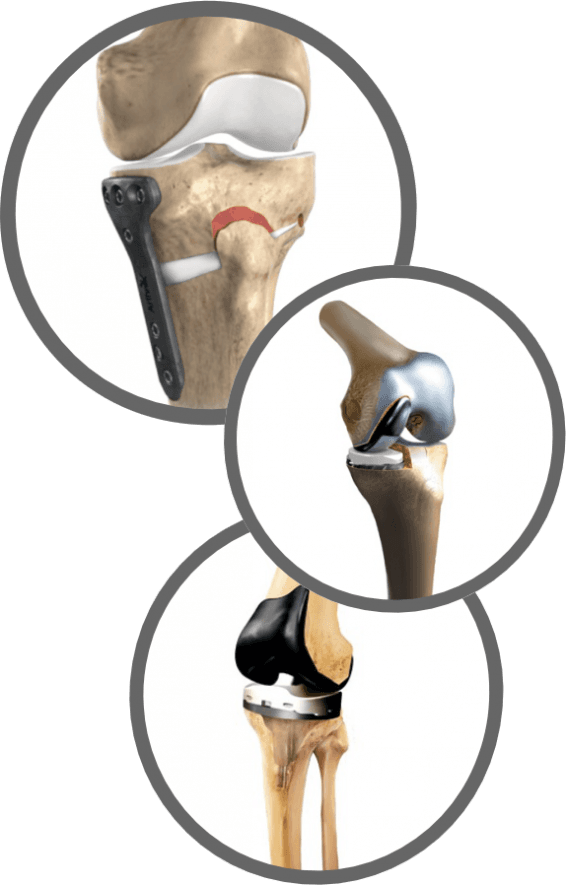
“For most surgeries, the plan is already set in advance. The diagnostic steps usually provide such a clear picture that we know exactly which technique will be necessary. However, there are always cases (especially with complex pre-existing damage or prior surgeries) in which the findings are not entirely clear or certain decisions can only be made during the procedure. Such situations are discussed with the patient in advance. In most cases, it is also clear beforehand which surgical options are available, and these must be weighed against one another depending on the intraoperative findings.
Surprises are rare in this context, neither for the patient nor for the surgeon, because in elective surgery, most aspects can be planned well in advance. Nevertheless, there are gray areas where not everything can be determined beforehand. A typical example is borderline extensive cartilage damage. Various methods are available for treating this—some more invasive, some less invasive; some one-stage, others two-stage. In such cases, the damage must be carefully assessed during the operation to select the appropriate option. These options are explained in detail beforehand so that the patient knows which alternatives are possible and that the final decision may be made in the operating room if necessary.
The patient’s preferences are also discussed beforehand, and the patient is involved in the decision-making process. Sometimes the patient prefers a single-stage procedure if possible, while other times they prefer the most comprehensive treatment available despite potentially longer and more complex postoperative care. In cases of very small or very large injuries, however, the situation is usually clear-cut, and we know exactly which procedure will be used even before the surgery,” explains Prof. Dr. Wachowski.
After reconstruction and after joint replacement, very different functional outcomes and weight-bearing profiles can be expected—and it is precisely these differences that play a central role in the treatment decision.
“In terms of weight-bearing capacity, there is a clear difference between joint-preserving procedures and joint replacement. Immediately after receiving a prosthesis, the knee is generally stable under weight-bearing. The patient may bear full weight immediately and move as much as pain allows. With joint-preserving procedures, postoperative care is significantly more complex. Cartilage regeneration or stabilizing surgeries for instability almost always require a period of weight-bearing restriction and limited flexion, because the biological structures need time to heal.
The procedures differ significantly, particularly in terms of postoperative weight-bearing capacity. After cartilage regeneration, patients must consistently walk with crutches for six to eight weeks—not because it is particularly painful, but because regeneration only works if the joint is not fully weight-bearing during this time, so as not to disrupt the formation of new cartilage. With joint replacement, on the other hand, crutches serve primarily to ensure safety and reduce pain. “If things go well and the patient feels stable, they can be discontinued relatively early without causing any damage, as long as the patient doesn’t fall,” says Prof. Dr. Wachowski, adding:
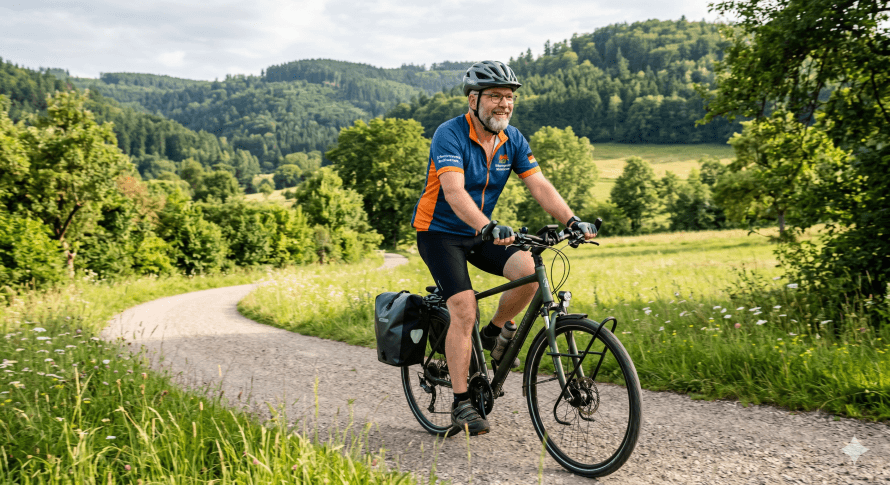
“The path back to sports also differs. Joint-friendly activities such as cycling or swimming are often possible just a few weeks after joint replacement, sometimes even during rehabilitation. With biological joint reconstruction, it takes about the same amount of time before you can cautiously start using an exercise bike again, though with greater caution, because a fall could endanger the reconstructed joint. Full athletic ability, however, is slightly limited after joint replacement.
Certain sports—such as intense downhill skiing or soccer involving physical contact with opponents—are not recommended. After ligament or cartilage reconstruction, on the other hand, the goal is often to be able to participate in all sports again, including stop-and-go and contact sports. However, this takes time: After cruciate ligament reconstruction or cartilage replacement, it is generally recommended to avoid contact sports for up to a year. Ideally, the restored joint will be more functional later on, but it is significantly more sensitive at first and requires a longer rehabilitation phase.”
Reconstruction often allows for a return to high levels of physical activity because the natural joint mechanics are largely preserved. Joint replacement reliably ensures freedom from pain and stable mobility in daily life, but it does not achieve the complex dynamics of a natural knee and is therefore more suitable for moderate physical activity without intense twisting or stop-and-go movements.
Current scientific data plays a much greater role in treatment decisions today than it did some time ago, because it helps predict very precisely how a knee will develop over the long term—both after reconstruction and after joint replacement. They thus provide a kind of “biological reality check” that matches the patient’s individual situation with the best possible evidence-based options.
“The limited lifespan of a prosthesis plays an enormous role in the decision between joint preservation and joint replacement, especially in young patients. These considerations must be addressed openly, because the hesitation to implant an artificial joint in someone in their mid-forties is entirely different from that in someone who is seventy. Even though modern joint replacements almost always last 15 to 20 years, the clock starts ticking, so to speak, the moment the implant is placed. Even if everything goes well and no accidents occur, a joint replacement in a young person will eventually fail and require revision surgery.
The situation is different for older patients: If a prosthesis is implanted at age seventy, it is highly likely to be the final solution, because in addition to its long lifespan, the risk of loosening in old age is significantly lower. Added to this is the professional situation. Some jobs simply can no longer be realistically performed with a joint replacement. Someone who is still fully engaged in their career in middle age and must cover many kilometers daily across sprawling facilities or regularly perform tasks that require kneeling may reach their limits, even with a prosthesis that objectively functions well.
There are people who cope surprisingly well with severe limitations, while others place significantly higher demands on their knee due to their life circumstances. This, too, must be discussed in great detail beforehand. “Even an optimally implanted joint replacement cannot withstand some of the stresses demanded by a professional career. That is why these considerations play a massive role in the decision of whether a joint should be preserved or replaced,” explains Prof. Dr. Wachowski.
A successful reconstruction often enables a higher level of function and a broader range of stress tolerance, especially for people who are physically active. A joint replacement, on the other hand, offers very reliable pain relief and stable function for daily life and sports, but is limited in its load-bearing capacity and cannot be compared to a youthful joint. The decision therefore always depends on the patient’s goals—maximum athletic performance or long-term, pain-free functionality in daily life.
Complex cartilage regeneration procedures are not automatically used in every attempt at joint preservation. Which method is used always depends on the size and location of the cartilage damage.
Prof. Dr. Wachowski explains: “Small defects can often still be treated with very minimally invasive procedures in which the bone is opened at specific points so that replacement cartilage can form. This older procedure continues to work reliably for small defects. As the defect size increases, so does the surgical effort and, if necessary, the invasiveness of the procedure. For medium-sized defects—about two to three square centimeters—the so-called Mince-Cartilage procedure may be an option.
In this procedure, small pieces of cartilage are harvested from a non-weight-bearing area of the joint, mixed with blood components, and reimplanted during the same operation. For even larger defects, a traditional cartilage cell transplant is necessary, which is performed in two stages: First, cartilage cells are harvested and cultured before being reimplanted during a second surgery. Which of these options is chosen therefore always depends on the individual findings and, where applicable, the patient’s preferences. If a patient falls on the borderline between different procedures, the possible options are discussed in advance so that it is clear which options are available and which of them can be applied depending on the intraoperative findings.”
The healing process and rehabilitation differ significantly between reconstruction and joint replacement—not only in terms of duration, but also in terms of goals, levels of stress, and biological requirements. Both approaches can lead to very good results, but they demand completely different adaptive responses from the body.
“Ultimately, the goal is always to preserve the knee joint as much as possible. Many decisions can be made in advance, but there are also situations in which the best course of action must be assessed intraoperatively. At our Duo practice, we perform over 200 joint replacement procedures and just as many reconstructive surgeries each year—both at our own practice and in collaboration with our partner hospitals.
This range demonstrates how frequently both approaches are considered and how individualized the decision ultimately is. Choosing the right prosthesis plays a particularly important role, especially for younger patients. When joint replacement becomes necessary, we try whenever possible to opt for partial joint replacement in this age group in order to preserve as much of the natural joint structure as possible.
Fundamentally, every treatment is based on an individualized decision made in consultation with the patient. “Only by considering the medical options, the patient’s personal circumstances, and their expectations together can we responsibly decide whether joint preservation is realistic or whether joint replacement is the better option,” emphasizes Prof. Dr. Wachowski, and with that, we conclude our conversation.
Thank you very much, Professor Dr. Wachowski, for this detailed information!
- Nationally recognized specialist in knee surgery, joint replacement, and sports orthopedics
- Extensive expertise in osteoarthritis, patellar instability, cartilage damage, cruciate ligament tears, and meniscus injuries
- Experienced in modern surgical techniques such as MPFL augmentation, trochlear plasty, ALL augmentation, and complex ligament reconstructions
- Full spectrum of cartilage surgery, including cartilage cell transplantation
- Scientifically recognized expert with numerous publications and his own research program
- Many years of experience in biomechanical research
- Outstanding university instructor and advisor to numerous doctoral candidates
- Established sports medicine specialist providing comprehensive care for recreational and professional athletes
- Specialist in complex revision surgeries and meniscus replacement
- Known for thorough consultations, clear explanations, and close follow-up care before and after surgery
Share this article
About the medical author
Alexandra Pfitzmann
Editor
Alexandra Pfitzmann – medical author: expert knowledge, professional articles and medical insights in the Leading Medicine Guide.
More about the medical author →Expert Interviews
Read next
- Expert Interviews
Expert Interview with Professor Dr. Amadeus Hornemann, MPH
Sep 18, 2026
Prof. Amadeus Hornemann on Precision Medicine in Gynecology: Modern Surgery, New Techniques, Better Quality of Life
Read more - Expert Interviews
Expert Interview with Professor Dr. Konstantinos Anagnostakos
Sep 15, 2026
Prof. Anagnostakos on Painful Knee Replacements
Read more - Expert Interviews
Expert Interview with Professor Karl Philipp Kutzner, M.D.
Sep 11, 2026
Prof. Kutzner on Cutting-Edge Endoprosthetics at ENDOPROTHETICUM Mainz
Read more