Expert Interviews
Prof. Rosenberg and Da Vinci Surgeries: A Colonic Surgery Expert Reports

Dorina Marlen Heller ·
High-precision robotics in the hands of a specialist: Prof. Dr. Robert Rosenberg is one of the most renowned surgeons using the robot-assisted Da Vinci surgical system. Robotic technology, which has long been standard in prostate surgery, is also increasingly being used in abdominal surgery. The Chief of Visceral Surgery at the Basel Cantonal Hospital is a key figure driving this trend; as a proven specialist at the Liestal campus, he enjoys an international reputation. In an interview with the Leading Medicine Guide, he explains exactly what sets this state-of-the-art surgical technology apart. In addition, the experienced, high-performing physician discusses the prognosis for recovery following robot-assisted surgery.
Leading Medicine Guide: What exactly sets Da Vinci robotic technology apart from conventional surgical methods?
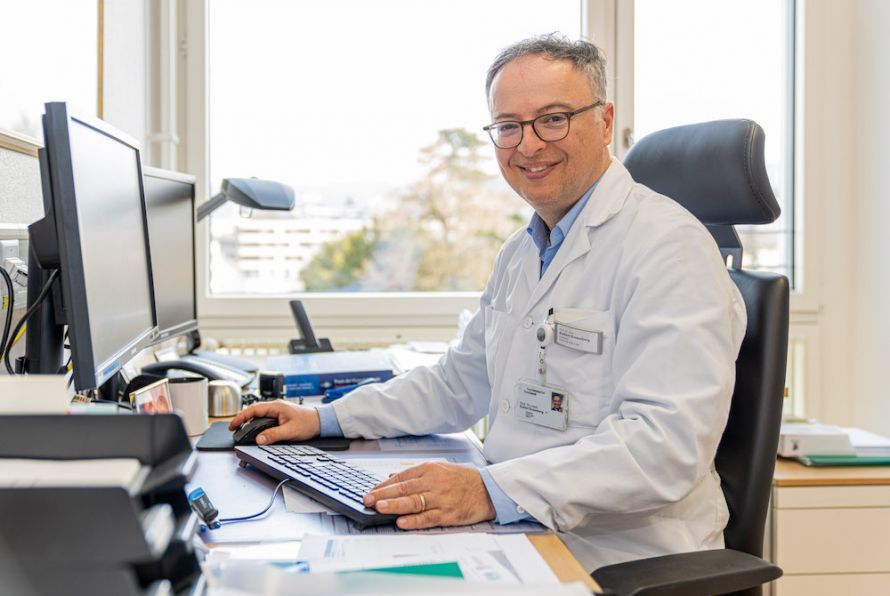
Prof. Dr. Robert Rosenberg: The truly remarkable thing about this technology is the robot’s precision, which a human hand cannot match. The robot is equipped with four arms, each fitted with different instruments—including a camera. These arms are controlled from an external console using a joystick. So I’m still the one performing the surgery as the surgeon—not the robot. The only difference is that I can sit in front of the screen instead of standing at the operating table. Another special feature of the robotic arms is that they’re much more flexible than the human hand. This makes it possible to rotate them up to 360 degrees, allowing for highly precise incisions and procedures even in the tightest spaces. In addition, the camera projects a crystal-clear image of the abdominal cavity, magnified tenfold, onto the console screen. The robot is a fantastic system that supports and facilitates surgical work.
Leading Medicine Guide: What an innovation! How has this technology evolved over time?
Prof. Dr. Robert Rosenberg: It was urology that historically made this technology a major force. Today, it’s impossible to imagine prostate surgery without the robot; it’s now considered the standard. This is because the precise dissection allows nerve fibers to be spared—at least according to the prevailing scientific consensus. Over the years, the robot has also been used increasingly in gynecology and abdominal surgery.
Leading Medicine Guide: And what happened next?
Prof. Dr. Robert Rosenberg: The technology has been continuously optimized and further developed. Before that, abdominal surgeries were more difficult. Imagine it this way: During intestinal surgery, we have to advance from the upper left abdomen through the lower left abdomen all the way into the pelvis. That requires moving the robotic arms around quite a bit. Meanwhile, the robotic arms have become increasingly slender, and their range of motion has improved enormously. As a result, the Da Vinci robot is an excellent tool for abdominal surgery as well. And not just here in Basel: Abdominal surgical procedures using robotic technology are being performed more and more frequently worldwide.
Leading Medicine Guide: What is the situation like at your clinic?
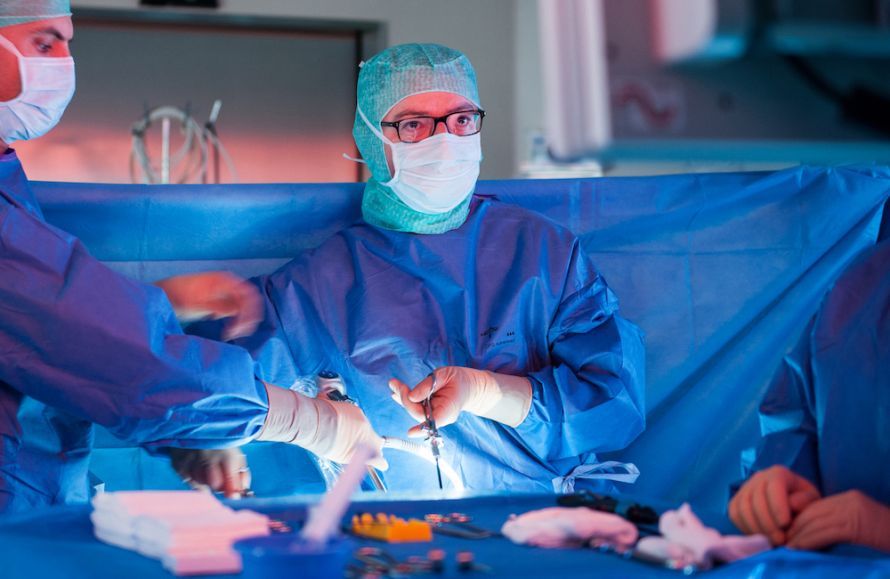
Prof. Dr. Robert Rosenberg: We’ve been using the robot for five years now. We’re currently switching to the latest model, and we’re performing about a hundred robotic surgeries a year. These are primarily intestinal and hernia surgeries, as well as diaphragmatic hernias. These are the three main areas at the moment—and the results are all very good.
Leading Medicine Guide: Do you ever encounter resistance from patients who have reservations about undergoing surgery with a robot?
Prof. Dr. Robert Rosenberg: Interestingly, that’s not the case at all. While there are a few patients who ask about it themselves, that’s likely more because the surgical method isn’t very well known. When we explain the method during the preoperative consultation, the patients immediately show a great deal of interest. Fortunately, we haven’t had any negative experiences with the robotic system so far, so we can definitely recommend it.
Leading Medicine Guide: The robot’s slimmer arms and a less invasive surgical method also improve the prognosis for healing, don’t they?
Prof. Dr. Robert Rosenberg: Yes, that’s the theory, and I’m convinced of it. However, it’s very difficult to measure this conclusively. What is clear is that the minimally invasive procedure itself is already much gentler than a large abdominal incision. The advantages of robotic technology—compared to minimally invasive or laparoscopic surgery—include a better overview and easier access. Suturing is also significantly easier with the robot. However, scientific studies have not yet been able to demonstrate that the use of robotic technology leads to a significantly improved prognosis for healing. We do have the impression, however, that patients who have undergone surgery with the Da Vinci robot recover a bit more quickly. That said, these differences cannot yet be scientifically measured, especially since we’re already achieving excellent results with conventional minimally invasive techniques.
Leading Medicine Guide: What is it like to be directly involved in such significant innovations in advanced medicine?
Prof. Dr. Robert Rosenberg: For me, as chief of surgery at a large cantonal hospital, it’s important that we surgeons can participate in these innovations and continue to advance our skills with the latest technologies. This benefits our patients, who gain from the fact that we are at the cutting edge of medical knowledge. After all, robotic systems will continue to evolve steadily in the coming years and become increasingly prevalent in medicine.
Leading Medicine Guide: Are there any other innovations in the field of colorectal surgery that are already being incorporated into your practice?
Prof. Dr. Robert Rosenberg: What’s truly outstanding—and has further improved our results—is the innovative assessment of anastomotic blood flow using a fluorescent dye during surgery. Here’s how it works: When you remove a section of the intestine, the two ends of the intestine must be securely connected to each other so that intestinal function is restored. To do this, a procedure called an anastomosis—that is, a connection between the intestines—is performed. It is crucial to ensure that blood flow is maintained all the way to the very tips of the anastomosis.
Leading Medicine Guide: And how should we visualize this?
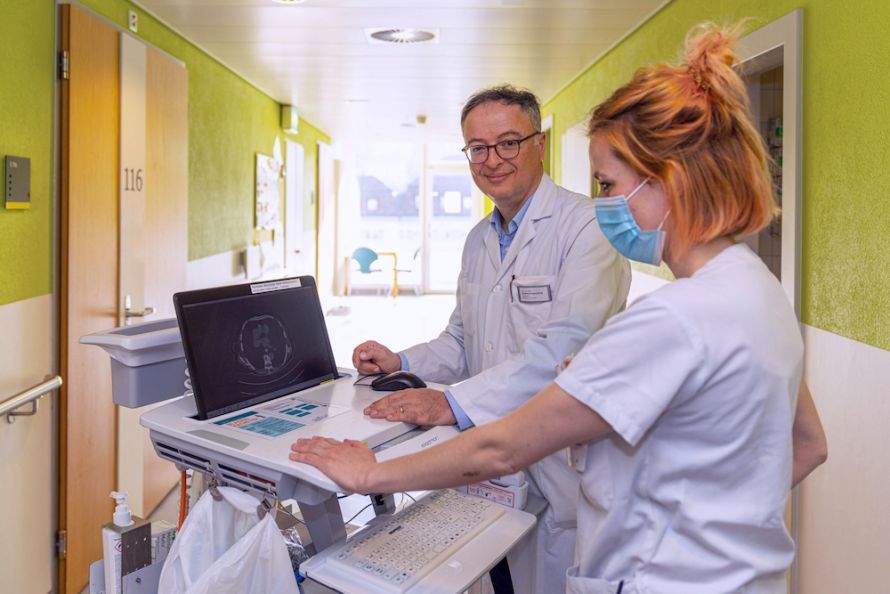
Prof. Dr. Robert Rosenberg: For several years now, we’ve been using the PINPOINT method: It’s a device that uses a fluorescent dye called ICG, which stands for indocyanine green. So, when I have two ends of the intestine that I want to connect, the anesthesiologist injects ICG intravenously. We dim the lights in the room and use a special laser camera. This allows us to see where the intestine is stained green. And if the staining is missing in certain areas, then I know I still need to remove a section there. This application has significantly improved outcomes in colorectal surgery in recent years.
Leading Medicine Guide: Thank you very much for this fascinating and insightful conversation, Prof. Dr. Rosenberg!
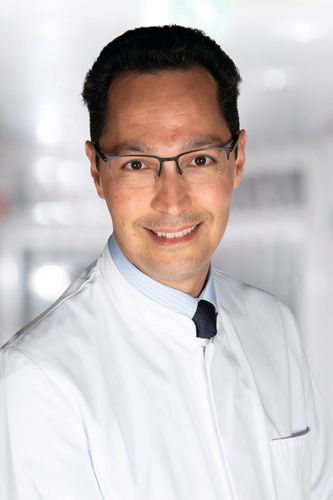
Prof. Dr. med. Robert Rosenberg, FACS, EMBA, is a highly specialized oncologic and visceral surgeon who, as Chief of Visceral Surgery, also heads the renowned Colorectal Cancer Center at the Cantonal Hospital of Basel. As a certified senior colorectal surgeon, he enjoys an international reputation for his outstanding diagnostic and therapeutic expertise. The surgical team in Liestal offers the full spectrum of visceral surgery using open, laparoscopic (i.e., minimally invasive keyhole) techniques, as well as robot-assisted surgical techniques. You can learn more about the Baselland Cantonal Hospital’s Liestal location and Professor Dr. Robert Rosenberg on the profile page in the Leading Medicine Guide.
Share this article
About the medical author
Dorina Marlen Heller
Editor
Dorina Marlen Heller – author: Explore expert medical articles in the Leading Medicine Guide.
More about the medical author →Basel-Country Cantonal Hospital, Liestal Site
ProfileExpert Interviews
Read next
- Expert interview
Cardiogeriatrics: Significance and benefits in the context of hospital reform
Sep 21, 2026
Cardiogeriatrics: Significance and benefits in the context of hospital reform
Read more - Expert interview
Expert Interview with Professor Dr. Amadeus Hornemann, MPH
Sep 18, 2026
Prof. Amadeus Hornemann on Precision Medicine in Gynecology: Modern Surgery, New Techniques, Better Quality of Life
Read more - Expert interview
Expert Interview with Professor Dr. Konstantinos Anagnostakos
Sep 15, 2026
Prof. Anagnostakos on Painful Knee Replacements
Read more