Expert Interviews
Rare Expertise: Prof. Stehr and Genital Malformations in Children
Leading Medicine Guide Editors ·
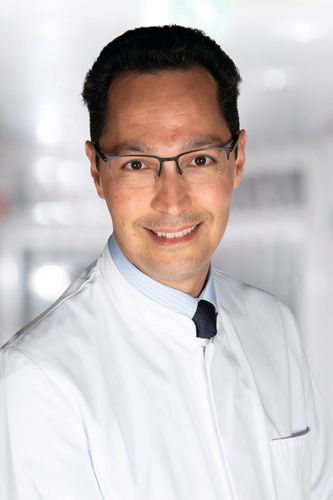
They are extremely rare—but the diagnosis comes as a shock: What should you do if children are born with genital malformations? Clearly, the best course of action is to immediately consult an experienced specialist who focuses specifically on this field. Prof. Dr. med. Dr. h.c. Maximilian Stehr of the Cnopf Children’s Hospital in Nuremberg is such a doctor. Not only does he possess outstanding expertise at the university level, but his great empathy also allows him to immediately ease the burden on affected parents—because he always works with them to find the right solution. Leading Medicine Guide spoke with the expert, who is one of the very few specialists in this field.

Leading Medicine Guide: Professor Stehr, are genital malformations detected immediately after birth, or are they only diagnosed at a later age?
Prof. Dr. med. Maximilian Stehr: Genital malformations are congenital. Therefore, they are usually detected immediately during the first examination right after birth. The most common condition is hypospadias, which is a congenital malformation of the male urethra. In this condition, the urethra is shortened and does not end at the tip but rather on the underside of the male genitalia. In severe cases, this urogenital malformation should be treated surgically; we recommend such surgery between the 9th and 12th month of life. However, there are also much rarer malformations. Some may not be noticed until later, such as malformations of the internal female reproductive organs.

Leading Medicine Guide: For parents, a diagnosis shortly after birth comes as a shock. Where can they find help, and what should they do in such a case?
Prof. Dr. med. Maximilian Stehr: Indeed, it is not easy for parents to be confronted with such a diagnosis. We offer specialized consultation hours for this at the Cnopf Children’s Hospital in Nuremberg. Overall, there are few centers in Germany that specialize in genital malformations. Here in Nuremberg, we have extensive experience in treating these children.
Leading Medicine Guide: How many specialists are there in Germany for complex surgical cases in this field?
Prof. Dr. med. Maximilian Stehr: There are few specialists for complicated and rare urogenital malformations. Most of them are members of the European Society of Pediatric Urology (ESPU). This medical society regularly organizes specialized continuing education courses. For example, along with two other colleagues from our clinic, I have earned the Fellow of the European Academy of Pediatric Urology (FEAPU) designation, which is a kind of European board certification in pediatric urology. In Germany, only 26 specialists are authorized to hold this title.

Leading Medicine Guide: When are children typically operated on?
Prof. Dr. med. Maximilian Stehr: That depends on the diagnostic picture. Some malformations must be addressed immediately because they can otherwise become life-threatening—for example, when urinary outflow is affected. Cases involving anatomical reconstructions are usually performed around the child’s first birthday. It’s important to keep in mind that we’re dealing with a psychologically very sensitive area. The procedure must not become a traumatic experience for the child; from a child psychiatric or child psychological perspective, we must be extremely gentle.
Leading Medicine Guide: Are there any special, new surgical methods in this specific field of pediatric urology?
Prof. Dr. med. Maximilian Stehr: To treat hypospadias, for example, there are a variety of technical approaches. It always depends on the individual case. The procedure can take several hours; in any case, we use only the finest instruments and suture materials and work with magnifying glasses and a great deal of patience. At the Cnopf Children’s Hospital, we perform about 100 hypospadias surgeries per year.
Leading Medicine Guide: Is one surgery sufficient, or do the corrections need to be performed in several stages?
Prof. Dr. med. Maximilian Stehr: We can often complete the surgery in a single step. However, this isn’t always advisable, as the risk of complications would increase. We always discuss everything in great detail with the parents, who know their child and his or her specific condition best.

Leading Medicine Guide: Parents play an important role throughout the entire treatment process and certainly need special support as well. How does that work?
Prof. Dr. med. Maximilian Stehr: Yes, when treating sick children, we as physicians must always keep the parents and the entire family in mind. That’s why, if necessary, we provide parents with psychological support and counseling, and our nursing staff is also specially trained in this regard. Severe genital malformations, in particular, are very stressful for parents.
Leading Medicine Guide: Could you elaborate on that a bit?
Prof. Dr. med. Maximilian Stehr: Time and again, children are born who, at first glance, cannot be clearly assigned to one sex based on their external appearance. Either the chromosome set does not match the appearance of the genitals, the genitals themselves are ambiguously formed, or the gonads are malformed. Sometimes both testicular and ovarian tissue is present. The debate over these children’s sexual autonomy is currently underway. I was recently invited to Berlin as an expert to the Federal Ministry of Justice to comment on this topic. The term “disorders of sex development (DSD)” encompasses many conditions, some of which are very, very rare. Today, we believe that in severe cases of ambiguous sex development, the affected children should be allowed to have a say in the decision-making process, and that it is often best to wait and see how things develop. After all, the ultimate goal should be to enable them to lead as happy a life as possible, rather than forcing them to conform to a norm. In any case, the family should seek counseling at a specialized center and entrust themselves to the various specialists trained in this field.
Thank you very much for the in-depth conversation and the profound insights into your important medical work as a pediatric surgeon and pediatric urologist!
What exactly is meant by…
Genital malformations are rare and are usually diagnosed immediately after birth. For treatment, parents can seek advice at a specialized center, such as: Cnopfsche Children’s Hospital, Pediatric Urology & Pediatric Surgery, St.-Johannis-Mühlgasse 19, 90419 Nuremberg, www.klinik-hallerwiese.de
Hypospadias is the most common congenital malformation of the male urethra. It is usually detected in newborns and is typically treated surgically around the age of one.
“Disorders of Sex Development (DSD)” (formerly: intersex) describes ambiguous sex development, possibly involving a discrepancy between chromosomal sex, internal sex organs, and the appearance of the external sex organs. The exact cause of the malformation is not known in all cases. Earlier treatment approaches focused on assigning a gender for upbringing as early as possible and performing surgery accordingly. This treatment approach is now being critically questioned, particularly by those affected. Since 2015, the German Medical Association has used the term “variants of sex development” to avoid pathologization, which those affected view as discriminatory. Today, the focus is on discussing the topic of intersexuality with the child or adolescent and concentrating not on achieving the most “normal” appearance possible, but on creating the most satisfying life plan possible given this particular form of sex development.
Image sources: (c) Trsakaoe, (c) Konstantin Yuganov, (c) Oksana Kuzmina, (c) komokvm, (c) Viacheslav lakobchuk – Adobe Stock.
Share this article
Expert Interviews
Read next
- Expert interview
Cardiogeriatrics: Significance and benefits in the context of hospital reform
Sep 21, 2026
Cardiogeriatrics: Significance and benefits in the context of hospital reform
Read more - Expert interview
Expert Interview with Professor Dr. Amadeus Hornemann, MPH
Sep 18, 2026
Prof. Amadeus Hornemann on Precision Medicine in Gynecology: Modern Surgery, New Techniques, Better Quality of Life
Read more - Expert interview
Expert Interview with Professor Dr. Konstantinos Anagnostakos
Sep 15, 2026
Prof. Anagnostakos on Painful Knee Replacements
Read more