Expert Interviews
Revision Surgery—A Special Challenge: An Interview with Expert Prof. Gautschi

Alexandra Pfitzmann ·
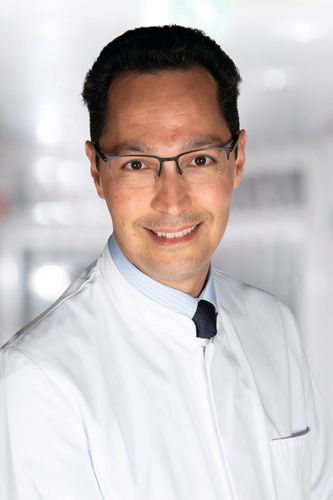
Prof. Dr. med. Oliver P. Gautschi is a leading expert in the field of spinal surgery with an impressive career and extensive experience in the treatment of spinal disorders. He began his medical career after studying medicine at the University of Basel, where he also earned his doctorate. As a board-certified neurosurgeon, he specialized in spinal surgery early in his career and has continuously expanded his expertise in this field.
His expertise covers the entire spectrum of spinal surgery, ranging from minimally invasive procedures to complex surgeries for spinal tumors and trauma. In doing so, Prof. Dr. Gautschi places particular emphasis on motion-preserving procedures (whenever possible) and minimally invasive techniques to ensure optimal recovery for his patients. His expertise also extends to navigation during spinal procedures, enabling him to ensure exceptional precision and safety in treatment.
Another focus of his work is clinical research in the field of spinal surgery. As a member of the Department of Neurosurgery and Spinal Surgery of Central Switzerland at the Hirslanden Clinic St. Anna in Lucerne, Prof. Dr. Gautschi works as part of an interdisciplinary team of highly qualified physicians and nurses, to provide patients with comprehensive and personalized care. The clinic is equipped with state-of-the-art technology and first-class facilities to ensure precise diagnosis and treatment.
Through his empathetic care and personal dedication, Prof. Dr. Gautschi plays a key role in ensuring that patients feel well cared for and that optimal treatment outcomes are achieved. His goal is to enable patients to enjoy an improved quality of life through high-quality medical care, to make daily activities easier, to alleviate pain, and to promote their long-term health.
Revision surgeries are particularly challenging and generally require an extremely high level of expertise. The editorial team of the Leading Medicine Guide spoke with specialist Prof. Dr. Oliver Gautschi about this topic.
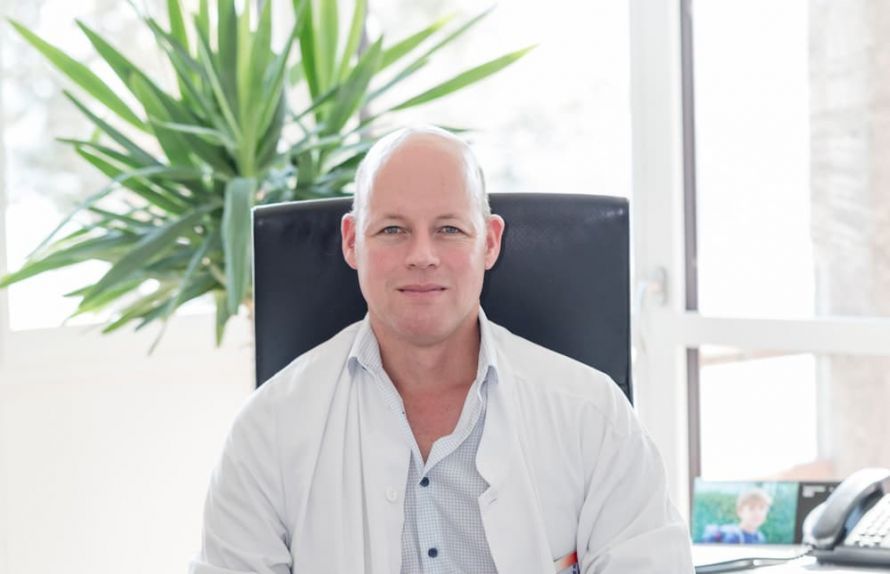
The spine is a complex and heavily stressed system that is subjected to the forces of gravity every day. Over time, various factors such as implant failure, infections, or osteoporosis can lead to complications that necessitate repeat surgery. These so-called revision procedures present a challenge and require experienced surgeons as well as specialized facilities. Spinal surgery is often preceded by long periods of severe discomfort. Patients have high expectations for the procedure, and thanks to state-of-the-art techniques and highly specialized surgery, treatment outcomes today are generally above average. Performing revision surgery is more demanding than the initial procedure, as scar tissue or changes resulting from the previous surgery are often present, and the anatomy is usually altered as well. Depending on the cause of the problems, various techniques can be used to relieve pressure on nerves, stabilize vertebral bodies with screws, or promote bone healing.
After an initial spinal surgery, various complications may arise that could necessitate revision surgery.
“In principle, the same symptoms that were present before surgery can recur after spinal surgery. These include pain, as well as motor and sensory deficits. These symptoms (especially the pain) can usually be treated with medication at first. However, depending on the severity of the symptoms, revision surgery may need to be considered. One of the most common causes is fusion failure, in which the fusion of two or more vertebrae does not heal completely, leading to pain and instability. Implant problems—such as screws, plates, or rods that loosen, break, or shift—may also require repeat surgery. In addition, excessive scar tissue around the nerve roots can cause pain or neurological symptoms. Conditions such as herniated discs or spinal stenosis may recur after a successful initial surgery. Inadequate stabilization of the spine can lead to mobility and instability in the operated area, which may cause further symptoms. “Infection is no longer as common today thanks to established treatment protocols such as sterilization of instruments, perioperative antibiotic prophylaxis, and early preparation of the skin and nasal mucosa (keyword: decolonization),” explains Prof. Dr. Gautschi at the beginning of our conversation.
Diagnostic procedures for revision surgery following a previous spinal operation are crucial for identifying the exact cause of persistent symptoms or complications.
Compared to the examinations performed before the initial surgery, these procedures can be tailored more specifically to the present symptoms and potential problems. “The patient is usually referred back by their primary care physician with the explanation that there is a new or increasingly treatment-resistant pain condition. As for the necessary imaging, an MRI is generally the imaging modality of choice, since, for example, in the case of a herniated disc, a standard X-ray would show nothing other than a loss of disc height. Nerve compensation cannot be visualized. Even on a CT scan, the individual segments are less clearly visible. However, if the patient has already undergone spinal fusion surgery, a SPECT-CT (Single Photon Emission Computed Tomography-Computed Tomography) scan can also be performed; this is a hybrid imaging technique that combines two different technologies: SPECT and CT. In this procedure, radioactive tracers are injected into the body. These tracers emit gamma rays, which are detected by a special camera to create three-dimensional images of organ function. This provides information on where hypermetabolism—or overactivity—is present, which may indicate active spondylarthrosis or osteochondrosis—a degenerative process involving active inflammation in the facet joint or intervertebral disc. Two scans are performed within three hours. “Depending on the intensity of the colors in the scan results, the extent of the activity can be determined,” says Prof. Dr. Gautschi regarding the unique capabilities of this diagnostic method.
By comparing the images with those taken before the initial surgery, doctors can identify changes such as implant failure, loosening, spondylolisthesis, infections, bleeding, scarring, or signs of compression. A neurological examination is also of great importance for assessing the extent of any neurological symptoms that may have developed after surgery. During this examination, reflexes, sensation, muscle strength, and coordination are assessed to detect possible nerve damage or functional impairments. Particular attention is paid to symptoms such as numbness, tingling, weakness, or paralysis, which could indicate nerve compression or damage. Functional tests, such as flexion-extension X-rays, can provide information on how the spine behaves under stress. These dynamic images show whether there is instability or restricted movement in the operated area, which could indicate fusion failure or loosening of the implants.
Revision surgery in spinal surgery presents a complex challenge associated with a variety of risks and difficulties, particularly when compared to initial procedures.
One of the main difficulties lies in the altered anatomy and tissue quality following previous surgeries. A high level of expertise is absolutely essential to perform a revision surgery successfully and safely. “Every revision surgery poses a greater risk to the patient and is an extremely demanding challenge for the entire operating room team. Scarring and changes in tissue consistency can complicate the surgical approach and hinder the identification of anatomical structures. Another risk relates to the increased complexity of the surgery itself. Previous surgeries can impair the surgical field of view, making navigation within the surgical site more difficult. As a result, the anatomical landmarks are often no longer present—that is, the natural anatomy we learned during our training is no longer recognizable. “It may therefore be the case that the patient is left with nothing but a massive scar plate, making it difficult to identify boundaries, which in turn increases the risk of muscle and/or nerve injury from the sharp instruments used,” explains Prof. Dr. Gautschi, adding: “If the anatomy is no longer normal due to previous surgeries and the bony structures are no longer clearly visible, then you usually need a computer-assisted navigation technique or a 3D image-guided surgical technique to get a better view of the surgical site and, if necessary, make precise corrections. In my opinion, this should be standard practice in revision surgeries, also for the patient’s safety,” says Prof. Dr. Gautschi.
A commonly used technique involves removing scar tissue and adhesions to improve visibility of the relevant anatomical structures. This allows for more precise placement of implants and more effective treatment of nerve compression. In addition, spinal stability can be improved by correcting misalignments and using additional instrumentation. To strengthen bone mass and promote fusion, bone substitute materials, growth factors, or biological substances such as bone morphogenetic proteins (BMP) can be used. These help accelerate the healing process and improve the integration of implants.
“Revision surgery always takes a little longer because the anatomical structures have changed and you’re dealing with scar tissue. Some of our patients here have undergone surgery many times and suffer from infections, hematomas, or recurrent herniated discs. The more often a patient has been operated on, the more scar tissue they have (as a rule), which prolongs the duration of each surgery. The length of the hospital stay depends on the extent of the revision surgery. Typically, the patient can go home after 1–3 nights. If spinal fusion was performed, the patient stays in the hospital a little longer, especially if the patient is older,” explains Prof. Dr. Gautschi.
The recovery time and rehabilitation phase following revision spine surgery differ in several ways from those following an initial procedure.
Patients who require revision surgery often have a more complex medical history and a higher risk of postoperative complications such as infections or bleeding. Treating these complications may prolong the rehabilitation phase. In addition, it may be necessary to manipulate muscles and tissues that are already weakened, leading to a longer healing process. This may require more time to strengthen the muscles and restore mobility.
“What the patient is and isn’t allowed to do during rehabilitation depends, once again, on the reason for and extent of the revision surgery. For example, anyone who lifts heavy loads too soon after repeat disc surgery risks an early recurrence.” Physical activities—and especially straining the back—should be strictly avoided during the first few weeks. The muscles require a longer-term rehabilitation process, which works well with physical therapy. Unlike in the past, early mobility is now encouraged in all cases, so younger patients are helped to their feet on the same day as surgery, while older patients are sometimes not helped up until the second day. Effective pain management is initiated so that the patient can move as much as possible. I perform a great many revision surgeries and also see many patients referred from other cantons and even from abroad. On average, 10–20% of all patients who have previously undergone back surgery will require at least one revision surgery in the course of their lives. This is not necessarily due to initial surgeries that went wrong, as the spine naturally ages over time and degeneration progresses. Some patients even require more than one revision surgery at times—this is simply the nature of the condition and is partly genetically determined. Fortunately, the Swiss healthcare system is structured in such a way that every patient has access to spinal surgery within a reasonable timeframe and distance. However, in smaller centers or private practices, the local infrastructure and postoperative monitoring capabilities are often too limited to safely and effectively perform, for example, extensive and complex revision surgeries,” states Prof. Dr. Gautschi.
Psychologically, revision surgery can place a greater burden on the patient. The disappointment that the initial surgery was unsuccessful and the uncertainty about the outcome of the revision can affect the patient’s motivation and the course of rehabilitation. Therefore, it is important for patients and their doctors to set realistic expectations and develop an individualized rehabilitation plan to achieve the best possible outcomes. Overall, revision surgery on the spine often requires a longer recovery time and more intensive rehabilitation compared to the initial procedure, as it involves additional challenges.
“The success rate after revision surgery does not depend solely on the surgery itself. If the surgery went well and the bone substrate is solid, the screws are firmly anchored, the imaging looks good, the spine is aligned, and the patient is doing well after 3–6 months, then the chances are very high that the spine will hold. However, if, for example, a fall occurs and the spine becomes unstable, or the patient develops progressive osteoporosis or muscle atrophy and a vertebra collapses, then the whole process can start all over again. “I always recommend that my patients come in for a checkup every 1–2 years. And if patients notice new problems, they should always get in touch promptly—which they do when they feel well supported,” says Prof. Dr. Gautschi, speaking from his own experience.
Seeking a second opinion before revision surgery—especially for instrumented procedures—is important and advisable under certain circumstances.
First and foremost, it enables the patient to make an informed decision about their treatment plan by considering different medical opinions and options. This promotes patient autonomy and trust in the medical process. Furthermore, a second opinion can help avoid potentially unnecessary procedures. In some cases, an alternative treatment method or a more conservative approach can offer an equally effective solution without incurring the risks and burdens of another surgery. A second opinion can also help clarify diagnostic uncertainties and ensure that the planned procedure is truly the best option for the patient. Despite these advantages, there are also some challenges associated with seeking a second opinion.
On the topic of second opinions, Prof. Dr. Gautschi states clearly: “A second opinion usually makes sense in cases of revision surgery. Because when two colleagues confirm a course of treatment, the patient is, so to speak, ‘reassured.’ It becomes problematic, however, when the patient is in pain and it’s not entirely clear why. And if the patient goes from doctor to doctor, and each one says something different, that doesn’t help the patient—it tends to lead to even greater uncertainty. On the other hand, I believe that every surgeon should be open to the idea if a patient wants to seek a second opinion. After all, not every opinion is always 100% right or 100% wrong. Especially in spinal surgery, there are many options that can lead to a good overall outcome. In the end, it’s always about finding a sensible solution for the patient. The challenge here is to reach the right consensus. Sometimes it also helps to consult the primary care physician as a mediator when there are two completely opposing opinions. In such cases, a third opinion often makes sense.”
Get expert advice at the Neuro and Spine Center at Klinik St. Anna – Hirslanden Clinic!
“There should always be a clear goal: We want our treatments and therapy to help the patient experience a significant or complete reduction in pain, achieve an improvement in daily activities with enhanced mobility, and attain a higher overall quality of life. Of course, all of this is only possible if the clinical and radiological conditions are met. At the same time, the treatment should be chosen to minimize risks and complications while keeping blood loss to a minimum. This means performing surgery with the smallest possible incisions, making full use of the infrastructure—including 3D navigation, monitoring, intraoperative imaging, and tailored pain management—and operating only when all conservative therapies have been exhausted. Unfortunately, many patients undergo unnecessary surgery. The key is to perform the right surgery on the right patient at the right time. And then there’s a good chance the patient will have a positive outcome,” says Prof. Dr. Gautschi, and with that, we conclude our interesting conversation.
Thank you very much, Professor Dr. Gautschi, for this fascinating insight into spinal surgery!
Share this article
About the medical author
Alexandra Pfitzmann
Editor
Alexandra Pfitzmann – medical author: expert knowledge, professional articles and medical insights in the Leading Medicine Guide.
More about the medical author →Expert Interviews
Read next
- Expert interview
Cardiogeriatrics: Significance and benefits in the context of hospital reform
Sep 21, 2026
Cardiogeriatrics: Significance and benefits in the context of hospital reform
Read more - Expert interview
Expert Interview with Professor Dr. Amadeus Hornemann, MPH
Sep 18, 2026
Prof. Amadeus Hornemann on Precision Medicine in Gynecology: Modern Surgery, New Techniques, Better Quality of Life
Read more - Expert interview
Expert Interview with Professor Dr. Konstantinos Anagnostakos
Sep 15, 2026
Prof. Anagnostakos on Painful Knee Replacements
Read more