Expert Interviews
“We don’t perform surgery in 80 percent of cases!” An interview with spine specialist Dr. Urs Iwan Zuberbühler

Claudia Dechamps ·
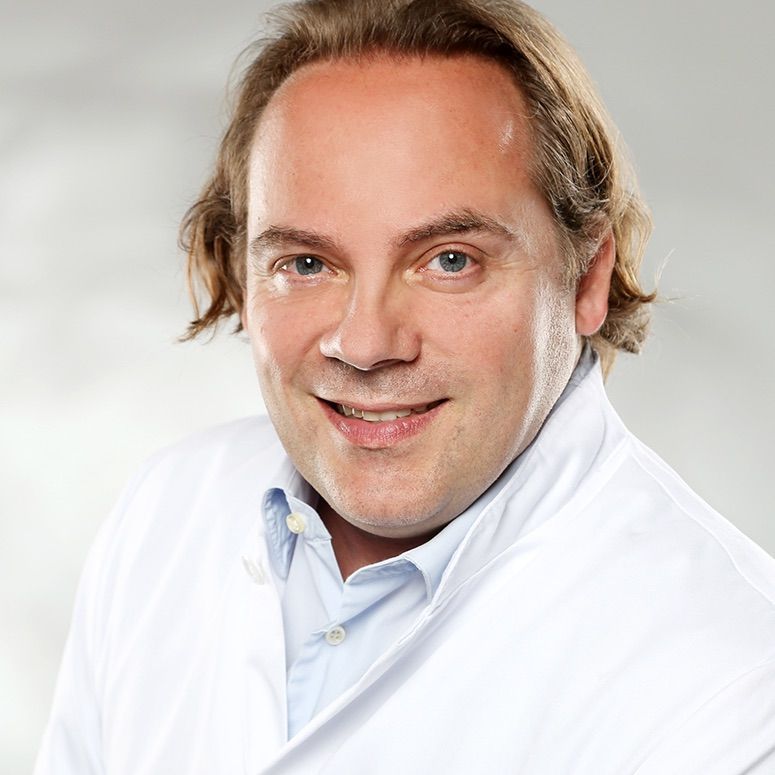
“Most people with back pain have completely wrong ideas about where to get the right kind of help.” That’s coming from someone who really knows what he’s talking about: Spine specialist Dr. med. Urs Iwan Zuberbühler is a board-certified specialist in orthopedic surgery and musculoskeletal traumatology—working, among other places, at the Neuro and Spine Center at the Hirslanden Andreasklinik in Cham. He also serves as an affiliated physician at several renowned clinics in Switzerland. In this interview, Dr. Zuberbühler—who is also highly regarded as a pain specialist and scoliosis surgeon—explains what patients with back pain should do.
Leading Medicine Guide: Dear Dr. Zuberbühler, in our experience, back pain is often not taken very seriously, even when it persists for a long time. Many people initially try to relieve it with common home remedies—is that the wrong approach?
Dr. med. Urs Iwan Zuberbühler: First of all, that’s not wrong. Often, the pain really does go away after a short time. About sixty to seventy percent of common back pain is localized in the lower part of the spine. There are a number of remedies available, ranging from hot water bottles to ointments to special patches from the pharmacy. If those help, then the goal is achieved. However, if the pain keeps coming back—almost daily—and if it’s always the same kind of pain and you can’t seem to recover from it at all, then you should definitely take action right away.
Leading Medicine Guide: And where should someone turn if they’re constantly plagued by back pain?
Dr. Urs Iwan Zuberbühler: In this case, it certainly makes sense to seek advice at a spine center. But many people worry that such a center is too specialized for their back pain and that it primarily treats and operates on only difficult cases. That’s simply not true: Spinal medicine is the domain of the spinal surgeon. We treat back pain, as well as pain and weakness in the legs caused by nerve irritation.
Leading Medicine Guide: So people’s self-diagnoses often prevent them from taking the right course of action?
Dr. Urs Iwan Zuberbühler: Exactly, because the first step toward treatment is identifying the cause of the symptoms—which requires the most accurate diagnosis possible. We spinal surgeons treat absolutely every type of back pain. For us, there is no such thing as “simple” back pain; instead, we prioritize precise diagnosis and targeted treatment—primarily conservative, but surgical when necessary.
Leading Medicine Guide: However, with back pain, physical therapy is often prescribed for a certain period of time, and most patients simply come to terms with the fact that the pain is a part of their daily lives, sometimes more, sometimes less.
Dr. Urs Iwan Zuberbühler: As I said, an accurate diagnosis is crucial for back pain. Once the cause of the back pain is known, treatment can be tailored to the specific issue. Very often, physical therapy based on the diagnosis proves successful. The causes of back pain are multifactorial. That’s why interdisciplinary care for patients is so important. Back pain belongs in the hands of a specialist who uses their expertise to determine exactly what is causing the pain. After all, there is no single cause of back pain.
Back pain has many causes
Leading Medicine Guide: But what are they?
Dr. med. Urs Iwan Zuberbühler: Degenerative changes in the intervertebral discs or facet joints, or irritation of the nerve roots, can cause pain in the lower back. Likewise, poor posture, muscle weakness, obesity, or osteoporosis, a herniated disc, a joint blockage, or a previous fall can contribute to back pain. However, there are also causes of pain in the spinal region that are related to inflammatory reactions in the internal organs and are triggered, for example, by the intestines, the kidney-bladder area, or gynecological factors.
Leading Medicine Guide: Nevertheless, many people will think that a spine center or a spine surgeon isn’t quite the right choice for their relatively simple back pain.
Dr. Urs Iwan Zuberbühler, M.D.: Many patients are afraid that a spine surgeon would only be interested in performing surgery. But this preconception is not true. Spine medicine is primarily about assessment, education, and counseling for the patient. We do not operate on 80 percent of our patients; instead, we treat them using a range of other options. Those who come to us are not there to discuss surgery; rather, they come for a differentiated diagnosis and targeted therapy that is primarily non-surgical.
Leading Medicine Guide: What does the diagnostic process look like when it comes to back pain?
Dr. Urs Iwan Zuberbühler: The standard procedure is a detailed consultation with the patient. A thorough clinical examination is the next step, followed by an X-ray, MRI, or, if necessary, a CT scan. If needed, additional neurological and electrophysiological tests are performed. Once all test results are available, we discuss the findings as well as possible treatment options.
MRI
Magnetic resonance imaging (MRI) is an imaging examination. Magnetic waves are used to generate precise, millimeter-resolution cross-sectional images of the body’s interior. This allows even small changes to be visualized. Unlike an X-ray, this procedure does not expose the body to radiation.
Leading Medicine Guide: Many cases of back pain have psychological causes. How can you determine this—or perhaps better yet, “filter it out”?
Comprehensive Diagnosis: “I build a relationship with my patients!”
Dr. Urs Iwan Zuberbühler, M.D.: As a spine surgeon, I build a relationship with my patients. After a thorough evaluation, I explain the examination results in detail. Only then do we begin targeted, individualized therapy—for example, with physical therapy, osteopathy, or interventional pain therapy, such as nerve blocks. Throughout the course of treatment, I see the patient regularly to monitor how successful the targeted interventions are. To identify psychological causes of the symptoms—as a doctor, you have to be very vigilant; this requires a lot of observation, conversation, and active listening. During these conversations, I also explain the mechanisms that can lead to symptoms. These include poor posture, lack of exercise, and sometimes even improper exercise, as well as mental stress or overload. Spinal medicine is a very complex field.
What is an infiltration for back pain?
During an infiltration, a mixture consisting of a local anesthetic and an anti-inflammatory drug is injected directly into the source of the pain. This reduces irritation, inhibits inflammation—and relieves pain. After an infiltration, temporary sensory disturbances or even muscle weakness may occur. Therefore, rest is recommended: it’s best to lie down and wait until the effects take hold.
Leading Medicine Guide: That’s actually surprising—that a spine surgeon doesn’t primarily perform surgery.
Dr. Urs Iwan Zuberbühler: Of course we perform surgery! However, surgery is always the last resort in pain management. In fact, only about twenty percent of the patients who come to our clinic require surgery. There are so many conventional ways to reduce lower back pain. However, physical therapy prescribed simply on a hunch is often of little help. About sixty to seventy percent of back pain is caused by degenerative changes; in such cases, we proceed step by step, see the patient regularly, and monitor how successfully the treatment is progressing.
Leading Medicine Guide: When is surgery truly necessary—for example, in cases of herniated discs?
Dr. Urs Iwan Zuberbühler, M.D.: Surgery is indicated after unsuccessful conservative treatment of the pain or in cases of neurological deficits such as sensory disturbances or motor weakness in the leg. In such cases, the surgery should be performed promptly to prevent permanent damage.
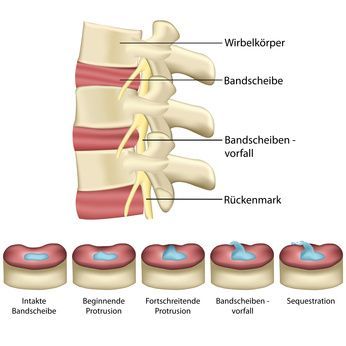
Eighty percent of herniated discs can be successfully treated conservatively or with injection therapy. Surgery is only recommended in cases of neurological deficits, but even then it should be performed promptly to prevent permanent damage. For example, bladder dysfunction associated with a herniated disc is considered a medical emergency.
“A spinal center focuses on diagnosis, education, counseling, and precisely tailored treatment”
Leading Medicine Guide: As a patient with back pain, what is the best approach when choosing a doctor?
Dr. Urs Iwan Zuberbühler, M.D.: First of all, there’s nothing wrong with seeing your primary care physician. However, if the pain does not improve within a reasonable amount of time, you should ask to be referred to a specialist—which does not mean that surgery will be performed immediately. A spine center focuses on diagnosis, education, consultation, and precisely tailored treatment. Back pain alone—not caused by a vertebral fracture—is rarely corrected with surgery.
Leading Medicine Guide: Dr. Zuberbühler—thank you very much for these interesting insights!
You can find out more about this experienced expert here on his profile page.
Share this article
Expert Interviews
Read next
- Expert interview
Expert interview with Professor Dr Elmar Herbst, PhD
Oct 15, 2026
Patient-centred and personalised knee surgery
Read more - Expert interview
Cardiogeriatrics: Significance and benefits in the context of hospital reform
Sep 21, 2026
Cardiogeriatrics: Significance and benefits in the context of hospital reform
Read more - Expert interview
Expert Interview with Professor Dr. Amadeus Hornemann, MPH
Sep 18, 2026
Prof. Amadeus Hornemann on Precision Medicine in Gynecology: Modern Surgery, New Techniques, Better Quality of Life
Read more