Expert Interviews
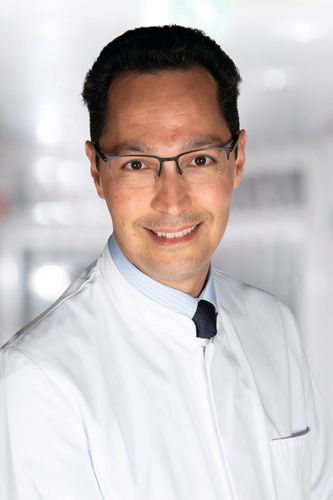
The Eustachian Tube - Expert Interview with Professor Holger Sudhoff, M.D., Ph.D., FRCS, FRCPath

Alexandra Pfitzmann ·
Professor Dr. med. Dr. rer. nat. Holger Sudhoff, FRCS, FRCPath, is a leading specialist in otolaryngology and head and neck surgery and heads the newly opened Bielefeld Head Center. This state-of-the-art facility, which opened its doors in May 2024 at the Seidensticker-Kontor in Stadtholz, is specifically designed for private patients suffering from various head and skin conditions. Drawing on his extensive knowledge and international experience, Prof. Dr. Sudhoff, together with a highly qualified team of specialists and surgeons, has created an environment that provides first-class medical care at the highest level.
The Bielefeld Head Center features two state-of-the-art operating rooms, where at least 2,000 surgeries are scheduled annually. The center relies on digitalization and the implementation of cutting-edge technologies, including artificial intelligence (AI). Particular emphasis is placed on the treatment of malignant and benign tumors in the head and neck region, lymph node disorders, tonsil surgeries, and cancers of the oral cavity and pharynx. Phonosurgery, salivary gland disorders, and conditions affecting the larynx and skin are also among the comprehensive treatment options, which are individually tailored to patients’ needs.
Prof. Dr. Sudhoff brings not only his extensive medical training from Ruhr University Bochum and UCSD Medical School, but also an impressive array of scientific publications and awards that have established him as a leading authority in his field. His work in research and teaching has established him as a defining figure, and the highly qualified specialists at the Bielefeld Head Center benefit from his expertise and his commitment to continuous professional development. The Kopfzentrum Bielefeld aims to ensure the best possible care for its patients through innovative approaches and the close integration of clinical practice and scientific progress.
Prof. Dr. Sudhoff and his team are tirelessly committed to developing new therapeutic methods to offer patients modern and personalized treatment. This underscores the Head Center Bielefeld’s outstanding position in the medical landscape and its commitment to future-oriented, patient-centered care. As a specialist in otolaryngology, Prof. Dr. Sudhoff also has extensive experience in treating ear disorders. The ear is a highly complex sensory organ, which is why the editorial team at the Leading Medicine Guide wanted to learn more about it and, together with Prof. Dr. Sudhoff, focused on the Eustachian tube and its function.
The ear is a fascinating sensory organ that plays a central role in our perception of the environment. It consists of three main parts: the outer ear, the middle ear, and the inner ear, which work together to convert sound waves into electrical signals that are interpreted by the brain. An important structure in the middle ear is the Eustachian tube, which plays a crucial role in regulating pressure in the ear and ventilating the middle ear. Diseases or functional disorders of the Eustachian tube can lead to a range of symptoms, including ear pain, hearing loss, and middle ear infections. Therefore, understanding the Eustachian tube and its function is of great importance in otolaryngology and overall ear health.
The Eustachian tube connects the middle ear to the back of the throat and consists of a bony and a cartilaginous section, which is about 3–4 cm long. The cartilaginous portion is elastic and allows the tube to open to equalize pressure in the middle ear.
“The Eustachian tube plays a key role in regulating pressure and ventilating the middle ear. The most important structures involved in its function are the bony and cartilaginous segments. The cartilaginous parts of the Eustachian tube are flexible and help with opening and closing, while the bony section stabilizes the entire structure. The Eustachian tube also contains a number of muscles, such as the tensor tympani muscle and the salpingopharyngeus muscle, which are responsible for actively opening the Eustachian tube. This active opening is essential for regulating air pressure in the middle ear and for preventing fluid buildup and infections. The Eustachian tube opens, for example, when swallowing. Furthermore, the Eustachian tube is lined on the inside with a mucous membrane that allows secretions to be transported out of the middle ear, keeping it clean and dry,” explains Prof. Dr. Sudhoff.
Normally, the Eustachian tube remains closed, but it opens during certain activities such as swallowing or yawning. This allows air to enter the middle ear. The middle ear contains the ossicles—the malleus, incus, and stapes—which are responsible for transmitting sound to the inner ear. A balanced pressure ratio in the middle ear is essential for the proper functioning of these ossicles. If the pressure in the middle ear is too low, the ossicles cannot function optimally, which can lead to hearing loss. In addition, the back of the throat, also known as the nasopharynx, plays an important role in ventilating the middle ear. A dysfunction or blockage of the Eustachian tube can lead to problems such as middle ear infections, pain, a feeling of pressure, or hearing loss.
Middle ear infections often occur when the Eustachian tube is blocked or cannot open, leading to an imbalance in pressure and poor ventilation of the middle ear.
“Children, in particular, frequently have upper respiratory tract infections, and the Eustachian tube is supposed to prevent the buildup of secretions and fluids in the middle ear. However, when an infection caused by bacteria or viruses develops, the Eustachian tube swells shut and can no longer perform this function. This results in negative pressure in the middle ear, causing fluid to accumulate. The ear can no longer function properly in transmitting sound, and chronic problems such as bone abscesses in the middle ear may also develop,” says Prof. Dr. Sudhoff.
The diagnosis of Eustachian tube disorders typically begins with a detailed medical history, during which the doctor asks the patient about symptoms such as a feeling of pressure in the ear, reduced hearing, or ear pain.
“Following the medical history, the patient’s eardrum is examined and an endoscopy of the nasopharynx is performed to assess the anatomy of the Eustachian tube. Tympanometry is also important; this test measures the resistance to movement of the eardrum. This test provides information about the pressure in the middle ear and can indicate dysfunction of the Eustachian tube, as insufficient ventilation of the middle ear is typically accompanied by abnormal pressure. A tubomanometry test may also be performed; this instrument is available at the Head Center in Bielefeld. This test determines whether the Eustachian tube can be opened actively or passively under varying pressure conditions. Occasionally, specialized hearing tests are required. Additionally, a computed tomography (CT) scan performed while standing may be recommended if there is suspicion that the Eustachian tube is blocked. However, it should not be overlooked that approximately 90% of children are affected by Eustachian tube dysfunction, at least temporarily. This usually occurs around the age of one and then again around the age of six. Children suffer from ear disorders more frequently because their Eustachian tube is oriented horizontally. This angle becomes steeper as they grow. Consequently, the horizontal orientation in children is less effective at draining secretions and equalizing pressure in the middle ear. In adulthood, the steeper angle of the Eustachian tube ensures that these functions are performed more effectively and that problems such as middle ear infections occur less frequently,” explains Prof. Dr. Sudhoff, adding:
“In children who have fluid in the middle ear for longer than three months, speech development may be delayed. This results in hearing loss of 20–30 decibels and a sensation of pressure in both ears. Actual pain occurs when a bacterial infection also develops, leading to an acute middle ear infection. As a rule, the so-called otitis media with effusion—that is, fluid in the ear—is not painful but merely causes a slight sensation of pressure.” Although adults can also suffer from middle ear infections, they are generally less susceptible than children. However, when conditions such as colds or allergies occur, adults—due to their often greater exposure to pollutants and allergens—may also experience symptoms of Eustachian tube dysfunction, although these symptoms usually lead to serious complications less frequently than in children.
Middle ear infections, also known as otitis media, are one of the most common ear conditions, especially in children. They can be acute or chronic and are often associated with colds or other respiratory infections. Acute otitis media involves a sudden inflammation of the middle ear, often accompanied by pain, fever, and hearing loss. Chronic middle ear infections, on the other hand, are characterized by recurrent inflammation and long-term impairment of the middle ear, which can lead to permanent changes in the tissue and hearing ability.
There are various approaches to treating Eustachian tube dysfunction.
“Initially, conservative measures such as decongestants or nasal sprays can be used to relieve pressure on the mucous membranes and promote the opening of the Eustachian tube to facilitate ventilation. If that is not sufficient, one must consider (especially in children) whether the nasal polyps should be removed. Another option is paracentesis, a medical procedure in which a small hole is made in the eardrum. This procedure is performed to remove fluid or pus from the middle ear, usually in the context of an acute or chronic middle ear infection. And if none of that helps, there is the technique of balloon dilation, a minimally invasive medical procedure in which a small balloon catheter is inserted into a narrowed or blocked passageway in the body and inflated there to widen the narrowing—similar to what is done with coronary arteries. “All of these procedures can be performed on an outpatient basis,” explains Prof. Dr. Sudhoff, adding with regard to the special care required for children: “Children are usually calm because we handle them very gently and explain everything to them in a child-friendly manner and with patience.” When preparing for anesthesia, we use patches with anesthetic ointments to temporarily numb specific areas of the skin and make them less sensitive to pain. It is very important that anesthesia be administered in the presence of the parents.”
“In general, we’re seeing an increase in tubal dysfunction. This is linked to environmental factors and the rise in allergies. Due to global warming, allergies are spreading more rapidly. There’s also an increase in fine particulate matter pollution. At the Bielefeld Head Center, we can offer patients the world’s most advanced allergy diagnostics, test for all 270 known molecular allergens from a single blood sample, and prepare our patients for specific immunotherapies,” emphasizes Prof. Dr. Sudhoff.
In some cases, surgical intervention may be necessary, particularly when recurrent middle ear infections occur. In such cases, inserting ventilation tubes into the eardrum can help equalize pressure in the middle ear and improve ventilation. These tubes allow air to enter the middle ear and excess fluid to drain out. In severe or chronic cases involving persistent dysfunction of the Eustachian tube, surgery to correct the anatomy or improve the function of the Eustachian tube may be considered.
Environmental factors and changes in pressure have a significant impact on the function of the Eustachian tube.
During sudden changes in pressure, such as those that occur during flying or diving, the Eustachian tube may have difficulty opening to equalize the pressure. This can lead to an uncomfortable sensation of pressure or pain in the ear, known as “ear pressure,” as well as hearing problems and, in severe cases, even middle ear infections.
“When flying, air pressure drops rapidly as the plane descends, causing the pressure in the middle ear to be higher than ambient pressure (known as MBN pressure). This is because airplanes aren’t as well-insulated as we might imagine. If the Eustachian tube cannot open sufficiently to equalize this pressure difference, ear pain and hearing may be impaired. Anyone experiencing problems during the descent can try yawning to equalize the pressure and relieve the discomfort. Those who have significant difficulty with this can undergo balloon dilation. Flight attendants, of course, face this situation every day, and we’ve already treated quite a few here at the Head Center in Bielefeld. Otherwise, they would face long-term problems due to the lack of pressure equalization. In fact, this can lead to what’s known as barotrauma—the eardrum can rupture due to pressure differences, potentially resulting in hearing loss,” explains Prof. Dr. Sudhoff.
The term MBN generally stands for “Myringo-Basal-Nasal” and refers to the pressure between the eardrum (myringo), the basal region of the middle ear, and the nasopharynx (nasal region), which is regulated by the Eustachian tube.
Similar problems also occur during scuba diving, where increasing water pressure in deep waters requires effective pressure equalization. To counteract these unpleasant and potentially harmful effects, there are various preventive strategies that can help those affected. A widely used method is chewing gum or swallowing water, as these activities stimulate the muscles that open the Eustachian tube, thereby facilitating pressure equalization. Yawning has the same effect and can help with pressure changes. For people who fly or dive frequently, special earplugs that equalize pressure more slowly can be helpful.
Highly Specialized ENT Medicine and Microsurgical Expertise at the Bielefeld Head Center
The Seidensticker-Kontor offers a comprehensive range of medical services in the fields of otolaryngology, phoniatrics, pediatric audiology, oral and maxillofacial surgery, dermatology, and allergology. Both conservative and surgical treatment methods are employed. The focus is on individualized and personalized medical care in a unique setting. Two state-of-the-art operating rooms enable high-quality, patient-centered care. A particular area of focus is microsurgical procedures to improve hearing. These include surgeries to treat vertigo and hearing loss, cochlear implantations, and the fitting of implantable hearing systems. In addition, procedures on the nose and paranasal sinuses, the removal of adenoids, and surgeries on the tonsils and salivary glands are performed regularly.
“Here in Bielefeld, we have a very high level of expertise in ear and middle ear surgery, sinus surgery, as well as in salivary gland disorders and the entire spectrum of ear, nose, and throat surgery. And because we have inpatient beds at a neighboring hospital, we can also offer skull base surgery, such as cochlear implantations and implantable hearing systems, as well as complex head and neck tumor surgery. “For example, during a fellowship at the University of Cambridge, I operated on approximately 700 patients with acoustic neuromas—this allows us to offer highly specialized advice on treatment strategies,” emphasizes Prof. Dr. Sudhoff, and with that, we conclude our conversation.
Thank you very much, Prof. Dr. Sudhoff!
Share this article
About the medical author
Alexandra Pfitzmann
Editor
Alexandra Pfitzmann – medical author: expert knowledge, professional articles and medical insights in the Leading Medicine Guide.
More about the medical author →Expert Interviews
Read next
- Expert interview
Cardiogeriatrics: Significance and benefits in the context of hospital reform
Sep 21, 2026
Cardiogeriatrics: Significance and benefits in the context of hospital reform
Read more - Expert interview
Expert Interview with Professor Dr. Amadeus Hornemann, MPH
Sep 18, 2026
Prof. Amadeus Hornemann on Precision Medicine in Gynecology: Modern Surgery, New Techniques, Better Quality of Life
Read more - Expert interview
Expert Interview with Professor Dr. Konstantinos Anagnostakos
Sep 15, 2026
Prof. Anagnostakos on Painful Knee Replacements
Read more