Expert Interviews
The Shift Toward Outpatient Care in Joint Replacement Surgery—Following Hip and Knee Total Joint Replacement, the Focus Is on Individualized Outpatient Rehabilitation Options

Alexandra Pfitzmann ·
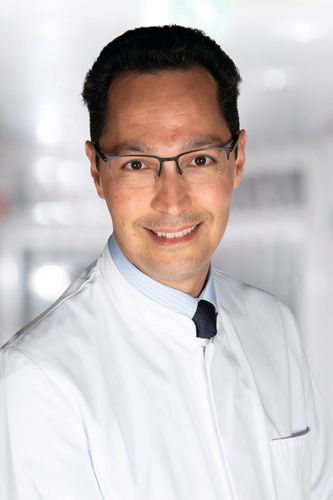
Professor Karl Philipp Kutzner, M.D., is a leading figure in the field of orthopedic surgery and a recognized expert in hip and knee joint replacement. His expertise is based on many years of clinical experience as a senior physician in the Department of Orthopedics at St. Josef’s Hospital in Wiesbaden and a successful habilitation in orthopedics at Johannes Gutenberg University in Mainz. Since 2023, he has headed the Endoprotheticum Rhein-Main, a state-of-the-art practice for orthopedics and joint replacement, where he offers not only medical excellence but also an atmosphere of trust and personalized care. Of particular note is Prof. Dr. Kutzner’s specialization in hip and knee joint replacement, which makes him a sought-after specialist—even beyond the local region—for patients with joint problems.
From consultation through treatment, he supports his patients with empathy and expertise. He understands the significant impact that joint problems, such as osteoarthritis, have on quality of life and is committed to helping his patients achieve a better quality of life through personalized solutions. A key focus of his work is the emphasis on conservative treatment methods wherever possible, despite his primary focus on surgery. This underscores his commitment to his patients’ well-being and to ensuring comprehensive care that extends beyond the surgical procedure itself.
His expertise ranges from minimally invasive procedures to partial joint replacement and revision surgeries, enabling him to offer a wide range of treatment options. Of particular note is Prof. Dr. Kutzner’s expertise and experience in the field of short-shaft hip prostheses. As one of Germany’s leading experts in this field, he possesses extensive knowledge and experience in this specialized surgical technique. Prof. Dr. Kutzner has also developed particular expertise in partial knee replacement. In addition to performing total knee replacements, he specializes in the implantation of glide prostheses and artificial partial joints. This treatment method benefits many younger patients with osteoarthritis and can provide them with many years of improved quality of life.
Through his practice, Endoprotheticum Rhein-Main, Prof. Dr. Kutzner provides first-class care in the Rhine-Main region. His practice in Mainz and his collaboration with the private Lilium Clinic in Wiesbaden enable him to offer a wide range of treatment options and ensure optimal patient care. His extensive experience and use of modern techniques allow him to achieve first-class results and offer his patients an improved quality of life.
The editorial team of the Leading Medicine Guide spoke with Prof. Dr. Kutzner about the shift toward outpatient care in joint replacement and individualized outpatient care plans following total knee or hip replacement surgery.

Hip and knee replacements are surgical implants used to treat advanced osteoarthritis or severe injuries. These replacements can significantly improve patients’ mobility and quality of life by relieving pain and restoring range of motion.
“Surgeries have become significantly less invasive in recent years, and minimally invasive techniques, along with comprehensive pain management strategies, now allow for immediate mobilization and a rapid return to independence for our patients in many cases,” Prof. Dr. Kutzner emphasized at the start of our conversation.
These endoprosthetic procedures generally require targeted follow-up care or rehabilitation to achieve optimal results. The traditional approach involves a hospital stay of several days at the clinic where the surgery is performed, followed by inpatient rehabilitation at a specialized rehabilitation clinic, usually lasting 3 weeks. However, developments in joint replacement surgery over the past 10 years have enabled increasingly effective and faster treatment approaches, some of which could even be carried out without an inpatient stay. In addition to ever-shorter inpatient stays, there is a growing number of outpatient rehabilitation facilities, which are gaining importance for a variety of reasons.
Regarding outpatient surgery, Prof. Dr. Kutzner comments: “The concept of outpatient surgical procedures is currently being strongly promoted by the German Ministry of Health. Here, it is important to take various parameters into account to ensure maximum quality and safety despite outpatient treatment. So far, this approach has only made a marginal impact in endoprosthetics. This is due in particular to the reimbursement structure. In other countries, such as the Netherlands or the U.S., this process is already significantly more advanced. Given the challenges facing the German healthcare system, a shift toward outpatient care in joint replacement could certainly have positive aspects as well.”
The advantages and disadvantages of shifting hip and knee joint replacement—also known as total hip replacement (THR) and total knee replacement (TKR)—to an outpatient setting are multifaceted and encompass various aspects and challenges, ranging from infrastructure and the organization of postoperative care to home care.
With outpatient hip or knee joint replacement surgeries, patients can usually return home within a few hours after the procedure. A one-night stay in the hospital is considered a short-term inpatient stay. In contrast, inpatient treatment requires patients to remain in the hospital for a certain period of time, usually for several days. For outpatient hip or knee replacement surgery, patients must be carefully selected to ensure they are suitable for an outpatient procedure. Outpatient surgery requires precise planning and coordination between the surgeon, the anesthesiologist, and the nursing team to ensure that all aspects of the treatment proceed smoothly. This also includes providing support and guidance for postoperative care at home.
“In fact, Germany has long been a nation of rehabilitation. Especially after knee and hip surgeries, it was customary for a long time to schedule inpatient rehabilitation lasting about 3–4 weeks. Many patients’ expectations are still very much rooted in this earlier ‘tradition,’ and they anticipate a longer inpatient stay for rehabilitation. However, in many cases today, rehabilitation on this scale is no longer strictly necessary—and in some cases, it isn’t even advisable in this form. The rehabilitation measures that are still offered as standard today usually no longer meet patients’ expectations, as the respective facilities are set up for the measures that were necessary in the past. This is because, in the past, patients were not able to regain mobility so quickly after surgery—something that is possible today thanks to minimally invasive techniques and, overall, much gentler treatment options. For this reason, patients are naturally discharged from the hospital much earlier today. A seamless transition to an inpatient rehabilitation facility often conflicts with wound healing that is not yet complete and soft tissue that is still tense. Nevertheless, it is not uncommon for our patients to be treated with equipment early on for the purpose of building muscle or achieving stability. This is actually not advisable in this early phase and may even hinder unimpeded healing,” explains Prof. Dr. Kutzner, adding:
“In the early phase following knee or hip surgery, lymphatic drainage is actually an important element of rehabilitation. In the past, the hospital where the surgery took place had a lymphatic drainage team consisting of physical therapists who were specifically responsible for treating soft-tissue swelling, hematomas, and edema in patients who had just undergone surgery. Unfortunately, due to the growing staff shortage, such teams no longer exist today. And rehabilitation facilities are also increasingly lacking the staff needed to handle labor-intensive tasks such as lymphatic drainage. In order to still offer something to patients who have just undergone surgery, they are often integrated into the training area or the exercise equipment room too early—either alone or in groups. As a result, individualized care tailored to the specific condition of each patient is often lacking. Lectures are also offered—but these are, by their very nature, not very personalized. Although exercise pools do exist, they can actually be very dangerous, especially for patients who have just undergone surgery, due to the high risk of infection or complications with wound healing. In this regard, an overall adjustment to inpatient rehabilitation programs would be desirable.
Alternatively, there have been many outpatient rehabilitation centers for several years now. For many patients today, this is a viable approach. Patients are picked up from their homes in the morning by bus and taken to the rehabilitation center. In the afternoon, they are driven back home. Consequently, patients spend approximately 5–7 hours a day at the facility. During this time, they often undergo various treatments for about 1–2 hours, receive counseling, and may also have lunch. Unfortunately, however, there is a staff shortage here as well, meaning that patients are often left unsupervised and to their own devices for the rest of the time. Treatment tailored individually to each patient is also becoming increasingly rare in this setting. Organizational challenges must also be overcome. For example, an application must generally be submitted to the respective health insurance provider for rehabilitation services. Applying to the insurance providers is often difficult; the application may only be submitted after the surgery and then frequently takes several days to receive a cost approval. This organizational burden is also increasingly consuming the already scarce personnel resources.”
What do you see as an alternative approach to postoperative care following hip and knee replacement surgeries?
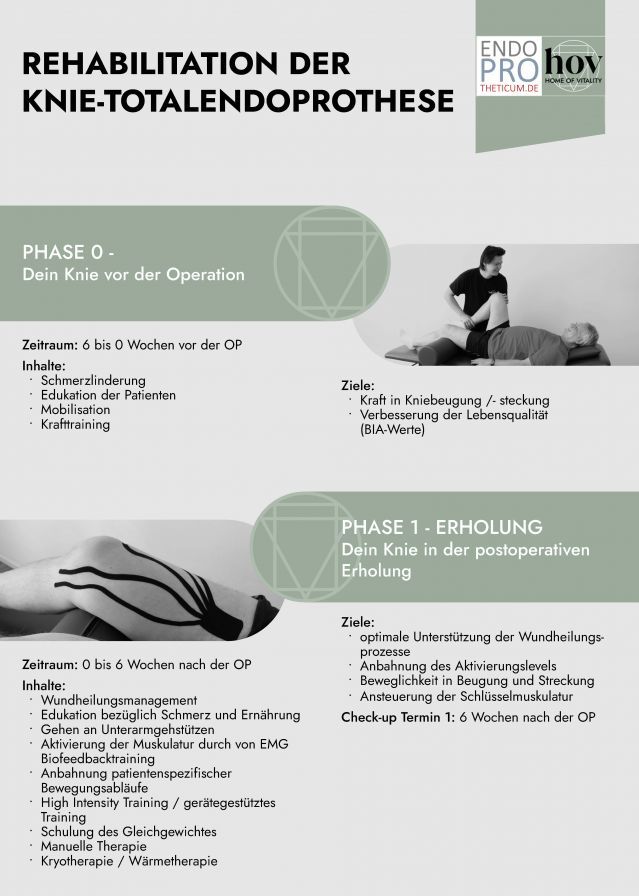
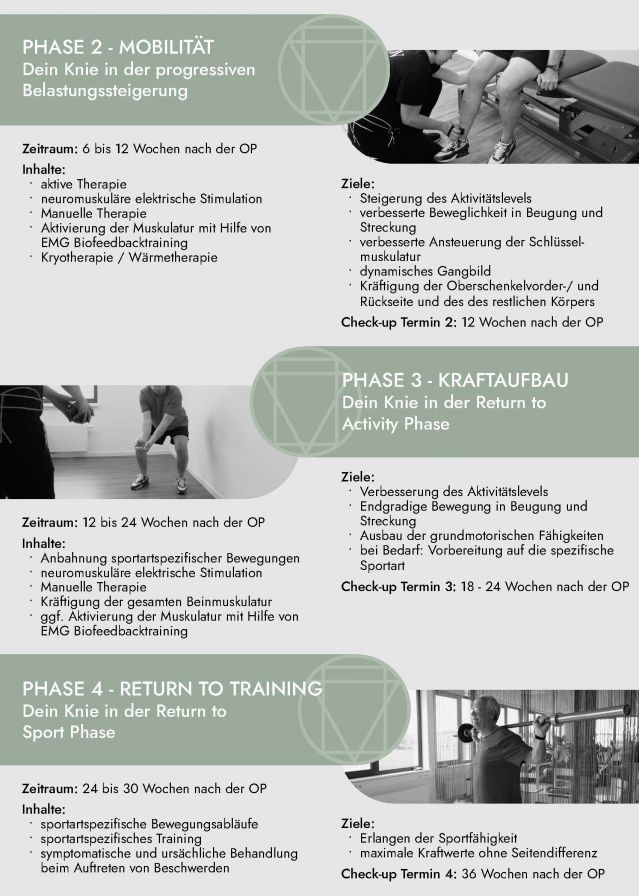
“We are increasingly shifting toward collaborating in advance with physical therapy colleagues who are highly skilled and specially trained in endoprosthetics, enabling them to provide significantly more individualized care to each patient. The concept calls for each patient to have a designated physical therapist even before the procedure, so they can optimally prepare for the surgery with that therapist and receive a plan and schedule for their personalized postoperative care in advance. Treatments such as lymphatic drainage, physical therapy, and medical exercise sessions are prescribed. This approach also allows for highly individualized and effective post-operative care. In many cases, the initial treatments begin as home visits, and once patients are able to come to the clinic, further treatment can be provided on-site. Experience shows that after about a week of this individualized treatment, most patients are fit enough to achieve very good results through self-directed exercises.
Prehabilitation is a crucial part of this approach, as it often means many patients do not require extensive rehabilitation afterward! “It’s also best if follow-up treatment takes place where the treating physician is located, or at least nearby, in case there are any questions or difficulties,” recommends Prof. Dr. Kutzner, adding: “Of course, financing is an issue. For privately insured patients, obtaining a prescription is usually not a major problem, but there are greater difficulties in the publicly insured sector. However, even here, prescriptions for physical therapy treatments and lymphatic drainage are covered without affecting the budget for the first 6 months following joint replacement surgery.”
Prehabilitation, also known as preoperative rehabilitation, refers to measures taken to prepare a patient for an upcoming surgery. The goal is to improve the patient’s physical and mental condition in order to accelerate postoperative recovery and minimize complications. Typical elements include physical training, nutritional counseling, psychological support, smoking cessation, as well as education and training regarding the procedure and the postoperative phase. The goal is for the patient to undergo surgery in the best possible condition to achieve optimal results.
Individualized postoperative care following hip or knee total joint replacement (TJR) surgery includes specific exercises and measures aimed at restoring mobility, strength, and flexibility to the operated joint in a timely manner and supporting a rapid recovery.
The exercises typically include passive and active range-of-motion exercises, joint mobilization, strength training, walking with assistance (e.g., crutches or walkers), balance exercises, and specific stretching exercises. The physical therapist develops a personalized rehabilitation plan based on the patient’s needs and progress. This plan may include exercises that can be performed at home, as well as regular sessions with the physical therapist to monitor progress and adjust the exercise program.
For a short-stay “ENDO-over-night” procedure or an outpatient “ENDO-in-a-day” procedure, the surgeon must have extensive experience and expertise in the relevant endoprosthetic surgical technique and a structured treatment plan.


These surgeries require a high degree of technical skill to perform the procedure precisely and efficiently. The surgeon must also be able to effectively coordinate the surgical and nursing teams to ensure that all aspects of the procedure run smoothly. Furthermore, it is important that the surgeon recognizes and appropriately manages potential risks and complications, both during the procedure and in the postoperative phase. Clear and comprehensive communication with the patient is crucial to ensure that the patient understands and agrees to the risks, the procedure, and the expectations of the surgery. As for the criteria for a patient to be eligible for an ENDO-over-night or ENDO-in-a-day procedure, these include good overall health, a supportive social environment, compliance and personal responsibility, and the absence of serious comorbidities. Each patient is evaluated individually to determine whether they are suitable for outpatient hip or knee replacement surgery, and the final decision is made by the treating team based on a comprehensive assessment of the patient’s health and other factors.
“The most important aspect is the patient’s explicit desire for an outpatient treatment pathway following a detailed explanation of the procedure, its benefits, and its risks. Significantly more patients are eligible than we had anticipated just a few years ago. It’s important to remember that patients are generally allowed to bear full weight immediately after surgery. Although they are provided with walking aids, these serve only to provide a sense of security and help distribute the load. Assistive devices such as toilet seat risers or stocking aids are no longer provided—they are generally no longer necessary. The risk of significant blood loss during surgery is no longer high, simply because the necessary incisions are minimal and no muscles are damaged. In addition, during hip and knee replacement surgeries, patients are given prophylactic tranexamic acid (a drug from the group of antifibrinolytics or lysine analogs), which prevents significant blood loss. Drainage is also no longer necessary during the surgery. “Patients who are excluded from outpatient procedures include those who truly have no one to assist them, those in poor health, and older patients—such as those aged 90—who would simply be overwhelmed in many situations and therefore require inpatient care,” explains Prof. Dr. Kutzner.
Outpatient hip or knee replacement surgeries can carry similar risks and complications as inpatient procedures, but there are also some specific considerations to keep in mind.
Infections pose a potential risk for both outpatient and inpatient patients. However, since outpatient patients spend less time in the hospital, the risk of infection may be slightly lower. Nevertheless, careful postoperative wound care and monitoring are necessary to prevent infections. Another important aspect is wound and pain management. Outpatient patients may need to manage their wounds and pain at home using appropriate techniques and medications. Adequate pain management is crucial for facilitating recovery and preventing complications. A means of contacting the treatment team should be available at all times.
“For the successful completion of an outpatient joint replacement procedure, the patient needs a so-called ‘Endo-Partner’—simply someone who is there to provide support during the first few days after surgery. Whether that is a spouse, a family member, or a friend is up to the individual. This Endo-Partner can prepare everything at home before the patient is discharged and is simply there to provide the initial assistance that is still needed. In the Netherlands, for example, there is a higher rate of outpatient surgeries because family members who provide support are granted time off work at the government’s expense. In the U.S., on the other hand, 98% of this is covered by the system in the form of home health care and other services,” explains Prof. Dr. Kutzner, emphasizing:
“At ENDOPROTHETICUM Rhein-Main, we offer our patients who are suitable for the procedure both the option of outpatient hip or knee replacement surgery and a personalized post-operative rehabilitation program outside of large rehabilitation facilities—this motivates patients, and they can carry it out independently and comfortably from home in order to regain full mobility as quickly as possible. I expect this approach to gain increasing attention in the coming years and for us to leave the old ways behind,” says Prof. Dr. Kutzner, bringing our conversation to a close.
Thank you very much, Professor Dr. Kutzner; this is encouraging for all patients facing hip or knee surgery!
Share this article
About the medical author
Alexandra Pfitzmann
Editor
Alexandra Pfitzmann – medical author: expert knowledge, professional articles and medical insights in the Leading Medicine Guide.
More about the medical author →Expert Interviews
Read next
- Expert interview
Cardiogeriatrics: Significance and benefits in the context of hospital reform
Sep 21, 2026
Cardiogeriatrics: Significance and benefits in the context of hospital reform
Read more - Expert interview
Expert Interview with Professor Dr. Amadeus Hornemann, MPH
Sep 18, 2026
Prof. Amadeus Hornemann on Precision Medicine in Gynecology: Modern Surgery, New Techniques, Better Quality of Life
Read more - Expert interview
Expert Interview with Professor Dr. Konstantinos Anagnostakos
Sep 15, 2026
Prof. Anagnostakos on Painful Knee Replacements
Read more