News
Insect Bites and Allergic Reactions—When They Become Dangerous

Melanie Al Tikriti, BSc ·
Why Some Insect Bites Are More Severe Than Others
For many of us, insect bites are just part of summer. Most of the time, they result in nothing more than a little redness, mild itching, and some swelling that goes away after a short while. But not every bite is harmless. Being bitten by an insect can really hurt and sometimes even trigger an allergic reaction.
It’s therefore important to distinguish between normal reactions and allergic reactions, since many people aren’t sure when symptoms after a bite are still normal or when they should seek medical attention.
What Happens in the Body After a Bite
When they sting, insects inject certain substances into the skin. These include proteins and toxic components to which the immune system reacts. The body then releases inflammatory substances that cause swelling, redness, and warmth. This reaction actually serves as a protective mechanism, as the body seeks to quickly combat and break down the foreign substances. However, the severity of the reaction varies from person to person. Some people experience hardly any symptoms, while others react very sensitively.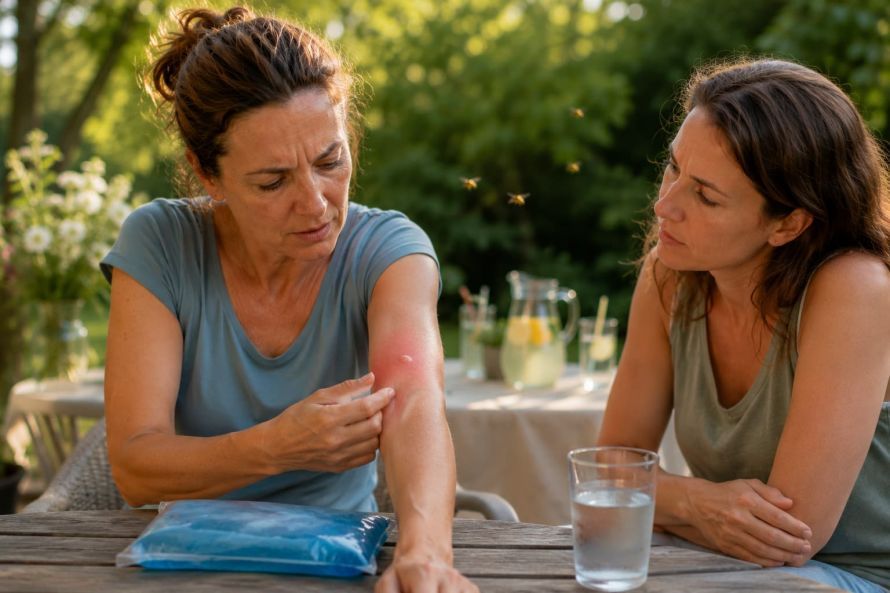
Differences Between Bees and Wasps
The fact is that bees and wasps are particularly likely to trigger more severe reactions than other insects. However, they differ in their stinging behavior. When a bee stings, the stinger usually remains lodged in the skin. It is torn from the bee’s body and can continue to release venom even after the bee has flown away or died. For this reason, the stinger should be removed quickly without applying additional pressure to the venom sac.
Wasps, on the other hand, do not lose their stingers and can sting multiple times in a row. This is especially true in the summer, when wasps are attracted to sweet foods and drinks and often linger in close proximity to people.
Normal Reactions to Insect Stings
In most cases, the reaction is localized. Symptoms occur directly around the sting site but subside within a few days:
Typical symptoms include:
- small to moderate swelling
- redness of the skin
- Itching or a mild burning sensation
- Tenderness around the injection site
These symptoms are unpleasant but are a normal reaction of our immune system.
If the swelling becomes significantly larger
Sometimes the reaction is more severe than expected. The swelling can spread over several centimeters and feel warm or tight. This is particularly distressing on the hands, feet, or face. However, even if the sting causes a severe reaction, this does not automatically indicate an allergy. The symptoms can last for several days and subside only slowly.
Recognizing Allergic Reactions Correctly
An allergy is defined as a reaction in which not only the sting site is affected, but the entire body reacts. Symptoms appear immediately after the sting and intensify rapidly.
When immediate medical attention is required:
- A rash on other parts of the body
- Sudden dizziness
- Difficulty breathing or a feeling of tightness
- Swelling in the face or neck
- Rapid heartbeat or circulatory problems
These symptoms should be taken seriously, as they may indicate a severe immune system reaction.
Why Some People Are More Severely Affected
Whether an insect sting is harmless or triggers more severe symptoms depends on various factors. It also depends on how sensitively the immune system reacts to the venom.
Previous stings can also play a role. In some cases, people may not develop a severe allergic reaction until after repeated exposure. Additionally, the site of the sting, the amount of venom, and the person’s overall health all influence the severity of the symptoms.
Do Not Underestimate Dangerous Situations
Particular caution is warranted for stings in the mouth or throat area. Even normal swelling in these areas can cause the airways to narrow. In such cases, seek medical attention immediately. Even multiple stings at once can place a heavy strain on the body, even if there is no history of a classic allergy. This is especially true for children, older adults, or people with pre-existing medical conditions.
What to Do After a Sting
After an insect sting, it helps to cool the affected area as quickly as possible to reduce swelling and pain. Avoid scratching the skin, as this can cause further irritation and even lead to inflammation.
Insect stings can be harmless, but should be properly assessed
Complete protection is virtually impossible in the summer, but the risk can still be reduced. Sweet drinks should be covered when outdoors, as wasps are particularly attracted to them. Hasty movements near insects also increase the likelihood of a sting. Insect stings are usually harmless. It is crucial to correctly assess symptoms and recognize warning signs early on. In cases of severe or recurring reactions, it may be advisable to seek evaluation from a dermatologist or a pulmonologist specializing in allergy.
Share this article
Verified expertise
Recommended specialists
3 specialists
3 results


Dr. med. Jan Hagemann
Wiesbaden


Prof. Dr. med. Christoph Bergmann
Dusseldorf
News
Read next
- News
Scabies: A contagious skin disease that is easily treatable
Oct 26, 2026
Severe itching and minor skin changes should be taken seriously
Read more - News
Heat Rash: What's Behind the Itchy Blisters
Oct 23, 2026
Heat Rash: Heat and Sweat Can Disrupt the Skin's Balance
Read more - News
Enlarged Prostate – When Medication Is Sufficient and When Surgery Is Recommended
Oct 21, 2026
Why Many Men Ignore Urinary Problems for Too Long
Read more