News
RSV in Babies: When the Airways Become Dangerously Narrow

Melanie Al Tikriti, BSc ·
How Parents Can Protect Their Child and Recognize Symptoms Early
RSV—respiratory syncytial virus—is one of the most common causes of respiratory infections in infants. The virus spreads rapidly, especially in the fall and winter, in daycare centers, playgroups, and families. For most children, an RSV infection is mild, but in babies under six months of age or in premature infants, it can have serious consequences, such as bronchiolitis or pneumonia.
Parents should take RSV very seriously: Early detection and appropriate care can prevent complications and make daily life much easier.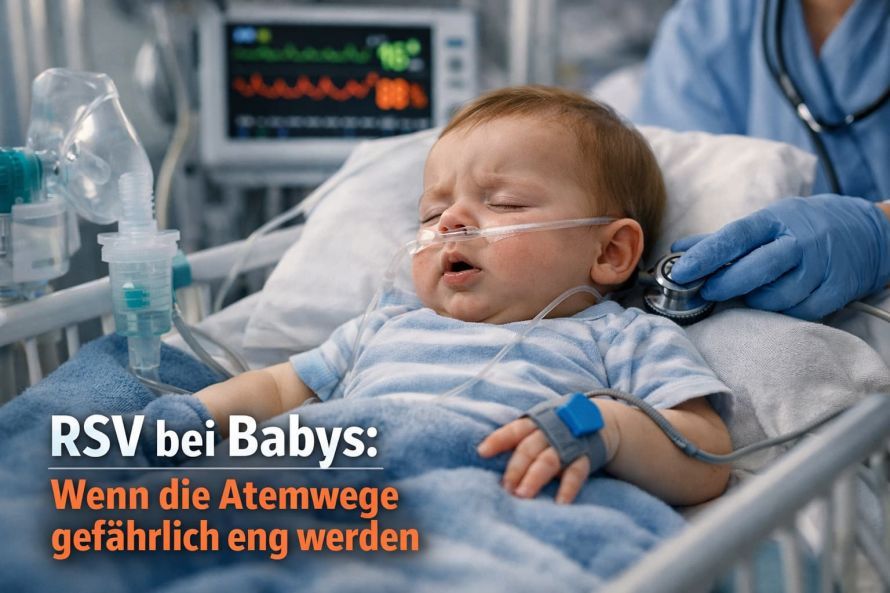
Typical Symptoms in Infants
The signs of an RSV infection are often nonspecific:
- stuffy nose, runny nose
- Cough, sometimes with wheezing
- Fever, often mild
- Breathing difficulties, rapid or labored breathing
- Loss of appetite or reluctance to drink
The situation becomes particularly critical if the baby is breathing very rapidly, the nostrils flare while breathing, or the lips or fingernails take on a bluish tint. In these cases, immediate medical attention is necessary.
How RSV is transmitted
RSV is highly contagious. The virus spreads through droplet transmission, direct contact, or contaminated surfaces. Babies often catch it from close contacts, such as family members or when older siblings visit.
Tips for prevention in everyday life:
- Regular handwashing for all family members
- Keep a safe distance from sick people
- Regularly disinfect toys, bottles, and surfaces
- Ventilate living spaces to reduce the viral load
- Avoid crowded rooms, especially during RSV season
Treatment and Care
RSV is not treated with antibiotics because it is a virus. Treatment focuses primarily on relieving symptoms:
- Fluids to prevent dehydration
- Slightly humidified indoor air to soothe the airways
- Child-appropriate medications for fever, as recommended by a doctor
In severe cases, however, hospitalization may be necessary, especially if the baby is very young, was born prematurely, or has a chronic illness. In the hospital, oxygen therapy, monitoring, and supportive care are provided.
Conclusion: Take RSV seriously, but stay calm
RSV is harmless for most babies, but it can become serious, especially in the first few months of life. Parents should recognize symptoms early, take preventive measures, and seek medical advice if in doubt. Awareness, hygiene, and proper care not only safeguard the child’s health but also give parents peace of mind in their daily lives.
Share this article
Verified expertise
Recommended specialists
4 specialists
4 results

Thoraxklinik-Heidelberg gGmbH
Heidelberg


Dr. Maik Brandes
Münster

Lungenkrebszentrum Treuenbrietzen
Treuenbrietzen

Professor Frank Breuckmann
Kitzingen
News
Read next
- News
Scabies: A contagious skin disease that is easily treatable
Oct 26, 2026
Severe itching and minor skin changes should be taken seriously
Read more - News
Heat Rash: What's Behind the Itchy Blisters
Oct 23, 2026
Heat Rash: Heat and Sweat Can Disrupt the Skin's Balance
Read more - News
Enlarged Prostate – When Medication Is Sufficient and When Surgery Is Recommended
Oct 21, 2026
Why Many Men Ignore Urinary Problems for Too Long
Read more