News
Jellyfish Stings: When a Fun Day at the Beach Suddenly Turns Painful

Melanie Al Tikriti, BSc ·
Not every jellyfish is dangerous—but proper first aid can make all the difference.
For many people, a dip in the ocean is part of a great vacation. But especially during the summer months, encounters with jellyfish are a common occurrence in popular swimming areas. While many species are harmless to humans, others can cause painful skin reactions. A jellyfish sting often occurs completely unexpectedly and can leave those affected feeling uncertain.
The severity of the symptoms depends on the jellyfish species, the amount of venom released, and the individual’s sensitivity. In most cases, the symptoms are limited to painful skin reactions. However, some jellyfish species can also trigger severe allergic reactions or circulatory problems and should therefore not be underestimated.
How Jellyfish Defend Themselves
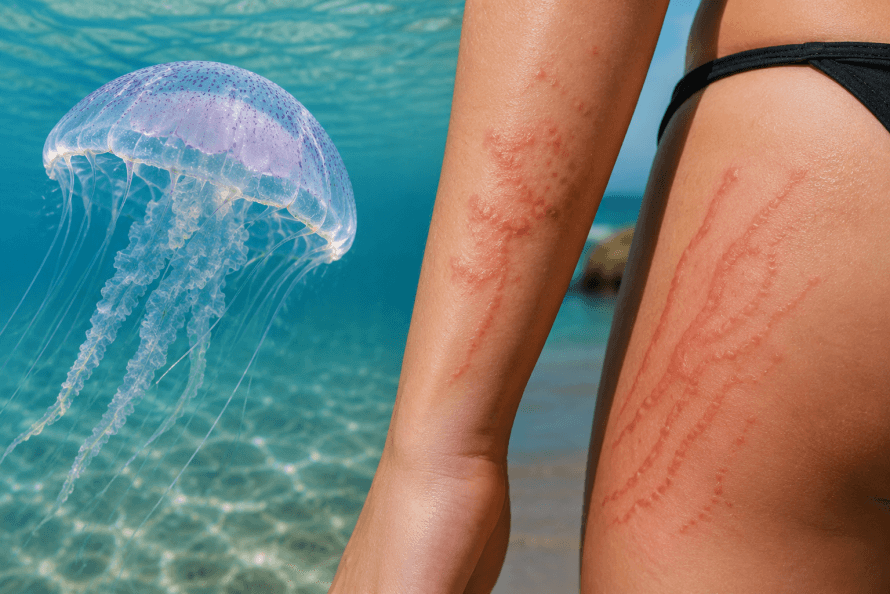
Jellyfish have millions of tiny stinging cells on their tentacles, which they use to catch prey or defend themselves against predators. Upon contact, the stinging cells shoot fine stinging filaments into the skin within fractions of a second, releasing their venom in the process.
Even torn-off tentacles or jellyfish washed ashore can still be active. Therefore, you should not touch dead jellyfish or come into contact with them in any other way.
Not every jellyfish causes severe discomfort
In European waters, most jellyfish species are unpleasant but rarely dangerous. Box jellyfish, in particular, frequently cause painful skin irritation. The Portuguese man-of-war—which, strictly speaking, is not a true jellyfish—can also cause significantly more severe symptoms.
In tropical regions, highly venomous box jellyfish are also found. Their venom can have life-threatening effects on the heart and nervous system.
These symptoms are typical
Symptoms appear immediately after contact. Many victims describe a sudden onset of burning or stinging pain.
Typical symptoms include:
- severe burning pain
- reddened skin
- striped skin lesions
- Swelling
- Itching
- Blistering
- Pain on pressure
Depending on the type of jellyfish, symptoms may disappear after a few hours or last for several days. In rare cases, nausea, dizziness, shortness of breath, muscle cramps, or circulatory problems may also occur. These symptoms should always be taken seriously.
Why Incorrect First Aid Can Worsen Symptoms
Many home remedies persist as popular beliefs, but they are not effective. On the contrary: Some measures can activate additional stinging cells and thereby release even more venom. The affected skin should therefore neither be rinsed with fresh water nor rubbed vigorously. Alcohol and urine are also no longer considered appropriate first-aid measures.
Instead, any remaining tentacles should be carefully removed with tweezers or gloves. Seawater is significantly better for rinsing than freshwater.
When Medical Help Is Necessary
Most jellyfish stings heal without lasting effects. In some situations, however, medical attention should be sought promptly.
These include:
- severe or worsening pain
- extensive skin reactions
- Shortness of breath
- Dizziness
- Circulatory problems
- Altered consciousness
- Allergic reactions
- Injuries to the face or eyes
Young children, older adults, and people with known allergies in particular should seek medical attention if they experience severe symptoms.
What Treatment Is Appropriate
The necessary treatment depends on the severity of the symptoms. Mild skin reactions can often be treated with cooling measures as well as pain-relieving or anti-inflammatory medications. For more severe itching or pronounced skin reactions, corticosteroid creams or antihistamines may be used. If a severe allergic reaction or circulatory problems occur, immediate medical treatment is required.
Most skin changes heal completely within a few days. Sometimes temporary skin discoloration or increased sensitivity may persist.
How to Reduce the Risk While on Vacation
Complete protection against jellyfish is not possible, but the risk can be significantly reduced by taking certain precautions.
The following are helpful, among other things:
- Pay attention to warning signs on beaches
- Avoid jellyfish in the water whenever possible
- Do not touch jellyfish that have washed ashore
- Wear water shoes or protective clothing in high-risk areas
- Be especially careful after storms
- Inform children about potential dangers
If you research the types of jellyfish at your vacation destination before you leave, you’ll be better able to assess potential risks and respond appropriately in an emergency.
Conclusion: With the right first aid, most jellyfish stings can be treated effectively.
Jellyfish stings are among the most common injuries while swimming in many vacation destinations. Although they usually cause only temporary skin reactions, they should not be underestimated. By responding correctly, avoiding unsuitable home remedies, and taking warning signs seriously, you can prevent complications and often get back to enjoying your vacation carefree in no time.
Share this article




News
Read next
- News
Scabies: A contagious skin disease that is easily treatable
Oct 26, 2026
Severe itching and minor skin changes should be taken seriously
Read more - News
Heat Rash: What's Behind the Itchy Blisters
Oct 23, 2026
Heat Rash: Heat and Sweat Can Disrupt the Skin's Balance
Read more - News
Enlarged Prostate – When Medication Is Sufficient and When Surgery Is Recommended
Oct 21, 2026
Why Many Men Ignore Urinary Problems for Too Long
Read more