
An ocular prosthesis for babies and toddlers raises many questions for parents—especially following diagnoses such as retinoblastoma, congenital anophthalmos, or microphthalmia. In addition to medical treatment, early prosthetic care plays a crucial role in the development of the eye socket, the eyelids, and facial symmetry. Modern glass ocular prostheses can be fitted as early as infancy and customized to fit each child. Close monitoring by specialized ophthalmologists and ocularists is essential to support growth, tolerance, and the most natural development possible over the long term.
Ocular Prostheses for Infants and Toddlers: Why Early Intervention Is Important
When a baby or toddler needs an ocular prosthesis, it’s an extraordinary situation for parents. Following retinoblastoma or in cases of congenital anophthalmos or microphthalmos, many questions arise at once: When does treatment begin? How does the fitting process work? Does an ocular prosthesis even make sense at this age? The clear answer is: Yes—and often, treatment should begin earlier than parents initially assume. The eye socket continues to develop, especially during infancy and early childhood. That is why early and closely monitored care is important to support growth, shaping, and symmetry as effectively as possible.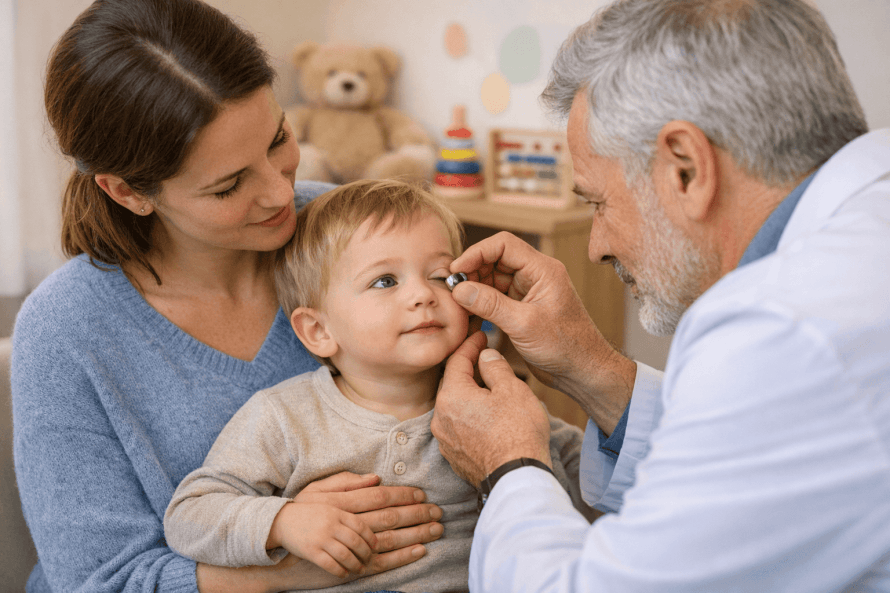
Why an ocular prosthesis is beneficial in infancy and early childhood
For young children, it’s not just about appearance. Well-fitting ocular prostheses fitted at an early stage can help keep the eye socket open, preserve the eyelid folds, and promote the most harmonious development possible of the eyelids, eye socket, and face. This is particularly relevant because anatomical changes during this stage of life can quickly affect further development. Regular checkups and care that keeps pace with growth are therefore essential.
Ocular Prostheses After Retinoblastoma: What Parents Should Know
Following retinoblastoma, the medical situation is often compounded by significant emotional strain on the family. Parents must not only come to terms with their child’s cancer diagnosis but also with the consequences of losing an eye and the anxiety surrounding the first encounter with a prosthesis. This makes it all the more important to have a team that works with professional expertise while providing calm, clear, and child-friendly support. A well-fitted ocular prosthesis can help improve facial symmetry and enable the child to develop as unobtrusively as possible in everyday life—without false promises, but with a realistic view of what is medically and prosthetically feasible.
Care for Anophthalmus and Microphthalmus: Individualized Rather Than Standardized
Experience is also crucial in cases of congenital anophthalmus or microphthalmus. Here, there is no need for a one-size-fits-all solution; rather, individualized care is required, tailored to the child’s diagnosis, growth, and resilience. Glass ocular prostheses, in particular, require precise fitting and close support for the family. Parents therefore benefit particularly from centers where ophthalmological assessment, specialized ocular prosthetics, and follow-up care are seamlessly integrated.
Why Regular Follow-ups Are So Important for Children with Ocular Prostheses
Since the eye socket is constantly changing as the child grows, a one-time fitting is not sufficient. The prosthesis must be regularly reviewed and adjusted as needed to ensure that shape, fit, and development continue to be properly supported. Especially in the early years of life, this close monitoring is a central part of treatment—not merely an add-on.
Find Specialized Care for Children with Ocular Prostheses
The experts in the Leading Medicine Guide offer specialized care for infants and children who are still growing, specifically including those with anophthalmia and microphthalmia. There, experienced ocularists and specialized ophthalmologists work closely together—a clear advantage when medical evaluation, prosthesis fitting, and long-term care need to be coordinated. Parents looking for a glass ocular prosthesis for their child or seeking a well-informed second opinion following retinoblastoma can request an appointment directly through the ocular prosthetics specialists listed in the Leading Medicine Guide.

About the medical author
Jörg Schmidt
Medical Author · Cologne
