Optune therapy (Optune Gio) is a non-invasive treatment method for adult patients with newly diagnosed glioblastoma or high-grade Grade 4 astrocytoma. It is based on what are known as Tumor Treating Fields (TTFields)—weak, alternating electric fields that target the tumor and disrupt the division of malignant tumor cells. When used in combination with standard therapies such as surgery, radiation therapy, and chemotherapy, Optune Gio can slow the progression of the disease and improve quality of life. Studies have shown that the therapy provides a survival benefit, particularly in patients with newly diagnosed glioblastoma.
What is Optune therapy?
Optune therapy is a non-invasive, wearable treatment method for certain brain tumors. It uses tumor therapy fields that are applied to the affected regions of the brain via a device. These fields generate a weak but continuous alternating current that specifically targets tumor cells and disrupts their cell division. This causes the tumor cells to multiply more slowly and eventually die.
Optune therapy is usually used in combination with chemotherapy, as the treatment combats the tumor more comprehensively through different mechanisms of action. For patients, this offers a new opportunity to improve their chances of survival and quality of life.
For which diseases is Optune therapy used?
Optune therapy was specifically developed for the treatment of glioblastomas and high-grade gliomas such as astrocytomas. Glioblastomas are malignant brain tumors characterized by rapid and aggressive growth and are often difficult to treat. Optune therapy has been approved for use in adult patients with newly diagnosed glioblastoma and can help slow the progression of the disease. Since glioblastomas often recur after surgery and during chemotherapy, Optune offers a valuable addition to the fight against this aggressive tumor.
How does Optune therapy work?
Optune uses special electrodes attached to the scalp that are connected via cables to a small, portable device. This device generates tumor therapy fields that directly affect the tumor cells in the brain. By specifically targeting cell division, tumor cells are prevented from multiplying, while healthy cells are less affected due to the special structure of the tumor therapy fields. Patients typically wear the device for at least 18 hours a day, which maximizes the therapy’s effectiveness.
Using Optune is straightforward and can be integrated into daily life, as the device is portable and the treatment setup is non-invasive. It is important that patients and their caregivers receive comprehensive training from healthcare professionals on how to use the device in order to benefit effectively from the therapy.
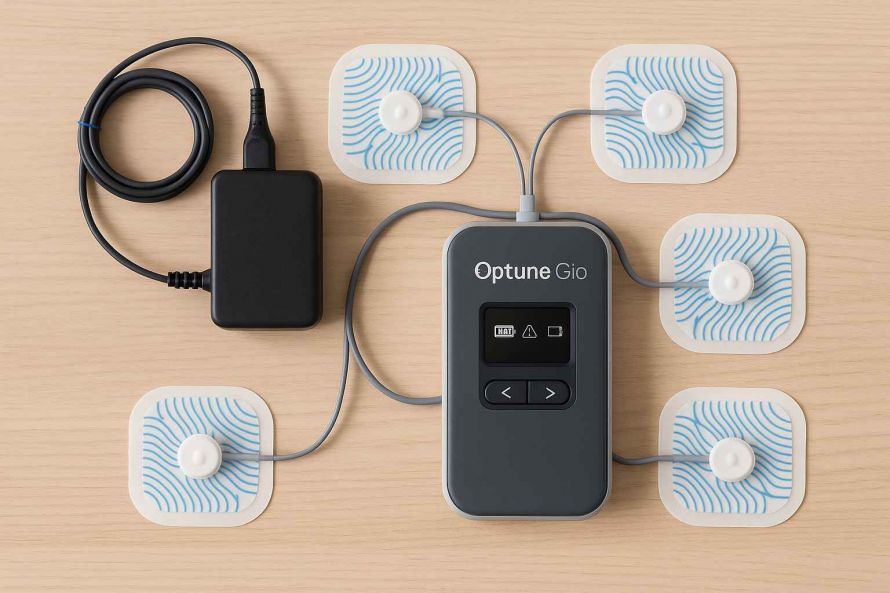
Optune Gio: Portable therapy device with transducer arrays for applying TTFields directly to the scalp
Living with Optune Gio: Daily Life, Arrays, and Practical Tips
Life with Optune Gio varies depending on daily circumstances but can be easily integrated into a normal daily routine. The therapy is non-invasive and outpatient, allowing patients to wear the device while on the go. The transducer arrays are placed directly on the scalp and changed regularly, usually every two to three days. Application specialists provide support with the initial application, optimal array placement, and changing the arrays.
For many Optune Gio users, it is helpful to structure their daily routine around the therapy—for example, by scheduling fixed times for array changes or charging the batteries. Traveling with Optune Gio is also possible: The device is compact, can be carried on an airplane, and is generally accepted by airlines. For longer trips, it is recommended to consult with the clinic or treatment center in advance.
Since the Optune Gio should be used as continuously as possible—ideally 18 hours a day—proper scalp care plays an important role. Mild skin irritation can usually be treated effectively by keeping the scalp dry, using non-irritating skincare products, or taking short breaks.
Follow-up Care and Behavior During Optune Therapy
Patients should make sure to use the Optune device regularly and daily for the recommended duration to achieve the greatest possible benefit from the therapy. Regular medical checkups are necessary to monitor the progress of treatment and manage any side effects.
The most common side effects of Optune therapy include skin irritation on the scalp where the electrodes are attached. In these cases, the doctor may recommend specific skin care measures or ointments to soothe the affected area.
Possible Side Effects and Risks of Optune Therapy
Although Optune therapy is generally considered safe, side effects can occur, as with any therapy. The most common side effects are skin irritation and local discomfort at the sites where the electrodes are attached. These skin reactions are mild in most cases and can be effectively managed with simple measures. Serious side effects are rare and occur only in a few cases. However, patients should discuss the therapy regularly with their treating physician to identify side effects early and respond appropriately.
Prospects and Prognosis of Optune Therapy
Optune therapy offers glioblastoma patients an additional treatment option that has been shown in clinical trials to prolong survival and improve quality of life. According to recent studies, patients who consistently and regularly undergo Optune therapy have a higher chance of keeping this aggressive tumor under control for a longer period of time.
Conclusion
Optune therapy is an innovative and non-invasive adjunct to conventional cancer therapy for glioblastomas and high-grade gliomas. It enables targeted, continuous treatment of tumor cells while leaving healthy cells largely unaffected. With the ability to wear the device on the go, it offers patients a flexible and effective treatment option that can improve quality of life and prognosis in glioblastoma.
FAQs About Optune Therapy
What does Optune therapy mean for a newly diagnosed WHO Grade 4 glioma?
For a newly diagnosed WHO Grade 4 glioma—which includes glioblastoma and certain Grade 4 astrocytomas—Optune can be used as an adjunct to surgery, radiation therapy, and chemotherapy. This combination has been shown to be effective in large clinical trials, as it can slow the progression of the disease and prolong survival.
How does Optune Gio work for Grade 4 astrocytomas and IDH-mutated tumors?
Optune Gio treats both classic glioblastomas and high-grade Grade 4 astrocytomas, regardless of whether the tumor is IDH-mutated or not. The therapy directs alternating electric fields (TTFields) specifically at the tumor to disrupt the division of tumor cells and thus inhibit tumor growth.
How are the transducer arrays placed directly on the scalp?
The transducer arrays—or HFE transducer arrays in the case of Optune Gio—are placed directly on the scalp. Application specialists demonstrate exactly how to position the arrays and how to change them. The array is typically replaced every two to three days.
How often should Optune Gio be worn each day?
To achieve the best possible results, Optune Gio should be worn as continuously as possible—ideally 18 hours a day. This is the only way to ensure that the TTFields reach sufficient intensity at the tumor.
What exactly do Tumor Treating Fields (TTFields) do?
TTFields act directly on tumor cells using low-intensity, intermediate-frequency alternating electric fields. They interfere with cell division and can specifically inhibit tumor growth. Healthy cells are less affected due to their structure.
Who covers the costs of Optune Gio?
Coverage depends on the specific health insurance plan. In many cases, the costs of treatment with Optune Gio are covered along with temozolomide chemotherapy if the medical criteria are met. The treating clinic will assist with clarifying eligibility and providing any necessary documentation.
Is Optune Gio also significantly effective for glioblastoma and grade 4 astrocytoma?
Yes. In studies, Optune Gio demonstrated significant benefits in newly diagnosed glioblastoma and grade 4 astrocytoma. Longer progression-free survival and extended overall survival were observed, particularly with consistent use.
Can you travel while using Optune Gio?
Yes. Optune Gio is an outpatient treatment and integrates well into daily life. Traveling with Optune Gio is also possible, as the device is compact and can generally be transported on airplanes without any issues. Many Optune Gio users report that it works well in everyday life.
What role does Novocure play in Optune therapy?
Novocure is the company that developed Optune and provides TTFields technology worldwide. The company’s support often includes technical assistance and training, ensuring that patients are well-guided in using Optune Gio.
Are there differences between WHO Grade 4 gliomas and WHO Grade 4 astrocytomas?
WHO Grade 4 gliomas encompass several aggressive tumor types, including glioblastoma and WHO Grade 4 astrocytoma. For both, Optune Gio is a potential adjunctive treatment option, as the procedure targets the mechanisms of cell division regardless of the specific subtype.