When tooth decay, accidents, or years of teeth grinding (abrasion) have caused significant damage, a simple filling is often no longer sufficient. This is where the field of restorative dentistry comes into play. Whether at a specialized clinic for reconstructive dentistry or a private dental practice, the goal is always to restore the masticatory system so that chewing and speaking are once again possible without difficulty. Both medical necessity and the desire to enhance the aesthetics of one’s smile play a central role in this process.
Restorative Dentistry: Restoring Function and Aesthetics
Functional and aesthetic reconstruction involves much more than simply closing a gap. If missing teeth are not replaced, the jawbone deteriorates and the position of the temporomandibular joints can shift. This is where reconstructive dentistry comes in. Through comprehensive diagnostics and treatment, we analyze how the upper and lower jaws are affected. A manual and instrumental functional analysis helps identify disturbances in movement patterns before the actual treatment begins. After all, the new dental restoration will only last in the long term if the various components work together properly.
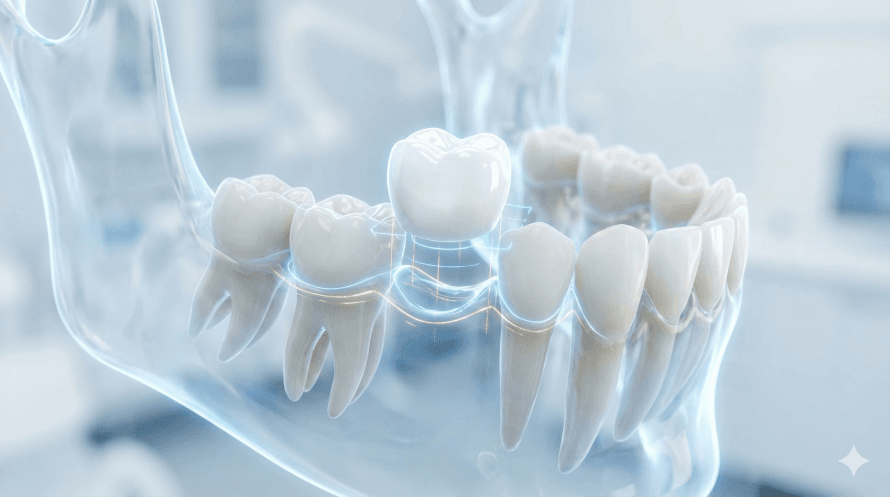
Reconstructive dentistry combines modern diagnostics with high-quality prosthetics to restore the function and aesthetics of the jaw.
Treatment and Reconstruction: From Veneers to Implants
The range of reconstructive options is vast. Minor defects at the neck of the tooth or on the chewing surface can often be treated using minimally invasive ceramic inlays and onlays. If the tooth root is still intact but the tooth is severely damaged, a traditional crown is used. If individual teeth or entire rows need to be replaced, bridges or implants are used. Fixed solutions offer the highest level of comfort. For the aesthetic reconstruction of front teeth, veneers (ultra-thin shells) are ideal, as they require only minimal grinding of the natural teeth.
When the Bite Is Off: CMD and Tooth Loss
A common cause of tooth loss or severe wear of the tooth’s hard tissue is teeth grinding (bruxism). Such chewing dysfunction often leads to craniomandibular dysfunction (CMD). Therefore, a comprehensive functional and aesthetic reconstruction is often preceded by an instrumental functional analysis of the masticatory system. Only once the joint and muscles are relaxed can the dental technician in the lab fabricate restorations that permanently stabilize the bite.
The Path to New Tooth Structure: Dental Technicians and Aesthetics
In complex cases, dentists and dental technicians work hand in hand. Whether the treatment involves dentures, veneers, or a complex reconstruction on tooth roots and implants, the result must look aesthetically natural and complement the face (aesthetics and function). Even for patients who are completely edentulous, modern full dentures or implant-supported solutions can significantly improve quality of life, as they fit securely and naturally contour the gums. This makes any defect invisible and fully restores the smile.
FAQ
How much does reconstructive dental treatment cost?
The cost varies greatly depending on the scope of treatment (e.g., number of implants, material for crowns). Since these are often complex dental procedures, a treatment and cost plan is prepared in advance.
What is the difference between inlays, onlays, and crowns?
Inlays and onlays are fillings used for small to medium-sized defects. A crown covers the entire tooth when there is hardly any natural tooth structure remaining.
Does restorative dentistry help with CMD?
Yes. By correcting the bite height (e.g., by rebuilding worn-down teeth using table tops or crowns), chewing dysfunction and CMD symptoms can be effectively treated.