
Herpes is a viral infection that most commonly manifests as painful blisters on the lips. Nearly 90 percent of all men and women in Germany are carriers of herpes viruses. While cold sores themselves are generally harmless, their relatives—genital herpes and shingles—can certainly cause serious illness.
Here you will find further information as well as a selection of herpes specialists and treatment centers.
What is herpes?
Herpes is a viral infection that manifests as blisters and scabs, primarily on the lips. A herpes outbreak typically lasts about two weeks, until the immune system has fought off the virus.
The disease occurs in outbreaks. After the first outbreak, herpes may disappear for a long time. The virus then retreats into the ganglion cells of the nervous system, where it is out of reach of the immune system. Once infected, a person cannot get rid of the virus.
Recurring outbreaks (known as reactivation) occur primarily when the immune system is weakened. Stress or sunlight can also trigger a recurrence in some people.
The herpes virus is highly contagious and is transmitted through physical contact.
Herpes is often mistakenly considered a sexually transmitted disease and associated with kissing. This is true insofar as the virus is transmitted when the herpes is active. However, infection usually occurs during infancy or childhood through a kiss from a parent.

Herpes labialis (cold sores)
Causes of Herpes
The herpesvirus group includes many different viruses, but they all have one thing in common: they cause red patches of skin with characteristic and painful blisters.
By far the most common herpes viruses are
- Herpes Type I (“cold sores”),
- Herpes Type II (“genital herpes”), and
- herpes zoster (“shingles”).
Herpes simplex type I primarily affects the face. Until a few years ago, herpes simplex type II was generally limited to the genital area (penis, vagina, anus).
Due to the more widespread practice of various sexual activities, the viruses’ “areas of occurrence” have now become intermingled. Unprotected oral sex can lead to Herpes Simplex Type I appearing in the genital area. Conversely, Herpes Simplex Type II can also appear in the mouth and on the lips.
Herpes viruses are typically transmitted through skin-to-skin and mucous membrane contact. Herpes is spread through direct contact with the highly contagious fluid from the herpes blisters.
Even after the symptoms have healed, transmission is still possible, depending on the affected area. The virus is then transmitted via
- saliva,
- vaginal or prostatic secretions, and
- semen
.
However, the risk of transmission is much higher when active blisters are present.
Contamination through contact is also possible. In such cases, the herpes viruses are transmitted, for example, through the shared use of glasses.
This can also lead to a herpes outbreak in the eyes. There, the herpes viruses may cause corneal and conjunctival inflammation. In newborns, this poses a risk of blindness. However, eye involvement is rare.
How can you recognize herpes?
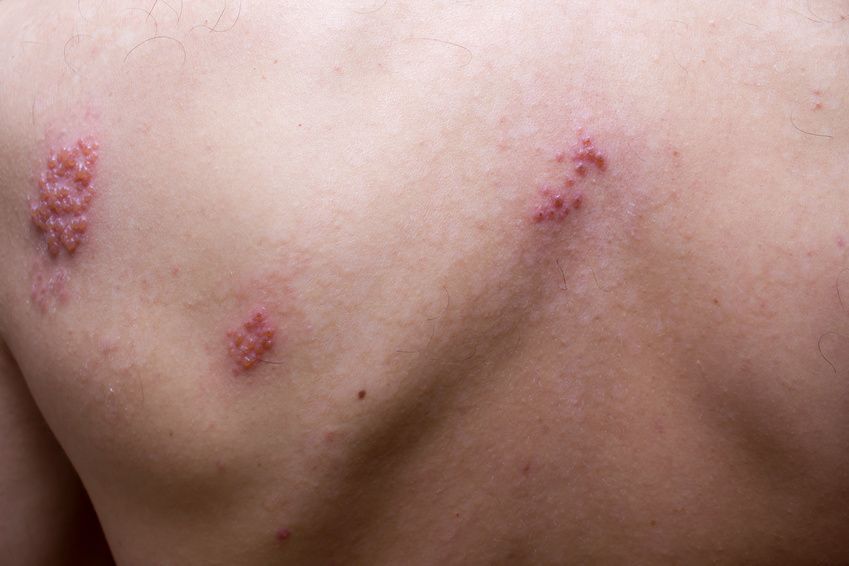
A few days after infection, small red blisters form. They are painful and can burst very easily. The regional lymph nodes are often swollen.
The herpes blisters heal after two to three weeks, forming scabs. Immunocompromised individuals and HIV patients generally tend to experience severe, protracted, and recurrent episodes.
Unlike cold sores and genital herpes, herpes zoster causes a general feeling of illness. Anyone who had chickenpox as a child carries the varicella-zoster virus for life.
With shingles (“herpes zoster”), widespread redness with countless blisters forms on the skin. Shingles typically breaks out
- in older age,
- due to a weakened immune system, or
- due to stress
.
In addition to these skin reactions,
- pain,
- tingling,
- numbness,
- muscle and joint pain, and
- a mild fever.
Acute shingles usually resolves on its own after a few weeks. Patients are typically prescribed pain relievers and antiviral medications to alleviate symptoms until recovery.
However, the months or even years following shingles are far more difficult. Post-herpetic neuralgia causes pain in the muscles and joints long after the shingles have healed. It can severely impair quality of life.
How is herpes treated?
Treatment for herpes in any form (herpes labialis, herpes genitalis, herpes zoster) can only be symptomatic. A permanent cure is still not possible today. After the skin symptoms subside, the virus retreats into the nerve tissue and becomes inactive. However, it can flare up again at any time.
Nevertheless, there are several ways to at least alleviate the symptoms. These range from home remedies to antiviral medications. The most common treatment is with the antiviral drug acyclovir. However, acyclovir is ineffective against dormant viruses in the ganglion cells.
Herbal preparations can also be used as a supplement. They sometimes have antiviral and antibacterial effects. In severe cases, such as those resulting from an immune deficiency, antibacterial agents are very helpful, as they can prevent a bacterial superinfection of the herpes blisters.
Honey has long been a tried-and-true remedy for inflammation. It is effective against both bacteria (antibacterial) and viruses (antiviral).
Black tea has very similar effects. Its high content of tannins (bitter compounds, tannic acids) kills viruses and inhibits inflammation. Place a cold or warm tea bag on the area affected by herpes.
Drying out the cold sores also helps. Essential oils can be helpful here, such as
- rosehip oil,
- St. John’s wort oil,
- jojoba oil,
- lemon balm oil,
- calendula oil, or
- tea tree oil.
Tooth powder and baking soda also have a drying effect.
How to Protect Yourself from Herpes
There is no sure way to prevent herpes. The virus is simply too widespread for that.
One exception is protection against the varicella-zoster virus, which causes chickenpox and shingles. Young children can be vaccinated against the virus and thus enjoy a certain degree of protection. However, this does not affect other herpes simplex viruses.
It’s rather difficult to protect yourself against cold sores. A single kiss is often enough for transmission. Children usually contract the virus through their parents’ care and a kiss.
The situation is different, however, with genital herpes. In this case, doctors and health experts recommend:
- Use condoms during sexual intercourse
- Condoms also help keep sex toys clean
- Avoid contact with blisters and weeping sores
- Refrain from oral sex if there are blisters and/or small sores on the penis, vagina, or labia
There is no 100% protection against herpes. The Federal Center for Health Education (BZgA) offers anonymous online and telephone counseling for those interested.
What is the prognosis for a herpes infection?
The course of herpes depends on individual factors specific to the person affected. Cold sores usually heal without leaving any scars.
Genital herpes is usually harmless, though it can be very painful. However, the often-inflammatory herpes blisters increase the risk of contracting other sexually transmitted diseases. This applies especially to diseases such as
The pathogens causing these diseases can use the mucous membranes damaged by herpes to enter the bloodstream.
In cases of immunodeficiency or HIV infection, the disease can also take a very severe course. These are referred to as systemic or generalized herpes infections. In such cases, there is a risk of, for example, viral encephalitis (inflammation of the brain), which is associated with a high mortality rate.
However, people who are generally healthy and have a functioning immune system usually recover very well from herpes. Herpes then heals without any visible consequences.
What other viruses are there in the herpesvirus group?
The Epstein-Barr virus and Pfeiffer’s glandular fever
The “kissing disease” is caused by the Epstein-Barr virus (EBV for short). It is also known as “Pfeiffer’s glandular fever” or infectious mononucleosis. EBV is a close relative of the herpes simplex virus. It is transmitted through saliva, which is why the disease is called “kissing disease.”
The initial infection usually occurs during adolescence or early adulthood. Flu-like symptoms appear first, followed by
- fever,
- fatigue,
- malaise,
- a sore throat due to severely swollen lymph nodes,
- headaches,
- cough, and
- chills.
As a result of the disease, cancer may develop later in life. The Epstein-Barr virus is detectable in up to 80 percent of nasopharyngeal tumors. The cancer often develops decades after the primary infection has resolved.
As a viral illness, Pfeiffer’s glandular fever cannot be treated causally, only symptomatically. Antipyretics and pain relievers are used. Antibiotics are prescribed in cases of bacterial superinfection in the area of the inflamed tonsils or lymph nodes.
Patients should strictly adhere to the prescribed rest. Otherwise, complications may arise, such as
- myocarditis,
- meningitis, or
- a ruptured spleen resulting from severe enlargement of the organ.
Cytomegalovirus and Cytomegaly
Another widespread member of the herpesvirus family is the cytomegalovirus (herpesvirus 5, human cytomegalovirus). It occurs only in humans. The prevalence of infection in the adult population in our region is about 40 percent. In the developing world, the virus reaches prevalence rates of up to 100 percent.
Infection usually occurs during childhood. Here, too, saliva and other bodily fluids are the routes of transmission.
Nearly 90 percent of those infected do not even notice the cytomegalovirus infection. In such cases, the infection is asymptomatic. In the remaining rare cases, symptoms such as fever and swollen lymph nodes may occur.
Overall, cytomegalovirus infection resembles mononucleosis. For people with a healthy immune system, the disease is easily managed and resolves without complications.
However, pregnant women and their unborn children are particularly at risk. The unborn child has about a 40 percent risk of becoming infected as well if the mother is infected for the first time. This usually results in severe birth defects in the child, such as
- heart muscle damage,
- intestinal disorders,
- hearing loss, and
- movement disorders.
This herpes virus often causes only vague, flu-like symptoms in the mother. As a result, the infection—and thus the risk to the child—often goes unrecognized.
A second group of high-risk patients consists of people with weakened immune systems. This includes
- transplant recipients (who have received a new donor organ) as well as
- people infected with HIV and
- people with AIDS.
In these patients, the cytomegalovirus can trigger systemic inflammation, including pneumonia.
As with all other herpes infections, treatment for cytomegalovirus is purely symptomatic. The following are used:
- antipyretics,
- antibiotics to treat concurrent bacterial infections, and
- antiviral drugs to slightly reduce the viral load of the disease.
There is no way to protect oneself against this herpesvirus. There is no vaccine, nor are there any specific preventive measures that could prevent infection. However, pregnant women are advised to have themselves and their partners screened for cytomegalovirus infection.
The test for antibodies against the cytomegalovirus is not a standard service covered by health insurance as part of prenatal care. Therefore, it is classified as a self-pay service. At around €13, the cytomegalovirus test is not too expensive, however. It is a good investment that, in the best-case scenario, can reduce the risk to the child.
For further assistance and comprehensive advice on the topic of “Herpes & Co.,” consult a dermatologist or gynecologist.
Share this article