Hormonal imbalances affect many people and can cause a wide range of symptoms. They occur when the delicate balance of hormones in the body is disrupted. These imbalances can lead to various medical conditions and often require a comprehensive diagnosis and treatment by specialized physicians.
Below you will find more information on hormonal imbalances as well as a selection of specialists who treat them.
What are hormones?
Hormones are chemical messengers in the body that are produced and released by hormone-producing glands.
The blood carries them to their target organs, where they ultimately regulate all of the body’s metabolic processes, which occur unconsciously and without active intervention.
Processes influenced by hormones include:
- Energy metabolism
- Water balance
- Growth processes
- Sleep-wake cycle, or
- Sexual functions
What hormones are there?
There are a wide variety of hormones, and many are likely still unknown.
The most important and common hormones are:
- The metabolic hormone insulin, which is produced by the pancreas
- The thyroid hormones thyroxine (tetraiodothyronine, or T4 for short) and triiodothyronine (T3 for short)
- The female sex hormones estrogen and progesterone, which are produced by the ovaries
- The stress hormone cortisol, produced by the adrenal glands
In addition, other hormones such as testosterone play an important role—not only in men but also in female metabolism. Hormones regulate numerous processes in the body, such as the menstrual cycle, mood, and energy balance.
Hormonal changes can also be a decisive factor when trying to conceive, as even small fluctuations can affect the interaction between the various hormonal systems.
What are common hormonal imbalances?
Many people think that hormonal imbalances only affect women during pregnancy or menopause. However, there are a variety of hormonal imbalances that can also affect men, children, and seniors.
Hormonal imbalances occur whenever the body is unable to properly produce, release, or process hormones.
These disorders can affect various systems in the body and cause a wide range of symptoms. For those affected, this often results in a significant reduction in their quality of life.
Among the most common hormonal diseases and disorders are:
Diabetes (diabetes mellitus): Characterized by elevated or low blood sugar levels. This leads to nausea, vomiting, dizziness, loss of consciousness, and unquenchable thirst.
Diabetes has now become a widespread disease. Patients often develop it over the course of their lives. It is associated with obesity and a lack of physical activity (type 2 diabetes mellitus).
In this case, although the pancreas produces sufficient insulin, the target tissues no longer respond to it properly. Through dietary changes and weight loss, the condition is easily treatable and even curable.
In the congenital form, type 1 diabetes mellitus, the islet cells responsible no longer produce enough insulin. Fat, muscle, and liver cells can no longer absorb sugar molecules. The cells therefore “starve,” which is why the artificial administration of insulin via injections is life-saving.
Thyroid dysfunction, including both hyperthyroidism and hypothyroidism.
In the case of underactivity (medically known as hypothyroidism), often caused by iodine deficiency or inflammation, the thyroid gland produces too few thyroid hormones.
Those affected complain of fatigue, depression, or weight gain. The lack of thyroid hormones ultimately leads to a slowing of the metabolism.
In hyperthyroidism (medically known as hyperthyroidism), there is an excess of thyroid hormones. Causes often include autoimmune diseases or tumors.
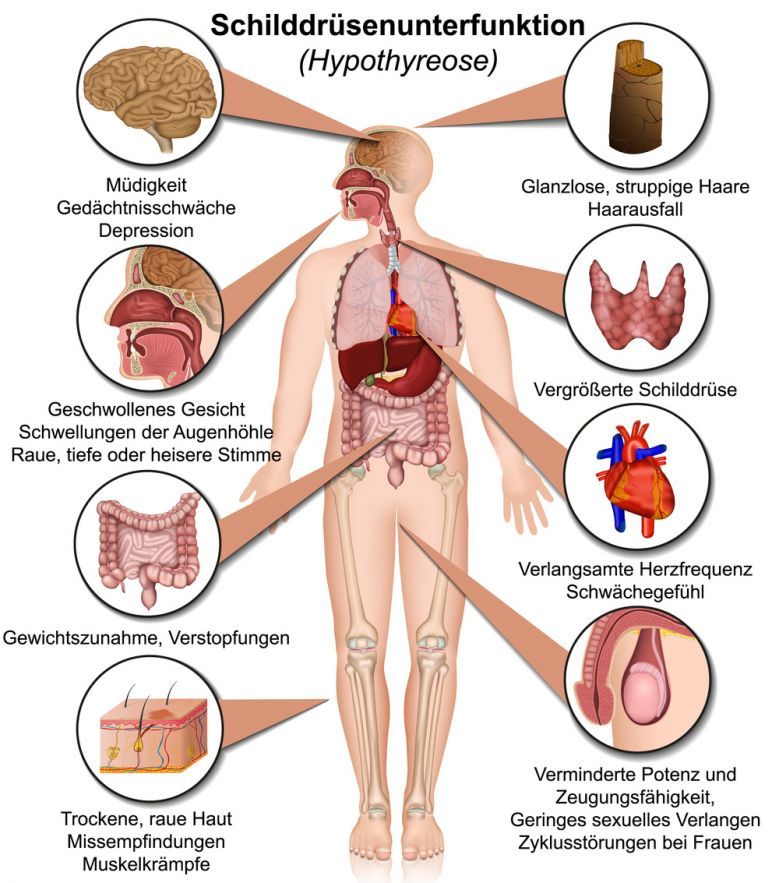
Symptoms of hypothyroidism @ bilderzwerg /AdobeStock
Disorders of the pituitary gland can also lead to hyperthyroidism.
An overdose of thyroid hormones (whether unintentional or deliberate, to achieve weight loss) can also cause hyperthyroidism.
A hallmark of hyperthyroidism is the acceleration of the entire metabolism. This typically leads to nervousness, increased sweating, intense hunger, and—despite increased food intake—weight loss.
Discussing hormonal imbalances in women would go beyond the scope of this text. A variety of hormones play a role during puberty, menopause, pregnancy, and breastfeeding, among other times.
Put simply, the most important hormones for regulating reproductive function in women are estrogen and progesterone. Even the slightest changes and irregularities can lead to menstrual cycle disorders and even infertility.
The adrenal gland produces the stress hormone cortisol. It controls all of the body’s stress responses.
Cushing’s syndrome is a condition associated with symptoms such as central obesity, a moon-shaped face, and skin changes (acne, excessive hair growth).
Disorders of the pituitary gland (hypophysis), the adrenal glands (adrenal tumors = adrenal adenomas), and the lungs (bronchial carcinoma) can lead to excessive cortisol production.
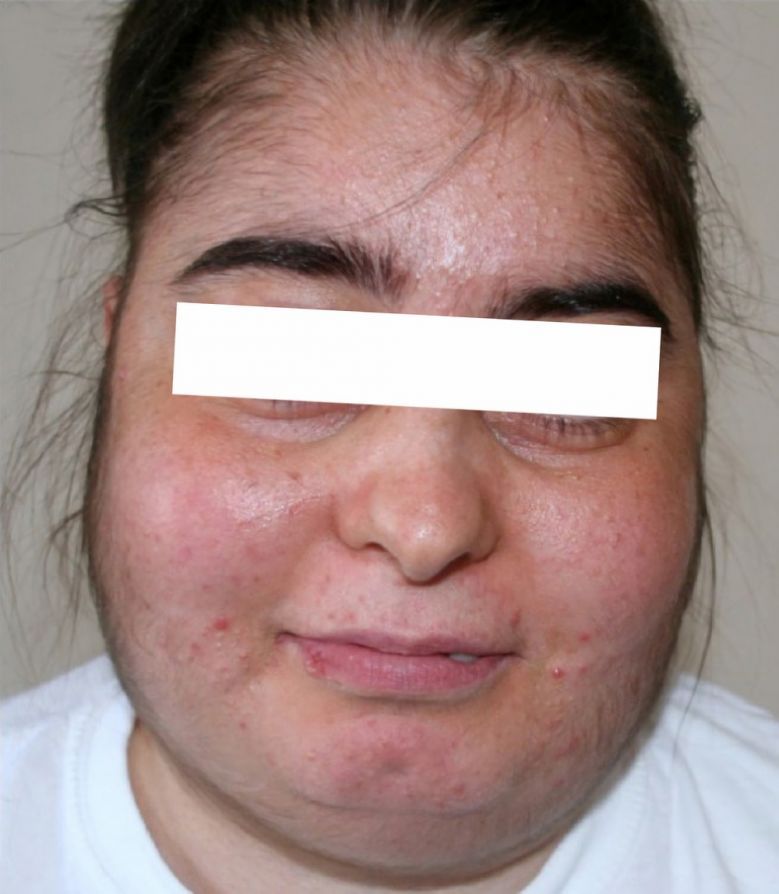
Young woman with Cushing’s syndrome @ By Ozlem Celik, Mutlu Niyazoglu, Hikmet Soylu, and Pinar Kadioglu - http://mrmjournal.biomedcentral.com/articles/10.1186/2049-6958-7-26, CC BY 2.5, Link
Which symptoms should (also) make you suspect hormonal disorders?
The symptoms of hormonal disorders are varied and depend on which hormones are affected.
Many hormonal disorders are accompanied by various symptoms that may also have other causes.
Therefore, if you experience any symptoms, you should have a blood test done. This makes it easy to rule out or confirm certain conditions.
The most common symptoms include:
- Fatigue and exhaustion
- Weight changes (gain or loss)
- Mood swings or depression
- Menstrual irregularities in women, such as irregular periods
- Skin problems such as acne or dry skin
- Sleep disturbances
- Hair loss
Causes and risk factors of hormonal imbalances
What are the causes and risk factors of hormonal disorders?
Since there are many different types of hormonal imbalances, various causes and risk factors may be responsible.
Some important examples are listed below:
- Genetic predisposition, for example, in type 1 diabetes mellitus
- Obesity and lack of physical activity in type 2 diabetes
- Malnutrition in cases of hypothyroidism; iodine deficiency is the most common cause in Germany (with the exception of coastal regions)
- Stress and psychological strain in cases of adrenal disorders and menstrual irregularities
- Medications and hormonal contraceptives
- Age and hormonal changes, such as during puberty or menopause
Hormonal imbalances can also occur when endocrine organs such as the ovaries, pituitary gland, or adrenal glands become out of sync. In polycystic ovary syndrome (PCOS), for example, elevated androgen levels and fluctuating estrogen levels lead to menstrual cycle problems, absent periods, or difficulty conceiving. Changes in prolactin, cortisol, or FSH can also disrupt hormonal balance and contribute to hormonal imbalances.
The hypothalamus also plays a central role, as it acts as a higher-level control center that regulates many hormonal systems. If this regulation is disrupted—for example, by stress, chronic illnesses, or metabolic changes—it can have far-reaching consequences for the entire body and trigger various hormonal disorders.
Diagnosis and Treatment of Hormonal Imbalances—From the Female Menstrual Cycle to Targeted Therapy
Diagnosing Hormonal Disorders
Various examination methods are used to diagnose hormonal disorders:
Medical history (anamnesis): The medical history is certainly one of the most important initial steps in the evaluation. The focus is on questions regarding the development of symptoms, specific surgeries, or medication use.
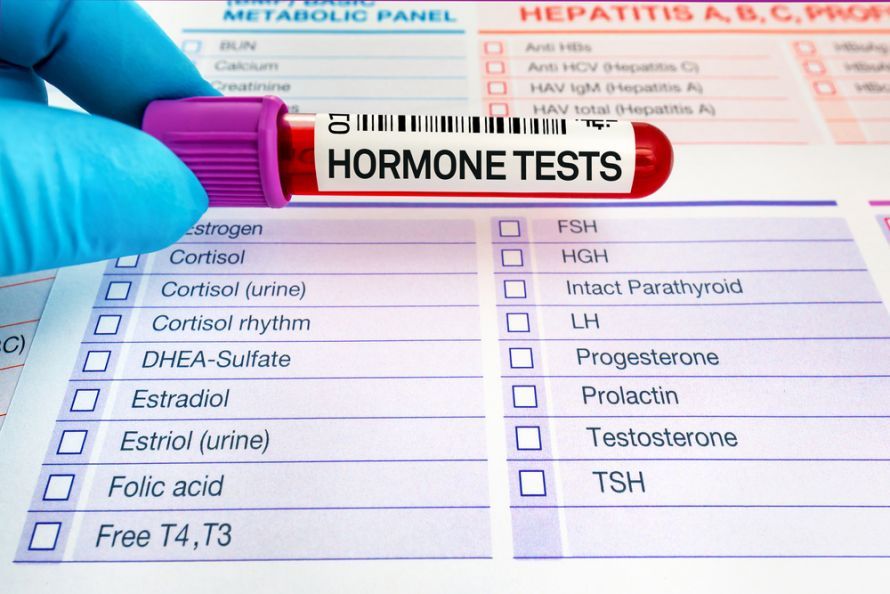
Blood test: Next comes the blood test, which also provides very important clues regarding the presence of a hormonal disorder. On the other hand, the blood test can also rule out hormonal disorders. In that case, further diagnostic tests for the described problems may be necessary.
Saliva tests for specific hormones: These can also provide an initial overview of hormonal status and any potential imbalances. This is particularly true for female sex hormones. Saliva tests are routinely used for this purpose.
Urine analyses to detect hormone metabolites
Imaging techniques such as ultrasound or MRI: To examine hormone-producing glands. This is useful, for example, when examining the thyroid or the ovaries. They are also used to confirm the diagnosis of hormonal imbalances.
Treatment of Hormonal Disorders
The treatment of hormonal disorders depends on the cause and the individual symptoms.
Common treatment approaches include:
- Medication with hormone replacement therapy or hormone blockers
- Lifestyle changes, such as dietary adjustments and regular exercise
- Stress management and psychological support
- Specialized therapies for women, such as treatment for menstrual cycle disorders or menopausal symptoms
Endocrinologists are specialists in the treatment of hormonal disorders. These doctors specialize in hormonal disorders and metabolic disorders and offer comprehensive diagnosis and treatment.
Hormonal imbalances can cause a wide variety of symptoms depending on the type of disorder. They particularly affect people of childbearing age who experience irregular cycles or symptoms such as PMS. It is crucial to monitor hormone levels regularly to detect changes early on.
Drug therapy is primarily used when the body does not produce sufficient amounts of known hormones or when these hormones are out of balance. This applies to both thyroid disorders and sex-specific imbalances, which can even increase the long-term risk of osteoporosis.
When taking hormonal medications—whether hormone replacement therapy, blockers, or regulating medications—the treatment plan is tailored individually to the patient. This ensures that hormonal imbalances are stabilized over the long term and symptoms are effectively reduced.
What is the prognosis for hormonal disorders?
The course of hormonal disorders depends heavily on the cause and on timely and appropriate treatment.
Many hormonal disorders can be well controlled through targeted therapies, significantly improving the quality of life for those affected. However, it is important to attend regular medical checkups and to follow the treatment plan consistently.
In summary, hormonal disorders can cause a wide range of symptoms and complaints. Therefore, a comprehensive diagnosis and treatment are necessary.
With the right treatment and the support of specialized doctors, the quality of life for those affected can be significantly improved.
If you experience persistent symptoms, consult an endocrinologist to identify and treat potential hormonal imbalances early on.
FAQs on Hormonal Imbalances
What role does LH play in hormonal imbalances?
In women, LH regulates ovulation, and in men, it influences testosterone production. If LH levels are too high or too low, this may indicate a potential underlying cause such as glandular disorders, hormonal imbalances, or thyroid diseases.
What are the typical symptoms of hormonal imbalances in women?
Hormonal imbalances in women often manifest as an irregular menstrual cycle, breakthrough bleeding, loss of libido, depressive moods, or other gynecological symptoms such as PMS.
Can hormonal imbalances also occur in men?
Yes. In men, hormonal disorders often manifest as a loss of libido, reduced drive, or changes in physical performance. These symptoms are frequently caused by a glandular disorder, stress, or a thyroid condition.
How do hormonal imbalances affect daily life?
Typical symptoms include fatigue, mood swings, hair loss, or weight fluctuations. Changes in the menstrual cycle, libido, or general well-being can also indicate a hormonal imbalance.
When should hormonal causes be considered in the event of symptoms?
In cases of breakthrough bleeding, an irregular menstrual cycle, loss of libido, depressive moods, or recurring hormonal symptoms, an endocrinological evaluation should be considered, as hormonal imbalances are a common possible cause.
Share this article

Sources
Berufsverband der Frauenärzte (BVF)
Deutsche Diabetes Gesellschaft (DDG)