Menopausal symptoms refer to illness-like symptoms that women experience when their hormonal balance changes. Menopausal symptoms can have a significant impact on quality of life and overall mood. The treatment and management of menopausal symptoms have therefore become increasingly important for doctors and their patients in recent decades. Here you will find further information as well as a selection of specialists and centers specializing in menopause.
Menopausal Symptoms: Definition
The climacteric, as menopause is known in medical terminology, typically occurs around midlife. The climacteric is divided into three stages:
- The period before the last menstrual period is called perimenopause. It is preceded by menstrual irregularities (shorter cycles, irregular intervals between periods) and begins, on average, at age 47.5.
- On average, women enter menopause at around age 52. This term refers to the last menstrual period in a woman’s life.
- The phase following menopause is called postmenopause.
The period before menopause is also called premenopause. During this phase, the ovaries are already producing fewer hormones, which can also lead to irregular cycles.
The ratio of the female sex hormones estrogen and progesterone (a progestin) to the male sex hormone testosterone changes: initially, less progesterone is produced. As a result, during premenopause and perimenopause, there is an estrogen dominance relative to progesterone—that is, a relative excess of estrogen.
After some time, less estrogen is produced. This is reflected in an absolute estrogen deficiency during advanced perimenopause and postmenopause.
Eventually, the production of female hormones ceases completely, resulting in the cessation of the menstrual cycle and menstruation. The production of male hormones, on the other hand, decreases only gradually.

Nine out of ten women going through menopause experience one or more symptoms during this hormonal transition. These symptoms are perceived as bothersome, unfamiliar, and limiting. This can also lead to secondary psychological symptoms.
Menopause is a phase of hormonal change. Those affected experience it as a stressful time during which they face a variety of issues related to their bodily experiences.
The symptoms of menopausal discomfort are complex. They are related to the relative and absolute hormone levels during the various phases of menopause.
Early Signs of Menopausal Symptoms
Women entering menopause are usually first surprised by irregularities in their menstrual cycle. Periods may be shorter or longer than usual, and bleeding is often heavier.
Estrogen dominance can also result in breast tenderness and lower abdominal pain. Sometimes these symptoms are accompanied by increased dryness of the mucous membranes.
Depending on the individual case, however, the onset of menopause may not be foreshadowed but may occur suddenly and unexpectedly.
Physical Symptoms – Hot Flashes and More
The term “hot flashes” is inextricably linked to menopause. A large majority of women going through menopause report experiencing regular hot flashes.
These are characterized by sudden sensations of extreme heat. They often spread from the head throughout the entire body and usually last only a few minutes. They are frequently accompanied by a rapid heartbeat. Occasionally, the sensation of heat is so intense that the body begins to sweat.
Hot flashes also cause stress for those affected, for example, when the symptoms occur in public.
After menopause, hot flashes gradually subside, though for some women they never completely stop. On average, however, hot flashes last 5.2 years.

Furthermore, a disrupted sleep pattern is typical of menopause. It becomes harder to fall asleep, nighttime sleep is restless, and periods of wakefulness during the night are long. Consequently, the feeling of fatigue and weakness is particularly pronounced in the morning.
The lack of sleep and the fact that it is not very restful also contribute to
- fatigue,
- a decline in performance, and
- feelings of exhaustion
are also counted among the symptoms of menopause. Whether these symptoms are triggered by hormonal fluctuations or are secondary effects of the disrupted sleep pattern has not been conclusively clarified in medical circles. However, it is undisputed that the symptoms occur and cause discomfort.
Due to the lack of estrogen, blood flow to the mucous membranes is reduced. This manifests as dryness of the mucous membranes in the
- the vagina,
- the urethra, and
- the bladder.
The change in mucus composition can lead to more frequent urinary tract infections and vaginal infections caused by fungi and bacteria.
Dryness of the vaginal mucosa can also make sexual intercourse very painful. Water-based lubricants, which can be purchased at any pharmacy, can help alleviate this problem.
In extreme cases, an increased urge to urinate can lead to temporary incontinence.
The hormonal deficiency also increases the risk of
- osteoporosis,
- joint and bone problems, as well as
- cardiovascular disease
. Weight gain is also not uncommon.
Psychological Symptoms Associated with Menopausal Symptoms
Menopause is an exhausting process that also affects one’s mental well-being. The period before and after menopause is often a time of emotional stress for those affected.
Due to the
- often chronic feeling of exhaustion,
- various physical discomforts, and
- struggles with one’s self-image
, menopause induces negative moods that, in many cases, can lead to depression.
The nagging worries and hormonal irregularities lead
- increased irritability,
- mood swings, and
- nervousness
, which in some cases can make social interactions difficult.
What to Do About Menopausal Symptoms?
The first person to consult regarding the complex issues surrounding menopause is a gynecologist. They are highly familiar with the specifics of the female hormonal system.
Hormone replacement therapy (HRT) has both advantages and disadvantages
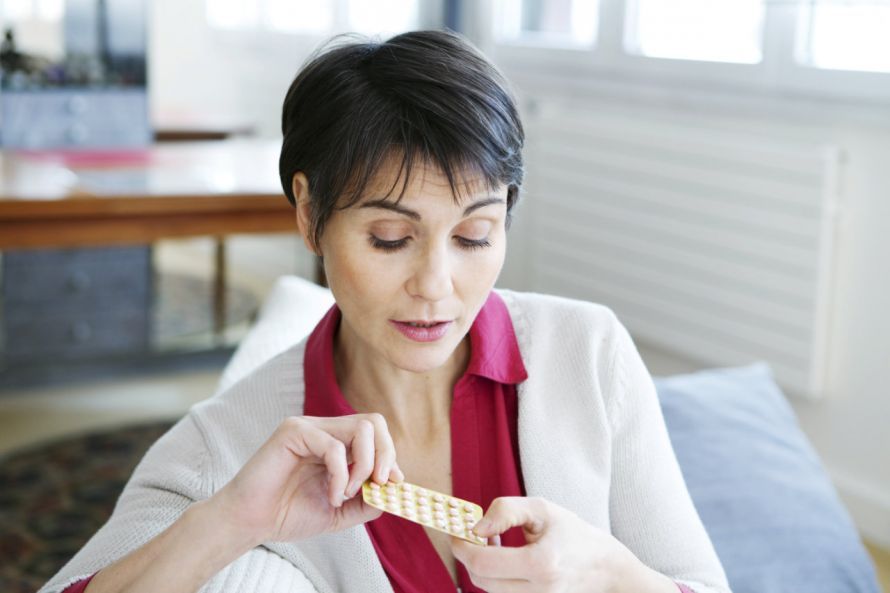
One way to alleviate menopausal symptoms is hormone replacement therapy, also known as HRT. However, this therapy interferes with the hormonal balance. It should therefore not be used without a medical necessity and after weighing the pros and cons.
According to the current guidelines of the leading German and Swiss gynecological societies, HRT is recommended for healthy women with a uterus—when medically necessary—to treat menopausal symptoms for a period of three to five years. Treatment may continue for longer, but the dosage should always be kept as low as possible.
According to the aforementioned guidelines, hormone replacement therapy has positive effects on
- hot flashes,
- vaginal dryness,
- sleep disturbances,
- depressive moods,
- decreased performance and memory, as well as
- bone and joint problems.
The authors also believe that HRT reduces the risk of certain diseases, including
The increased risk of breast cancer and vascular occlusions is considered low. However, it is also emphasized that an annual review should be conducted to determine whether hormone therapy is still necessary at all. Women over the age of 60 should not receive HRT.
The U.S. Preventive Services Task Force (USPSTF) takes a slightly different view. While it also recommends HRT for the short-term treatment of menopausal symptoms and considers it safe for this use,
However, in its current recommendations, it opposes the use of hormone preparations after menopause for the prevention of diseases. The disadvantages—such as an increased risk of, among other things,
- invasive breast cancer (a particularly aggressive form of breast cancer),
- venous thromboembolism
would outweigh the benefits.
Hormone replacement therapy should therefore always be used with caution and in a rather conservative manner. The gynecologist will decide together with the patient
- whether hormone replacement therapy is medically indicated and
- whether the benefits outweigh the potential risks.
Implementation of Hormone Replacement Therapy
Hormone replacement therapy does not follow a fixed protocol but must be tailored to each woman’s individual hormonal profile. For this reason, women should provide their gynecologist with all relevant information
regarding the course of her menstrual cycle and
any specific circumstances
. Only then can the gynecologist determine the appropriate course of treatment. For example, symptoms in women who have had breast cancer or a hysterectomy are treated differently.
As part of HRT, the body is administered the hormones it previously produced, usually as part of combination therapy. The hormones estrogen and progestins are combined.
This approach effectively alleviates menopausal symptoms. As a result, women experience fewer—or even none at all—of the hormonal changes in their own bodies.
Hormone preparations are available in many different forms. They are administered as
- tablets,
- creams,
- suppositories,
- patches, or
- injections
. The German-Swiss medical societies recommend the use of creams.
Herbal Remedies for Menopausal Symptoms
As an alternative to hormone replacement therapy (HRT), there are herbal remedies such as chasteberry or black cohosh. Valerian helps with sleep disturbances.
However, the benefits of herbal preparations have not been scientifically proven.
Hot flashes may also be treated in some cases with specific serotonin reuptake inhibitors. As with herbal remedies, the long-term risks of these medications are currently unknown.
Depending on the specific symptoms, other medications may be considered for the acute treatment of symptoms.

Lifestyle Changes
Lifestyle changes, such as
- more exercise,
- a balanced diet, and
- quitting smoking
reduce the risk of developing hormone-deficiency-related conditions such as
Light clothing, a cold washcloth, or a cold pack on the neck or forehead can make hot flashes more bearable. Women who suffer from sleep disturbances should avoid caffeinated beverages in the afternoon and eat dinner a little earlier.
With the right treatment approach, it is possible to reduce menopausal symptoms to a very manageable level.
Share this article

About the medical author
Sabine Schneider
Editor-in-Chief
Sabine Schneider – medical author: Explore expert articles and medical expertise in the Leading Medicine Guide.
View full expert profile →Sources
- aerzteblatt.de (2017) Kein sicheres „Timing“: US-Leitlinie lehnt Hormone zur Krankheitsprävention nach der Menopause weiter ab. Ärzteblatt vom 13. Dezember 2017
- Deutsche Gesellschaft für Gynäkologie und Geburtshilfe, Berufsverband der Frauenärzte, Deutsche Menopause Gesellschaft et al. (2015) Anwendungsempfehlungen zur Hormonsubstitution in Klimakterium und Postmenopause. Aktualisierte gemeinsame Empfehlungen. Frauenarzt 56(8): 657-660
- Krebsinformationsdienst (2016) Hormone und Krebsrisiko. Für gesunde Frauen: Was tun gegen Beschwerden in den Wechseljahren? Deutsches Krebsforschungszentrum. https://www.krebsinformationsdienst.de/vorbeugung/risiken/hormonersatztherapie1/
- NICE guideline (2015) Menopause: diagnosis and management. NICE, nice.org.uk/guidance/ng23
- US Preventive Services Task Force (2017) Hormone Therapy for the Primary Prevention of Chronic Conditions in Postmenopausal WomenUS Preventive Services Task Force Recommendation Statement. JAMA 318(22):2224-2233. doi:10.1001/jama.2017.18261