Breast cancer is a common form of cancer and affects many women over the course of their lives. The disease results from malignant changes in cells within the breast tissue and is medically referred to as breast carcinoma.
Symptoms can vary widely, ranging from palpable changes in the breast to discomfort in the nipple or armpit area. Early diagnosis of breast cancer significantly improves the chances of recovery, which is why early detection and regular screenings play a crucial role.
Modern treatment options such as surgery, chemotherapy, radiation therapy, and drug therapy now make it possible to provide personalized treatment.
What is breast cancer?
Breast cancer, also known as mammary carcinoma, is a malignant tumor of the breast.
Breast cancer is by far the most common form of cancer among women. In Germany, about one in nine women will develop breast cancer during her lifetime. More than 70,000 new cases of breast cancer are diagnosed in Germany each year.
The female mammary gland (mammary gland) consists of
- glandular tissue,
- fat, and
- connective tissue.
The glandular tissue is made up of lobules. These produce breast milk and open into the milk ducts.
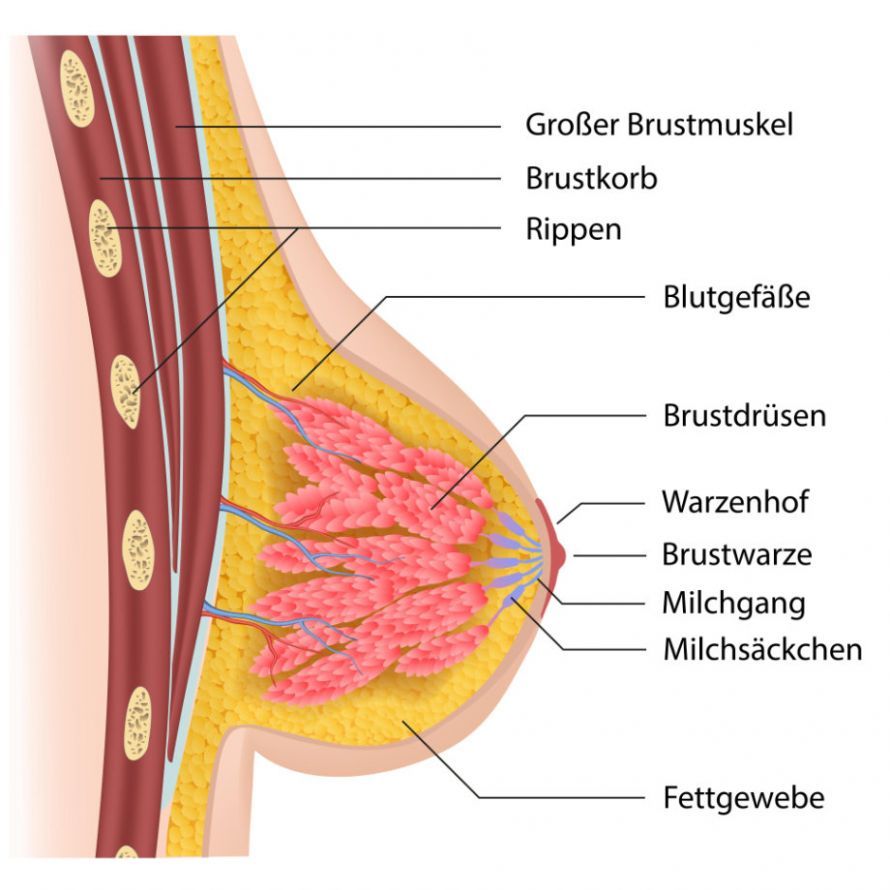
The structure of the female breast © bilderzwerg | AdobeStock
Depending on where it originates, breast cancer is classified into types
- those originating in the milk ducts (invasive ductal) or
- from the lobules (invasive lobular)
. There are also a few rare subtypes. Additionally, breast tumors are classified according to
- the degree of malignancy,
- hormone sensitivity, and
- sensitivity to certain antibodies.
Breast Cancer in Women—Risk Factors, Symptoms, Early Detection—Everything You Need to Know About Living with Breast Cancer at Various Stages of the Disease
Causes and Risk Factors for the Development of Breast Cancer
Unfortunately, the exact cause of breast cancer is still unknown. However, a number of risk factors are known. Women
- as they get older.
- if there is a family history of mutations in the BRCA1 or BRCA2 breast cancer genes.
- who have previously had cancer in one breast; the other breast is then also at increased risk.
- who started menstruating at an early age.
- who experience late menopause.
- Women without children.
- who were older than 30 when they gave birth to their first child.
- who smoke heavily and consume excessive amounts of alcohol.
Women who breastfeed, on the other hand, have a lower risk of developing breast cancer.
It was previously believed that certain hormone replacement therapies also increased the risk of breast cancer. An outdated American study reached this conclusion. However, the study was based on hormone preparations that were too highly dosed and of poor quality. This study has since been refuted.
Properly administered hormone replacement therapies do not increase the risk of breast cancer.
How is breast cancer diagnosed?
Every woman should regularly examine her breasts for changes. If you notice, for example,
- lumps,
- dimpling,
- pain,
- skin changes, or
- discharge from the nipple
, you should see your gynecologist immediately.
Unfortunately, breast cancer does not always cause symptoms. Some breast cancers can therefore only be detected through
- mammography,
- ultrasound, or
- magnetic resonance imaging (MRI)
.
Breast cancer is highly treatable if the tumor is detected early. The chances of a cure decrease significantly with larger tumors or when lymph nodes are affected. That is why cancer screening is so important. Be sure to take advantage of all the screening exams offered by your health insurance provider. For women between the ages of 50 and 69, cancer screening also includes mammography screenings.
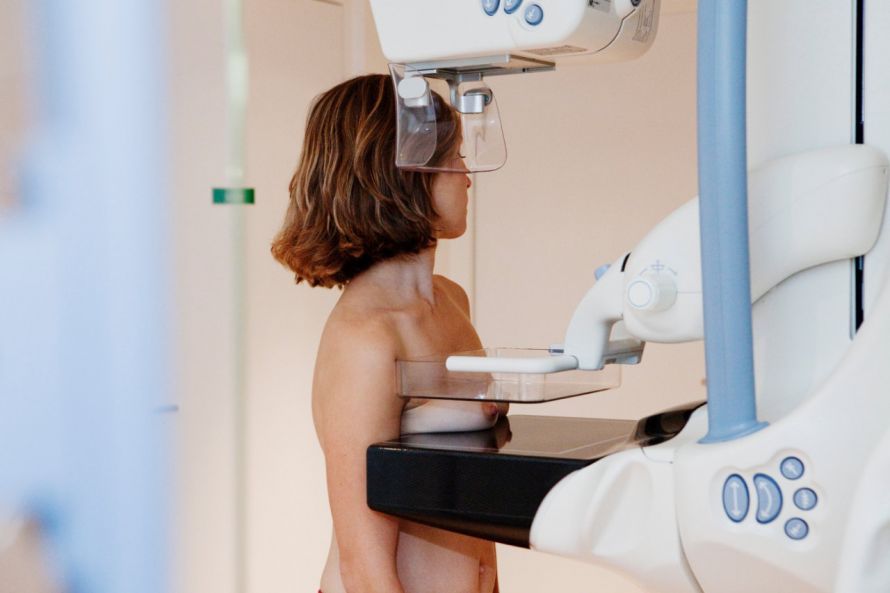
Performing a mammogram © RFBSIP | AdobeStock
Most women’s clinics and their interdisciplinary breast centers offer breast clinics. Here, patients can be examined and advised by specialists. In most cases, private practice gynecologists or radiologists refer their breast cancer patients to such clinics.
In addition to a detailed discussion of the patient’s personal medical history (anamnesis), comprehensive breast cancer diagnostics are performed. These include
- a physical examination and
- an ultrasound examination of the breast using a high-resolution ultrasound machine.
The specialists evaluate the mammogram images brought in by the patient or arrange for further specialized imaging tests.
Often, a tissue sample is taken during the ultrasound examination (breast biopsy). The removal of so-called tissue cylinders is performed using a high-speed punch biopsy under local anesthesia.
If the diagnosis of breast cancer is confirmed, the next steps will be discussed in a personal consultation.
This includes a series of tests to determine
- how advanced the breast cancer is and
- whether it has already spread to other organs.
Detecting and Treating Breast Cancer—The Right Treatment for Breast Cancer, Breast Cancer Surgery, and Side Effects
Surgical Treatment of Breast Cancer: Breast Cancer Surgery
The principle of surgical treatment is the complete removal of the tumor from the breast. In most cases, breast-conserving surgery can be performed. During this procedure, the tumor is removed along with a safety margin of healthy tissue.
In rare cases, however, removal of the entire breast (mastectomy) is still necessary, for example, in cases of
- skin involvement or
- an inflammatory component.
During breast cancer surgery, the sentinel lymph node in the armpit on the affected side is also removed. To do this, a dye or radioactive substances are injected into the area around the node or near the nipple. This allows the lymph node to be marked and removed more easily.
In the laboratory, the lymph node is examined for the presence of cancer cells. This procedure is known as sentinel lymph node biopsy.
The first lymph node in a tumor’s drainage area is called the sentinel lymph node (sentinel = guard). It “guards” the other lymph nodes in the armpit.
This allows doctors to draw conclusions about the spread of the cancer. If the sentinel lymph node is free of cancer cells, the other axillary lymph nodes are also unaffected. However, if the sentinel lymph node also contains cancer cells, additional lymph nodes in the armpit must be removed.
Today, so-called oncoplastic techniques are used in all surgical procedures. These techniques combine cancer surgery with principles of plastic surgery.
As a result, even after extensive breast surgery, attractive cosmetic results can often be achieved. Techniques are also used to balance the opposite side, for example, in tumor-adapted reduction surgery.
Even the removal of a breast is not a fate one must simply accept. Reconstruction can be performed using either the patient’s own tissue or a prosthesis. The nipple can also be reconstructed. The type of breast reconstruction depends not only on the patient’s physical condition and the planned treatment but, above all, on the patient’s wishes. The doctor discusses this matter individually with each patient and works with her to develop a customized plan.
Drug Treatment for Breast Cancer
Chemotherapy
Breast cancer is a curable disease as long as it has not spread to other organs. However, chemotherapy is often necessary to achieve a cure. During this treatment, medications are administered intravenously to prevent tumor cells from dividing and growing.
These medications also affect the rest of the body, which is why the treatment has side effects, such as
- hair loss,
- nausea,
- a drop in white blood cell count.
Today, however, many side effects can be prevented so effectively that they hardly ever occur anymore. The treatment is usually provided on an outpatient basis
- at breast centers,
- by oncologists, or
- by specialized gynecologists
.
Before treatment begins, doctors usually implant a small valve, known as a port. The medication can be administered easily and gently through this port. Often, it becomes clear as early as after the core biopsy or upon assessment of the tumor’s spread that chemotherapy is necessary. In such cases, chemotherapy is usually administered before breast cancer surgery. This is referred to as neoadjuvant chemotherapy.
This causes the tumor to shrink, making the breast cancer easier to remove surgically. The effectiveness of the chemotherapy is monitored through regular checkups. The therapy is considered successful if the tumor actually shrinks.
Anti-hormone therapy
Many tumors are sensitive to hormones. They possess what are known as hormone receptors. During a histological examination of the cancerous tissue, pathologists determine whether the tumor responds to hormones.
Hormone-sensitive breast cancers can also be treated with anti-hormone therapies. For premenopausal women, tamoxifen is the primary treatment. Sometimes oncologists also prescribe medications that induce artificial menopause.
Postmenopausal women are also often treated with tamoxifen. However, they should also receive an aromatase inhibitor on a rotating schedule. Many patients are treated exclusively with aromatase inhibitors.
Anti-hormone therapies also have side effects, which must be discussed in detail depending on the combination and specific drug. However, these side effects are not comparable to those of chemotherapy. Hormone therapy typically lasts five years and begins after chemotherapy. It is prescribed by private practice gynecologists, who also provide follow-up care.
Antibody Therapy
Pathologists also examine the tumor for specific binding sites for an antibody, the HER2-neu receptor. If the tumor is sensitive to this antibody, antibody therapy is recommended in conjunction with chemotherapy. This also involves outpatient infusions.
Radiation Therapy for Breast Cancer
Oncologists often recommend radiation therapy to the surgical site following breast cancer surgery. The high-dose radiation destroys any remaining tumor cells. Certain lymphatic drainage areas must be irradiated if many lymph nodes are affected.
Radiation therapy is administered on an outpatient basis every weekday. It typically lasts up to six weeks.
Side effects primarily include local skin and tissue reactions. Some patients also feel that their physical performance is limited.
Follow-up Care for Breast Cancer
Follow-up care is provided by private practice gynecologists. They follow established protocols. Follow-up care consists of
- a physical examination of the breasts,
- breast ultrasound,
- mammography,
- a physical examination, and
- questions about symptoms.
Further diagnostic tests and tumor marker tests may also be part of follow-up care.
Psycho-oncology
A cancer diagnosis is a life-changing experience and causes fear and anxiety for many patients. Therefore, support from specially trained psychologists—known as psycho-oncologists—is an integral part of cancer treatment.
This support often helps patients regain a positive outlook on the future during this difficult time.
There are also clinics with nursing staff specially trained to care for breast cancer patients (breast nurses).
What is a breast center?
A breast center is a clinical unit comprising collaborating interdisciplinary clinics and, where applicable, private practice physicians, that focuses on
- diagnosis,
- treatment,
- prevention, and
- research
all diseases of the female breast—and, in rarer cases, the male breast.
In a breast center, various medical specialties work together in an interdisciplinary manner, including
- gynecology,
- oncology,
- hematological oncology,
- radiology,
- pathology, and
- psycho-oncology.
This close collaboration among various specialties ensures that patients receive optimal care. All treatment decisions are made jointly during regular tumor board meetings.
The German Cancer Societies and the German Society for Senology certify quality-assured breast centers. In doing so, they consider various criteria, such as the cases treated and the experience of the medical staff. These “breast centers” must undergo certification by expert committees. As a result, treatment at a certified breast center is consistent and of a high standard.
Conclusion
The diagnosis and treatment of breast cancer are complex, as breast cancer is the most common form of cancer and numerous factors—such as the timing of diagnosis, the type of breast cancer, and the risk of breast cancer all play a role; the development of breast cancer and its risk factors can influence an individual’s risk of developing the disease and may increase that risk.
Breast cancer is common in women, but men with breast cancer are also affected, which is why early detection is crucial for identifying breast cancer at an early stage, as breast cancer in its early stages offers better chances of recovery than advanced breast cancer with malignant tumors.
Once breast cancer is diagnosed, treatment for breast cancer depends on the specific tumor present in the case of breast carcinoma, as breast cancer encompasses a variety of clinical presentations; therefore, surgery for breast cancer, further treatments, as well as the management and follow-up care for breast cancer, must be planned on an individual basis.
Patients with breast cancer and older women, just like others affected by breast cancer, require structured treatment and follow-up care, as breast cancer causes not only physical but also psychological stress, and living with breast cancer often means long-term support, even years after diagnosis.
Organizations such as German Cancer Aid and other institutions are available to provide guidance and support, as breast cancer is common in Germany, its incidence is high, and dying from breast cancer remains a real risk despite modern medicine.
In addition to medical care, the issue of breast cancer highlights the importance of prevention, as preventing breast cancer, influencing its development, and ensuring an early diagnosis can be crucial, given that breast cancer comes in many forms, including inflammatory breast cancer, as this overview of breast cancer makes clear.
FAQ
What is breast cancer?
Breast cancer is a malignant cancer in which cancer cells multiply in the breast tissue. Breast cancer is the most common cancer among women in Germany.
What symptoms can occur with breast cancer?
A common symptom is a palpable lump in the breast or armpit. Other symptoms may include skin changes, nipple retraction, or unusual bleeding.
How is breast cancer diagnosed?
Breast cancer is diagnosed through a physical examination, ultrasound, mammography, and a tissue biopsy. Early diagnosis is crucial for the chances of recovery.
What treatment options are available for breast cancer?
Treatment for breast cancer includes surgery, chemotherapy, radiation therapy, and medication. The treatment plan is tailored to the individual patient based on the tumor stage, the nature of the disease, and the patient’s specific circumstances.
What are the chances of recovery from breast cancer?
The chances of recovery depend on the stage, the type of tumor, and the timing of the diagnosis. Early-stage breast cancer is often highly treatable, especially with consistent treatment and follow-up care.
Share this article

About the medical author
Prof. Diethelm Wallwiener
Medical Author · MedicalDirector – University Women’s Clinic · Tuebingen
Prof. Dr. med. Dr. h.c. mult. Diethelm Wallwiener – author: Explore expert medical articles in the Leading Medicine Guide.
View full expert profile →Sources
- ONKO-Internetportal der Deutschen Krebsgesellschaft: Brustkrebs: www.onko-portal.de/basis-informationen-krebs/krebsarten/brustkrebs.html
- Deutschen Gesellschaft für Senologie: https://www.senologie.org/