Expert Interviews
Modern Hip Arthroscopy: Indications, Outcomes, and Preventive Measures—An Expert Interview with Retired Chief Physician (Germany) Dr. med. Wolfgang Zinser

Alexandra Pfitzmann ·
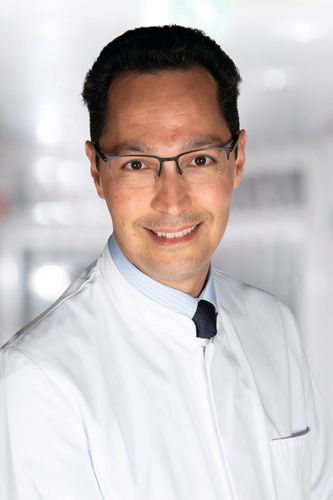
Dr. Wolfgang Zinser, MD, retired chief physician, is an internationally recognized specialist in orthopedics and traumatology with particular expertise in joint-preserving hip surgery. As a certified cartilage specialist and recognized AGA expert for the hip, knee, and ankle, he has dedicated himself to the treatment and regeneration of damaged joints for over two decades. His practice focuses on hip arthroscopy, cartilage and labrum reconstruction, and innovative procedures such as minimally invasive periacetabular osteotomy (PAO) for the correction of hip dysplasia. Having performed more than 2,000 cartilage cell transplants, Dr. Zinser is one of the world’s leading experts in this field.
At his state-of-the-art practice, OrthoExpert, he offers diagnostics and treatment at the highest scientific level and performs surgeries at the well-equipped Graz Ragnitz Private Clinic and the EMCO Private Clinic in Bad Dürrnberg, Salzburg. His primary goal is to provide his patients with individualized, holistic, and sustainable treatment—with a focus on long-term joint preservation and a rapid return to an active lifestyle. As president of the Society for Cartilage Regeneration and Joint Preservation (QKG), Dr. Zinser is not only committed to the further development of innovative treatment methods but also serves as an instructor, speaker, and scientific author. His background in sports medicine as a former national team athlete in the triple jump gives him a deep understanding of the specific needs of athletes. In addition to surgical procedures, he offers a wide range of modern conservative therapies, including PRP injections, hyaluronic acid therapies, and cartilage-protective measures. His philosophy is based on precision, expertise, and a personalized treatment approach.
Through close collaboration with physical therapists, sports associations, and colleagues, he ensures that every patient receives the best possible care. Thanks to his status as a private practice physician, he is able to devote sufficient time to each patient to develop a customized treatment plan. Anyone looking for an experienced specialist in hip, knee, and joint disorders is in the best of hands with Dr. Wolfgang Zinser.
The editorial team at Leading Medicine Guide spoke with Dr. Zinser about modern hip arthroscopy.

In recent years, hip arthroscopy has established itself as a minimally invasive technique for diagnosing and treating various hip joint conditions. It is primarily used for younger and athletically active patients who suffer from pain or limited mobility. Typical indications include femoroacetabular impingement (FAI), cartilage damage, or labral tears. Through early screening and targeted preventive measures, hip problems and joint wear can often be avoided or their progression slowed.
When determining the indication for hip arthroscopy, particularly in cases of femoroacetabular impingement (FAI) (hip impingement) and labral lesions (damage to the hip joint labrum), both clinical and imaging criteria must be carefully considered.
“For joint-preserving therapies, there are standardized imaging recommendations, whereby multiple X-rays are always taken to calculate all angular measurements. A central component of hip diagnostics is the standardized pelvic overview radiograph WITHOUT gonad protection and axial imaging, e.g., the Lauenstein view, which provide detailed information about the hip joint structures and help identify pathological changes such as osteoarthritis, dysplasia, or impingement. Other important imaging techniques in axial imaging include the Ripstein and FAUX profile views (lateral standing views), each of which depicts specific aspects of the hip joint and enables a precise assessment of various hip conditions. X-rays form the basis for evaluating hip joint structures, particularly in the diagnosis of dysplasia and femoroacetabular impingement (FAI). To distinguish between these two conditions, angular measurements—which can only be precisely calculated using X-rays—are essential. Therefore, an X-ray is the first necessary examination before an MRI is performed,” explains Dr. Zinser, adding:
“MRI follows clearly defined guidelines set forth in the European guidelines. First, a general overview image is taken, followed by specific sequences, such as sagittal and coronal sections of the hip joint, as well as radial sequences around the femoral neck axis. This radial technique, in which a virtual axis is drawn through the femoral neck and rotated 360 degrees around the femoral head, makes it possible to detect irregularities such as a cam deformity. The exact locations of this cam deformity can only be accurately visualized on an MRI. In young patients with suspected abnormal femoral neck rotation (torsion), it is also recommended to calculate the antetorsion angle of the femoral neck on MRI (the angle between the femoral neck axis and the axis of the posterior knee base line). It is important that all of these standard examinations be performed, as an incomplete diagnostic picture can lead to misdiagnoses. For example, if only MRI is used, dysplasia could be overlooked, which in the worst case could lead to suboptimal or even inappropriate treatment. A common example is when patients present with a diagnosis of a labral tear and believe that the labrum simply needs to be sutured. It is important to explain that a labral tear in the hip does not occur in isolation but always has an underlying cause. This can be femoroacetabular impingement (FAI), hip dysplasia, or a combination of both. If only the labrum is repaired without treating the underlying cause—for example, during hip arthroscopy—the problem will not be permanently resolved, and the patient will continue to experience symptoms.”
For over twenty years, Dr. Zinser has been passionately committed to joint and cartilage regeneration at both the national and international levels. With his extensive knowledge and expertise, he supports the advancement of this field and is actively involved in numerous medical societies to promote the latest findings and innovative treatment methods.
“As an educator, it is important to me to pass on my knowledge to young physicians and guide them on their journey. Close collaboration with colleagues from various fields helps us develop new approaches. A central focus of my involvement in professional societies is raising awareness: Joint-preserving hip therapies belong in the hands of specialists. Unfortunately, many patients do not receive the correct diagnosis until late in the course of their illness—for example, in cases of hip dysplasia, where years often pass and several orthopedic surgeons are consulted before the causes are identified. Necessary measurements are often not taken early on, which delays diagnosis. In the case of FAI, referral to specialists usually happens somewhat faster, but even here, education remains essential,” explains Dr. Zinser, adding:
“In Germany, there is currently a growing focus on the centralization of hospitals, which means that specialized centers are being consolidated to ensure more comprehensive care. Even if patients may have to accept longer travel times as a result, this is a sensible step, as all relevant specialties can collaborate within large hospitals, which optimizes treatment. The size of the center plays a lesser role here, especially when it comes to procedures such as hip arthroscopy, which in Germany are sometimes even performed on an outpatient basis. This procedure does not require intensive care units, but only the necessary specialized knowledge, surgical skills, and a competent radiologist on site.”
Femoroacetabular impingement (FAI) is a common, pre-arthritic hip deformity in physically active children and adolescents. It is usually caused by overuse during the growth phase, particularly in sports that place heavy stress on the hips, such as soccer, ice hockey, or basketball. If left untreated, Cam-FAI significantly increases the risk of early-onset coxarthrosis. Timely diagnosis and treatment—such as through hip arthroscopy—can significantly improve the prognosis and prevent osteoarthritis. Intensive training periods between the ages of 12 and 13 are particularly high-risk. Studies show that frequent stress, epiphyseal injuries, or pre-existing conditions such as Perthes disease can contribute to its development. While symptomatic cases should be treated surgically early on, monitoring asymptomatic deformities is also important to prevent long-term complications. In the DACH region, there is an underservice in FAI diagnosis and treatment compared to the United States. Greater public awareness, better reimbursement for joint-preserving procedures, and targeted prevention programs are necessary to reduce long-term damage and the number of joint replacement surgeries.
The functional and long-term outcomes of hip arthroscopy vary considerably depending on the patient’s age, with younger and older patient groups in particular exhibiting different postoperative courses and prognoses.
Younger patients, particularly those under 40 years of age, generally benefit the most from hip arthroscopy, especially if they suffer from femoroacetabular impingement (FAI) or labral lesions but do not yet exhibit significant degenerative changes in the joint.
“Statistically speaking, all studies show that the younger the patients are, the better the prognosis. This is because femoroacetabular impingement (FAI) develops during puberty and has been progressing ever since. Depending on how active the patient is, the situation can develop differently. If someone engages in little sports or physical activity—so that the typical movements in which the bone strikes or becomes trapped against the joint structures do not occur—they can often live with FAI for a long time without significant symptoms. More active patients, on the other hand, experience worsening symptoms as the load on the hip increases, because the deformity progressively damages the joint structures. The longer a person lives with this damaging deformity, the greater the damage that can be detected in the joint. It is best to correct FAI at a stage when there is little or no damage to the joint structures. “There is strong scientific evidence that early treatment of patients significantly improves their chances of having a healthy hip joint later in life and prevents age-related wear and tear,” says Dr. Zinser. The main goal of treatment is therefore prevention. Young, physically active people who struggle with nonspecific symptoms in the groin area are often particularly affected. These patients often think they simply have a groin strain or sore muscles. In reality, it is usually the hip that is causing the problems.
“Many patients report persistent symptoms that they initially dismiss as overuse. Upon closer questioning, however, earlier symptoms often emerge—such as adductor pain after exercise—which could have been recognized as early warning signs. Increasing hip stiffness and limited mobility are also frequently reported—symptoms that are mistakenly attributed to muscle shortening. In fact, however, the cause of FAI lies in the bony structure: When the hip is extended, the bony prominence rubs against the joint, which can cause further damage and worsen the symptoms,” explains Dr. Zinser.
Preventive measures and conservative treatment options play a crucial role in slowing the progression of degenerative hip conditions and delaying surgery as long as possible.
If a patient has symptomatic FAI—that is, experiences symptoms over an extended period—and these do not improve despite at least three months of conservative therapy, then, according to current medical knowledge, surgery should be considered. This is especially true when certain angles of the hip joint are pronounced. “A study shows that the risk of developing radiographic osteoarthritis within the next 13 years increases by 5% for every additional degree when the alpha angle exceeds 65 degrees—a value typical of CAM-FAI. At an angle of 66 degrees, the risk would therefore already be 5% higher; at 67 degrees, 10% higher, and so on. Over the course of a lifetime, the risk of needing a hip replacement increases by 4% with every additional degree of the alpha angle. This means that early treatment can reduce the risk of deterioration and, consequently, the risk of needing a hip replacement later on. Therefore, symptomatic patients—especially younger ones—should undergo surgery today if conservative treatment is unsuccessful. In cases of less severe FAI, where symptoms are mild and conservative treatment—such as physical therapy—results in symptom relief, a wait-and-see approach may be taken initially. If patients do not engage in intense athletic activities and their symptoms resolve with physical therapy, surgery is not immediately necessary. However, as soon as symptoms recur, treatment should be initiated. If conservative treatment does not lead to improvement over a period of three months, a more detailed examination should be conducted to monitor the progression,” Dr. Zinser explains, adding the following about physiotherapy options:
“In physical therapy, a specialized program is usually recommended, to be performed twice a week. The goal is to reduce friction between the femoral neck and the acetabulum—among other things, by aligning the pelvis to prevent a swayback posture and by stretching the often-shortened hip flexors. These measures can often provide relief or even eliminate symptoms in cases of mild discomfort. Exact figures on the success rate of conservative therapies are not available. If the pain persists despite therapy and the friction continues to occur during daily activities or sports, surgery should be considered to prevent further damage.”
Hip arthroscopy, joint-preserving osteotomy (which corrects the bony deformity), and conservative therapies each offer different advantages and have their own strengths in terms of pain relief and functional improvement, depending on the severity of the condition and the patient’s specific needs.
Hip arthroscopy is a minimally invasive procedure in which small incisions are made to inspect the joint and, if necessary, remove damaged cartilage or loose bodies. In cases of early- to moderate-stage hip osteoarthritis, where there is only limited damage to the cartilage or other tissues, hip arthroscopy can be a good option. “In the treatment of FAI (femoroacetabular impingement), it is crucial to resolve the impingement and the associated symptoms. Typically, during hip surgery, corrections are made to the rounded femoral head (cam deformity) and/or the acetabulum to resolve the impingement. There are various techniques, but generally, a small number of incisions are used to access the joint. The exact number of incisions can vary depending on the complexity of the surgery—while some surgeons require only two incisions, my standard method involves three, and if additional cartilage work is needed, a fourth incision is made. The incision lines are planned precisely to ensure that the procedure is performed optimally. Before the actual surgery, the key landmarks of the hip joint are carefully marked. These include, among others, the anterior superior iliac spine and the midline of the knee joint. These landmarks help determine the exact direction of the incisions so that the surgeon can access the joint optimally. “Even after performing over 2,000 hip arthroscopies, I still mark all relevant points to ensure proper orientation during the operation; I’ve made this a standard practice,” explains Dr. Zinser, before discussing the actual surgical incisions:
“The surgery is performed in two phases. First, the patient is positioned in a special way so that the leg is flexed. This ensures that the anterior joint capsule is relaxed, which allows for better access to the hip joint. In this first phase, the joint impingement is treated and the bony deformities are corrected by adjusting the area between the femoral neck and the acetabulum so that the previous impingement no longer occurs. During this phase, the joint is gently moved and positioned in various flexed positions until the problem is resolved. The second phase begins once the impingement has been corrected. This phase focuses on gaining access to the central hip joint. To do this, the extended leg is pulled further into a specific position to create a joint space. The arthroscope can be inserted through this space to inspect the joint, examine the cartilage of the femoral head and acetabulum, and identify any damage. If there are tears in the cartilage, these are either repaired or minor defects are removed. In cases of more severe cartilage damage, regenerative therapy may be used, such as the implantation of a membrane to promote cartilage regeneration.”
In Germany, there are differences between inpatient and outpatient procedures, and the billing systems have not yet been adequately adapted. For certain cartilage treatments, such as matrix-induced bone marrow stimulation or outpatient cartilage cell transplantation, there are no appropriate billing codes, which leads to problems. The professional association is currently working on solutions to improve the framework conditions.
Early detection and prevention of femoroacetabular impingement (FAI) is particularly important in sports such as soccer, ice hockey, and martial arts, as this condition occurs frequently in these disciplines.
“It is important to me that FAI be systematically screened for in the sports where it frequently occurs. We are currently working with the coaching staff at Sturm Graz, the nearby Bundesliga club, to establish a prevention program. We know that nearly 70% of soccer players develop FAI at some point in their careers—primarily due to intense training during puberty. Soccer players, ice hockey players, and martial artists are particularly affected, as this problem has been frequently identified among them. The first soccer club to implement a prevention program was FC Barcelona. The goal is to identify affected athletes early on through screening methods. For young players who show signs of rotational deficit, a targeted reduction in training or a break from the sport can help reduce the incidence of FAI. The key is to identify young athletes in high-risk sports early on so we can provide them with targeted support as this problem develops. If symptoms persist, we can treat them early on. This is an essential part of our strategy. Screening, early detection, and close monitoring of athletes are crucial, and we have already placed these measures on the agenda in our committees,” explains Dr. Zinser.
Following hip arthroscopy, biomechanical and postoperative rehabilitation measures are crucial for optimal recovery and minimizing complications.
“In many cases, patients can go home on the day of surgery if home care is guaranteed. However, I recommend that patients stay in the hospital for one night. Physical therapy is often scheduled for the next day, and they can then go home the day after that. For me, that’s the standard: surgery on one day, physical therapy the next, and home the day after that. Even for minor procedures, the surgeries often take longer. Hip arthroscopy, for example, takes an average of 1.5 to 2 hours—that’s almost twice as long as hip replacement surgery. This is because hip arthroscopy is a much more complex procedure. In the past, this was done using large, open incisions, during which the hip was dislocated to make the joint structure directly visible. The arthroscopic procedure is significantly more difficult and requires a higher level of skill from the surgeon. “There are studies that have examined the learning curves for such procedures, and it is recommended to perform at least 100–150 hip arthroscopies under the guidance of an experienced surgeon in order to master this technique safely,” notes Dr. Zinser, adding the post-operative guidelines:
“During the healing phase, patients use walking canes as a safety measure to avoid complications such as stress fractures of the femoral neck, which are rare but possible if patients put too much weight on the leg too soon. In most cases, partial weight-bearing is sufficient for about two to three weeks. Once the crutches are no longer needed, a more intensive rehabilitation phase begins. Our postoperative care is well documented and has already been published. The rehabilitation process comprises various phases. Initially, the focus is primarily on reducing swelling, joint mobilization, traction exercises, and muscle strengthening exercises. Once the crutches are no longer needed, walking training, gait therapy, and later strength training follow. “A professional soccer player who receives optimal therapy is fit again after about six months and can return to play.” We conclude our conversation on this positive note.
Thank you very much, Dr. Zinser, for the helpful explanation!
Share this article
Expert Interviews
Read next
- Expert interview
Expert interview with Professor Dr Elmar Herbst, PhD
Oct 15, 2026
Patient-centred and personalised knee surgery
Read more - Expert interview
Cardiogeriatrics: Significance and benefits in the context of hospital reform
Sep 21, 2026
Cardiogeriatrics: Significance and benefits in the context of hospital reform
Read more - Expert interview
Expert Interview with Professor Dr. Amadeus Hornemann, MPH
Sep 18, 2026
Prof. Amadeus Hornemann on Precision Medicine in Gynecology: Modern Surgery, New Techniques, Better Quality of Life
Read more