Expert Interviews
Optimal Masculinity: Innovative Methods for Penis Lengthening, Thickening, and Aesthetic Enhancements—An Expert Interview with Dr. Kuehhas

Alexandra Pfitzmann ·
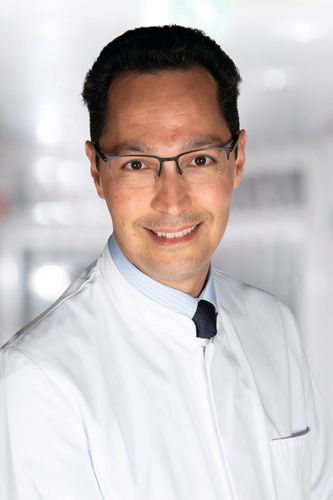
Dr. med. univ. Franklin Kuehhas is an outstanding physician and specialist in Vienna who specializes in reconstructive andrology and genital surgery. With a clear focus on the health and issues of the male genital area, he has earned an excellent international reputation. Dr. Kuehhas is widely respected for his empathy, discretion, and professionalism and is considered an expert in performing complex surgeries involving the male genital tract. At his Vienna practice, located directly behind City Hall, Dr. Kuehhas offers a premier destination for men seeking to address intimate health issues. He understands that many men are reluctant to discuss such matters with their primary care physician or urologist, as they are often perceived as embarrassing. Dr. Kuehhas provides an open and trusting environment where men can discuss any genital-related issues, regardless of their nature or presentation. Professionalism and discretion are his top priorities.
As a highly specialized andrologist, Dr. Kuehhas treats both congenital and acquired genital conditions. He places great emphasis on aesthetic genital surgery, as the appearance of the genital area is of great importance to many men. He is a member of various international medical societies and a sought-after speaker at conferences worldwide. Dr. Kuehhas completed his residency in urology and andrology at prestigious university hospitals in Heidelberg and Vienna. During this time, he was already able to specialize in the surgical treatment of the male genitalia. Further specialized training at the renowned University College London led him to reconstructive andrology, a field in which he is now recognized as an expert.
Dr. Kuehhas treats various genital conditions, including penile curvature and erectile dysfunction. In treating penile curvature, he employs a variety of surgical methods and has even contributed to the development of new surgical techniques. With regard to erectile dysfunction, he offers penile prosthesis implantation as a solution for severe cases. In addition to medical genital surgery, Dr. Kuehhas specializes in aesthetic procedures in the genital area. This includes surgical penile lengthening, penile thickening, glans thickening, and other aesthetic enhancements. His wide range of services enables men to rediscover the joy of their sexuality and feel more comfortable in their own bodies. The editorial team at Leading Medicine Guide took the opportunity to learn more about reconstructive andrology and genital surgery.

In a world where aesthetic enhancements and the pursuit of self-confidence are gaining importance, male genital aesthetics are also coming into focus. Modern medical approaches offer innovative methods for penile lengthening, thickening, glans thickening, and other aesthetic enhancements. The focus is not only on the physical aspects but also on men’s emotional well-being and self-confidence.
“A penile prosthesis is generally an option for men for whom other treatments for erectile dysfunction have not been effective. It is important to assess the severity of the problem and ensure that all other possible solutions have been exhausted. The patient’s overall health plays a crucial role in the decision to proceed with a penile prosthesis. Men suffering from erectile dysfunction should first have tried all conservative therapies before considering surgical intervention. Erectile dysfunction can be treated through various conservative therapeutic approaches, although effectiveness may vary from person to person. Lifestyle changes play an important role, including a healthy diet, weight management, and regular physical activity. Quitting smoking and controlling alcohol and drug use are additional approaches. Psychological counseling can be helpful, especially in cases of psychologically induced erectile dysfunction caused by stress or relationship problems. “In addition, there is drug therapy with prescription PDE-5 inhibitors, such as Viagra or Cialis,” explains Dr. Kuehhas at the beginning of our conversation.
Finally, surgical procedures always carry risks, so the patient must also be healthy enough to withstand the surgery and the recovery period. Dr. Kuehhas explains how a penile prosthesis can help men: “The psychological pressure on those affected is usually very high, and psychosexual issues also play a role here. It’s also important to take the patient’s lifestyle and sexual habits into account. Ultimately, a penile prosthesis can significantly improve a man’s sex life, especially when other treatments are simply not effective. It enables men to achieve and maintain an erection whenever they wish. This can lead to increased self-esteem and improved self-confidence, as well as enhancing intimacy in a relationship. However, one should not think of a penile prosthesis as a rubber dildo; rather, it is a replacement for the erectile tissue that allows for orgasm. It is very important to note that a penile prosthesis is irreversible, since the non-functioning erectile tissue is destroyed during the surgery. Therefore, the decision should be carefully considered and made only in consultation with an experienced physician.”
The surgical implantation of a penile prosthesis is a minimally invasive procedure. “As with any surgery, there are risks involved, but they are not considered high. Of course, bleeding or inflammation can occur from time to time. The probability of inflammation involving the prosthesis itself is less than 1%. The surgery is performed quickly, and the patient can theoretically have sex four weeks after the procedure,” explains Dr. Kuehhas optimistically.
Penile curvature, or Induratio Penis Plastica (IPP), is a condition characterized by scar-induced hardening of the connective tissue in the erectile tissue of the penis. The exact causes of this condition are not fully understood, but there are various factors that can lead to IPP.
The scar tissue causes a curvature of the erect penis. The exact cause of Peyronie’s disease is not fully understood, but it is often associated with microtrauma, trauma to the genital area, genetic predisposition, and inflammation. Inflammatory processes in the penis, which can occur with certain infections or diseases, are another possible cause of scarring and curvature. It is also believed that a genetic predisposition to IPP exists, as the condition occurs more frequently in some families. The symptoms of IPP typically include a painful curvature of the erect penis, which is often accompanied by pain or discomfort during sexual intercourse. Men with IPP may also have difficulty achieving or maintaining an erection.
“A distinction is made between acquired and congenital penile curvature. Approximately 2% of the male population in Germany is affected by congenital penile curvature, and 10% by acquired penile curvature. The actual numbers are certainly higher, but unfortunately, the subject is still very much taboo. In addition, men generally do not like to talk about their problems. As for the symptoms of penile curvature, the greater the curvature, the more severely the man is affected. Penetration is usually no longer possible. And even if it is, maintaining an erection is usually no longer possible. This leads to psychosexual problems, meaning that, out of shame, men no longer seek intimacy with their partner in the first place. In cases of acquired penile curvature, a scar-like area of connective tissue appears on the penis, and sexual intercourse can lead to recurring injuries. In cases of congenital penile curvature, the cause unfortunately cannot be determined with certainty. Environmental factors may play a role, as may a simple genetic predisposition; however, a diet containing soy may also lead to a malformation in some cases,” says Dr. Kuehhas, describing the dilemma. Soy products contain phytoestrogens, which are plant compounds structurally similar to human estrogens. Opinions vary regarding the effects of soy products on hormonal balance. This has not been proven.
Congenital penile curvatures are present at birth and typically develop during fetal development. Congenital penile curvature is usually diagnosed when the condition is detected at birth. A thorough examination by a pediatrician or urologist can confirm the curvature. Treatment may vary depending on the severity. In some cases, the curvature corrects itself.
There are various treatment options for penile curvature, depending on the severity of the condition.
“Penile curvature can only be treated through surgical correction. Pills or injections do not help in this case. There are two surgical methods: one that shortens the penis and one that preserves its length. The choice of treatment depends on many factors, including the severity of the curvature, the patient’s symptoms, and his personal needs,” explains Dr. Kuehhas. The earlier penile curvature is diagnosed and treated, the better the prospects for a successful correction are generally.
More and more men are seeking penis enlargement.
“The increasingly common desire for penis enlargement is certainly also the result of the ever-available pornography. People tend to compare their penis size to that of porn actors, while ignoring the fact that these sizes generally do not correspond to the norm. They are inappropriate points of comparison. There are also psychosexual reasons. Men who are in the showers at a gym or sitting in the sauna feel uncomfortable in the presence of their fellow athletes because of what they perceive as the unattractive appearance and size of their penis, and they want a cosmetic change—even if this may be based on a false self-image. “They often want a visible thickening when flaccid,” says Dr. Kuehhas, explaining some of the motivations men have, and adds: “I once had a patient who came to my office with his wife, expressing a desire for penis enlargement. In the end, it turned out that his wife had cheated on him with the sports coach, who was apparently ‘well-endowed,’ and that was what motivated his desire for enlargement. I ultimately refused to perform that surgery.” All surgical procedures carry potential risks such as infections, bleeding, scarring, and loss of function. “The surgical penile enlargement procedure is low-risk and takes about 60–90 minutes. Insurance does not cover the cost,” says Dr. Kuehhas.
Patients should always keep in mind that self-esteem and satisfaction with their sex life depend not only on penis size but on many other factors.
A Side Note on the Diagnosis and Treatment of Urethral Problems.
Urethral strictures, also known as urethral narrowing, can be attributed to various causes. Trauma to the genital area, such as blows or impacts, surgical procedures in the genital area, or inflammation and infections of the urethra can lead to damage and scarring, which ultimately result in a narrowing of the urethra. Repeated microtrauma from vigorous sexual intercourse may also play a role. It is also believed that genetic factors may be involved, as urethral strictures occur more frequently in some families.
A physical examination can reveal pain or changes in the genital area. “In a procedure called urethroscopy, a thin tube with a camera (urethroscope) is inserted into the urethra. This allows the doctor to view the urethra from the inside and identify strictures or other problems. In some cases, imaging tests such as ultrasound or magnetic resonance imaging (MRI) may be used to examine the structure of the urethra. Here at our practice, we can use a retrograde urethrogram to take images of the urethra during urination. The organ—whether the urethra, bladder, or ureter—is visualized by injecting contrast dye through a catheter and then examined radiologically. “Compared to excretory urography, this procedure has the advantage that the contrast medium, which is administered retrograde, does not reach the renal parenchyma. This allows the urinary tract to be visualized using contrast medium even in patients with renal insufficiency,” says Dr. Kuehhas regarding the work done at his practice. Proper care and handling of the catheter are crucial for preventing infections. The recovery time may vary depending on the type and extent of the procedure.
A Call to Break the Taboo!
“It would be desirable if genital surgery and male genital aesthetics were no longer considered taboo. For women, the public discourse is entirely different, whether regarding breast surgery or the use of medications for incontinence. When it comes to men, however, topics related to the genital area are often avoided, even when a procedure is medically necessary. I would like to see more education on this topic in the media as well, because the psychological pressure is immense, as I notice time and again with my patients. “I perform 50–100 penile prosthesis surgeries per year and see time and again how positively life-changing this procedure is,” says Dr. Kuehhas, bringing our conversation to a close.
Dear Dr. Kuehhas, thank you very much for this important insight into this male-dominated field!
Share this article
About the medical author
Alexandra Pfitzmann
Editor
Alexandra Pfitzmann – medical author: expert knowledge, professional articles and medical insights in the Leading Medicine Guide.
More about the medical author →Expert Interviews
Read next
- Expert interview
Cardiogeriatrics: Significance and benefits in the context of hospital reform
Sep 21, 2026
Cardiogeriatrics: Significance and benefits in the context of hospital reform
Read more - Expert interview
Expert Interview with Professor Dr. Amadeus Hornemann, MPH
Sep 18, 2026
Prof. Amadeus Hornemann on Precision Medicine in Gynecology: Modern Surgery, New Techniques, Better Quality of Life
Read more - Expert interview
Expert Interview with Professor Dr. Konstantinos Anagnostakos
Sep 15, 2026
Prof. Anagnostakos on Painful Knee Replacements
Read more