Expert Interviews
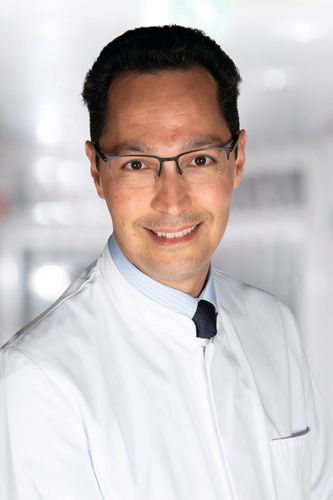
Radiofrequency Ablation for Thyroid Nodules - Expert Interview with Dr. Monica Negrean

Alexandra Pfitzmann ·
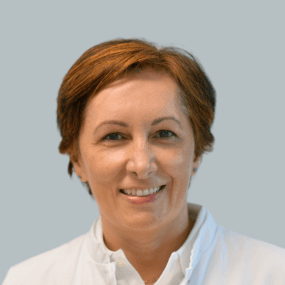
Dr. Monica Negrean is a highly qualified and dedicated specialist in endocrinology and diabetology at the renowned Cellitinnen-Krankenhaus St. Vinzenz in Cologne. Born and raised in Cluj-Napoca, Romania, Dr. Negrean developed a passion for medicine at an early age, a passion that has stayed with her throughout her life. She earned her medical degree from the University of Cluj-Napoca, where she began to explore the importance of nutrition for health in depth during her initial residency training. After completing her residency, Dr. Negrean moved to Germany to continue her medical career.
In her doctoral thesis, she investigated the influence of nutrition on vascular health in patients with diabetes and, through a second specialty training in endocrinology, gained an in-depth understanding of hormonal and metabolic processes in the human body. Dr. Negrean’s areas of expertise in diabetology include the interdisciplinary treatment of diabetic foot syndrome, including the evaluation of suspected circulatory disorders and Charcot arthropathy. In endocrinology, her focus is on the treatment of thyroid disorders, including fine-needle aspiration of nodules and radiofrequency ablation of benign thyroid nodules. She has particular expertise in the diagnosis and treatment of disorders of the pituitary gland, thyroid, parathyroid glands, and adrenal glands, as well as in the evaluation and management of obesity. Hormone deficiency during menopause or in men is also within her area of expertise.
Today, Dr. Negrean is the Chief Physician at the Department of Diabetology and Endocrinology at Cellitinnen-Krankenhaus St. Vinzenz in Cologne-Nippes, one of the leading facilities of its kind in Germany. The clinic treats approximately 1,300 inpatients annually and places a special emphasis on the treatment of diabetic foot syndrome and other chronic wounds to prevent unnecessary amputations. As the West German Center for Thermoablation, the clinic has been a pioneer in the minimally invasive treatment of thyroid nodules since 2015.
Dr. Negrean is not only active in clinical practice but is also deeply committed to training young physicians. She passes on her extensive knowledge and experience to the next generation of doctors and is highly regarded and appreciated by her patients. Through her dedication and expertise, Dr. Negrean contributes significantly to the high quality of patient care and ensures that the clinic at St. Vinzenz Hospital continues to play a leading role in the treatment of endocrinological and diabetic conditions. The thyroid gland causes problems for many people and can also lead to significant weight fluctuations.
The editorial team of the Leading Medicine Guide had the opportunity to speak with Dr. Negrean specifically about radiofrequency ablation of thyroid nodules.
The thyroid gland, a small butterfly-shaped organ located in the front of the neck, plays a crucial role in the human body. It produces vital hormones that regulate metabolism, growth, and development. Despite its small size, the thyroid gland has far-reaching effects on nearly all organ systems and plays a vital role in maintaining health. Disorders of thyroid function can cause a wide range of often serious health problems, which is why a basic understanding of its function and potential diseases is of great importance. Thyroid nodules are areas of thickened thyroid tissue that can develop due to a variety of factors. These nodules can be either benign or malignant, though most are benign.
The causes of thyroid nodules are diverse and include a range of factors.
“When it comes to the thyroid, we are essentially dealing with two major conditions. The first is thyroid dysfunction, which includes hyperthyroidism and hypothyroidism. The second group of conditions involves structural changes, with nodules being by far the most common change, primarily caused by iodine deficiency. Women are affected more often than men, and the risk increases with age. In Germany, one in four people—that is, 25 percent of the population—has thyroid nodules; among older adults, the figure is one in two to one in three,” explains Dr. Negrean at the start of our conversation.
Genetic predispositions also play a role, as a family history of the condition increases the risk of developing thyroid nodules. Chronic inflammation of the thyroid, such as that seen in autoimmune diseases, can also lead to nodules. In addition, benign tumors, known as adenomas, can present as nodules, and in rare cases, thyroid cancer may be the cause. Cyst formation and fibrosis resulting from chronic inflammation or tissue damage can also cause nodules.
The symptoms of thyroid nodules can be varied and depend on the size, location, and function of the nodules. Small nodules often remain asymptomatic and are discovered incidentally during routine examinations. However, when symptoms do occur, they may prompt the patient to see a doctor.
“Nodules are often discovered incidentally during an ultrasound examination of the thyroid. However, it is also possible for a patient to feel or even see a nodule themselves. Patients may also experience a feeling of pressure or tightness in the neck. This is noticeable when swallowing; in more severe cases, it can also be felt when breathing, or the patient may notice, for example, that the collar of a shirt no longer fits. Larger nodules can cause hoarseness by putting pressure on the vocal cord nerves,” says Dr. Negrean regarding the symptoms of thyroid nodules, and he then explains the diagnostic process:
“The evaluation of thyroid nodules involves several steps. First, we talk with the patient (medical history), who tells us about their history, and we then perform a physical examination in which we palpate the neck for swelling and nodules. To determine the size, texture, and exact location of the nodules and to examine the lymph nodes, an ultrasound examination is usually performed. This method provides a detailed image of the thyroid gland and helps determine whether the nodule is solid or cystic. A biopsy may be performed for further evaluation. During this procedure, cells are extracted from the lump using a thin needle and examined under a microscope for cancer cells. Blood tests to measure thyroid hormone levels and other relevant parameters, such as thyroid-stimulating hormone (TSH), are also performed to assess thyroid function. In some cases, a scintigraphy—a nuclear medicine test—can be helpful in assessing the activity of thyroid nodules and distinguishing between cold (non-hormone-producing) and hot (hormone-producing) nodules.”
Radiofrequency ablation (RFA) offers specific advantages over conventional surgery in the treatment of benign thyroid nodules.
“Radiofrequency ablation has been used on other organs for many decades. In the treatment of the thyroid, the method has been used internationally for over 20 years and is based on the principle of destroying the nodule with heat. During ablation, a probe is inserted into the nodule and heated. The heat destroys the nodule, which is then gradually broken down by the body, much like a bruise that gradually disappears. This leads to a significant reduction in size over several months. Personally, I do not view radiofrequency ablation as a competitor to surgery, but rather as a complementary treatment. Then there are special cases involving nodules, namely autonomous adenomas, which produce too many hormones. In these cases, radioiodine therapy is the treatment of choice. However, there are also patients who reject this form of therapy—for example, women planning a pregnancy—because the word “radioactive” carries negative connotations. In such cases, radiofrequency ablation is a good alternative. Or the nodules can be surgically removed. When it comes to thyroid surgery, Germany ranks at the top internationally. “In my opinion, not all surgeries are always necessary,” explains Dr. Negrean, adding:
“A major advantage is the minimally invasive nature of radiofrequency ablation, which usually only needs to be performed once. Since it is performed under local anesthesia using a thin needle, large incisions and the associated scarring are avoided. In addition, the risk of complications such as infections, bleeding, and injury to surrounding structures—such as the vocal cord nerves—is lower than with traditional surgeries. Before the procedure under local anesthesia, patients are also given a small sedative and remain awake. The treatment is relatively painless or often pain-free, as the thyroid gland has no pain receptors—the surrounding tissue is numbed. Patients recover more quickly after an RFA and stay in the hospital for only 1–2 days. They typically resume their normal activities within a few days and experience minimal time off work. Another important advantage of RFA is the preservation of thyroid function. Since RFA treats only the nodule and the surrounding thyroid tissue is largely preserved, the likelihood of impaired thyroid function is lower.” Follow-up care includes regular ultrasound and laboratory tests to monitor the regression of the nodule and thyroid function.
For a patient to be a candidate for radiofrequency ablation (RFA), certain criteria must be met to ensure that this procedure is both safe and effective.
“Before radiofrequency ablation is performed, it must be confirmed that the nodule is benign. This is because, in the case of malignant nodules, one cannot be certain that radiofrequency ablation will eliminate all malignant cells. Even if the nodules are located very low down, such as below the collarbone, RFA is problematic because the risk of complications is too high. Patients with severe coagulation disorders or those taking blood thinners must be evaluated with particular care, as the risk of bleeding may be increased. The patient should be in good general health and have no serious comorbidities that could increase the risk of the procedure. However, there are specific contraindications for RFA that must be taken into account. Patients with malignant thyroid nodules or suspected thyroid cancer are not suitable candidates for RFA and generally require surgical treatment. Patients with active infections in the neck or head area are also unsuitable, as this increases the risk of complications. Patients with pacemakers or other implanted electronic devices should also be thoroughly evaluated before the procedure. “The procedure is also not performed on pregnant women,” explains Dr. Negrean.
Radiofrequency ablation is a relatively safe procedure. Nevertheless, complications can occur.
“In rare cases, a bruise (hematoma) may develop at the puncture site, but this usually heals on its own. Another possible complication is an infection at the puncture site. It is extremely rare for the vocal cord nerves to be affected, as we take care to spare these structures. The risk of permanent underactive thyroid (hypothyroidism) is low, but it can occur with extensive treatment. Compared to traditional surgical procedures, complications from RFA are usually less severe and occur less frequently. “Surgical procedures may be associated with a higher risk of permanent thyroid dysfunction, injury to the vocal cord nerves, larger scars, and longer recovery times,” Dr. Negrean explains.
Studies have shown that most patients do not experience significant changes in their thyroid hormone levels after RFA, and their thyroid function remains normal. However, further well-controlled studies with larger patient groups over a longer period of time are needed for a more comprehensive assessment of the long-term effects of RFA.
Outlook for the Future and Advice on Thyroid Care
“In medicine, knowledge doubles at least every two years. Radiofrequency ablation has been used as a thyroid treatment in Germany for about 12 years. Guidelines are already in place, and we have a great deal of experience. The technical capabilities, including those related to planning the procedures, will certainly continue to evolve. But we are already very satisfied with what we have in this field. If I may offer some advice: Germany used to be an area with iodine deficiency and is now once again a country with mild iodine deficiency. In our grandparents’ generation, people often had those huge goiters. We don’t see that anymore today because we’ve improved iodine intake. In that respect, using iodized salt definitely makes sense to support this intake. However, in cases of hyperthyroidism, iodine-enriched salt intake is counterproductive; but from a population-wide perspective, iodine-enriched salt is beneficial! For this reason, all pregnant women also receive supplemental iodine,” explains Dr. Negrean, bringing our conversation to a close.
Thank you very much, Dr. Negrean, for this helpful information on the treatment of thyroid nodules!
Share this article
About the medical author
Alexandra Pfitzmann
Editor
Alexandra Pfitzmann – medical author: expert knowledge, professional articles and medical insights in the Leading Medicine Guide.
More about the medical author →Expert Interviews
Read next
- Expert interview
Cardiogeriatrics: Significance and benefits in the context of hospital reform
Sep 21, 2026
Cardiogeriatrics: Significance and benefits in the context of hospital reform
Read more - Expert interview
Expert Interview with Professor Dr. Amadeus Hornemann, MPH
Sep 18, 2026
Prof. Amadeus Hornemann on Precision Medicine in Gynecology: Modern Surgery, New Techniques, Better Quality of Life
Read more - Expert interview
Expert Interview with Professor Dr. Konstantinos Anagnostakos
Sep 15, 2026
Prof. Anagnostakos on Painful Knee Replacements
Read more