Nodules in the thyroid gland develop as a result of changes in the thyroid tissue and can occur singly or in multiples. Often, this condition is a goiter, which is an enlarged thyroid gland with nodules. In addition to solid nodules, cystic changes—which are filled with fluid and are usually benign—can also occur. Thyroid nodules can affect hormone production and lead to hyperthyroidism or hypothyroidism. Therefore, an accurate diagnosis is important to distinguish between harmless nodules and those that require treatment.
Thyroid nodules are very common and can develop in many people over the course of their lives. These nodules can be either harmless or malignant and cause various symptoms. In this article, you’ll learn everything you need to know about the causes, symptoms, diagnosis, and treatment of thyroid nodules. You’ll also find listed specialists here who treat thyroid nodules.
What are thyroid nodules?
The thyroid gland is an important hormone-producing organ that regulates all metabolic processes. The thyroid gland is regulated by the pituitary gland and is either stimulated or suppressed as needed. Thyroid nodules are small changes in the thyroid gland’s tissue that develop in many people over the course of their lives. For affected patients, this often leads to anxiety and the need for comprehensive medical information. Thyroid nodules can affect hormonal balance and lead to an overactive or underactive thyroid.
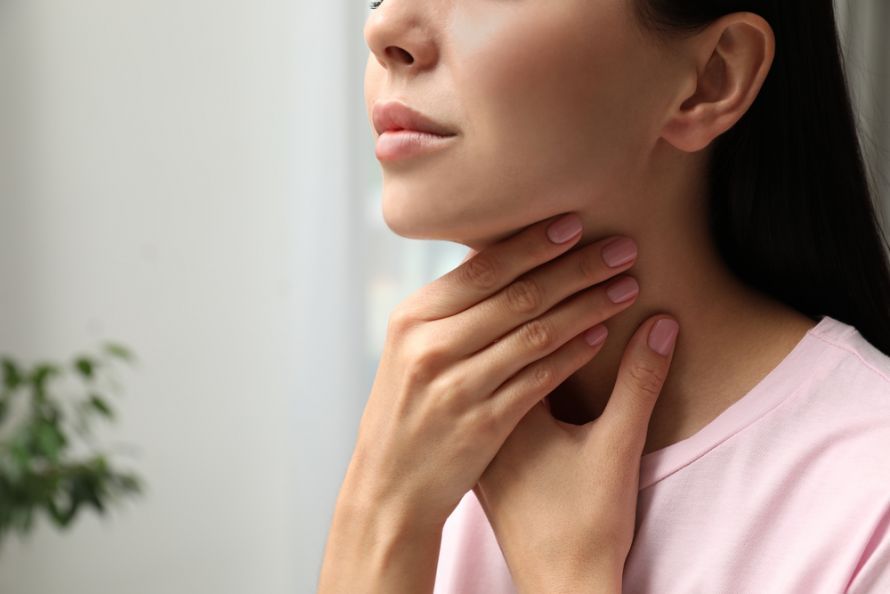
Thyroid nodules almost never cause symptoms; only when they become very large can they lead to a feeling of pressure or difficulty swallowing @ New Africa /AdobeStock
What symptoms do thyroid nodules cause?
Thyroid nodules often cause no symptoms and are therefore usually discovered by chance during routine examinations. When symptoms do occur, they can vary widely:
- Difficulty swallowing: A nodule can press on the esophagus and make swallowing difficult. This is often only very mild at first and may worsen over time.
- Breathing problems: Larger nodules can constrict the windpipe, which can make breathing significantly more difficult. It is rare for thyroid nodules to cause breathing problems, and this is only to be expected in very advanced stages when the thyroid gland has grown considerably in size. Breathing problems therefore usually do not occur until the thyroid gland is already visibly enlarged.
- Swelling in the neck: An enlargement of the thyroid gland—initially detectable only by touch but visible in advanced stages—is the most common sign of thyroid nodules. Many patients also report that their first symptoms were swelling of the neck and palpable thyroid nodules.
- Hormonal changes: Thyroid nodules are often associated with an overactive or underactive thyroid, since the thyroid gland controls all metabolic functions. In cases of hyperthyroidism, symptoms such as nervousness, weight loss, and a rapid heartbeat may occur, whereas in cases of hypothyroidism, fatigue, weight gain, and sensitivity to cold are typical signs.
Most thyroid nodules do not cause a feeling of pressure or difficulty swallowing
In most cases, thyroid nodules go unnoticed because they do not cause pain, a feeling of pressure, or difficulty swallowing. Symptoms usually do not appear until the thyroid gland is significantly enlarged or multiple nodules are pressing on surrounding structures. Nodules often develop due to low iodine intake, which leads to a compensatory enlargement of the thyroid tissue.
Thyroid nodules are distinguished using imaging techniques such as ultrasound and scintigraphy. These tests reveal whether the nodules are hormonally active or inactive—a crucial piece of information for further treatment and prognosis.
What causes thyroid nodules?
The exact causes of thyroid nodules are not always clear. However, there are several known risk factors:
1. Iodine deficiency
A low iodine intake can contribute to the development of thyroid nodules. Iodine deficiency is a very widespread problem. Exceptions to this are coastal states, where higher fish consumption leads to a higher average intake of iodine-rich foods. Iodine is the most important component of thyroid hormones, so an insufficient iodine intake can lead to a deficiency in thyroid hormones. In response, the pituitary gland attempts to stimulate the thyroid to produce more hormones, which results in an enlargement of the thyroid tissue.
2. Age
The risk of thyroid nodules also increases with age. This is because, as we age, the duration of hormonal stimulation of the thyroid tissue increases, thereby raising the likelihood—or risk—of tissue overgrowth. These growths can also become malignant, turning the thyroid nodules into cancerous tumors—a possibility that also becomes more likely with age.
3. Gender
Women are affected significantly more often than men, although the reasons for this are not fully understood. Women are affected approximately 10–15 times more often than men; by the age of 45, one in two women has thyroid nodules. A connection to hormonal influences is suspected, as well as genetic factors on the X chromosome, of which women have two and men only one. Influences during pregnancy are also being discussed, as is the fact that women generally have a more active immune system, resulting in a higher risk of developing autoimmune diseases.
4. Genetic Predisposition
A family history of thyroid disorders has also been observed and may therefore increase the risk. However, the vast majority of thyroid nodules are acquired, and even a family history does not necessarily indicate a genetic cause. In these cases as well, changes in the thyroid may occur more frequently within families due to upbringing, lifestyle, and dietary habits.
5. Radiation Exposure
Previous radiation treatment in the neck area can increase the risk of nodules. Occupational exposure to radiation can also increase the risk. In any case, however, the possibility of malignant transformation and the need for further evaluation via a tissue examination (biopsy) must be considered.
What to Do About Thyroid Nodules?
When thyroid nodules are newly discovered, a thorough evaluation is essential to assess their size, location, and activity. Doctors generally recommend an ultrasound examination and hormone testing to determine whether the nodule is benign or requires treatment. Depending on the findings, treatment with medication, radioiodine therapy, or surgical removal may be appropriate. Small, non-notable nodules are usually monitored regularly to document any changes early on and intervene if necessary.
What tests are important for detecting thyroid nodules?
The diagnosis of thyroid nodules involves several steps:
1. Medical History
During the medical history, a detailed history of the patient’s health is taken, and questions are asked about a family history of thyroid disease, previous medical conditions, and current medications. The patient should also be asked about symptoms that could indicate a thyroid disorder. These include, in particular,
- pain,
- difficulty swallowing,
- hoarseness, and
- shortness of breath, as well as
- signs of hyperthyroidism (nervousness, restlessness, and weight loss despite ravenous appetite) or
- hypothyroidism (fatigue, listlessness, loss of appetite, and weight gain).
Previous thyroid surgeries are also important in this context, as is occupational, medical, or personal exposure to radiation.
2. Physical Examination
If a thyroid disorder is suspected, the physical examination is the most important diagnostic method, alongside taking the patient’s medical history. During this examination, the neck is palpated and examined for lumps. Attention is also paid to swelling, which is already noticeable upon visual inspection in the early stages and can be felt by palpation in the advanced stages. During the palpation, attention is also paid to tenderness and the consistency of the nodules—that is, whether the nodule is hard or soft, movable, or firmly fixed in place.
In cases of more extensive changes, the entire thyroid gland may feel enlarged on palpation, whereas with a single lump, only a limited area of the thyroid gland feels thickened. Patients often report a feeling of pressure in the neck or difficulty swallowing, especially if the nodule is pressing on the esophagus or trachea. Cysts in the thyroid gland can also cause such symptoms. Nodules with a diameter of more than one centimeter should always be examined more closely to assess the risk of functional or structural changes.
3. Ultrasound Examination
This method makes it possible to visualize nodules and assess their characteristics.
Ultrasound is the most important imaging test for determining whether nodules are present, how large they are, and whether they are solid or cystic structures. Experts can use the images to accurately assess whether a nodule has irregular edges or is clearly demarcated from healthy tissue.
Lumps with a diameter greater than 1 cm are generally evaluated more closely, as the risk of significant tissue changes increases at this size. If multiple lumps are present, the condition is referred to as nodular goiter. Ultrasound also allows for follow-up monitoring to observe whether a nodule is shrinking or continuing to grow.
4. Blood Tests
Measuring thyroid hormone levels is part of the basic diagnostic workup to detect an overactive (hyperthyroidism) or underactive thyroid. It provides crucial information about current thyroid function and helps distinguish hormonal disorders from structural changes.
In most thyroid nodules, hormone production is normal; however, hyperthyroidism may indicate a so-called “hot nodule”—that is, an area that produces hormones on its own. Depending on the blood test results and the location of the nodule, further diagnostic testing or treatment may be advisable to prevent complications and stabilize thyroid function.
5. Scintigraphy
Scintigraphy is used to distinguish between “hot” (hormone-producing) and “cold” (non-hormone-producing) nodules. Warm nodules show normal activity, while hot nodules are often associated with hyperthyroidism. Cold nodules should be examined more closely, as they can be malignant in rare cases. If a nodule grows or affects hormone production, treatment may be necessary to prevent symptoms and long-term damage.
6. Fine-Needle Aspiration Biopsy
Taking tissue samples is important and essential for determining whether a nodule is benign or malignant.
How are thyroid nodules treated?
Treatment depends on the type and size of the nodule, as well as the associated symptoms. Treatment options include:
- Observation: Regular checkups for asymptomatic, benign nodules.
- Medication: Treatment of hyperthyroidism or hypothyroidism.
- Radioiodine therapy: Destruction of thyroid tissue using radioactively labeled iodine for overactive nodules.
- Surgery: Removal of large, symptomatic, or suspicious nodules.
Specialists in the conservative treatment of thyroid nodules include endocrinologists and otolaryngologists. Surgeons are responsible for surgical procedures.
What is the course and prognosis of thyroid nodules?
Thyroid nodules generally have a good prognosis. Benign nodules often remain stable or grow only slowly. Malignant nodules—that is, thyroid cancer—are less common but can be effectively treated with early diagnosis and treatment. Regular checkups and early treatment contribute significantly to a positive prognosis.
FAQs on Thyroid Nodules
How do thyroid nodules develop, and why can new nodules form?
Thyroid nodules usually develop due to changes in thyroid tissue, often as a result of iodine deficiency or hormonal influences. Over time, additional nodules may form, especially in cases of nodular goiter, which is a nodular enlargement of the thyroid gland.
When should a thyroid nodule be examined more closely?
If a nodule grows, causes symptoms, or becomes hard, it should be evaluated by a doctor. Even for nodules that do not resolve on their own, further evaluation is advisable to rule out the possibility that the nodule is malignant.
Can thyroid nodules cause problems with swallowing?
Yes, especially larger nodules or a pronounced struma nodosa can cause problems with swallowing or a feeling of pressure in the throat if they press on the esophagus or trachea.
How are thyroid nodules treated?
Treatment depends on the nodule’s size, location, and hormonal activity. In many cases, monitoring is sufficient; however, if the nodule is overactive or growing, medication or radioiodine therapy may be necessary.
Can thyroid nodules go away on their own?
Some small nodules may shrink or decrease in size over time, especially if an iodine deficiency is corrected. Others remain stable or continue to grow slowly, which is why regular ultrasound checkups are important.
Share this article

About the medical author
Prof. Dr. med. Susanne Regus
Medical Author
Prof. Dr. med. Susanne Regus – medical author: expert articles, professional insights and medical expertise in the Leading Medicine Guide.
View full expert profile →Sources
- Deutsche Gesellschaft für Endokrinologie (DGE)
- American Thyroid Association (ATA)
- Bundeszentrale für gesundheitliche Aufklärung (BZgA)