Expert Interviews
Knee Pain? Understand the Causes of Degenerative Knee Conditions! — Expert Interview with Prof. Petersen

Alexandra Pfitzmann ·
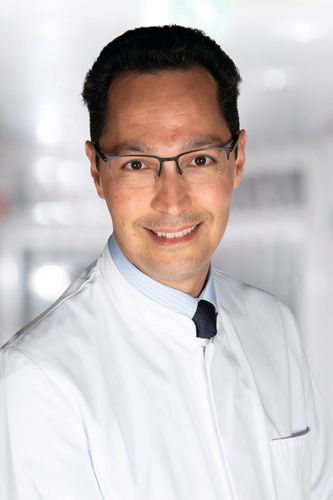
Prof. Dr. med. Wolf Petersen is a recognized authority in the field of knee surgery and a leading expert in orthopedics and trauma surgery in Berlin. Since 2008, he has headed the Department of Orthopedics and Trauma Surgery at Martin Luther Hospital in Berlin-Charlottenburg and has received numerous awards for his exceptional expertise and leadership skills. His career is characterized by consistent specialization and a high level of professional competence, which has earned him international recognition.
As a specialist in orthopedics and trauma surgery as well as sports medicine, Prof. Dr. Petersen brings a broad spectrum of knowledge and experience to his practice. His expertise ranges from the treatment of injuries and deformities to degenerative conditions of the musculoskeletal system. At the renowned clinic of the Martin Luther Hospital, he successfully treats sports injuries, bone fractures, joint degeneration, and other orthopedic conditions. His outstanding range of services includes, in particular, knee surgery, where he specializes in complex procedures such as knee replacements, meniscus surgeries, and cruciate ligament surgeries. Prof. Dr. Petersen relies on innovative procedures such as meniscus transplantation, cartilage-bone grafts, and minimally invasive techniques to achieve optimal treatment outcomes.
Thanks to his many years of experience in knee surgery, he has established himself as a trusted expert. He places great emphasis on using minimally invasive procedures to ensure a faster recovery and the best possible outcomes for his patients. Prof. Dr. Petersen heads a state-of-the-art clinic that stands out not only for its broad range of treatments but also for its technological sophistication. His commitment to utilizing innovative techniques is reflected in his use of minimally invasive arthroscopic procedures, which provide patients with gentle and effective treatment. With his extensive knowledge and clinical expertise, Prof. Dr. Petersen ensures his patients receive first-class care and an optimal recovery.
Approximately one in five people in Germany has knee problems. Whether it’s inflammation, overuse, sudden injuries to the menisci or cruciate ligaments, or simply wear and tear—we spoke with Prof. Dr. Petersen about these common issues.

Signs of wear and tear in the knee joint, medically known as knee osteoarthritis, are degenerative changes that can occur over time. They affect the cartilage layer in the knee joint, which normally acts as a shock-absorbing layer between the bone surfaces. Knee osteoarthritis develops when this cartilage thins and wears away, leading to friction and pain. Typical signs of wear and tear in the knee joint include pain, stiffness, swelling, and limited mobility of the knee. Patients may also feel a grinding or cracking sensation in the joint. These symptoms can become more severe as the disease progresses and limit the affected person’s mobility.
“The primary degenerative joint disease of the knee is knee osteoarthritis. There are various causes, including the aging process, injuries to the knee joint, obesity, genetic predisposition, or overuse of the joint due to certain sports or occupations. In some cases, for example, the meniscus alone may wear down. The main symptom here is pain. Joint effusion can also be a secondary symptom of osteoarthritis. Primarily, the degenerative process occurs in the cartilage. Secondarily, inflammation can develop, producing fluid that enters the joint cavity, causing the knee joint to swell. And then the patient finds themselves in a vicious cycle, because they cannot move the knee well, which in turn exacerbates the condition and causes the surrounding tendons to gradually shorten. The lack of movement leads to muscle atrophy—that is, the muscles deteriorate—and the symptoms continue to worsen,” explains Prof. Dr. Petersen at the beginning of our conversation. The treatment of degenerative changes in the knee joint aims to relieve pain, improve mobility, and preserve the knee’s functionality. This may include conservative methods such as physical therapy, pain medication, and injections, or surgical interventions such as joint replacement with a knee prosthesis.
Various treatment methods are available for degenerative conditions of the knee joint, such as knee osteoarthritis.
Conservative approaches include physical therapy and exercise therapy, which aim to strengthen the muscles around the knee and improve mobility. Medications such as pain relievers or anti-inflammatory drugs can also be used to relieve pain and reduce inflammation. In some cases, injections of hyaluronic acid or cortisone may also be helpful. Weight loss is also particularly important to reduce the strain on the knee joint. Assistive devices such as orthotics or walking aids can be used to relieve pressure on the knee and support the healing process.
“As a general rule, conservative treatment options should be exhausted first. Weight loss, combined with a change in diet, is one of the first steps in this process. This is because people with a BMI (Body Mass Index) over 30 are definitely at a higher risk of developing osteoarthritis, as the joints are subjected to much greater stress due to the excess weight. Our widely consumed Western fast-food diet has a high inflammatory potential. People eat far too much meat, which increases uric acid production, which in turn can lead to gout in the joints. There are also too many processed foods in German households. A Mediterranean diet, on the other hand, is highly recommended—one rich in unsaturated fatty acids, low in meat, and high in fish and vegetables. But it’s not just dietary changes that are important; your overall lifestyle matters as well. That means: You should stay active! Of course, you shouldn’t put too much strain on your joints, which is why activities like gymnastics or water aerobics are well-suited. “Even losing just ten kilograms can significantly reduce osteoarthritis symptoms,” recommends Prof. Dr. Petersen.
The decision between conservative treatment methods and surgical methods—such as knee replacement—depends largely on the degree of cartilage wear. The condition of the cartilage in the knee joint plays a decisive role in choosing the appropriate treatment path.
In cases of minor or early-stage cartilage damage, conservative approaches such as physical therapy, medication, injections, or other non-invasive therapies can be used to relieve pain and improve function. These methods are often preferred, especially for younger patients or those with an active lifestyle. The goal is to improve quality of life and delay surgery for as long as possible. “If movement is severely restricted, targeted physical therapy can also help, and orthopedic devices such as insoles, orthoses, or adjustable knee braces can provide support,” explains Prof. Dr. Petersen, who also discusses a medication option:
“Short-term episodes of pain can also be treated with medications such as ibuprofen or diclofenac. However, this should not be done over an extended period. Injections are another option for pain relief. Cortisone plays a rather minor role here and is used only for joints with extremely severe inflammation. Hyaluronic acid is significantly more effective. Platelet-rich plasma (PRP) injections are also a good option. In this procedure, the patient receives an injection of a solution derived from their own blood. The growth factors in the platelets stimulate the joint’s natural healing and regeneration processes, reduce inflammation, and promote the repair of damaged tissue.”
Articulated knee braces, also known as dynamic or functional knee braces, are orthopedic devices used to stabilize and support the knee. Unlike rigid braces, articulated knee braces allow for a certain degree of freedom of movement in the knee joint while simultaneously providing protection and support. These braces are often equipped with joints or hinges that allow the knee to move within a specific range of motion while maintaining the necessary stability. The range of motion can vary depending on the model and individual needs.
However, very advanced cartilage wear—which leads to significant pain, restricted movement, and loss of function in the knee joint—can limit the effectiveness of conservative treatments. In such cases, where conservative measures do not provide sufficient relief, there are various surgical options that can be considered.
“For localized cartilage damage or early-stage osteoarthritis, there are a variety of treatment options, including cartilage cell transplantation; however, this is generally more suitable for younger patients, and a transplant only makes sense if the cartilage damage is localized. The next major surgical option to consider is what is known as a realignment procedure, a joint-preserving surgery that corrects the patient’s leg alignment. However, this is only an option for patients who do not yet have a damaged joint shaft and are in osteoarthritis stages 1–3,” notes Prof. Dr. Petersen.
Osteoarthritis, a degenerative joint disease, can be classified into four grades that indicate the severity of the condition.
Stage 1 (early osteoarthritis): At this stage, there are initial signs of cartilage damage. The cartilage is slightly worn, which can lead to minimal symptoms such as occasional joint pain or stiffness.
Grade 2 (mild osteoarthritis): Here, the cartilage is already significantly damaged. Pain occurs more frequently, especially after exertion or movement. Joint function may be impaired, and grinding or cracking sounds may occur.
Grade 3 (moderate osteoarthritis): At this stage, the cartilage is severely worn down, which can lead to significant pain, swelling, and stiffness. Joint mobility is severely limited, and deformities may develop.
Grade 4 (advanced osteoarthritis): This is the most severe stage, in which the cartilage is completely worn away and the bones in the joint rub directly against one another. This results in severe pain, swelling, and limited mobility. Joint deformity is pronounced, and bone spurs (osteophytes) may develop.
Once osteoarthritis has reached stage 4, joint replacement surgery is often the only effective treatment.
The decision to undergo joint replacement is often made when cartilage damage is so advanced that it severely impairs the structure of the knee joint or has caused bone deformities. In such cases, implanting a prosthesis may be necessary to restore joint function and relieve pain. “Age often plays a role in the decision to undergo joint replacement. I am very cautious with all patients under 55 years of age. This is because younger patients in particular have high expectations of an artificial joint, as many of them, for example, would like to continue participating in sports. Although today’s artificial joints are very good and very well developed, they are still artificial joints. For younger patients, therefore, symptoms must be very severe before an implant is considered. The situation is different for older patients. The goal here is for them to be able to manage their daily lives well again and get by without pain,” says Prof. Dr. Petersen regarding the considerations surrounding joint replacement surgery.
Ultimately, the choice between conservative methods and joint replacement is based on a comprehensive assessment of the patient’s individual condition by the treating physician. Factors such as the severity of cartilage wear, symptoms, lifestyle, and the patient’s preferences are taken into account. The decision is therefore always a case-by-case assessment aimed at ensuring the best possible treatment for the patient and improving their quality of life.
As knee replacement surgery continues to evolve, various innovative technologies and materials are being used to improve the durability and functionality of the prostheses.
Modern implants are often made of durable materials such as ceramics, metal alloys, or special high-performance plastics, which help reduce wear and extend the prosthesis’s lifespan. “As a rule, all knee replacements are made of metal; in the lower leg region, they are usually made of titanium with a polyethylene inlay, and the lower surface of the femoral component is always made of a cobalt-chromium alloy. Over the past 30 years, revisions due to prosthesis wear have become almost nonexistent. In any case, it’s safe to say that after 20 years, approximately 80–85% of the prostheses are still intact—or, to put it another way, most implants “outlast” the patients. This will certainly improve even further in the future. After all, we must not forget that we now have data analysis from surgeries performed 20–30 years ago. Everything that has happened in the last five years up to the present cannot yet be documented as part of a long-term analysis,” explains Prof. Dr. Petersen.
A significant advancement today lies in tailoring implants to the patient’s individual anatomy. Thanks to advances in imaging and 3D printing technology, custom-made implants can be produced that are precisely tailored to the patient’s anatomical characteristics.
After knee replacement surgery, thorough and structured rehabilitation is crucial for achieving a faster recovery and improved mobility for the patient.
The goal of these rehabilitation measures is to strengthen the muscles, restore knee mobility, and improve the joint’s normal function. Initially, the rehabilitation phase focuses on gently moving the operated knee, reducing swelling, and activating the muscles around the joint. Early mobility exercises, performed under the guidance of a physical therapist, help promote blood circulation and improve muscle function. “Postoperative care is actually quite simple. The patient can put full weight on the leg immediately after the procedure. We generally recommend using walking aids for a period of four weeks, but these are only meant to improve and support coordination. This timeframe also varies. Some patients can stop using them after just two weeks, while others—who are a bit less agile or had more severe stages of osteoarthritis—need more time. Patients stay with us in the hospital for 3–7 days and can then be discharged home or to a rehabilitation clinic,” says Prof. Dr. Petersen.
Physical therapists develop individualized exercise programs aimed at restoring full range of motion in the knee, improving muscle strength around the joint, and promoting stability. Strengthening the quadriceps, hamstrings, and calf muscles plays a key role in protecting the knee and supporting its function. At the same time, balance and coordination exercises are performed to build the patient’s confidence in the operated knee and minimize the risk of falls. In addition to targeted rehabilitation exercises, guidance for daily life is also important. This involves maintaining proper posture, avoiding overloading the knee during daily activities, and using assistive devices such as walking aids or knee braces correctly.
Participating in sports is still possible even after knee replacement surgery. Prof. Dr. Petersen comments: “When it comes to resuming sports activities, it always depends on the type of sport and, of course, the intensity of the activity and how it is performed. Of course, all sports that are easy on the joints—such as cycling, Nordic walking, swimming, and light fitness training—are ideal. But I also have many patients who go skiing. That’s certainly feasible, but black runs should be avoided. In general, however, it’s beneficial for patients to engage in sports and stay active, because strong muscles are important for the joint.”
Faster Recovery: Fewer Complications and Infections at Martin Luther Hospital in Berlin.
“Here at Martin Luther Hospital in Berlin, we follow what are known as ‘fast-track concepts,’ which are designed to prevent complications and help patients regain mobility more quickly. This means that by the evening of the same day as their surgery, patients are already on their feet and taking a few steps. This is followed by physical therapy twice a day. As a result, we no longer experience any cases of thrombosis. Another goal is to keep patients in the hospital for as short a time as possible to further reduce the risk of infection. Administering the medication tranexamic acid prevents the need for blood transfusions, and for the past four years, an antibiotic has been injected directly into the joint immediately after surgery to prevent infections. “Thanks to all these measures, we have succeeded in reducing the infection rate to nearly zero, and patients are generally back on their feet faster,” explains Prof. Dr. Petersen regarding the successful measures for infection prevention and faster patient recovery, which will also be published in approximately two years as part of a completed study to encourage others to follow suit.
Tranexamic acid is a medication used to treat excessive bleeding. It works by promoting blood clot formation and thus stopping the bleeding.
“The status quo is good when it comes to joint replacement, and we’re already relatively far along. There isn’t much room for improvement there. However, I suspect that further improvements will come through increasing digitalization. Especially among athletes—particularly those who’ve undergone cruciate ligament surgery—we’ve seen in recent years what’s possible again athletically after surgery. Developments in the field of joint replacement could still improve in this area. I see a bright future ahead,” says Prof. Dr. Petersen optimistically, and with that, we conclude our conversation.
Thank you very much, Professor Dr. Petersen, for the insight into treatment options for knee osteoarthritis!
Share this article
About the medical author
Alexandra Pfitzmann
Editor
Alexandra Pfitzmann – medical author: expert knowledge, professional articles and medical insights in the Leading Medicine Guide.
More about the medical author →Expert Interviews
Read next
- Expert interview
Cardiogeriatrics: Significance and benefits in the context of hospital reform
Sep 21, 2026
Cardiogeriatrics: Significance and benefits in the context of hospital reform
Read more - Expert interview
Expert Interview with Professor Dr. Amadeus Hornemann, MPH
Sep 18, 2026
Prof. Amadeus Hornemann on Precision Medicine in Gynecology: Modern Surgery, New Techniques, Better Quality of Life
Read more - Expert interview
Expert Interview with Professor Dr. Konstantinos Anagnostakos
Sep 15, 2026
Prof. Anagnostakos on Painful Knee Replacements
Read more