Expert Interviews
Bariatric Surgery: A Ray of Hope for Weight and Health—An Expert Interview with Prof. Staikov

Alexandra Pfitzmann ·
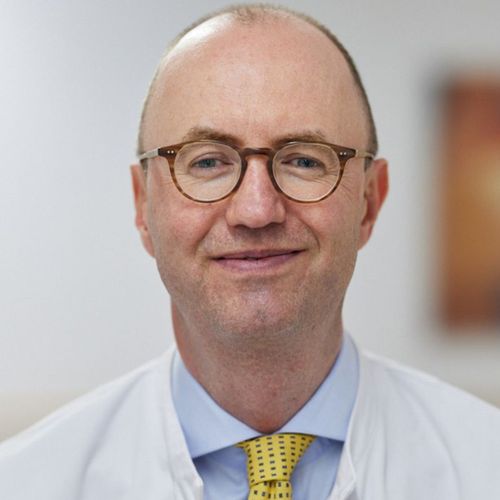
Professor Plamen Staikov, M.D., is an internationally recognized authority in the fields of bariatric surgery and abdominal surgery. As Medical Director and Chief Physician at Sachsenhausen Hospital in Frankfurt am Main, he is regarded as an expert in minimally invasive and innovative bariatric procedures as well as in the surgical treatment of cancer. His area of expertise covers the entire spectrum of bariatric surgery, with a focus on procedures such as gastric bypass, sleeve gastrectomy, mini-gastric bypass, and other techniques. As one of Europe’s leading obesity centers, Sachsenhausen Hospital, under the direction of Prof. Dr. Staikov, performs more than 1,000 surgeries per year and also offers specialized revision surgery for patients from all over Germany and around the world.
With experience from more than 10,000 surgeries performed as chief of the surgical department, his primary focus is on laparoscopic surgery. In addition to treating gastrointestinal diseases and performing gallbladder surgeries, he specializes in bariatric and oncological surgery. His bariatric center in Frankfurt-Sachsenhausen is one of the leading facilities for the treatment of morbid obesity and is a renowned center for surgical diabetes treatment in Europe. Together with his team of colleagues, he is proficient in all bariatric procedures and offers particular expertise in revision surgeries following previous bariatric procedures.
In addition to bariatric surgery, the Department of Surgery under his leadership covers the entire spectrum of oncological surgery, reflux surgery, trauma surgery, proctology, and endocrine surgery. The focus is on the use of minimally invasive surgical techniques to ensure gentle treatment for patients in a state-of-the-art surgical wing. The exceptional expertise of Prof. Dr. Staikov and his team enables not only the effective treatment of severely obese patients but also the successful management of complex cases from around the world.
His commitment to innovative surgical techniques, combined with his professional expertise, makes him a leading authority in the field of bariatric and abdominal surgery. According to the Robert Koch Institute, nearly 13 million adults in Germany suffer from obesity; and approximately 6% of children are affected. For this reason, the editorial team at Leading Medicine Guide took the opportunity to speak with Prof. Dr. Staikov about this condition and its treatment options.

Obesity, as a chronic disease, has become one of the greatest global health challenges of the 21st century. It is characterized by an excessive accumulation of body fat and has a significant impact on the health and well-being of those affected. With its rising prevalence, obesity affects not only body weight but also other aspects of an individual’s life and can lead to a variety of health risks.
Obesity is associated with a wide range of health risks that can significantly impair overall well-being.
“The risks of obesity have been known for many decades, and over 50 related conditions stem from pathological overweight. One of the most significant risks affects the cardiovascular system. People with obesity have an increased risk of high blood pressure, coronary heart disease, heart failure, or stroke. Excess body fat can cause the heart to work harder to supply the body with blood, which increases the strain on the cardiovascular system. Furthermore, the risk of type 2 diabetes increases significantly in people with obesity. This results from insulin resistance caused by excess adipose tissue. “The condition can lead to long-term complications such as nerve damage, eye problems, and kidney disorders,” explains Prof. Dr. Staikov at the beginning of our conversation.
Respiratory diseases are also more common in people with obesity, particularly sleep apnea—which involves pauses in breathing during sleep—as well as asthma, which is exacerbated by the extra weight and the resulting breathing difficulties. “Anyone who suffers from chronic sleep disturbances consequently also suffers from fatigue, and simply lacks the rest they need at night. This leads to stress and increased hunger—in such cases, the patient may eat even more and find themselves caught in a devastating cycle,” Prof. Dr. Staikov explains, adding: “One thing is very clear: Once obesity is present, it is certain to progress. We distinguish between three different degrees of obesity, which are determined by the Body Mass Index (BMI). Treatment is already necessary at a BMI of 30 or higher. Unfortunately, however, in Germany, health insurance companies often only approve surgical treatment for obesity, for example, once a patient reaches a BMI of 50. This already corresponds to super-obesity, and in that sense, it’s almost too late for the patient, since complications from obesity are usually already present. “There are no good systems in place.”
Obesity is generally classified using the Body Mass Index (BMI). BMI is calculated by dividing weight in kilograms by the square of height in meters. The World Health Organization (WHO) has established guidelines for classifying BMI into different degrees of obesity.
Underweight: BMI below 18.5
Normal weight: BMI between 18.5 and 24.9
Overweight: BMI between 25 and 29.9
Class I obesity (mild): BMI between 30 and 34.9
Obesity Class II (moderate): BMI between 35 and 39.9
Obesity Class III (severe): BMI of 40 or higher.
Musculoskeletal disorders, such as osteoarthritis, are common among people with obesity. The extra weight puts strain on the joints, which can lead to inflammation and premature wear and tear. Aside from the physical risks, obesity also affects mental well-being. People with obesity have an increased risk of depression, anxiety, and low self-esteem. The stigma associated with being overweight can lead to social exclusion and psychological stress, which in turn impairs mental health. In summary, obesity significantly affects overall well-being—both physically and mentally—and increases the risk of a variety of serious diseases, which can severely impair the quality of life for those affected.
Genetic predisposition plays a significant but complex role in the development of obesity.
Studies have shown that genetic predisposition can influence the risk of developing overweight and obesity. “Even though much remains unclear, it can be said that genetics is a major factor in the risk of developing obesity. Various genes can play a role in metabolic processes, appetite regulation, and fat distribution in the body. These genetic factors can increase an individual’s risk of weight gain when they interact with environmental factors. Added to this are lifestyle factors. We have an immense surplus of calories that’s impossible to avoid. Food is always nearby. On top of that, we don’t get enough exercise overall. Many people believe that if they’ve taken 10,000–12,000 steps a day, they’ve been physically active. But that’s nowhere near enough. Compared to previous generations, our calorie expenditure is much lower. “A diet rich in high-calorie and processed foods, combined with a lack of physical activity, contributes significantly to weight gain,” Prof. Dr. Staikov explains.
Weight gain in people can vary greatly despite an apparently similar calorie intake, and this can be explained by a variety of factors. The gut flora, also known as the gut microbiome, plays a crucial role in various aspects of health, including metabolism and weight. The microbiome consists of a multitude of microorganisms, such as bacteria, viruses, fungi, and other microbes, that live in the digestive tract. “The gut flora is like a fingerprint—its composition is unique to each individual. Certain patterns have been identified that are associated with obesity. Metabolism is also individual. But we cannot pinpoint a single cause for the predisposition to obesity,” said Prof. Dr. Staikov regarding the varying rates of weight gain among people.
Non-surgical treatment options for people with obesity include various measures for weight loss and improving health.
“As already mentioned—obese patients in Germany are usually referred for treatment too late. In any case, a comprehensive range of nutritional, behavioral, and exercise therapy programs with competent professionals would be necessary. This would at least provide a good chance of weight loss in the early stages, at a BMI of around 30. In fact, for decades there has been a recommendation to treat obesity starting at a BMI of 30. This is because those affected cannot succeed on their own—that is an illusion. Despite the existing recommendation, there is no structure in place to help the millions of people with obesity. “The crucial moment is for the affected person to take action in a timely manner,” explains Prof. Dr. Staikov, describing the unsatisfactory situation for people suffering from obesity.
- A balanced, calorie-conscious diet can help with weight loss. A meal plan rich in fruits, vegetables, whole grains, and lean protein can support weight loss.
- Regular exercise is crucial for weight loss and improving overall health. A structured exercise program that includes aerobic exercise, strength training, and flexibility exercises can help burn calories and improve metabolism.
- Psychological support and behavioral therapy can help change unhealthy eating habits, manage emotional eating, and establish new, healthy behaviors.
- In some cases, weight-loss medications may be prescribed to suppress appetite or reduce fat absorption. These medications are typically used in combination with dietary changes and exercise therapy.
- Regular medical care and monitoring are important for tracking weight loss progress, treating comorbid conditions, and identifying potential complications.
The most common bariatric procedures—gastric bypass, sleeve gastrectomy, and adjustable gastric banding—differ both in how they are performed and in their effects on weight loss and potential risks.
“There are three standard surgeries for patients with obesity. The sleeve gastrectomy, the Y-shaped gastric bypass, and the somewhat newer omega-shaped gastric bypass. The key factors in choosing a procedure are the patient’s initial weight, any comorbidities, existing eating disorders, whether the patient smokes or takes medication, and their general living circumstances. All of this must be discussed in detail with the patient, as these are key criteria for determining the surgical method. It must also be clarified whether the patient will be able to continue attending follow-up appointments five, ten, or twenty years after the surgery,” explains Prof. Dr. Staikov.
Roux-en-Y gastric bypass (Y-bypass): This is a common form of bariatric surgery used for weight loss. In this procedure, the stomach is divided into a small upper pouch and a larger lower pouch. The upper pouch is connected directly to the small intestine, allowing most of the stomach and the upper small intestine to be bypassed. This reduces the amount of food consumed and leads to a lower calorie intake.
The Omega-Loop gastric bypass (mini-gastric bypass) was introduced in 1997 by Robert Rutledge as a specific variation of gastric bypass surgery. Compared to the traditional Roux-en-Y gastric bypass, this method is characterized by the creation of a single new connection (anastomosis) between the gastric pouch and the small intestine.
“To emphasize this once again very clearly—we perform surgery far too late in Germany. Compared to the rest of the world, we in Germany perform surgery years or even decades later than other countries. In Germany, a patient with a BMI of 40 combined with type 2 diabetes can undergo surgery immediately. Without diabetes or other comorbidities, conservative treatment must first be pursued for a period of six months. Only then can surgery be considered. However, people with a BMI of 40 usually already have serious comorbidities or complications related to obesity, which, unfortunately, weight-loss surgery cannot reverse. These regulations are rooted in German health policy and the continuing restrictions imposed by health insurance companies, which have also ensured that people simply tend to see a doctor too late. There are also still insurance companies that look for formal errors so they can refuse to pay for the surgery retroactively. And all of this comes at the expense of patient health,” Prof. Dr. Staikov strongly criticizes.
The mini-gastric bypass (MGB) is a variation of the conventional gastric bypass procedure that is less invasive and involves shorter surgery times. It is similar to the traditional gastric bypass in that a smaller gastric pouch is created and a portion of the small intestine is bypassed.
“Studies suggest that the mini-gastric bypass is as effective as the traditional gastric bypass in terms of long-term weight loss and weight stability. In many patients, the MGB leads to significant weight loss and an improvement or even remission of comorbidities such as type 2 diabetes, high blood pressure, and sleep apnea. The choice of bariatric procedure, including the mini-gastric bypass, should be based on a thorough assessment of the patient’s individual health status, their preferences, and a careful risk-benefit analysis. Ultimately, the goal is always to achieve the following: weight loss, weight maintenance, control of comorbidities, and a restored quality of life for the patient,” and he highlights the unique features of the center in Frankfurt am Main: “At our center, 50% of our surgeries are gastric sleeve procedures; the two types of bypass surgeries are performed somewhat less frequently. A particularly positive feature here at the largest bariatric surgery center in all of Germany is the very low rate of revision surgeries—approximately 10–15%. This rate is generally much higher elsewhere. The overall complication rate, at 1–2%, is also negligible. The surgeries typically last about 60 minutes, and the patient can be discharged from the hospital after about three days.”
Follow-up care after bariatric surgery is crucial for the long-term success of the procedure.
“Obesity is a chronic condition that cannot be cured even with surgery. It must be clearly explained to the patient that follow-up care must continue for life. The rate of follow-up care in Germany is also very low. Many patients simply go to their family doctor for a checkup. We strongly recommend that our patients come to us, as the treating center, for follow-up visits, since we can provide all necessary assistance in case of doubt. After treatment, in addition to a nutrition and exercise plan (following proper counseling), we provide our patients with supplemental vitamins and calcium. “Following up on these recommendations is also part of the aftercare,” explains Prof. Dr. Staikov. It is important that patients actively participate in their aftercare and follow their treatment team’s recommendations in order to maintain healthy habits in the long term and minimize potential complications.
Semaglutide is a medication traditionally used to treat type 2 diabetes. Recently, however, it has also garnered attention as a potential treatment option for obesity.
Studies have shown that semaglutide, when used in higher doses than those for diabetes treatment, can lead to significant weight loss in people with obesity. The medication works by increasing feelings of fullness, reducing appetite, and possibly influencing metabolism. Clinical trials have shown that the use of semaglutide in people with obesity resulted in greater weight loss compared to a placebo. Some study participants even achieved weight loss of more than 15% of their body weight.
“Medications containing the active ingredient semaglutide are generally a valuable addition and have been on the market for several years now. We know what they can achieve, because a 15% weight loss is truly remarkable. However, medications are only effective as long as you take them. It’s also important to note that semaglutide is prescription-only and therefore not accessible to everyone, since patients must pay for the active ingredient themselves—and not everyone can afford to do so. As long as this financial barrier—approximately 200 euros per month—remains, it’s simply unfair. We only prescribe the medication to patients with a BMI of 30 or to those who have undergone bariatric surgery in the past and are showing signs of regaining weight. “In principle, the active ingredient semaglutide can be helpful,” comments Prof. Dr. Staikov.
As with any medication, side effects can occur with semaglutide, including nausea, vomiting, diarrhea, or stomach discomfort. The use of this medication should be discussed with a doctor to weigh the individual risks and benefits.
Hope for the Future
“We urgently need to establish the framework in Germany to ensure that every person with a BMI over 30 has access to adequate treatment. This depends on two key factors: staffing and cost coverage. For example, patients must still pay for their own necessary vitamin supplements even after surgery. Many patients actually shy away from surgery out of fear of financial consequences, which can be fatal. Obese people have no lobby in Germany,” states Prof. Dr. Staikov, bringing our conversation to a close.
Many thanks to Prof. Dr. Staikov for this highly informative and insightful discussion on the topic of obesity!
Share this article
Expert Interviews
Read next
- Expert interview
Expert interview with Professor Dr Elmar Herbst, PhD
Oct 15, 2026
Patient-centred and personalised knee surgery
Read more - Expert interview
Cardiogeriatrics: Significance and benefits in the context of hospital reform
Sep 21, 2026
Cardiogeriatrics: Significance and benefits in the context of hospital reform
Read more - Expert interview
Expert Interview with Professor Dr. Amadeus Hornemann, MPH
Sep 18, 2026
Prof. Amadeus Hornemann on Precision Medicine in Gynecology: Modern Surgery, New Techniques, Better Quality of Life
Read more