Expert Interviews
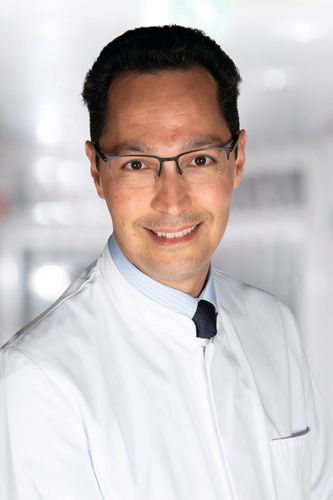
“Good Prospects for Colon Cancer!”: An Interview with Dr. Volker Fackeldey, M.D.

Alexandra Pfitzmann ·
When it comes to colorectal cancer, he is exactly the right person to talk to: Dr. Volker Fackeldey, MD, a specialist in general and visceral surgery, specialized visceral surgery, and a coloproctologist, heads the Mainfranken Colorectal and Rectal Center in the Kitzinger Land region. In this interview, he talks primarily about the risks of developing colorectal cancer—but also about the chances of recovery. Because colorectal cancer can be defeated—provided it is detected early and treated effectively.
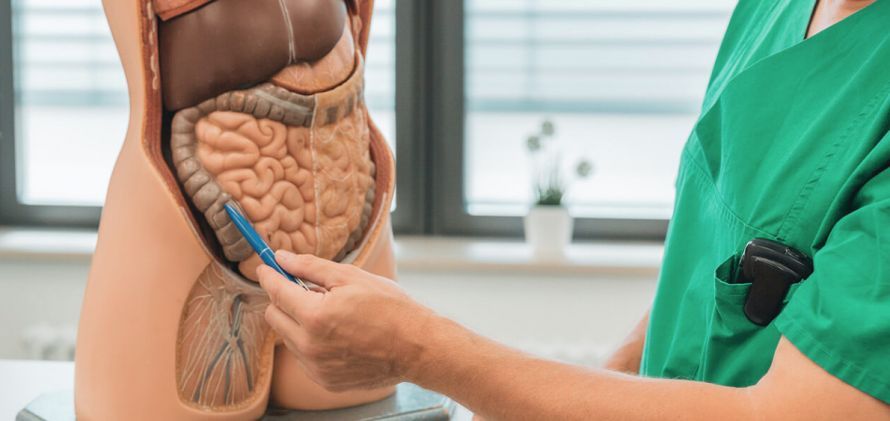
Approximately 80,000 people are diagnosed with colorectal cancer each year in Germany alone. This makes it the second most common malignant disease among both women and men. For about 29,000 of those affected, colorectal cancer is fatal. This doesn’t have to be the case, says Dr. Volker Fackeldey, M.D., because: In ninety percent of all cases, colorectal tumors develop from initially benign polyps.
However, colorectal cancer can be truly insidious. This is because those who develop it often do not notice it for a long time. Initially, there are simply no symptoms—and colorectal cancer develops extremely slowly. It is only in the later stages of the disease that the first signs of colorectal cancer become apparent. Certain signs should immediately raise a red flag: For example, anyone who notices changes in bowel habits, such as persistent diarrhea or blood in the stool, should not delay seeing a doctor. Other symptoms include constant fatigue, unintentional weight loss, and general weakness.
The main factor that can lead to colorectal cancer is poor dietary habits. Diet often plays a major role in medicine, and when it comes to colorectal cancer, the message is clear: the healthier and more balanced our diet, the lower our risk of colorectal cancer. A diet low in fiber and high in meat puts a strain on the colon, just as do the classic culprits nicotine and alcohol. However, genetic factors can also trigger the development of colorectal cancer—as can chronic inflammatory bowel diseases such as ulcerative colitis, which is an inflammatory condition affecting the large intestine. Important to know: People with type 2 diabetes are generally more susceptible to colorectal diseases!
Prevention is key
The figure is surprisingly high: More than half of patients with colorectal cancer could be cured! And it’s simple, as Dr. Fackeldey emphasizes: “Not even one in three people takes advantage of the screening measures available today. Yet it is strongly recommended,” says the specialist. “Health insurance plans cover the costs of screening—the colonoscopy—for women starting at age 55 and for men starting at age 50.” Wasn’t the age for men also 55? “That’s right, but it was lowered from 55 to 50 because men are more prone to colorectal cancer than women,” explains Dr. Fackeldey.
Of course, genetic predisposition also plays a major role, but much of it seems to be manageable. “The fact is that the risk increases with age. Common lifestyle-related issues such as obesity, excessive consumption of red meat in particular, and excessive alcohol consumption all contribute negatively to the risk,” Dr. Fackeldey points out.
Genetic predisposition is an important factor when it comes to screening. Dr. Fackeldey recommends: “If the mother or father has had colorectal cancer, the risk for the next generation is two to four times higher, so regular screening is strongly recommended in such cases.”
At around five to seven percent, the most common form of hereditary colorectal cancer is hereditary non-polyposis colorectal cancer (HNPCC, also known as Lynch syndrome). The predisposition is inherited from one parent and is therefore present from birth. Colorectal cancer can develop even at a young age, but it can also lead to other types of tumors. There is an 80 percent probability of developing the disease, which is why timely screening is particularly important.
Early Detection: Colonoscopy
Many people are afraid of a colonoscopy—or they feel embarrassed. Yet such an examination is completely unproblematic today. Before a colonoscopy is performed, it must be ensured that the bowel is empty. To achieve this, a laxative is usually administered one day in advance. During the examination, a sedative may be given, or a short-acting anesthetic such as propofol may be used. The examination is not painful, though it may be somewhat uncomfortable.
“You have to keep the following in mind: If nothing abnormal is found during the exam, you’ll have about ten years of peace of mind until your next screening. If an adenoma—a tumor that is usually benign, encapsulated within an organ, and originating from glandular tissue—or a suspicious polyp is found, it can be removed immediately. In cases of doubt, a tissue sample is sent to the pathology lab for further examination. The patient then receives a definitive diagnosis and doesn’t have to worry that colon cancer is developing in their body; instead, countermeasures can be taken immediately,” says Dr. Fackeldey.
Given this approach, everyone in the at-risk age group should take the initiative and schedule a screening appointment. After completing such “tasks,” people usually feel heroic and good—it’s done!
During a colorectal screening, a video colonoscopy is usually performed. This involves carefully inserting a thin tube into the colon through the rectum. If they wish, patients can watch the entire procedure on a screen, which can be quite fascinating. The colonoscope itself has a suction device used to remove fecal matter or fluids. Small instruments can be inserted through a small working channel to remove polyps or take tissue samples if necessary. A colonoscopy is a routine examination and carries low risk. And most importantly: About 97% of existing adenomas—which are potential precursors to cancer—are detected!As a general rule, you can remain optimistic even if abnormal or cancerous tissue is discovered during a colonoscopy. This is because colorectal cancer is one of the most curable forms of cancer when detected early. “I often see patients—as was the case just recently—who are fifty years old and could be successfully treated even without chemotherapy,” explains Dr. Fackeldey. “Many patients, on the other hand, who did not undergo screening, deeply regret it when the disease is detected late and at an advanced stage,” he adds.
“Our location is excellent!”
By the way, anyone can take care of their gut flora: “I recommend a traditional, high-fiber diet. That keeps the gut active and prevents it from becoming sluggish,” advises Dr. Fackeldey, adding: “Too much fat is unhealthy, and meat consumption should be reduced. Red meat in particular—pork, beef, lamb, and game—is not easily digested by the gut in large quantities.” Of course, in this context, one should pay attention to the origin of the meat, which is easy to do if consumption is kept to a minimum.
So it’s actually better to spend a little more money on good quality rather than buying cheap meat from a discount store. The reason: Meat from discount stores usually comes from animals that have been treated with medication—that is, from factory farming, which is also ethically difficult to accept. “Avoid regular consumption of alcoholic beverages and instead treat yourself to a pot of green tea every now and then—your gut will thank you!” recommends Dr. Fackeldey.
Dr. Fackeldey, a native of the Rhineland whose parents are both doctors and whose daughter also aspires to become a doctor, is optimistic. “The technology available to us doctors is getting better and more sophisticated all the time. In the long term, I can envision a genetic marker for preventive care that can quickly identify hereditary factors. My patients’ quality of life during colorectal cancer treatment is steadily improving, and research is advancing,” he says, looking to the future with satisfaction. “Our location in the Kitzinger Land region is excellent, and we have many patients who travel from far away to receive treatment here. And—many more people should take advantage of preventive screening via colonoscopy!” he urges at the conclusion of this encouraging conversation, for which we extend our heartfelt thanks.

Dr. Volker Fackeldey has been directing the Mainfranken Colon and Rectal Center for over ten years. As the coloproctology center of excellence at Klinik Kitzinger Land, the center specializes in the treatment of the colon and rectum and is known throughout the state. As a specialist, Dr. Volker Fackeldey has numerous specializations and additional training. He is not only a specialist in general and visceral surgery and in special visceral surgery, but also in sports medicine, proctology, and chiropractic therapy. What sets him apart as the director of the Mainfranken Colon and Rectum Center is a particularly rigorous qualification—namely, the “EBSQ Coloproctology” (European Board of Surgical Qualification in Coloproctology).
Share this article
About the medical author
Alexandra Pfitzmann
Editor
Alexandra Pfitzmann – medical author: expert knowledge, professional articles and medical insights in the Leading Medicine Guide.
More about the medical author →Kitzinger Land Clinic
ProfileExpert Interviews
Read next
- Expert interview
Cardiogeriatrics: Significance and benefits in the context of hospital reform
Sep 21, 2026
Cardiogeriatrics: Significance and benefits in the context of hospital reform
Read more - Expert interview
Expert Interview with Professor Dr. Amadeus Hornemann, MPH
Sep 18, 2026
Prof. Amadeus Hornemann on Precision Medicine in Gynecology: Modern Surgery, New Techniques, Better Quality of Life
Read more - Expert interview
Expert Interview with Professor Dr. Konstantinos Anagnostakos
Sep 15, 2026
Prof. Anagnostakos on Painful Knee Replacements
Read more