Expert Interviews
Hernia Surgery: Modern Solutions for a Strong Abdominal Wall—An Expert Interview with Dr. Pöschmann

Alexandra Pfitzmann ·
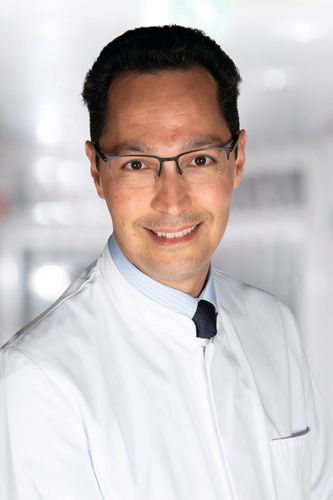
Dr. med. Enrico Pöschmann is a renowned specialist in hernia surgery and successfully leads the Swiss Hernia Center, which has now merged with his Seechirurgie practice and opened its doors in October 2024 as the Seechirurgie Surgical Center and Outpatient Surgery Center. Dr. Pöschmann and his experienced team cover the entire spectrum of hernia surgery and offer excellent diagnostics as well as innovative surgical procedures. Dr. Pöschmann has extensive experience, particularly with complex hernias such as incisional hernias, rectus diastasis, and sports hernias. Thanks to this expertise, the Swiss Hernia Center has been able to expand and now has locations in Schaffhausen, Schwyz, and Zug. The center works closely with various renowned hospitals and medical groups.
Dr. Pöschmann has earned an outstanding reputation in the surgery of abdominal wall hernias and diaphragmatic hernias. He is not only a master of minimally invasive keyhole surgery but also a leader in the use of robot-assisted surgical techniques (such as the da Vinci method). His broad repertoire of surgical procedures enables individually tailored interventions that significantly improve the chances of recovery and allow patients to return to their daily lives quickly. Dr. Pöschmann brings his extensive expertise to bear particularly in cases of severe abdominal adhesions. In addition to using ultrasound technology, he also employs advanced methods such as computed tomography (CT) or MRI when necessary to make a precise diagnosis.
Dr. Pöschmann’s high level of professional expertise is rooted in many years of academic and clinical training. Even during his studies at the renowned University of Leipzig, he devoted himself to hernia surgery. Later, he deepened his knowledge in leadership positions at several major hospitals and gained valuable experience as a chief physician and health economist. Today, Dr. Pöschmann is known not only for his surgical skills but also for his role as a managing director and consultant, where he applies his expertise to the development of collaboration models and medical centers. The Swiss Hernia Center stands for the highest quality in hernia surgery, as evidenced, among other things, by its certification from the German Hernia Society and its participation in the international Herniamed network.
The editorial team of the Leading Medicine Guide had the opportunity to speak with Dr. Pöschmann and learn more about hernia surgery.

Hernias, also known as visceral hernias, occur when internal organs or tissues protrude through a weak spot or opening in the abdominal wall. They occur particularly frequently in the groin area, around the navel, or at surgical scars and can affect people of all ages. Hernias often result from a combination of congenital or acquired weaknesses in the tissue and increased pressure in the abdominal cavity, such as when lifting heavy loads, experiencing chronic coughing, or straining heavily. Although hernias are often painless and appear only as an external bulge, they can lead to serious complications such as incarceration, which requires immediate treatment. Therefore, it is important to detect hernias early and, depending on their type and size, consider appropriate treatment options to minimize risks and improve the quality of life for those affected.
The symptoms of a hernia can vary depending on its type and location.
“A classic hernia, such as an inguinal hernia, manifests as a bulge in an area where there was none before. Sometimes this becomes clearly visible, for example, after a coughing fit or when lifting something heavy. In some cases, a person may also feel localized pressure, a pulling sensation, or even a stabbing pain. The symptoms are very diverse,” Dr. Pöschmann begins in our conversation. In advanced cases, when parts of the intestine become trapped by the hernia (incarceration), severe abdominal pain, nausea, vomiting, and digestive problems such as constipation may occur, indicating a medical emergency. However, there are also hernias that are asymptomatic and are discovered only by chance.
Anyone experiencing the symptoms mentioned above should definitely consult a doctor. Regarding diagnosis, Dr. Pöschmann explains: “The most important part of the diagnostic process is the medical history. The goal is to determine what symptoms the patient is experiencing and how long they’ve had them. I ask whether there was a specific trigger and whether there is a family history of the condition. A family history is particularly common among men when it comes to inguinal hernias. Women, on the other hand, sometimes have a predisposition to generally weak connective tissue with insufficient protein. This is followed by a physical examination, during which we examine the area where the patient notices something unusual. Hernias can often be easily palpated by hand; we can frequently feel gaps or the hernial sac itself. In any case, we can pinpoint the location of the hernia. Then—and this is also in line with international standards—an ultrasound examination is performed, as it allows for a very precise assessment of the findings. This confirms whether a hernia is present—a hole in the abdominal wall—and determines its size; only then can a decision be made regarding treatment.”
If an incarcerated hernia is suspected—in which tissue is trapped and blood flow is impaired—a rapid diagnosis is crucial to prevent serious complications and, if necessary, to initiate emergency surgery.
The risk of developing a hernia increases with age, as tissue elasticity decreases. Men are more commonly affected because their inguinal canal is anatomically more susceptible. Other risk factors include genetic predisposition, chronic cough, heavy lifting, obesity, pregnancy, chronic constipation, and scar tissue from previous surgeries. Conditions such as Marfan syndrome or Ehlers-Danlos syndrome—genetic disorders that weaken connective tissue—can also increase the risk.
The best time for surgical treatment of a hernia depends on various factors, including the type of hernia, the severity of symptoms, and the risk of complications.
“There are no conservative treatments for a hernia. If a patient is not immediately eligible for surgery, so-called hernia trusses (a type of support or compression device) can be used temporarily, but this is definitely not a solution. This is because a hernia is a biomechanical problem—the hole that has formed in the abdominal wall must be closed surgically. Exactly when this is done depends primarily on the symptoms. This is because there are also small hernias that actually cause no symptoms at all, and in these cases, the patient can be managed with ‘watchful waiting.’ This means that both the patient and the doctor monitor the condition closely. “As soon as noticeable symptoms appear—which can then be seen on an ultrasound—or if inflammation develops due to repeated incarceration, or if the intestine keeps protruding into the hernia, surgery is absolutely necessary,” Dr. Pöschmann emphasizes.
Minimally invasive procedures, also known as laparoendoscopic surgeries, offer a number of advantages over conventional open surgeries in the treatment of hernias.
A key advantage of the minimally invasive method is less tissue trauma. Instead of a large incision, the laparoscopic technique involves making only a series of small incisions through which instruments and a camera are inserted. This results in less postoperative pain and a faster recovery, which often allows for a shorter hospital stay. Patients can generally resume their normal activities sooner, and the cosmetic results are more aesthetically pleasing due to the smaller scars. The risk of wound infections is also generally lower with minimally invasive procedures.
Dr. Pöschmann explains: “Almost all hernia surgeries can be performed using minimally invasive techniques—the question is simply whether it always makes sense. For example, if you have a very young male patient who is thought to have an inguinal hernia, but it’s not actually a true hernia—rather, the canal through which the testicle descends from the abdomen into the scrotum hasn’t closed properly. I wouldn’t treat something like that with a synthetic mesh, as would be required in a minimally invasive procedure. In this case, I would simply stabilize the area with a small incision and a special suturing technique, which would then last for the rest of the patient’s life. The same applies to a young woman with a very small femoral hernia, where a mesh isn’t strictly necessary either. Here, too, the procedure can be performed effectively from the outside with a small incision. For patients with a large incisional hernia, a minimally invasive procedure doesn’t make sense either. In this case, it’s better to reopen the old incision, stabilize everything properly, and close it again,” and he adds a comment on the use of meshes:
“When it comes to meshes, the gold standard is the use of polypropylene or Prolene meshes, which are permanent synthetic meshes that offer excellent stability, have very good healing rates, and do not trigger allergies. However, there may also be situations where patients have very small hernias that still need to be stabilized, in which case one might opt for a biodegradable mesh that dissolves after 15–18 months and is replaced by the body’s own connective tissue. This option is also popular among patients who want to return to sports quickly, simply because the biodegradable meshes help restore the body’s natural elasticity after they have broken down and been replaced by the body’s own tissue. Of course, there are also patients who simply do not want to have plastic in their bodies; for them, biodegradable meshes represent a good alternative. The only limitation we face here is that there is still no reliable long-term data (ten years or more) available. However, if these meshes are implanted correctly and the indication is appropriate, they appear to be extremely effective and in no way inferior to a synthetic mesh. What we don’t yet know, though, is how the tissue will regrow after ten years or how stable it will be once the mesh has dissolved. I am very happy to use biodegradable meshes frequently—I was actually the first to use them in Switzerland—and have had very good results so far, with no recurrences since 2014.”
The risk of recurrence—that is, the reappearance of a hernia after surgery—varies depending on the type of hernia, the surgical procedure chosen, and the patient’s individual risk factors.
Recurrences may occur more frequently in cases of larger abdominal wall hernias or in patients with risk factors such as severe obesity, smoking, or chronic cough. “Of course, it also depends on the location of the hernia, but if we take the most common type of hernia—the inguinal hernia—as an example, global statistics show a recurrence rate of approximately 1.5–3%. We also need to distinguish between different scenarios here. Is it a recurrence because the mesh has torn—which is extremely rare—or because the patient has gained weight and the chosen mesh size is simply no longer sufficient? Technical errors can occur in some patients, for example, when meshes that are too small have been selected. In the past, the shrinkage of meshes within the body was not always taken into account. I perform surgery on recurrences every week, though the mesh does not always need to be replaced. After all, the mesh has integrated into the body over time, so I avoid replacement as much as possible and prefer to add a second mesh instead. I also always try to make corrections from the inside, which is possible in 90% of cases. As a general rule: if the patient underwent minimally invasive surgery during the first operation, the second operation is performed as open surgery, and vice versa. But minimally invasive surgery is simply much less traumatic for the patient. In these cases, I also like to use the robot-assisted approach because it allows for even greater precision,” says Dr. Pöschmann, describing his approach.
After surgery, it’s important to ensure an adequate recovery period and to avoid activities that could strain the abdominal muscles. Gradually resuming physical activity and strengthening the abdominal muscles through targeted exercises can also help stabilize the abdominal wall and minimize the risk of recurrence.
“For typical inguinal hernias, there are no special precautions the patient needs to take. Resting for 2–3 days is advisable to allow the wound to heal, and cycling should ideally be avoided for about two weeks, as it causes jarring movements in the groin. For all other major abdominal hernias, I am personally very strict, and my patients must wear an abdominal support for about six weeks, are not allowed to lift more than five kilograms, and must refrain from sports. Of course, this has the disadvantage of causing muscle atrophy. After the six weeks, I see the patient again, and another ultrasound is performed. If everything has healed well by then, intensive physical therapy can begin, which is just as important as the surgery. After all, strong muscles are always beneficial, even from a preventive standpoint. Weak muscles combined with severe obesity is a bad combination. “And as with all wounds, it’s important to avoid smoking, since smoking constricts blood vessels and reduces oxygen flow to the area where healing is taking place, which in some cases can lead to reduced stability of the implanted mesh,” recommends Dr. Pöschmann.
The treatment of complex hernias, such as incisional hernias and rectus diastases, presents particular challenges, as these conditions are often associated with larger defects in the abdominal wall, poorer tissue quality, and an increased risk of complications.
Incisional hernias develop at the site of a previous surgery and are often weakened by scar tissue, which makes healing more difficult and increases the risk of recurrence. Rectus diastasis—the separation of the rectus abdominis muscles—is not a classic hernia, but it can cause similar symptoms and also significantly weaken the abdominal wall.
Rectus diastasis is a medical condition in which the two longitudinal muscles of the abdominal wall—the so-called rectus muscles or “six-pack muscles”—move apart. This occurs due to overstretching of the connective tissue structure that connects the muscles along the midline of the abdomen, known as the linea alba. This condition leads to a weakening of the abdominal wall and can manifest as a visible or palpable gap along the midline of the abdomen, especially when the abdominal muscles are contracted.
“In all complex and large hernias, in rectus diastases—where the abdominal muscles sometimes diverge by up to 20 cm—and in lateral hernias on the outer side of the abdominal wall. The latter sometimes develop following previous surgeries on the kidney or liver. These surgeries are very challenging and always require a so-called ‘tailored approach’—that is, a treatment plan customized for each individual patient—which must be planned very carefully. For patients with very large hernias where the muscles are widely separated, preoperative treatment is usually necessary as well. There are several approaches, and different colleagues use different techniques. Personally, I switched to Botox treatment some time ago. In this procedure, patients receive ultrasound-guided Botox injections into the oblique abdominal muscles 4–6 weeks before surgery. This makes the entire abdomen extremely soft because the oblique abdominal muscles are no longer pulling, and during surgery, these large hernias can then be closed without tension. “And tension-free closure is always the goal. Because wherever you pull tissue together with thick sutures, blood flow is impaired, which in turn prevents proper healing,” Dr. Pöschmann explains.
Inguinal hernia surgery is one of the most common surgeries worldwide. Dr. Pöschmann himself performs approximately 500 procedures per year, and the entire Swiss Hernia Center performs approximately 1,000 surgeries per year.
The new outpatient surgical center “Seechirurgie,” led by Dr. Enrico Pöschmann on behalf of the Swiss Hernia Center, sets new standards in surgical care and represents a merger of the Seechirurgie practice and the Swiss Hernia Center.
A modern medical center spanning approximately 650 m² has been created, perfectly tailored to the needs of both patients and medical staff. The new facility features state-of-the-art examination rooms and a dual operating room with two surgical stations. This layout enables the smooth performance of outpatient procedures and ensures efficient workflows thanks to short distances and a well-thought-out spatial design. Particular emphasis has been placed on the flexibility of the practice infrastructure, allowing the surgical center to respond optimally to the changing needs of medical care. This is evident both in the technical equipment and in the operational processes, which are designed for needs-based use. In addition, great importance was placed on the quality of the patient experience. The high-quality and stylish interior design creates a pleasant and calming atmosphere that benefits both patients and staff. “Seechirurgie” combines state-of-the-art technology with a comfortable and patient-centered environment, making it a central hub for outpatient surgical treatments in the Zurich area.
“The shift toward outpatient care continues to advance, and the Seechirurgie Surgical Center—which remains the home of the Swiss Hernia Center—is perfectly positioned for this trend. Our patients experience much less stress and trauma. And here we can offer everything under one roof—including X-rays and digital ultrasound—with fully integrated diagnostic services featuring CT and MRI, in-house radiologists, and the ability to perform surgeries directly on-site, including laparoscopic and arthroscopic procedures. We can perform major surgeries at our partner hospitals. We also maintain close ties with primary care physicians and private practitioners in the area, which helps optimize scheduling. Incidentally, Seechirurgie is open to external surgeons!” explains Dr. Pöschmann, and with these positive developments, we conclude our conversation.
Thank you very much, Dr. Pöschmann, for these fascinating insights into hernia surgery!
Share this article
About the medical author
Alexandra Pfitzmann
Editor
Alexandra Pfitzmann – medical author: expert knowledge, professional articles and medical insights in the Leading Medicine Guide.
More about the medical author →Expert Interviews
Read next
- Expert interview
Cardiogeriatrics: Significance and benefits in the context of hospital reform
Sep 21, 2026
Cardiogeriatrics: Significance and benefits in the context of hospital reform
Read more - Expert interview
Expert Interview with Professor Dr. Amadeus Hornemann, MPH
Sep 18, 2026
Prof. Amadeus Hornemann on Precision Medicine in Gynecology: Modern Surgery, New Techniques, Better Quality of Life
Read more - Expert interview
Expert Interview with Professor Dr. Konstantinos Anagnostakos
Sep 15, 2026
Prof. Anagnostakos on Painful Knee Replacements
Read more