Expert Interviews
Designing Effective Outpatient Orthopedic Care: An Expert Interview with PD Dr. Vavken

Alexandra Pfitzmann ·
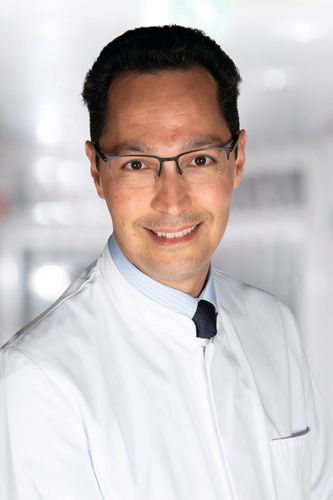
PD Dr. med. Patrick Vavken is a leading orthopedic surgeon and traumatologist at the ADUS Clinic in Dielsdorf, where he serves as chief physician. With extensive training in Austria, the United States, and Switzerland, he specializes in the treatment of shoulder and elbow conditions as well as sports medicine. His expertise encompasses both minimally invasive and joint-preserving procedures, with a particular focus on treating joint instability and hypermobility, which often occur in children and adolescents.
PD Dr. Vavken has a particular passion for regenerative and joint-preserving surgery, especially in the treatment of cartilage damage. His work aims to preserve joint function and sustainably improve his patients’ quality of life.
His international training and close collaboration with leading medical institutions, including Boston Children’s Hospital and Harvard Medical School, have given him a unique perspective and deep knowledge in sports medicine and the treatment of growth-related injuries. He applies this knowledge not only in the treatment of children and adolescents but also to adult patients, who benefit from his expertise.
Under Dr. Vavken’s leadership, the ADUS Clinic stands for first-class medical care characterized by a patient-centered and holistic treatment approach. His commitment to the continuous improvement of treatment processes and patient safety ensures that the clinic continues to operate at the highest level and provides optimal care for its patients.
The editorial team of the Leading Medicine Guide spoke with Dr. Vavken about optimal outpatient orthopedic care.

Orthopedic conditions affect the musculoskeletal system of the human body, which includes bones, joints, muscles, tendons, and ligaments. Common orthopedic conditions include injuries resulting from accidents or sports activities, as well as degenerative diseases such as osteoarthritis or osteoporosis, which can develop over the course of a person’s life. These conditions often lead to pain, limited mobility, and a reduced quality of life. Thanks to modern medical advances, there are now a wide variety of outpatient treatment options that make it possible to treat many orthopedic conditions effectively and gently. These include minimally invasive procedures, physical therapies, and regenerative methods aimed at supporting the body’s natural healing process and avoiding surgical intervention whenever possible.
Over the past 10–15 years, medicine has changed significantly, leading to an increasing number of procedures that can be performed on an outpatient basis.
Outpatient Treatment in Switzerland
In Switzerland, outpatient treatment is fully covered by health insurance companies. The costs of inpatient stays are shared between insurance companies (45%) and cantons (55%). It is therefore clear that policymakers have a strong interest in promoting outpatient care.
“In any case, it’s clear that most patients welcome outpatient treatment. They are reluctant to spend time in a hospital, worried that they might catch an infection there. Outpatient treatments are certainly possible. I spent quite some time in the U.S., and there, 99.99% of treatments were performed on an outpatient basis, which was also great for us doctors, since after seeing the last patient of the day, we could simply go home without having to schedule long rounds or deal with inpatient issues,” explains Dr. Vavken, before we really dive into the topic and explore the question of why so many treatments are now possible on an outpatient basis in the first place:
“All in all, we doctors have all become much better at what we do. For example, we can administer deep anesthesia and wake the patient up at exactly the right moment without them feeling unwell for days due to the amount of anesthesia. We also have a much better understanding of and more options for effective pain management. For example, in pain management using catheters, elastomer—a flexible, rubber-like material—can function as an elastic balloon inside the pain pump, delivering the medication evenly into the catheter and thus into the patient’s body. From a purely surgical perspective, of course, a great deal has changed. Just consider, for example, how cruciate ligament surgery was performed 15 years ago—the entire leg was cut open from the hip to the ankle. Today, there are only two small incisions, and the surgery no longer takes four hours, but just 45 minutes. Thanks to all these improvements—in terms of surgery duration, pain, and so on—surgery is no longer as traumatic and dramatic an experience as it was 10–15 years ago. On top of that, everyone would rather be at home than in a hospital. After all, you can recover on your own couch in the comfort of your own home.”
Technologies such as endoscopic procedures and robot-assisted surgery have made it possible to perform surgeries with greater precision and less invasiveness. These advances are supported by improved anesthesia technologies that enable a safe and rapid recovery, often without the need for general anesthesia. In addition, wound care techniques have improved. New wound care products, such as advanced wound adhesives and fast-healing sutures, help patients recover more quickly. Improved patient management strategies allow for effective monitoring even after the procedure, making outpatient procedures safer.
In orthopedics, numerous surgeries can be performed on an outpatient basis, made possible by the use of minimally invasive techniques and advances in medical care.
“Almost any orthopedic surgery can be performed on an outpatient basis, but not automatically for every patient. For example, if a young and fit athlete needs a new hip, a same-day outpatient procedure is theoretically possible. To illustrate this concretely: The patient would arrive at the hospital at 10 a.m. on Wednesday, the surgery would take place at 3 p.m., and he could leave the hospital at 3 p.m. on Thursday. This would then comply with the 23-hour rule, according to which this procedure would still be classified as outpatient. “For an overweight patient or someone with heart problems, such a procedure would not be possible—not even if only a minor meniscus surgery were scheduled,” explains Dr. Vavken.
To minimize the complication rate and the risk of readmissions following outpatient orthopedic procedures, both preoperative and postoperative management strategies can be optimized.
Thorough preoperative planning is crucial before the procedure. This begins with a comprehensive patient assessment, during which medical history, existing conditions, and potential risk factors are carefully examined. An individualized risk analysis helps identify patients for whom additional precautions or alternative treatment options should be considered. Providing the patient with detailed information about the procedure, postoperative care, and potential risks also helps ensure that the patient is better prepared and follows postoperative instructions carefully.
“It’s important to ensure that the patient knows what they need to do and what they can do once they’re home after outpatient surgery. And as a doctor, you have to trust the patient to do this. That requires thorough counseling before the procedure. What’s ultimately missing in outpatient care, of course, is empathy, so you have to think ahead in this regard. And that also involves seemingly small details. For example, a patient shouldn’t wear tight jeans to an outpatient knee surgery because they wouldn’t be able to get back into them right after the procedure. We must ensure that such details are explained to the patient beforehand. For me as a surgeon—speaking from the other side—it doesn’t matter whether I’m performing outpatient, inpatient, or short-stay surgery. Ultimately, I have to ensure that I’ve done everything correctly and decide whether I can actually send the patient home. In this regard, the anesthesiologist actually has to consider more factors and faces greater demands, since they are responsible for stabilizing the patient and must also ensure that the patient wakes up safely and that the nausea that often accompanies the procedure is under control. The patient, of course, also has certain expectations—after all, they pay their health insurance premiums. On the other hand, I often have to really convince patients to be admitted to the ward if there are any uncertainties,” explains Dr. Vavken.
Several strategies are important in the postoperative period.
“Typically, we schedule the first postoperative follow-up—which also includes suture removal—about two weeks after surgery. The patient’s primary care physician can also handle the suture removal, since it’s medically sufficient for me to see the patient again only after six weeks. By then, the patient should have gotten past the initial phase of healing pain and may even have had a few physical therapy sessions—which gives me a much more productive basis for discussion with the patient. Should minor wound bleeding or irritation occur in the meantime, the patient can, of course, be seen on short notice. We put together so-called “packages” for our patients so they know what to do and when. Each patient receives a concise PDF containing all the information they need. This starts with the registration form for the surgery, followed by an informational section, a doctor’s note regarding their medical status, the prescription for health insurance, instructions for physical therapy, and a recommended code of conduct for the patient. This way, the patient knows exactly how to handle things like bandages or pain medication, for example, and when they’re allowed to shower, drive, and so on. About 90% of all questions are answered in these packages. The package also includes a list of emergency phone numbers. “It’s important that the patient doesn’t feel left alone. Often, the questions a patient has are quite simple and human,” explains Dr. Vavken.
Postoperative pain and inflammation management plays a central role. Effective pain control tailored to the patient’s needs can help facilitate recovery and reduce the risk of complications. However, it can sometimes happen that a patient must be admitted to the hospital after surgery.
Commenting on possible complications, Dr. Vavken says: “Some patients experience circulatory problems after surgery, especially older patients. Their blood pressure may be too high or too low. Of course, we don’t send patients with such a blood pressure crisis home. Other patients, including younger ones, sometimes experience an apnea episode as a reaction to the anesthesia. These patients must then be monitored for 24 hours and remain on the ward. “When I used to work at Harvard (Boston) in the U.S., we performed 1,000 procedures per year—of these patients, two to three were admitted to the hospital, while all others were treated on an outpatient basis and sent home.”
A comparison of outpatient and inpatient procedures shows that both approaches offer advantages but can have different effects on the healing process and quality of life.
Outpatient surgery is encouraged by the Federal Ministry of Health in Germany, and in Switzerland, too, many surgeries are already performed on an outpatient basis. “However, I have the impression that policymakers have not yet found a good solution for the shift toward outpatient care and that addressing this issue is still being pushed aside to some extent. After all, this also concerns patients who receive acute care and are billed via the so-called ‘short-stay DRGs.’ It’s still unclear to hospitals how to handle patients requiring short- or medium-term care. As long as a hospital earns more from inpatients than from those treated on an outpatient basis, the hospital won’t take any steps to promote the shift to outpatient care. In my opinion, it would make a lot of sense to physically separate inpatient and outpatient facilities. We need a dedicated outpatient infrastructure. Here in Switzerland, we have some huge hospitals—but that’s not what’s needed for outpatient care. All of this needs to be better organized, including the billing system. The distribution of patients should also be improved so that those requiring minor procedures are treated exclusively on an outpatient basis, those requiring major procedures are referred to an appropriate university hospital, and those requiring moderate procedures remain in the hospital as usual. In this regard, specialized centers would also be important, because treating a mix of conditions of varying severity within a single facility is challenging. One problem, however, is that everyone wants to do everything—which is partly due to funding issues and certainly calls into question the credibility of their respective areas of expertise,” Dr. Vavken points out, adding:
“Here at the ADUS Clinic, 15–20% of all procedures are performed on an outpatient basis. Now, in Switzerland (after 15 years of discussion), the Federal Council has adopted a uniform funding concept for outpatient procedures. Hospitals, however, are underfunded for inpatient care, which leads to a liquidity problem. Under the new funding model, part of the money saved is to be invested in improving inpatient care. Outpatient care definitely makes sense! Both patients and doctors approve of it. We need a sustainable approach here, because healthcare costs cannot be reduced overnight. There must be outpatient centers—it works very well in other countries!” With this wish, we conclude our conversation.
Thank you very much, Dr. Vavken, for sharing these interesting insights into the shift toward outpatient care!
Share this article
About the medical author
Alexandra Pfitzmann
Editor
Alexandra Pfitzmann – medical author: expert knowledge, professional articles and medical insights in the Leading Medicine Guide.
More about the medical author →ADUS Clinic
ProfileExpert Interviews
Read next
- Expert interview
Cardiogeriatrics: Significance and benefits in the context of hospital reform
Sep 21, 2026
Cardiogeriatrics: Significance and benefits in the context of hospital reform
Read more - Expert interview
Expert Interview with Professor Dr. Amadeus Hornemann, MPH
Sep 18, 2026
Prof. Amadeus Hornemann on Precision Medicine in Gynecology: Modern Surgery, New Techniques, Better Quality of Life
Read more - Expert interview
Expert Interview with Professor Dr. Konstantinos Anagnostakos
Sep 15, 2026
Prof. Anagnostakos on Painful Knee Replacements
Read more