Expert Interviews
Ocular Prosthetics—Fitting Glass Prosthetics: An Expert Interview with Prof. Heindl

Alexandra Pfitzmann ·
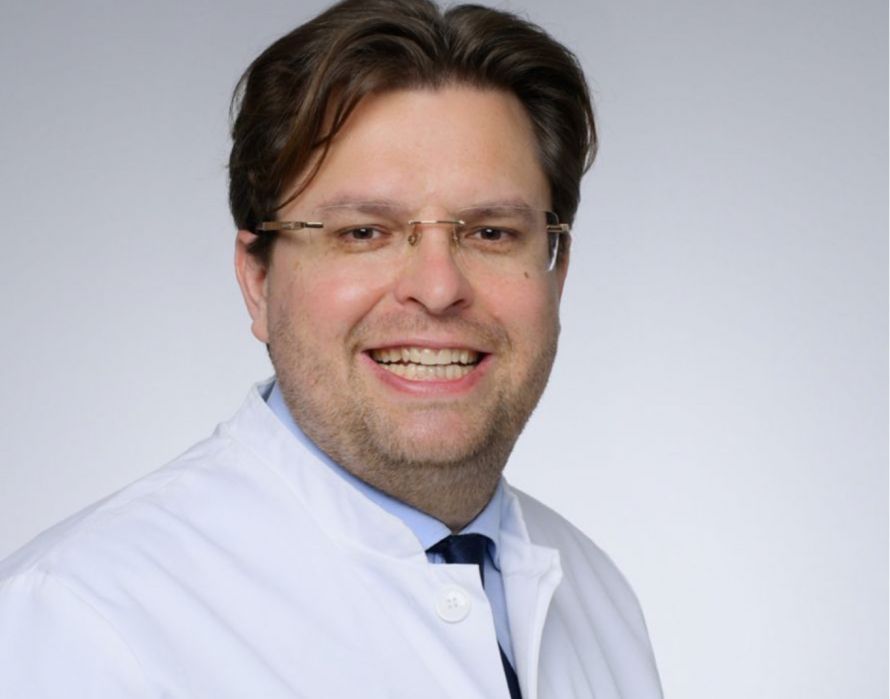
Prof. Ludwig M. Heindl, Ph.D., Ph.D., is a world-renowned specialist in eyelid, orbital, lacrimal system, and tumor surgery, as well as general ophthalmology, who works at the Center for Ophthalmology at the University Hospital of Cologne. He is an expert in his field with an excellent reputation thanks to his extensive experience and exceptional dedication to patient care. Prof. Dr. Dr. Heindl is a professor of ophthalmology and is among the most recognized experts in the field, both nationally and internationally. He is known for his innovative contributions to ophthalmic oncology and ophthalmoplastic surgery.
Professor Dr. Dr. Heindl specializes in eyelid surgery, lacrimal duct surgery, and tumors of the eyelids and conjunctiva. He is a recognized expert in the field of lacrimal duct stenosis and developed a laser-based, incision-free technology that is both successful and leaves no scarring. Through his pioneering work, he has made a decisive contribution to the advancement of minimally invasive surgical techniques, which significantly improve the patient experience. An example of his holistic approach is his interdisciplinary collaboration within the tumor board, where he works with other specialists to develop individualized treatment plans for patients with eye tumors. This holistic care aims to ensure that patients receive optimal treatment not only through surgery but also through alternative therapies such as radiation and medication.
Last but not least, the close and long-term follow-up care provided at the Cologne Eye Clinic is an example of Prof. Dr. Dr. Heindl’s commitment to always keeping his patients’ well-being in mind. With a deep understanding of eye diseases and the optimal integration of theory and practice, Prof. Dr. Dr. Heindl is an exceptional physician who provides his patients with outstanding and sustainable care. His goal is not only to meet patients’ medical needs but also to recognize and treat them as individuals with unique therapeutic needs. In this way, he ensures excellent care and helps to significantly improve his patients’ quality of life.
The editorial team of the Leading Medicine Guide spoke with Prof. Dr. Dr. Heindl to learn more about ocular prosthetics.
Millions of people worldwide are affected by various eye diseases. These can vary greatly in nature and severity, ranging from harmless visual impairments to serious conditions that can significantly impair vision and quality of life. Among the most common eye diseases are cataracts, glaucoma, macular degeneration, and tumors, which not only affect the physical health of the eyes but can also cause emotional and psychological distress. A particularly sensitive and often overlooked area in the treatment of eye diseases is ocular prosthetics. When parts of the eye or even the entire eye are lost due to injuries, diseases, or surgical procedures, this can lead to significant limitations in quality of life. In such cases, an ocular prosthesis can be an important solution that not only addresses aesthetic concerns but also offers functional and psychological benefits.
The loss of an eye can have various causes, both traumatic and medical in nature.
“The loss of an eye is often caused by severe trauma resulting from accidents at home, at work, or during sports. Another common cause of eye loss is large tumors that can no longer be treated with radiation, necessitating the removal of the eye. In addition, certain conditions, such as chronic eye diseases or severe infections, can also lead to the loss of an eye. An ocular infarction can also result in the loss of an eye and is often associated with glaucoma. An ocular infarction occurs when a blood vessel in the eye becomes blocked. As a result, new blood vessels form, leading to increased intraocular pressure and ultimately to an infarction. “It is therefore advisable to visit an ophthalmologist annually starting at a certain age and to have your intraocular pressure checked,” explains Prof. Dr. Dr. Heindl at the beginning of our conversation.
Systemic diseases such as diabetes can also play a role in some cases by causing damage to the eye’s structures. In addition, complications following surgical procedures, such as cataract surgery or retinal surgery, can result in the need to remove the eye. In rare cases, postoperative infections or other unexpected reactions can lead to irreversible damage. In all these cases, the need for an ocular prosthesis arises when an eye has had to be removed.
Prof. Dr. Dr. Heindl comments: “As a doctor, you have to approach the patient with great care, prudence, and time. And you have to distinguish between different patient groups. Trauma patients or tumor patients, for example, were until recently still seeing with the eye that is now no longer intact, so the loss of vision here is a massive turning point in their lives. Other patients, on the other hand, have already undergone numerous eye surgeries and have a long history of suffering behind them, and thus tend to view the removal of the eye as a relief. Many patients report that they should have sought removal sooner. In any case, the loss of an eye is a life-changing event—but the outlooks vary greatly.”
There are three different surgical methods for treating the loss of an eye.
“These are evisceration, enucleation, and exenteration. The three methods differ in terms of surgical procedure and indications. In evisceration, an incision is made at the junction of the cornea, and the entire interior of the eye—the choroid, retina, and vitreous—is removed; a plug is then inserted into the sclera and sutured shut like a baseball. This has the major advantage that the eye muscles do not need to be detached but remain attached to the sclera. The conjunctiva is then sutured over this, and a prosthesis is placed on top, which is significantly more mobile as a result of this procedure. However, this method cannot be used in all cases. In particular, the method does not work for tumors, as tumors have often invaded the sclera—more specifically, the scleral layer. And in the case of malignant tumors, it is absolutely essential to achieve a complete R0 resection. Therefore, in these specific cases, the second surgical method—enucleation—must be chosen. In this procedure, the conjunctiva is incised and the entire eyeball—including the sclera—is removed by severing the external eye muscles and the optic nerve. A prosthesis is then inserted into this cavity, and the eye muscles are sutured over it. With this procedure, the mobility of the prosthesis is slightly poorer than with evisceration. The third procedure is exenteration, which is used for tumors that are so large that they grow into the orbit. In this case, the orbit must be cleared down to the bone. In this case, a prosthesis is not used; instead, an epithesis is employed, which only reconstructs the appearance of the eye. If the eye has been damaged by a traumatic event, evisceration may be the preferred option. In principle, the procedures must be discussed individually with the patient. “Even evisceration, which is generally the preferred option, carries the risk of sympathetic ophthalmia—an inflammatory reaction to proteins from the other, healthy eye,” explains Prof. Dr. Dr. Heindl regarding the surgical methods.
An epithesis following exenteration of the orbit involves the insertion of an artificial eye prosthesis. It serves to reconstruct the cosmetic appearance of the face by replacing the lost eye. The prosthesis is custom-made to resemble the natural eye as closely as possible and is typically made of materials such as silicone or acrylic. It helps improve the patient’s appearance.
Glass prostheses offer a variety of advantages in ocular prosthetics that address both the aesthetic and functional aspects of ocular prosthetic care.
“The prosthesis, which is placed on the conjunctival stump, is commonly made of glass in Germany. This glass, known as cryolite glass, is manufactured specifically in Germany; it is characterized by its exceptional hardness, chemical resistance, and smooth surface, and is custom-fitted. Due to events during and after World War II, the supply of glass from Germany was cut off. Other countries were therefore forced to find a replacement for the glass, and the plastic PMMA (polymethyl methacrylate) was developed. As a result of this development, German-speaking countries continue to use glass primarily, while the rest of the world uses plastic. Numerous studies comparing the two materials have been conducted, all of which concluded that glass is significantly superior to plastic, leading scientists to recommend glass as well. Glass is also far superior in terms of aesthetics, as its reflection most closely resembles that of the human cornea. “Glass is also better tolerated than plastic, which significantly minimizes the risk of inflammation and results in fewer overall complaints for patients,” says Prof. Dr. Dr. Heindl regarding the high quality of glass eyes, adding:
“The glass prosthesis should be replaced once a year because the surface becomes rougher due to tear flow. The plastic prosthesis, on the other hand, must be sanded down after one year, and overall, the patient keeps their plastic prosthesis for about four to five years. Plastic certainly has its place—glass can break if the prosthesis is dropped while being cleaned, for example, though this is extremely rare. If the patient participates in a contact combat sport, I would tend to recommend plastic. However, glass is clearly the superior material.”
The fitting process for an ocular prosthesis is a meticulous, multi-step procedure designed to ensure an optimal fit and a natural appearance.
This process typically begins with an initial consultation, during which the patient is informed about their individual needs, expectations, and wishes. Medical aspects, such as the cause of vision loss and the patient’s overall health, are also discussed.
“Trained prosthetists are the ones who make the prostheses—the training for these so-called ocularists takes five to seven years before they can fit ocular prostheses. To manufacture an ocular prosthesis, the eye socket must be analyzed to identify its specific contours. The prosthesis is then individually customized in size and shape for the patient using semi-finished prostheses—about the size of a ping-pong ball—so that it fits perfectly into the eye socket. The color of the other eye is, of course, also taken into account and selected accordingly,” explains Prof. Dr. Dr. Heindl.
Once the final prosthesis is complete, another fitting takes place. During this step, the prosthesis is inserted into the eye socket and checked once again for fit, comfort, and aesthetics. The prosthesis should fit comfortably and cause no irritation. Follow-up care is also an important part of the fitting process. The patient is instructed on how to properly care for and clean the prosthesis to maximize its lifespan and ensure hygiene. In addition, regular checkups are conducted to ensure the prosthesis continues to fit optimally, as anatomical conditions can change over time. If necessary, adjustments or even replacement of the prosthesis may be required to ensure continued good functionality and aesthetics.
“At first, every patient is naturally afraid of having the eye removed and of the potential cosmetic disfigurement associated with it. However, this fear eventually gives way to the fear of losing vision in the other eye. So after the surgery, aesthetics are no longer the problem—it’s the concern for the other eye. And this is exactly where you have to engage the patient,” notes Prof. Dr. Dr. Heindl. Of course, there are also some risks. The eye specialist comments on this: “Especially in younger patients, the eye socket can scar. In addition, a loss of volume can occur because the eye socket collapses. In this case, fat must be transplanted. Then there is ‘Dry Eye Socket Syndrome,’ a condition where the eye is too dry even on the side with the prosthesis, which is why we very often prescribe artificial tears to patients.”
The care and maintenance of a glass eye prosthesis are crucial for maximizing its lifespan and minimizing the risk of infections or other complications.
Regular and careful care not only ensures that the prosthesis looks aesthetically pleasing but also contributes to the health of the surrounding tissue. “In the past, it was recommended to wear the prosthesis only during the day and remove it at night, which is a no-go today because the eye socket can then become overgrown. We know better now. The ocular prosthesis should be worn continuously. Recommendations regarding regular cleaning have also changed. The prosthesis should remain in the eye socket for as long as possible, since cleaning it too frequently can wash away healthy bacteria and thereby alter the eye socket’s microbiome. Some patients are completely satisfied wearing the prosthesis continuously for half a year, while others clean it once a week or once a month—it varies greatly from person to person. In the U.S., even longer wearing periods are recommended, and I, too, advise my patients to leave the prosthesis in the eye for as long as possible,” advises Prof. Dr. Dr. Heindl, briefly explaining the cleaning procedure: “To remove the prosthesis from the eye socket, there’s a small suction cup that’s placed over the prosthesis, allowing the patient to simply pull it out. The eye socket is lined with conjunctiva—so the patient doesn’t see an empty hole when looking with their healthy eye. Nevertheless, patients often have significant anxiety about this, and the entire process is, in a sense, an intimate act.”
3D Printing of Ocular Prostheses: Hype, Challenges, and the Indispensable Role of Ocularists
“Two to three years ago, there was a real buzz surrounding the creation of ocular prostheses using 3D printers. England, in particular, drove this development forward significantly with a startup—a company that no longer exists. The core problem, however, is that while 3D printing for plastic prostheses is an interesting idea, the individual customization of the eye socket poses a particular challenge. The shape of the eye socket must be precisely captured. This is difficult because both the eyelids and the eye socket itself are movable. MRI or CT scans are of no help here, as they cannot fully capture the dynamic nature of the eye socket. Theoretically, a prosthesis could be produced using 3D printing, but the result would then have to be extensively adjusted and refined by hand. This is precisely why the profession of ocularist is so important and irreplaceable. In Germany, there is a professional association of ocularists that is also involved in research projects on 3D printing of ocular prostheses. “Research in this area is progressing, but at present I would advise any patient against having a prosthesis made using 3D printing,” says Prof. Dr. Dr. Heindl.
“The removal of an eye is, in and of itself, always an admission of failure. That is why it is important to develop new and even better therapeutic approaches to spare patients this painful step—the removal of an eye. As far as the manufacture of glass eyes is concerned, more groundwork needs to be done. Ocularists originally came from a craft-based background, but a study shows that an integrated care model could be the way forward. This care team should consist of ocularists, ophthalmic plastic surgeons, psychologists, and a specialized ophthalmologist who cares for the remaining eye. There could also be changes in the materials used in the future. For example, the surface of the glass could be further optimized to improve its biocompatibility—an area in which research is currently underway as well,” says Prof. Dr. Dr. Heindl. “This concludes our conversation.”
Share this article
Expert Interviews
Read next
- Expert interview
Expert interview with Professor Dr Elmar Herbst, PhD
Oct 15, 2026
Patient-centred and personalised knee surgery
Read more - Expert interview
Cardiogeriatrics: Significance and benefits in the context of hospital reform
Sep 21, 2026
Cardiogeriatrics: Significance and benefits in the context of hospital reform
Read more - Expert interview
Expert Interview with Professor Dr. Amadeus Hornemann, MPH
Sep 18, 2026
Prof. Amadeus Hornemann on Precision Medicine in Gynecology: Modern Surgery, New Techniques, Better Quality of Life
Read more