Expert Interviews
Opportunities in Bariatric Surgery: An Expert Interview with Dr. Staikov

Sabine Schneider ·
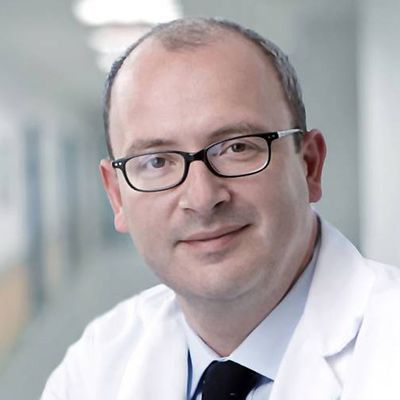
Dr. Plamen Staikov, M.D., is a highly respected specialist in general and visceral surgery and chief physician at Sachsenhausen Hospital in Frankfurt am Main. His expertise in bariatric and oncological surgery has earned him international recognition. Particularly in the field of bariatric surgery—which offers a life-changing treatment option for many severely obese individuals—he continually sets new standards, whether through innovative treatment methods or his focus on minimally invasive techniques.
As director of the Frankfurt Sachsenhausen Obesity Center, one of Europe’s most renowned centers for the treatment of morbid obesity and surgical diabetes treatment, Dr. Staikov and his experienced team offer the full spectrum of bariatric procedures. These include procedures such as gastric bypass, mini-gastric bypass, sleeve gastrectomy, biliopancreatic diversion, gastric balloon, and gastric banding. He also specializes in performing revision surgeries, which can successfully resolve complications arising from previous bariatric procedures. Many patients from around the world seek him out to benefit from his extensive experience and precise surgical technique.
In addition to bariatric surgery, Dr. Staikov is a specialist in cancer surgery. Nearly all tumor surgeries are performed at Sachsenhausen Hospital using minimally invasive techniques. In addition, the surgical team led by Dr. Staikov covers a broad spectrum of procedures, including reflux surgery, proctology, and endocrine surgery. The clinic’s state-of-the-art equipment, including a specialized surgical wing with an intensive care and monitoring unit, guarantees the highest level of patient safety and optimal treatment outcomes.
The editorial team of the Leading Medicine Guide was able to learn more from Dr. Staikov specifically about treatment options for patients with obesity.
Obesity is a chronic condition characterized by excessive accumulation of body fat and can lead to a variety of health problems. It is considered one of the greatest health challenges of the 21st century and is a major risk factor for numerous diseases, such as cardiovascular disease, type 2 diabetes, joint problems, and certain types of cancer. Despite the widespread recognition that a balanced diet and regular exercise are essential measures for managing obesity, treatment for severe obesity often requires more intensive medical intervention. In this context, bariatric treatments, such as gastric bypass or sleeve gastrectomy, have gained in importance. These procedures offer patients the opportunity to lose a significant amount of weight and thereby improve their quality of life.
“A major challenge in Germany is for people suffering from obesity to gain access to treatment at all. When it comes to treatment eligibility criteria, Germany lags far behind other countries and falls short in international comparisons. Health insurance companies require a BMI of 50 to guarantee coverage. Consequently, this means that patients in Germany are older and sicker than those who undergo surgery in our neighboring countries. We have more than 60 years of experience in bariatric surgery—in the past, the primary goal was to achieve weight loss, and today the focus is on regulating metabolism, particularly with regard to type 2 diabetes. “Metabolic disorders can also be effectively treated with bariatric surgery,” explains Dr. Staikov at the beginning of our conversation.
There are three standard methods in bariatric surgery:
“First and foremost is sleeve gastrectomy, which has been around for two decades now and is the most commonly performed procedure worldwide. By reducing the size of the stomach by approximately 80%, this method has a simple mechanism of action. This reduces the amount of calories consumed, resulting in a calorie deficit over a period of more than a year, which leads to weight loss with few to no side effects. The second standard procedure is the Roux-en-Y gastric bypass, the oldest bariatric surgery, which has been in use for 60 years. This surgical procedure offers particular benefits for patients who have long suffered from diabetes. It is also recommended for patients who have severe gastroesophageal reflux disease prior to surgery, a condition that can cause not only heartburn but also inflammation of the esophagus,” explains Dr. Staikov, adding:
“Over the past 10 to 15 years, a third surgical procedure has been introduced in Germany—one that has actually been in use for about 25 years: the single-anastomosis bypass, also known as the omega-loop bypass or mini-bypass. In this procedure, the stomach is reduced in size by creating a narrow tubular pouch. This pouch is connected directly to a loop of the small intestine, thereby bypassing a portion of the small intestine. The single anastomosis means that only one suture site is required between the pouch and the small intestine, which makes the procedure technically simpler. The surgery yields very good results in terms of weight loss and the treatment of comorbidities. However, some patients experience complications after the surgery, such as bile reflux. In this case, bile enters the stomach through the connected small intestine loop, irritating it and potentially leading to the formation of ulcers that require treatment. “Therefore, the surgery is the first step, followed by close monitoring and close collaboration between the patient and the doctor.”
The choice of the appropriate procedure depends on individual factors such as the degree of obesity, comorbidities, and the patient’s lifestyle. At the same time, careful preparation is crucial for the success of the surgery. Comprehensive medical evaluations are conducted beforehand to rule out potential contraindications, such as untreated eating disorders or serious medical conditions. Psychological counseling ensures that patients are emotionally stable and aware of the lifelong changes the procedure will require. Nutritional counseling also plays a central role, as patients must learn to adjust their eating habits even before surgery—for example, by eating smaller portions and following a high-protein diet. In addition, a preoperative diet is often recommended to reduce liver size and facilitate the surgery. During this preparatory phase, doctors, psychologists, dietitians, and other specialists work together in an interdisciplinary team to determine the most appropriate surgical method for each individual. Patients must also be thoroughly informed about the risks, benefits, and necessary lifestyle adjustments following surgery. Bariatric surgeries are therefore not merely surgical procedures but part of a comprehensive treatment approach that requires careful preparation, the selection of the appropriate method, and lifelong follow-up care to ensure long-term success.
Medical tourism has increased in recent years.
For cost reasons, some patients from Germany choose to have surgery abroad. “Having surgery performed abroad almost always leads to problems. This is because, as a rule, the necessary follow-up examinations cannot be carried out, since it is difficult for the patient to visit the treating physician regularly. Although some checkups can now be conducted online to some extent, when problems arise, patients in Germany go to a doctor. Here in the Rhine-Main region, we have many of these patients who, for example, had surgery in Turkey but come to us for revision or follow-up surgery—sometimes as emergency patients, sometimes on a scheduled basis. This then leads to entirely legitimate issues with health insurance, since the initial treatment took place abroad. Patients must not forget that all surgeries can also have long-term effects that may not appear until years after the procedure. This can lead to lifelong problems, particularly in the form of deficiency symptoms (iron/vitamins), which can be prevented through regular checkups. In addition, there are potential mechanical issues that may require a second surgery, such as reflux with heartburn as a symptom. This is a relatively common problem following sleeve gastrectomy. If conservative measures do not help, the sleeve gastrectomy must be surgically revised. “It is therefore always best to ensure that the treating physician can be consulted again,” advises Dr. Staikov.
There is a measurable increase in obesity among adults in Germany—over 65% among men and over 40% among women. This means that more than a quarter of adults are morbidly obese.
“The worst part is actually the rise in childhood obesity across all industrialized countries. Generally speaking, there are few treatment approaches in Germany for obesity patients that are effective on a nationwide scale. Of course, there are conservative and surgical approaches, but it’s always difficult for patients to find an individually tailored solution for this condition that’s easily accessible. After all, it’s not enough to simply tell patients to eat less and exercise more. It is necessary to guide patients toward a treatment that has been proven to be effective in the long term. To achieve this, patients need partners in their treatment—such as nutritionists, sports medicine specialists, psychologists, behavioral therapists, physical therapists, and surgeons. Unfortunately, health insurance companies in Germany cover the costs for these services too late. The countries around us—such as Switzerland, the Benelux countries, or Scandinavia—take action much earlier. It is a significant advantage for patients to undergo surgery sooner. After all, the timing of the surgery is always the top priority in order to achieve the best possible outcome for patients. Of course, all necessary measures must be taken before surgery, such as preliminary consultations and preoperative treatments by various specialties (psychology, endocrinology, etc.). However, waiting times for the necessary appointments are currently getting longer and longer in Germany, and unfortunately there is no prospect that this will improve in any way over the next ten years, as our healthcare system has fallen so far out of balance. In addition to structural problems, the main issue is the shortage of staff across all areas. “Germany was also the last country to define obesity as a disease in 2022—that is shameful,” states Dr. Staikov.
Of course, the goal is for every patient to receive the help they need to regain their health.
“We can identify two groups. One group consists of patients for whom surgery is the only option. If all criteria are met, the surgery is performed with costs covered by the respective health insurance provider. Then there is the group of patients who fall into a gray area. They are severely and pathologically overweight—for example, with Class II obesity (BMI 35–40)—and some already have significant comorbidities, yet they do not meet the criteria for coverage by health insurance providers. For these patients, there is the option of undergoing the necessary surgery by providing proof of six months of conservative treatment and taking a slight detour to reach that point. At our center, we offer everything—from nutritional counseling to behavioral therapy—to carry out the six-month conservative therapy. We treat patients from all over Germany, but this complicates the logistical implementation of the therapy. The fact that digitalization in Germany has not yet been sufficiently developed adds to the challenges. Parts of the treatment could theoretically be carried out digitally or via media, but German laws are too complicated, and data protection regulations also pose significant obstacles. Unfortunately, as with so many things, efforts to improve these conditions fail due to a lack of funding,” criticizes Dr. Staikov, adding:
“We try to find a way forward and a good solution with every patient. Of course, it’s always easiest when the patient can be integrated into our center, since we offer the full range of necessary treatments. Many patients have serious comorbidities that must be evaluated before surgical obesity treatment, and many find this process overwhelming. We can organize all the necessary steps for the patient right here in-house—to that end, we developed a concept in 2017 that facilitates all the necessary medical evaluations so that patients can be helped here.”
Nutrition plays a key role in long-term success.
Immediately after surgery, patients undergo a gradual transition from a liquid diet to pureed foods and then to solid foods. In the long term, a protein-rich, balanced diet with reduced fat and sugar content is recommended, as this supports weight loss and helps prevent the onset of dumping syndrome and other digestive problems. Sticking to small portions and practicing mindful eating are crucial for preventing overeating and minimizing the risk of regaining weight. Lifestyle changes are equally important. Regular physical activity supports weight loss, improves muscle mass and metabolism, and contributes to long-term weight stabilization. Psychological support, such as behavioral therapy, can be helpful in managing emotional eating patterns and promoting motivation. Self-help groups or weight-management programs offer additional support.
“Eating culture is a crucial factor. With children, for example, we still have the opportunity to influence whether or not they will become overweight later in life. A nationwide program for schools would make sense here, ensuring that sufficient physical activity is included in the daily schedule—every single day! All children should be required to participate in some form of physical education. Unfortunately, our children are getting fatter and fatter. Physical education classes are canceled far too often. We have a duty to create the best possible conditions for our children!” Dr. Staikov argues emphatically.
Weight-loss injections, such as those containing the active ingredients semaglutide (e.g., Wegovy) or tirzapatide (e.g., Mounjaro), offer patients with obesity a way to reduce their weight pharmacologically. These medications, which act as GLP-1 receptor agonists, promote a feeling of fullness, reduce appetite, and in many cases stabilize blood sugar levels.
“Weight-loss injections are playing an increasingly important role. However, anyone considering taking them needs to know one thing: These injections are designed so that once you start, you don’t stop. It is a lifelong therapy, as there is an 80 percent chance of experiencing the yo-yo effect if treatment is discontinued. They produce good results—up to 20 percent of total body weight can be lost. However, they are not suitable for all patients. They are best suited for people who are not yet extremely overweight and who have a realistic chance of either reaching a normal weight or at least getting close to it with the injections. In most cases, these patients’ BMI falls between 28 and 35. Currently, the treatment often fails because health insurance companies do not cover the cost of the injections, and the costs remain very high (approximately 300 euros per month). This situation is expected to stabilize somewhat in the coming years, and it would be desirable for the treatment to become accessible to the general population by then. In the U.S., the treatment is more accessible, and approximately 20,000 to 40,000 people start it there each week,” says Dr. Staikov, who concludes by sharing a few more thoughts:
“There needs to be a shift in thinking in Germany—we now have over eight million people with diabetes, and 80 to 90 percent of them are overweight. The associated costs of obesity are enormously high and continue to rise every year. If we don’t positively influence the next generation from the very beginning, the situation will only get worse, because eventually no one will be able to bear the costs. There are also too few obesity specialists for the number of patients.”
Thank you very much, Dr. Staikov, for your candid remarks on obesity and its treatment!
Share this article
Expert Interviews
Read next
- Expert interview
Expert interview with Professor Dr Elmar Herbst, PhD
Oct 15, 2026
Patient-centred and personalised knee surgery
Read more - Expert interview
Cardiogeriatrics: Significance and benefits in the context of hospital reform
Sep 21, 2026
Cardiogeriatrics: Significance and benefits in the context of hospital reform
Read more - Expert interview
Expert Interview with Professor Dr. Amadeus Hornemann, MPH
Sep 18, 2026
Prof. Amadeus Hornemann on Precision Medicine in Gynecology: Modern Surgery, New Techniques, Better Quality of Life
Read more