Expert Interviews
PD Dr. med. Stefan Rahm on Femoroacetabular Impingement: Coxarthrosis and Reasons for Revision Surgery

Alexandra Pfitzmann ·
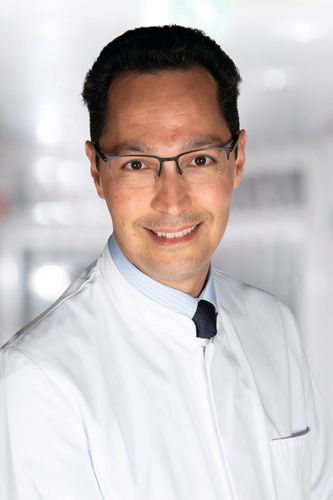
PD Dr. med. Stefan Rahm is a specialist in orthopedic surgery and musculoskeletal traumatology with proven expertise in hip and pelvic surgery. As a partner at the Zurich Joint Center at the Bethanien Private Clinic, he treats patients with a wide range of hip-related conditions—from joint-preserving procedures to complex revision surgeries.
His medical career has taken him to several leading Swiss hospitals, including the Balgrist University Hospital and the St. Gallen Cantonal Hospital. He completed his habilitation in orthopedic surgery and traumatology of the musculoskeletal system in 2019 at the University of Zurich. A particular focus of his work is on hip surgery aimed at preserving joint function—such as the arthroscopic treatment of deformities—as well as on the minimally invasive implantation and revision of hip prostheses. In doing so, he combines modern surgical techniques with personalized, patient-centered care. In addition to his clinical work, PD Dr. Rahm is also deeply involved in research.
His research has been published in numerous international journals, and he regularly serves as a speaker and reviewer. He provides treatment both at the Bethanien Private Clinic and at public hospitals in the Zurich area.
The editorial team of the Leading Medicine Guide spoke with hip specialist PD Dr. Rahm about the various causes of hip pain, the need for joint replacement, and any necessary revision surgeries.

The hip joint is subjected to enormous stress in everyday life—which makes an early and precise diagnosis all the more important when symptoms arise. Among the most common causes of hip pain are femoroacetabular impingement (FAI) and coxarthrosis. While FAI primarily affects younger, active people and, if left untreated, can lead to premature joint wear, coxarthrosis is a degenerative disease that usually occurs in older adults. In both cases, surgical treatment may be necessary. Even after hip replacement surgery, complications can arise over time that necessitate what is known as revision surgery. A nuanced assessment of the causes, diagnostic approaches, and treatment options is therefore essential for sustainable care.
Femoroacetabular impingement (FAI) is a condition of the hip joint in which an anatomical abnormality restricts normal mobility and causes pain. Typically, there is an abnormality in the acetabulum (pincer type) or the femoral head (CAM type), which causes the articular cartilage and the labrum to become pinched when the hip joint is flexed or rotated. This chronic friction or repeated impact can lead to cartilage damage over time and ultimately to osteoarthritis of the hip joint.
In femoroacetabular impingement (FAI), specific structural changes in the hip joint cause a mechanical collision between the femoral neck and the rim of the acetabulum during certain ranges of motion.
“The typical patient with femoroacetabular impingement is usually a young person, typically between the ages of 18 and 25, who likely participates in sports such as soccer, karate, or ice hockey. At first, they notice a feeling of tightness in the groin, which initially occurs only during training or a game. Over time, this pressure in the groin becomes noticeable even during prolonged sitting; it simply feels tight there, accompanied by mild pain in the groin area. This pain usually subsides when the leg is moved and the person stands up. The symptoms often worsen, and at some point, the patient seeks medical attention. Through a clinical examination and analysis of the symptoms, it is usually possible to determine that the cause lies in restricted internal rotation in the 90-degree flexion position, causing the narrowing to become symptomatic and trigger discomfort. In addition, an X-ray can clarify the diagnosis even further, as it reveals the oval shape of the bone at the junction between the femoral head and the femoral neck. This allows for a definitive determination that impingement is present. For a three-dimensional assessment of the problem, arthro-magnetic resonance imaging (arthro-MRI) is often performed—that is, an MRI scan using contrast dye injected into the joint. This allows for a precise assessment of the condition of the cartilage and whether the labrum—the joint rim—is already damaged. “Especially in symptomatic patients, it is usually found that the labrum is torn in the upper lateral region, which is explained and caused by premature, repetitive impact of the femoral head-neck junction against the rim of the acetabulum,” explains PD Dr. Rahm, adding:
“The difference is that the labrum is a ring of cartilage that serves a different function than the articular cartilage itself. If the labrum is damaged due to overuse, this is not directly related to osteoarthritis or a pre-osteoarthritic condition. Rather, it is a localized injury around the hip joint that, when treated correctly (hip arthroscopy with femoral neck reshaping, acetabular rim trimming, and labral repair), can heal very well. This is referred to as a “reparative surgery,” in which a perfectly functioning joint is created following a successful procedure, and the chances of a long-term outcome—that is, 20 to 30 years—are very high. This type of hip surgery (hip arthroscopy with labral repair) has only been available since around 2010. In the past, open surgical hip dislocation was the standard approach, but with the development of hip arthroscopy—that is, minimally invasive joint surgery—the open surgical method has been almost completely replaced. The current technique has been in use since around 2010, allowing the labrum to be sutured precisely and the transition between the femoral head and the femoral neck to be treated optimally.” In the early days of hip arthroscopy, the labrum was removed because it was not yet technically possible to reattach it. 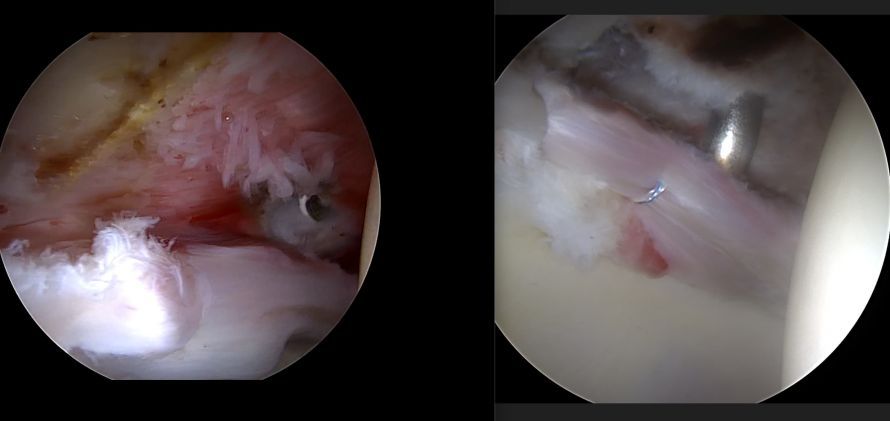
The clinical examination, X-ray, and MRI usually provide sufficient information to assess the situation.
“Sometimes I supplement the diagnostic workup with a 3D CT scan to obtain a more precise overview. If the clinical findings are inconsistent or the situation appears complex, I use this additional imaging method to better understand where all possible interventions are necessary. Especially in cases of pronounced impingement configurations, 3D-CT provides a detailed overview of which areas need to be treated or adjusted during surgery. Another important aspect of the examinations is that the knee is included in both the MRI and the CT scan to measure femoral torsion. Femoral torsion is a decisive factor in impingement: if it is very low—especially below zero—this is referred to as retro-torsion. This can cause impingement on its own, even without pronounced CAM or pincer impingement. In such cases, this is difficult to correct arthroscopically. Open surgery may be considered, in which the torsion is corrected via a so-called subtrochanteric, femoral, anteverting rotational osteotomy. The severity of cartilage damage in the joint is the most important prognostic factor for the long-term outcome of joint-preserving hip arthroscopy. In young patients, around 20 years of age, hip arthroscopy is usually still performed, even if cartilage damage is already present. Even in 30-year-olds, the goal is to preserve the joint as much as possible if the extent of the damage allows it. In older patients, aged 40 and above, there is a risk that the prospects for a satisfactory outcome following a joint-preserving procedure are significantly limited because the damage is too advanced. In such cases, hip arthroscopy is usually no longer advisable, as the actual benefit to the patient is too small—since coxarthrosis is already present, a condition that even cartilage surgery techniques cannot address. Instead, one should then consider a total hip replacement, the outcomes of which are excellent today across all age groups. Age and the extent of joint damage are therefore the most important prognostic factors: “In younger patients, joint-preserving surgery is always preferable; in older patients, joint replacement is generally preferred, as this offers the highest chance of long-term, good function,” says PD Dr. Rahm.
Patient-specific factors that increase the risk of a subsequent revision surgery following hip replacement are diverse and relate to both physical condition and lifestyle habits as well as comorbidities.
Relevant risk factors include, among others, young age, a high level of physical activity, pronounced anatomical deformities, obesity, and systemic diseases such as rheumatoid arthritis or diabetes mellitus. Poor bone quality, for example due to osteoporosis, can also increase the risk of loosening or periprosthetic fractures. Pre-existing infections, previous surgery on the affected hip, or suboptimal muscle strength and muscle imbalance following the initial surgery also play a role.
“As a rule, today’s hip replacements are extremely durable, so the need for revisions is rather rare. Nevertheless, there are specific risks that must be taken into account during revision surgery. These procedures require a significantly higher level of expertise, as they are more complex and must be planned with precision. For revisions, it is important to choose the correct approach, and anterior approaches have proven effective here because muscles or tendons do not need to be cut, allowing for faster healing. However, the first few weeks following revision surgery should be managed with caution to optimally promote the integration of the new prosthesis. Generally, the postoperative recovery period after revision surgery takes longer than after primary hip replacement. In most cases, sports may not be resumed until several months later, once the prosthesis has healed well, the X-ray appears normal, and the patient is satisfied. If this is the case, there is a good chance that the prosthesis will last a very long time—perhaps even a lifetime. The materials used today, such as highly cross-linked polyethylene and ceramic heads, are very durable, even though we do not yet have 30-year data to support this. Nevertheless, the results so far are so convincing that, provided the first year goes well, problems are highly unlikely,” explains PD Dr. Rahm, adding:
“If a revision does become necessary—for example, due to loosening or wear—it is usually a clear indication for surgery. Such cases are, however, very rare. To detect such long-term complications early, I see my patients every five years for a checkup, including an X-ray. In the event of a revision, I can usually use the same approach—that is, the anterior approach—and replace only individual components, such as the head or the polyethylene liner. This allows for short, straightforward procedures that are usually very effective and get patients back on their feet quickly. To prevent the risk of revision surgery, careful preoperative planning is essential. This includes detailed imaging diagnostics, precise prosthetic alignment that takes individual anatomy into account, and, if necessary, preoperative measures to optimize bone health or achieve weight loss. Structured postoperative rehabilitation, including targeted muscle strengthening and training in joint function, also contributes significantly to the stability and longevity of the prosthesis. In the long term, patient-specific education on joint-protective behavior and potential warning signs also plays a central role in detecting complications early and avoiding revision surgery whenever possible.” 
The surgical strategies for primary hip replacement differ significantly from those used in revision arthroplasty in several respects—both in terms of technique and complexity as well as in terms of postoperative outcomes.
In primary hip replacement, the focus is generally on a well-defined surgical procedure using standardized implants and techniques. In most cases, the anatomical structures are still largely intact, which allows for more precise implant positioning and relatively predictable biomechanics. Modern minimally invasive techniques and muscle-sparing approaches can further facilitate postoperative rehabilitation and reduce the risk of complications. The functional outcome for primary implantations is generally very good, with high patient satisfaction and a long prosthesis lifespan. In contrast, revision arthroplasty is characterized by significantly higher surgical demands.
PD Dr. Rahm comments: “Revisions always present a special challenge because they are a kind of black box—you can’t accurately identify the problems until during the procedure. That’s why thorough preparation for all possible scenarios is essential. You have to be prepared for the possibility, for example, that the stem is loose, that there is more wear, or that the cup also needs to be replaced because it is damaged or no longer holds properly. It is also important to have all available implants and materials on hand in the operating room in advance so that we can respond flexibly. However, sometimes other solutions are needed, such as filling with bone graft material to stabilize bone loss (osteolysis). Furthermore, different acetabular roof cups, screw-fixation or cemented stems, as well as longer revision stems, are part of the planning to cover all contingencies. Another important consideration in revision surgeries is scar tissue. One in every two surgeries is affected by scar tissue, which often impedes visibility and access. Therefore, it is crucial to review the surgical report from the initial surgery, if it is still available. Sometimes it can still be found or requested. This allows one to determine where the scar is likely located and which approach is best to choose. If the initial procedure was performed via the posterior approach, it usually makes sense to choose the same approach for the revision as well. If the initial procedure was performed via the anterior approach, the decision should be made on a case-by-case basis, and one may deviate from this if the advantages of a different (non-anterior) approach outweigh those of the anterior approach in the revision scenario. It is also possible to remove a scar while working from the back and creating a small “working plane” at the front. It is important to be prepared for all eventualities and to carefully consider where the problem is likely to lie and how best to ensure a stable total hip replacement with as little soft-tissue damage as possible, so that the patient can ultimately be sent home pain-free, mobile, and satisfied.”
Early treatment of femoroacetabular impingement (FAI) can significantly reduce the risk of developing coxarthrosis later on. In FAI, anatomical abnormalities of the femoral head (Cam type), the acetabulum (Pincer type), or a combination of both (Mixed type) lead to repeated mechanical conflict between the femur and the acetabular rim. This mechanical stress leads to gradual damage to the articular cartilage and labral structure, particularly in physically active or young patients, which is considered a potential precursor to the development of osteoarthritis.
“In fact, the topic has not yet been fully clarified in the scientific literature, but there is preliminary evidence suggesting that successful impingement treatment can positively influence the course of the disease. One example is a young soccer player who undergoes surgery in a timely manner and is pain-free after treatment. During the surgery, it is also possible to directly assess the condition of the bone and cartilage tissue. However, long-term comparative studies in which 100 patients underwent surgery and were compared with another 100 who did not undergo surgery—with the results evaluated after 30 years—do not yet exist. There is growing evidence that early impingement surgery may slow the progression of osteoarthritis in the hip joint. The term “prevent” is used with caution in clinical practice because the data supporting this are not yet strong enough. It is important for patients to understand that the primary indication for surgery is to alleviate acute distress and pain. “This is because the data on slowing or preventing osteoarthritis are not yet conclusive, whereas freedom from pain after sports and exercise is a clear recommendation for early treatment,” explains PD Dr. Rahm, who also offers advice on possible preventive measures:
“Prevention of early osteoarthritis primarily involves having the range of motion of the hip joint checked by a specialist. For young patients experiencing their first twinge in the hip, a standard X-ray can provide valuable information. If the hip joint isn’t causing any symptoms, there’s a good chance it will last a long time. Many patients don’t experience pain until later in life, even though they never had any symptoms before. This shows that the hip joint often adapts to changes as long as it doesn’t cause pain. If symptoms arise, it’s important to take action early, as pain is usually a warning sign. Low-impact sports such as cycling, swimming, hiking, or walking are recommended, as they place less strain on the joint. However, high-intensity, sudden movements or sports involving abrupt stop-and-go phases—such as karate or squash—can increase the risk and should generally be avoided. As a general rule: The earlier you take care of your hip joint and take preventive measures, the better you can delay the onset of osteoarthritis and maintain your quality of life in the long term.” 
Man in the Park_AI-generated
The Joint Center Zurich is one of the leading facilities for hip surgery. Its focus is on state-of-the-art minimally invasive procedures, which account for about 80% of surgeries and enable a quick, gentle recovery. Over 95% of patients report a marked reduction in pain and a significant improvement in mobility after treatment.
“Here in Zurich, I currently perform about 200 hip replacements per year and around 80 arthroscopies. So I can say that we are highly specialized. My focus is exclusively on hip surgery; I do not operate on any other joints. This sets me apart, as I am familiar with the entire spectrum of hip medicine, including the treatment of joint deformities, joint replacement, and revision joint replacement. In today’s world, it makes sense to concentrate on one area in order to develop expert knowledge, recognize complex problems early on, and specifically avoid them,” emphasizes PD Dr. Rahm, and with that, we conclude our conversation.
Thank you very much, Dr. Rahm, for these important insights!
Share this article
Expert Interviews
Read next
- Expert interview
Expert interview with Professor Dr Elmar Herbst, PhD
Oct 15, 2026
Patient-centred and personalised knee surgery
Read more - Expert interview
Cardiogeriatrics: Significance and benefits in the context of hospital reform
Sep 21, 2026
Cardiogeriatrics: Significance and benefits in the context of hospital reform
Read more - Expert interview
Expert Interview with Professor Dr. Amadeus Hornemann, MPH
Sep 18, 2026
Prof. Amadeus Hornemann on Precision Medicine in Gynecology: Modern Surgery, New Techniques, Better Quality of Life
Read more