Expert Interviews
Precise and Rapid Skin Cancer Screening with a 360° Full-Body Scanner — Expert Interview with Prof. Bechara

Alexandra Pfitzmann ·
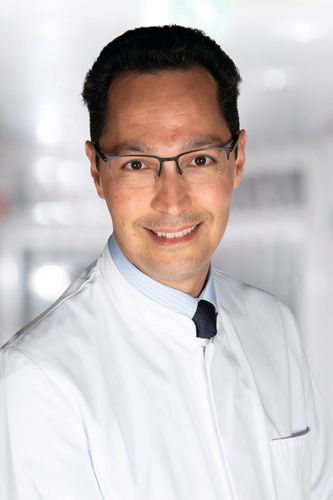
Prof. Dr. Falk Bechara is a recognized specialist in the field of dermatological surgery and enjoys an excellent reputation far beyond the Ruhr region. As Deputy Director of the Department of Dermatology and Chief Physician of the Division of Dermatological Surgery at the Catholic Hospital in Bochum, he combines the highest level of medical expertise with innovative treatment methods. His areas of expertise include the surgical treatment of skin tumors, skin cancer surgery, plastic and reconstructive skin surgery, as well as the treatment of scars and complex skin conditions such as hidradenitis suppurativa (acne inversa).
With years of experience and extensive scientific expertise, Prof. Dr. Bechara relies on state-of-the-art diagnostic and therapeutic procedures. Thorough diagnostics are always his top priority in order to detect pathological skin changes at an early stage and treat them effectively. He possesses exceptional expertise, particularly in skin tumor surgery, which enables him to diagnose skin cancer at its various stages early on and to perform individually tailored surgical treatments.
As a former president of the German Society for Dermatological Surgery (DGDC), Prof. Dr. Bechara is committed not only to patient care but also to scientific research and teaching. His close collaboration with national and international experts, as well as his active participation in scientific studies, ensure that his patients benefit from the latest developments in dermatological surgery.
As early as 2014, he was appointed an adjunct professor at the Medical Faculty of Ruhr University Bochum in recognition of his achievements and outstanding expertise. Patients who place themselves in Prof. Dr. Bechara’s care benefit from personalized and competent care based on thorough diagnostics, modern therapeutic approaches, and many years of surgical experience.
In an interview, the editorial team of the Leading Medicine Guide learned more about the development and treatment of skin cancer and about the 360° full-body scanner that Prof. Dr. Bechara uses on his patients.
Skin cancer is one of the most common types of cancer worldwide and can occur in various forms, ranging from relatively harmless basal cell carcinomas to highly aggressive malignant melanomas. What makes skin cancer particularly dangerous is that it often develops unnoticed over a long period of time and can lead to serious health consequences only in advanced stages. Yet the skin offers a unique opportunity for early detection: changes are usually visible and can be detected early through regular screenings. Skin cancer screening therefore plays a crucial role in diagnosing malignant skin changes in a timely manner and treating them successfully. Modern examination methods, such as reflected light microscopy or digital dermatoscopy, make it possible to identify even the smallest abnormalities and, if necessary, remove them at an early stage. People who have their skin checked regularly and use sun protection can significantly reduce their personal risk and maintain their skin health in the long term.
The development of skin cancer is influenced by a variety of risk factors, with excessive UV radiation considered the primary cause.
“UV radiation is still considered the most important risk factor for the development of skin cancer. However, the significance and nature of UV damage vary depending on the type of skin cancer. Non-melanoma skin cancers—such as actinic keratoses or basal cell and squamous cell carcinomas—are clearly linked to long-term, cumulative UV exposure. You can think of this as a ‘UV account’: every time you’re exposed to the sun, a deposit is made into it, and eventually the account is full—the first skin changes or precancerous lesions appear. When it comes to malignant melanoma, the evidence is more complex. While there are forms of melanoma—especially on the face—that are clearly linked to chronic UV exposure, However, many melanomas develop on parts of the body such as the trunk, arms, or legs, which are less exposed to the sun in everyday life. In such cases, it is assumed that more intense UV damage—for example, sunburns during childhood or adolescence—plays a decisive role. Another risk factor is skin type: People with fair skin, blond or red hair, and light-colored eyes are at significantly higher risk than people with darker skin. Darker skin types have a certain degree of natural protection due to a higher melanin content. A third major risk factor is a weakened immune system. People with an immunodeficiency—such as those taking immunosuppressive medications or who have undergone organ transplants—have an increased risk of developing skin cancer, particularly aggressive forms. Even for people with generally healthy skin and a healthy lifestyle, intense sun exposure—such as two weeks of intense sunbathing on vacation—can lead to long-term problems. UV protection therefore remains a key preventive measure for all skin types and age groups,” explains Prof. Dr. Bechara at the start of our conversation.
The so-called “UV debt effect” means that every sunburn increases the long-term risk of skin cancer, even if it occurred many years ago. Certain groups of people are particularly at risk. These include people with fair skin (skin types I and II), blond or red hair, blue or green eyes, and a tendency to develop freckles. These skin types have lower levels of melanin, the pigment that protects the skin from UV damage.
Those affected should regularly check their skin for changes, as skin cancer can often be detected early through noticeable skin changes.
Moles and pigmented spots in particular should be monitored, especially if they change in shape, color, or size. The so-called ABCDE rule helps identify suspicious skin changes early on. Here, A stands for asymmetry, B for irregular borders, C for varying colors within the spot, D for a diameter of more than five millimeters, and E for elevation or a changing surface.
“When noticeable skin changes occur, in many cases they are the result of a prolonged period of intense UV exposure. It is important to distinguish between basal cell carcinoma and melanoma, as they exhibit different typical symptoms. With non-melanoma skin cancer, patients often report lesions on areas of the body heavily exposed to the sun—such as the face, ears, or forearms—that repeatedly break open or form scabs. Typically, these sores appear to heal but then reappear after a few weeks or months. This recurring pattern is a classic warning sign. A simple rule of thumb is: Skin changes that do not heal completely within eight weeks should be examined by a doctor. With melanoma, however, the focus is not on a slow-healing wound but rather on changes in moles. Notable signs include an increase in size, irregular borders, or asymmetrical shapes. A mole should be roughly symmetrical—if you mentally divide it down the middle, both halves should look similar. Furthermore, most melanomas do not develop from existing moles but appear as new, dark spots on the skin. Many patients report that a spot they hadn’t noticed before suddenly appeared. Such new changes should also be evaluated by a dermatologist as soon as possible, since early diagnosis is crucial for successful treatment,” explains Prof. Dr. Bechara.
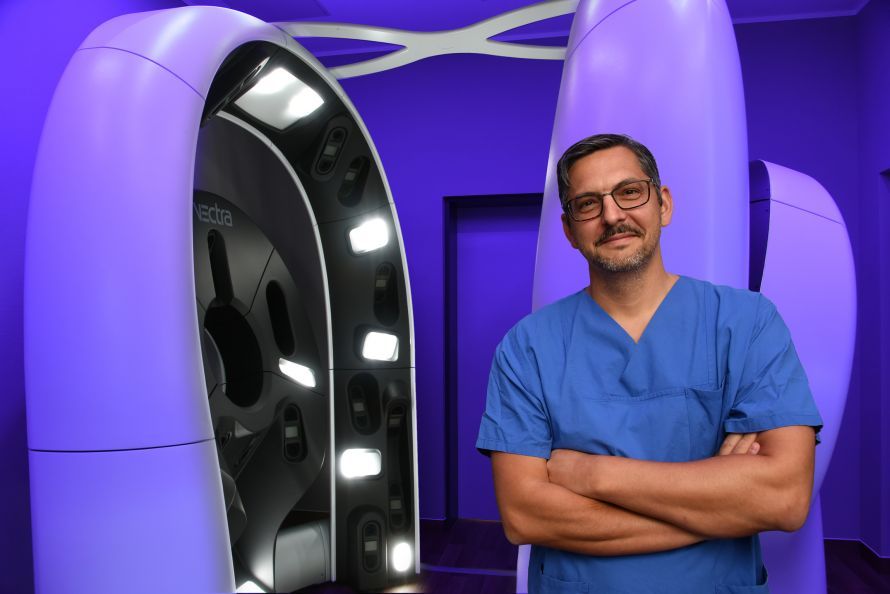
The 360-degree full-body scanner offers a state-of-the-art and more precise method for skin cancer screening compared to conventional examination with the naked eye or a dermatoscope.
“At first glance, the 360-degree full-body scanner seems a bit futuristic, but it can best be compared to the body scanners used at airports. The patient stands upright inside the device, undressed, much like one might imagine using a standing tanning bed. At that moment, over 100 high-performance cameras simultaneously capture every square millimeter of the skin. Within a few seconds, this creates a precise, three-dimensional avatar of the patient, on which all skin lesions are documented in detail. The major advantage of this technology lies in the comprehensive capture and storage of all skin areas—nothing is overlooked. It is particularly helpful that each individual skin lesion is not only recorded but also directly localized and digitally stored. The integrated artificial intelligence also performs an initial analysis of the captured lesions. Abnormal skin areas are flagged for the physician, who can then examine them more closely using a special magnifying glass or through video dermatoscopy. Here, too, AI-supported analysis is used to assess, for example, the borders, color, and structural changes of moles,” says Prof. Dr. Bechara, emphasizing:
“The real progress, however, is particularly evident in follow-up monitoring. If a patient has several hundred moles, for example, it is nearly impossible to precisely track their development over extended periods with the naked eye. At a follow-up appointment, the scanner compares all stored moles with the current ones and reliably detects whether new ones have appeared, existing ones have changed, or if any have grown in a conspicuous manner. This capability for automated long-term monitoring represents a significant advance over the traditional examination, in which the dermatologist uses a handheld magnifying glass to scan the skin for abnormalities. While this method—which remains the standard—is effective, it is significantly more limited in its ability to cover large areas of skin and allow for long-term comparability. For many patients, their last skin cancer screening may have been years ago, often performed with a magnifying glass as the doctor examined the body step by step. While this approach is still used, the limitations of this method quickly become apparent when dealing with a large number of skin lesions. The full-body scanner, on the other hand, offers a valuable complement to this approach, enabling reliable and long-term, traceable early detection of skin cancer, especially in high-risk patients.”
The device can only detect the areas of skin that its cameras can see. Areas such as the soles of the feet, skin folds, scalp hair, oral mucosa, or the genital area are not included, as they cannot be detected. “The system does not work on its own—it’s not simply a matter of the patient stepping into the device and receiving a printed report. Rather, the dermatologist must manually examine the areas that are not captured. Any suspicious lesions are then examined further using an electronic magnifying glass. The device can therefore only be used properly in combination with the expertise of a specialist. If the device or the dermatologist detects a suspicious change, there are various options for how to proceed. For minor abnormalities that do not require immediate surgery, the patient may initially be instructed to monitor the mole and return for a follow-up if any changes occur. In more serious cases, when a mole raises suspicion of skin cancer, removal is recommended. Here at our clinic, we’ve developed a unique approach: we offer “just-in-time” treatment. This means the patient comes in, and we offer to complete the entire process in a single day. Following the scan, the suspicious lesions are removed immediately if necessary. Another advantage of our system is that the pathological analysis of the tissue samples is performed right here on-site. This means the patient typically receives the results within 16 to 18 hours. Here’s an example: A patient comes in on Monday; the examination reveals three suspicious moles, which are removed that same day. The results are available as early as the next morning, and the patient is contacted immediately. This way, they quickly find out whether everything is fine or whether further steps are necessary. This procedure—in which diagnosis, surgery, and histopathological examination are completed within 18 hours—is standard practice here at the University Hospital. This is exceptional, as it often takes several weeks at other facilities for the entire process to be completed,” explains Prof. Dr. Bechara.
The 360-degree full-body scanner is particularly recommended for patients who are at increased risk for skin cancer.
If patients have many moles or a possible family history of skin cancer—such as a grandparent or sibling who has had it—the question arises as to how often they should undergo screening. “Generally, we recommend that patients with no prior history of cancer undergo regular examinations according to established protocols. For non-melanoma skin cancer, follow-up care takes place every six months for the first three years, while for melanoma, the frequency depends on the thickness of the tumor. For patients who simply have many moles or a family history of skin cancer, we recommend a checkup at least once a year. If anything unusual is discovered during one of these examinations, the established follow-up protocols come into effect, which vary depending on the findings. Of course, we hope this isn’t the case, but regular checkups are important so that we can respond early,” recommends the dermatologist.
This technology is particularly beneficial because it enables continuous monitoring of the skin, allowing small changes to be tracked over an extended period of time. In addition, people who are regularly exposed to intense UV radiation—whether at work or during their free time—also benefit from using a 360-degree full-body scanner. This includes, for example, people who work outdoors a lot or sunbathe frequently. For people who have frequently used tanning beds in the past, the scanner also offers an effective method for detecting skin changes caused by UV exposure.
St. Josef Hospital—Ruhr University Bochum Medical Center is one of the largest university hospitals in Germany, both in terms of the number of beds and its size. The hospital places a special emphasis on the treatment of skin cancer. A standout feature of the hospital is the close integration of diagnostics, surgical treatment, and histological analysis into a single step. This efficient combination, supported by well-coordinated teams, enables comprehensive and high-quality care for skin cancer patients.
There are many different opinions about how much sun is actually healthy, especially with regard to vitamin D levels.
On the one hand, you often hear that vitamin D is important and that sun exposure is generally good for you. On the other hand, people wonder how to find the right balance. There are often misconceptions about how much sunlight is necessary to maintain vitamin D levels. “If you take a closer look at the facts, you’ll find that it’s often enough to expose your hands and forearms to the sun for about 15 minutes a day. This short period of time is sufficient to maintain adequate vitamin D levels. The idea that you have to spend an hour or more in the sun to meet your vitamin D needs is therefore incorrect. Of course, the sun also has other positive effects, such as the feeling of well-being that results from serotonin production. But when it comes solely to vitamin D levels, it’s not necessary to bask in the sun for hours on end. With children, of course, the situation is somewhat different. Many people think that children get used to the sun and then no longer need protection to develop a healthy tan. Unfortunately, this is a misconception. Every sunburn and every instance of redness that one accepts in the hope of achieving a nice tan always causes damage. That’s why it’s especially important to ensure proper sun protection early on, particularly for children. “The sooner you start, the better it is for skin health,” states Prof. Dr. Bechara.
The treatment of non-melanoma and melanoma skin cancer differs primarily in terms of the type of cancer, the stage of the disease, and the patient’s overall health. In recent years, the chances of recovery have improved significantly, particularly for melanoma, thanks to new treatment methods.
Non-melanoma skin cancer, which consists of basal cell and squamous cell carcinomas, is usually treated surgically, as it generally does not metastasize quickly. In advanced cases or when the tumor is in hard-to-reach areas, radiation therapy or chemotherapy is used. Systemic therapies such as chemotherapy are rarely necessary. In contrast, the treatment of melanoma is more complex. In the early stages, the tumor is surgically removed, possibly along with adjacent lymph nodes. For advanced melanomas that have metastasized, immunotherapies and targeted therapies such as checkpoint inhibitors (nivolumab, pembrolizumab) have proven highly successful and significantly improve the prognosis, even in treatment-resistant cases.
Prof. Dr. Bechara comments: “If you look at the developments in the treatment of melanoma over the past few years, a lot has changed, especially in the area of advanced stages. Looking back 15 to 20 years, melanoma—especially in advanced forms or in cases that had already metastasized—was usually a death sentence for patients. In the past, the only hope for a cure lay in early detection and surgical removal of the tumor, which remains the best treatment option for early-stage melanoma even today. The major problem, however, was that advanced melanoma—especially when it had already metastasized—almost always led to death. But over the past ten years, treatment has changed fundamentally—and this is revolutionary. A decisive advance has been the introduction of immunotherapy, for which the Nobel Prize in Medicine was awarded. Targeted therapy has also played a major role. These two developments have completely transformed treatment options and significantly improved patient outcomes. Today, thanks to these new therapies, we can achieve long-term remissions in about half of patients with advanced melanoma. Although melanoma continues to pose a major therapeutic challenge, these advances have made it much less frightening. The results we see today would have been unthinkable just a few years ago—the progress is truly impressive and represents a real quantum leap in dermato-oncology.”
In recent years, awareness of skin protection has unfortunately declined somewhat, particularly due to the influence of social media, which glamorizes tanning and sun exposure.
“Twenty to thirty years ago, there were major public awareness campaigns that placed a strong emphasis on skin protection. In recent years, however, largely due to social media, a trend has emerged that glorifies tans and beach vacations. Unfortunately, this has led to a decline in awareness of the risks posed by the sun, especially among young people. I hope this trend will reverse and that more people will understand the importance of skin protection. As far as treatment is concerned, we’ve made great strides, especially with advanced skin cancer, where many patients can now be managed long-term with the new therapies. However, many patients still do not respond to the new medications, and there is still a great need for research in this area. It is particularly important to find solutions for these difficult cases,” notes Prof. Dr. Bechara, adding:
“There’s also a cultural shift when it comes to sun exposure. Social media, in particular, promotes a lifestyle in which the sun and a tan are seen as signs of happiness and joie de vivre. Advertisements and images from vacation destinations also reinforce this trend. People are spending more time in the sun than ever before—not just in the summer, but also during the winter, when people enjoy sitting in the sun at a café. This is generally nice, but it also carries risks if you don’t protect yourself properly. There’s nothing wrong with enjoying the sun as long as you protect yourself adequately—whether with clothing or sunscreen. The problem arises when you don’t protect yourself or expose yourself to the sun for too long, especially between noon and 4 p.m., when the sun is at its strongest. In many countries, you don’t even see locals outside during these hours, and these are important precautions that must be repeatedly brought to people’s attention. Even if we believe we have long since overcome these risks, protection from the sun remains an important challenge that must not be overlooked.” With that, we conclude our conversation.
Thank you very much, Professor Bechara, for the important information on skin cancer, the 360° scanner, and how to protect yourself from the sun.
Share this article
Expert Interviews
Read next
- Expert interview
Expert interview with Professor Dr Elmar Herbst, PhD
Oct 15, 2026
Patient-centred and personalised knee surgery
Read more - Expert interview
Cardiogeriatrics: Significance and benefits in the context of hospital reform
Sep 21, 2026
Cardiogeriatrics: Significance and benefits in the context of hospital reform
Read more - Expert interview
Expert Interview with Professor Dr. Amadeus Hornemann, MPH
Sep 18, 2026
Prof. Amadeus Hornemann on Precision Medicine in Gynecology: Modern Surgery, New Techniques, Better Quality of Life
Read more