Expert Interviews
Esophagus and Pancreas

Alexandra Pfitzmann ·
The esophagus and the pancreas are among the key organs of the digestive system—and both play a crucial role in health and quality of life. Diseases of the esophagus and pancreas are often complex, ranging from functional disorders such as heartburn to highly specialized tumor-related conditions.
Modern visceral surgery now combines minimally invasive and robotic techniques to treat these sensitive organs with precision, minimal trauma, and oncological safety.

Early symptoms of diseases of the esophagus or pancreas are often so subtle and nonspecific that they are easily overlooked in daily life or attributed to harmless causes. It is precisely this lack of clarity that leads many affected individuals to seek medical help only at a late stage—and as a result, diseases are often diagnosed at advanced stages.
“With esophageal diseases, it often becomes apparent early on that food intake is no longer functioning as usual. Many patients can barely swallow solid foods like meat and unconsciously switch to softer or liquid foods because they are easier to swallow. This change is one of the most typical early warning signs of an esophageal tumor. The situation is different with the pancreas: It is located deep within the body, and by the time a tumor there causes symptoms, the disease is often already quite advanced.
One of the first symptoms may be yellowing of the eyes, because the common duct carrying bile and pancreatic juice is narrowed by tumor growth. Those affected often do not notice this at all—it is usually others who point out the yellowing of the eyes. Unlike inflammatory processes, which can also cause bile congestion, this yellowing typically occurs without pain in the case of a tumor. Regardless of the type of tumor, many patients eventually develop what are known as “B symptoms”: unintentional weight loss, loss of appetite, night sweats, or sleep disturbances.
These symptoms are not specific to a particular organ but are typical of malignant diseases in general. Another warning sign specific to pancreatic diseases can be newly diagnosed diabetes. “Since the pancreas regulates sugar metabolism, a tumor can lead to the sudden diagnosis of diabetes—a symptom that should always be investigated, even though, fortunately, it does not always indicate cancer,” explains Prof. Dr. Bockhorn regarding the initial symptoms and describes the causes:
“The most significant risk factors for the development of esophageal and pancreatic cancer continue to be external factors such as alcohol, smoking, an unhealthy diet, and obesity. Added to this are recurrent inflammations—such as those caused by chronic reflux in the esophagus or pancreatitis in the pancreas. Genetic factors also play a role, but research is still in its early stages when it comes to reliably determining individual risk profiles.
Prevention is therefore becoming increasingly important: regular checkups with a primary care physician as well as screening tests such as gastroscopy and colonoscopy, which have been recommended for years but are still used far too infrequently.”
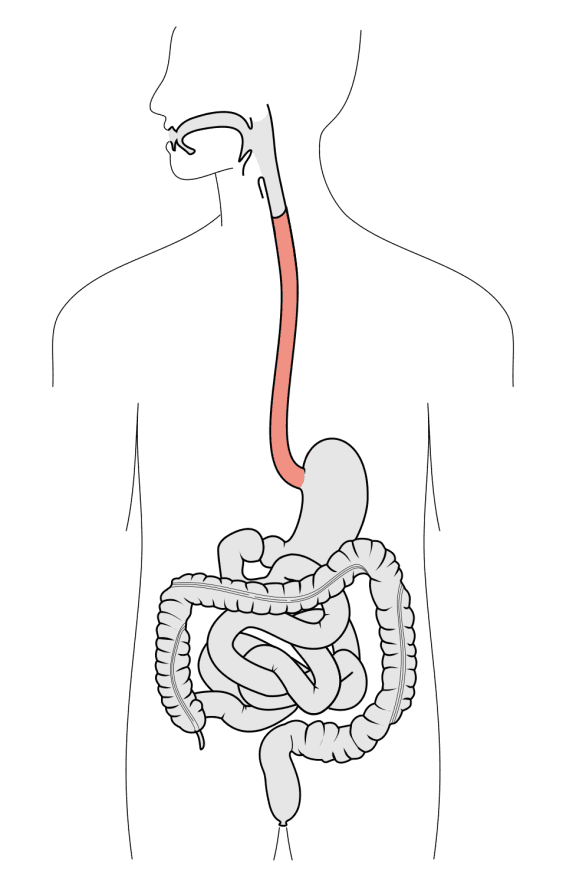
Diseases of the esophagus and pancreas are diagnosed using a multi-step diagnostic approach that combines clinical examination, imaging techniques, functional diagnostics, and laboratory analyses.
“Many patients arrive at the hospital with an initial suspicion or even a confirmed diagnosis because they have previously noticed the changes mentioned earlier—difficulty eating, unexplained fatigue, weight loss, painless yellowing of the eyes, or newly diagnosed diabetes. Primary care physicians play a central role in this process, as they are often the first to recognize these warning signs and refer patients to gastroenterologists in private practice, who then initiate the initial diagnostic workup. If esophageal cancer is suspected, a gastroscopy with tissue biopsy is usually performed.
Diagnosis of pancreatic cancer is more complex because the organ is located deep within the body; in such cases, an endosonography—an ultrasound performed from within—is usually required, which also allows for a targeted biopsy. Once the diagnosis is confirmed, the next step is what is known as staging. This includes endoscopy and imaging procedures such as a CT scan of the chest and abdomen to determine the TNM stage: the tumor size, lymph node involvement, and the presence of metastases. With this information, the case is presented to the interdisciplinary tumor board—a panel of experts from fields including radiology, gastroenterology, oncology, nuclear medicine, pathology, and surgery.
There, a joint decision is made regarding which treatment is most appropriate for the individual patient. Depending on the tumor type and stage, this may involve surgery, preoperative oncological treatment, combination therapy, or, in certain cases, primary endoscopic treatment. “The goal is always to find the best possible, individually tailored treatment—based on the combined expertise of many specialties working together to review the case,” explains Prof. Dr. Bockhorn.
The diagnosis is never based on a single finding, but rather on a combination of symptoms, imaging, functional diagnostics, and laboratory values. It is precisely this integration that makes it possible to distinguish between functional disorders, inflammatory changes, and structural diseases—and to initiate the appropriate treatment at an early stage.
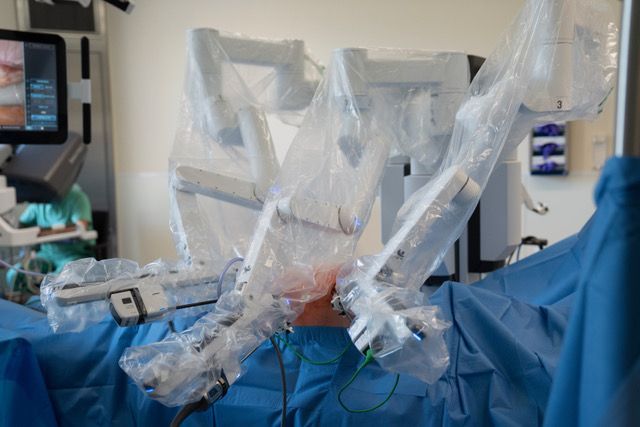
Minimally invasive and robotic procedures have fundamentally transformed surgery on the esophagus and pancreas in recent years, as they enable procedures that were previously associated with significantly greater physical strain, longer hospital stays, and higher complication rates. It is precisely with these two organs—located deep within the body, surrounded by sensitive structures, and functionally highly complex—that the advantage of precise, tissue-sparing techniques is particularly evident.
In this regard, Prof. Dr. Bockhorn identifies the greatest challenges for the treating physician: “In esophageal and pancreatic surgery, every operation has its own Achilles’ heel. With the esophagus, the greatest challenge lies in the new anastomosis between the stomach and the esophagus, which is created after removal of the tumor-bearing segment. With the pancreas, it is the highly complex reconstruction of the anastomosis between the pancreas and the small intestine.
It is precisely at these sites that most complications arise—and how well they are managed depends heavily on the experience of the entire center. What matters is not only the surgeon’s expertise but also the routine of all the departments involved: Anesthesiology, gastroenterology, radiology, oncology, and pathology must be familiar with the specific characteristics of these tumor diseases. That is why we speak of centralization and certification—because only a well-coordinated, interdisciplinary team can ensure the safety and quality that such procedures require.”
Tumors of the esophagus and pancreas are considered particularly challenging because they often present late, are anatomically complex, and affect highly sensitive functional structures. Both organs are capable of compensating for a long time, so early symptoms remain nonspecific, and the diagnosis is often not made until the tumor has already reached a locally advanced stage or has spread to surrounding structures. At the same time, these tumors are biologically aggressive, grow infiltratively, and tend to metastasize to lymph nodes or distant sites at an early stage. This makes treatment planning a balancing act between oncological radicality and functional safety.
Minimally invasive and robotic procedures enable extremely precise, tissue-sparing surgery on the esophagus and pancreas: Thanks to a magnified view, precise instrument control, and stable reconstructions, risks such as bleeding, fistulas, or suture-related problems are significantly reduced, while pain, wound complications, and recovery time for patients are noticeably minimized.
“Over the past two decades, the prospects for truly curative treatment have improved significantly. Modern oncological and radiation therapy methods—including antibody therapies—as well as the introduction of minimally invasive and robot-assisted surgical techniques have statistically significantly increased survival rates. Robotics plays an important role in both esophageal and pancreatic surgery: It does not operate autonomously, but rather translates the surgeon’s precise movements with exceptional stability and minimal interference.
“This repeatability and high precision are crucial in complex procedures because they reduce complications and improve the quality of the entire operation—an advancement that directly translates into better outcomes for patients,” emphasizes Prof. Dr. Bockhorn.
The decision on treatment is based on a combination of many factors: tumor stage, anatomical location, biological aggressiveness, functional risks, comorbidities, and the patient’s individual resilience. This is precisely why these diseases are treated in specialized centers where, in addition to surgery, various medical disciplines work closely together. Only in this way can a treatment plan be developed that equally considers oncological safety, functional preservation, and quality of life.
Truly optimal care for patients with esophageal and pancreatic diseases can only be achieved where diagnosis, treatment, and follow-up are not viewed as separate steps, but as a closely integrated, interdisciplinary chain. These diseases are complex, often progress aggressively, and affect anatomically highly sensitive regions—which is why structures are needed in which different medical disciplines work not sequentially, but simultaneously and collaboratively.
“After surgery on the esophagus or pancreas—often supplemented by pre- or post-operative oncological therapy—patients enter a phase of adjustment. The reconstruction alters how they eat: Some can initially eat only small amounts, while others can no longer tolerate certain foods or develop new likes and dislikes. It is important to actively engage with this new situation and figure out what works best for each individual. At the same time, patients should resume their daily routines as quickly as possible, including moderate physical activity, to maintain strength and health.
During follow-up care, the treating physicians see their patients regularly at first, before further care is transferred to their primary care physicians. However, the clinic remains the point of contact at any time in case of uncertainties or new symptoms—in accordance with the principle of “supported and guided.” “Overall, more men than women continue to be affected, which is related to both genetic factors and the risk behaviors that are more common among men,” notes Prof. Dr. Bockhorn, emphasizing at the conclusion of our conversation:
“Oldenburg is the third university medical center in Lower Saxony and thus fulfills the corresponding healthcare mandate for the region. Another distinguishing feature is that approximately 50 esophageal and about 70 pancreatic surgeries for cancer are performed here annually—a volume that underscores the center’s high level of specialization and experience.”
Thank you very much, Professor Dr. Bockhorn, for this valuable insight into your work!
- Director of the University Clinic for General and Visceral Surgery, Oldenburg University Hospital
- Professor of Visceral Surgery, Director of the Colorectal Cancer Center & ZIRCOL
- Specialist in the esophagus, pancreas, heartburn, esophageal diverticula, and esophageal cancer
- A leader in minimally invasive, robotic, and oncological surgery
- Board-certified specialist in visceral, specialized visceral, thoracic, and general surgery
- Formerly held a senior position at the UKE Hamburg-Eppendorf
- International networks: E-AHPBA, ISGPS, ESA
- Research on tumorigenesis, inflammation, and chemoresistance; development of innovative polymer technologies
- Founder of the ZIRCOL Robotic Surgery Center and 24/7 Telemedicine Center
- Committed to organ-preserving, minimally invasive, high-end surgery at the university level
Share this article
Expert Interviews
Read next
- Expert interview
Expert interview with Professor Dr Elmar Herbst, PhD
Oct 15, 2026
Patient-centred and personalised knee surgery
Read more - Expert interview
Cardiogeriatrics: Significance and benefits in the context of hospital reform
Sep 21, 2026
Cardiogeriatrics: Significance and benefits in the context of hospital reform
Read more - Expert interview
Expert Interview with Professor Dr. Amadeus Hornemann, MPH
Sep 18, 2026
Prof. Amadeus Hornemann on Precision Medicine in Gynecology: Modern Surgery, New Techniques, Better Quality of Life
Read more