Expert Interviews
Prof. Diethelm Wallwiener on Endometriosis: Menstrual Cramps That Feel Like Knife Stabs

Alexandra Pfitzmann ·
Endometriosis is one of the most common gynecological conditions affecting women—and he is one of the leading specialists in this field: Professor Dr. med. Dr. h.c. mult Diethelm Wallwiener, as Medical Director at the University Women’s Hospital in Tübingen, heads the supraregional center of excellence for all areas of gynecology and obstetrics. In endometriosis, the uterine lining implants itself outside the uterus, which can lead to adhesions or cysts—so-called endometriotic lesions—that often grow unnoticed over a long period of time. It can therefore take years before a diagnosis of endometriosis is made. The renowned specialist answered questions for the Leading Medicine Guide.

Many women experience natural menstrual pain, which can range from mild to severe. Pain caused by endometriosis is often mistaken for menstrual cramps by many affected women, especially during puberty or before menopause. Endometriosis symptoms usually begin two to three days before the onset of monthly bleeding.
Recurring pain during or after sexual intercourse can also be a sign of endometriosis. Such pain often leads to difficulties in intimate relationships. In some cases, the pain may radiate in a cramping manner to the back or legs. Those affected often describe it as feeling like “a thousand knife stabs.”
Diarrhea or nausea may also occur. Chronic pain can also lead to fatigue, irritability, or even depressive moods.
The uterine lining (endometrium) thickens during the first half of the menstrual cycle and is shed again at the end.
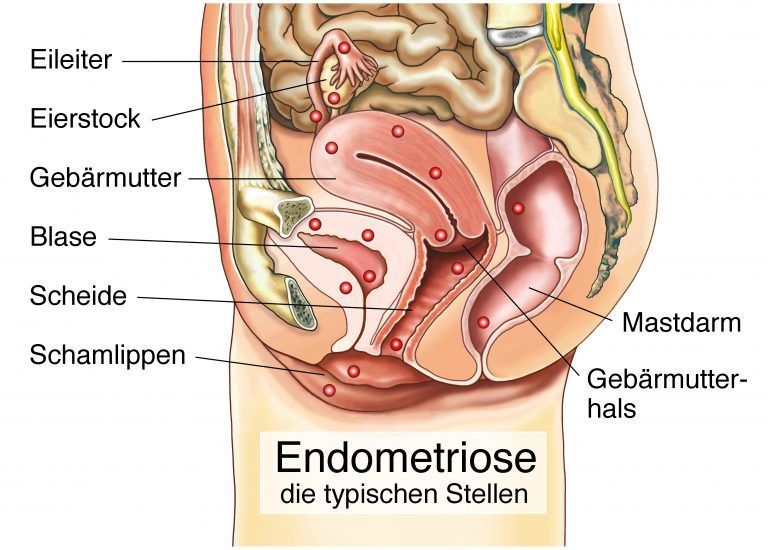
These endometrial implants are usually benign. They attach—much like moss—to the fallopian tubes, the ovaries, the ligaments supporting the uterus, on or within the uterine wall, the vagina, the bladder, the intestines, or the peritoneum. In principle, however, they can also affect other organs in the female body, such as the lungs (although this is rare). Depending on the severity of the endometriosis, the lesions are often no larger than the head of a pin. However, larger, blood-filled cysts may also form, leading to adhesions in the fallopian tubes and ovaries.
Blood in the stool, for example, can be a sign of endometriosis, particularly when the endometriosis spreads to the intestinal lining.
Tragically, affected women often struggle with the inability to conceive. This is because when the ovaries or fallopian tubes are affected by endometriosis, successful fertilization usually does not occur.

There are three forms of endometriosis:
1) Endometriosis genitalis interna (internal genital endometriosis)—Here, the growths are located within the uterine muscle wall.
2) Endometriosis genitalis externa (external genital endometriosis) – In this form, the genital areas outside the uterus are affected, such as the outer wall of the uterus, the uterine ligaments, the ovaries, the fallopian tubes, the so-called “Douglas pouch” between the rectum and the uterus, and the vagina.
3) Extragenital endometriosis – This refers to organs outside the pelvis, such as the lungs or scar tissue from a cesarean section.
It is very rare for endometriosis to develop into a malignant condition. If it does, it is most often the ovaries that are affected, which in some cases can also lead to ovarian cancer.
As an expert in the field of endometriosis, Professor Dr. med. Dr. h.c. mult Diethelm Wallwiener describes the condition as the “chameleon” of women’s diseases, since it is often not recognized immediately and, unfortunately, leads to many misdiagnoses.
“One in ten women in Germany suffers from endometriosis symptoms,” explains Professor Wallwiener, urging all women to consult their gynecologist at the first signs of the condition to enable early detection and appropriate treatment.
Endometriosis: Often a Difficult Diagnosis
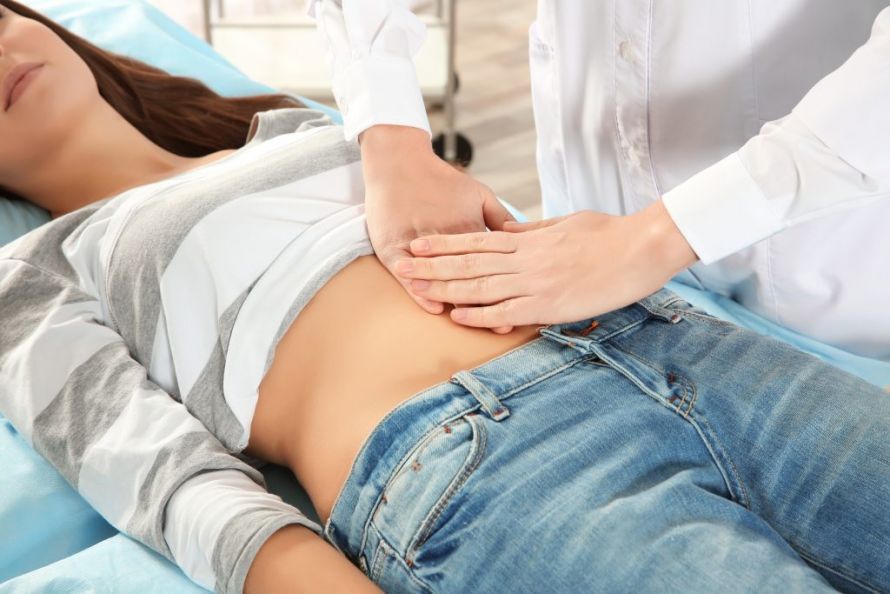
“Endometriosis can only be diagnosed via laparoscopy,” explains Professor Wallwiener, warning against therapeutic measures without first establishing a clear diagnosis. “Today, minimally invasive diagnosis via a keyhole procedure lasting only a few minutes is so low-risk that women need not worry about this minor surgery. It’s much worse when women live with a suspected diagnosis of endometriosis and put themselves under physical and psychological strain.”
“I have endometriosis—what can I do?”
“The most important thing is for the patient to go to a certified endometriosis center to receive comprehensive treatment. A decision will be made as to whether medication or hormone therapy will be used in addition to surgery, which is usually unavoidable. Often, anti-endometriosis hormone therapy is administered even before the surgical removal of the endometriotic lesions to shrink them, allowing the surgery to be performed with even greater precision,” explains Professor Wallwiener, who wants to encourage women not to hide behind the disease and possibly develop feelings of guilt. He continues: “The patient’s subsequent follow-up care is also best ensured by a certified center.”
Conclusion: Many theories surround the development of endometriosis, ranging from hormonal causes to an impaired immune system. Why the uterine lining grows outside the uterus has not yet been fully researched.
Did this information help you? Would you like to learn more about University Professor Dr. Wallwiener? Then visit his profile page on the Leading Medicine Guide!
Image sources: (c) Africa Studio, (c) Leonid, (c) nenetus, (c) chajamp – Adobe Stock.
Share this article
About the medical author
Alexandra Pfitzmann
Editor
Alexandra Pfitzmann – medical author: expert knowledge, professional articles and medical insights in the Leading Medicine Guide.
More about the medical author →Expert Interviews
Read next
- Expert interview
Cardiogeriatrics: Significance and benefits in the context of hospital reform
Sep 21, 2026
Cardiogeriatrics: Significance and benefits in the context of hospital reform
Read more - Expert interview
Expert Interview with Professor Dr. Amadeus Hornemann, MPH
Sep 18, 2026
Prof. Amadeus Hornemann on Precision Medicine in Gynecology: Modern Surgery, New Techniques, Better Quality of Life
Read more - Expert interview
Expert Interview with Professor Dr. Konstantinos Anagnostakos
Sep 15, 2026
Prof. Anagnostakos on Painful Knee Replacements
Read more