Expert Interviews
Expert Interview with Asst. Prof. Dr. Resmiye Ermis - Gentle, Minimally Invasive Gynecology – Leading the Way from Woman to Woman: VNotes Technique, Fibroid Removal, and Pelvic Organ Prolapse Treatments

Alexandra Pfitzmann ·
Assistant Professor Dr. Resmiye Ermis is a renowned gynecologist who specializes in minimally invasive gynecological surgery and founded the MIC and Myoma Center Rhein-Main at the Red Cross Clinic in Frankfurt am Main. She is one of Germany’s leading specialists in the field of modern endoscopy and minimally invasive procedures for conditions such as fibroids, endometriosis, uterine prolapse, and many other gynecological conditions. Her outstanding expertise is confirmed by her certification as an MIC-III surgeon, which she received for the third consecutive time in 2024.
Under her leadership, the center has earned an excellent reputation for advanced outpatient and inpatient treatments that enable patients to enjoy a high quality of life. Assoc. Prof. Dr. Ermis is a pioneer in the introduction of innovative procedures; for example, in 2015 she established the safe removal of abdominal tissue using morcellation in a bag—a technique that is now widely used in medical practice throughout Germany. Her expertise encompasses the comprehensive treatment of uterine fibroids, endometriosis, unexplained infertility, fallopian tube diagnostics, hysterectomy, pelvic organ prolapse, as well as surgical procedures for bleeding disorders and other gynecological conditions. The modern laparoscopic techniques she employs allow for minimally invasive procedures, most of which can be performed on an outpatient basis, and lead to excellent treatment outcomes.
Assoc. Prof. Dr. Ermis is one of a select few gynecologists in Germany to hold the highest certification from the German Society for Gynecological Endoscopy (AGE)—a testament to her leading position in minimally invasive surgery. She places great emphasis on personalized care and knows how to address her patients’ needs. Thanks to her innovative treatment methods, her high level of professional expertise, and her compassion, she has helped numerous women overcome pain and significantly improve their quality of life.
The Rhine-Main MIC and Fibroid Center at the Frankfurt Red Cross Clinic enjoys an excellent reputation among experts and patients alike and is synonymous with outstanding medical care of the highest standard
In a conversation with Asst. Prof. Dr. Ermis, the editorial team of the Leading Medicine Guide learned more about innovative minimally invasive procedures in gynecology.

In the past, gynecological surgeries were performed using open surgery until laparoscopic techniques were developed. Open procedures are still performed depending on the patient, but they are often associated with longer recovery times, more severe pain, and larger scars. With the development of additional minimally invasive methods, such as the VNotes technique (Vaginal Natural Orifice Transluminal Endoscopic Surgery), the approach has changed significantly: Instead of large incisions, the procedure is performed through a small vaginal opening, which reduces the complication rate, shortens recovery time, and is more comfortable for patients. This innovation has thus significantly improved the standard of care in gynecology.
“The VNotes technique enables a minimally invasive surgical method in gynecology in which access is gained through the vagina. Unlike traditional laparoscopy, in which instruments are inserted through several small incisions in the abdominal wall, VNotes involves a single incision in the vagina just below the cervix. Gas is introduced into the abdominal cavity through this access point to inflate the abdominal cavity, allowing for examination and surgery without incisions in the abdominal wall. This technique is suitable, for example, for the removal of fibroids that are not located too deep within the uterine wall, as well as for hysterectomy, oophorectomy, or salpingectomy. It is also used for many treatments of pelvic organ prolapse, such as the fixation of the uterine suspension ligaments. The approach may vary depending on the condition and situation, and the decision to use the VNotes technique depends not only on the clinical picture but also on factors such as the size of the tissue or the patient’s age. “Overall, VNotes is suitable for many benign conditions; however, for larger tumors or very elderly patients, the technique may be difficult or unsuitable,” explains Assistant Professor Dr. Ermis at the beginning of our conversation.
The vaginal approach causes minimal trauma to the tissue and skin, resulting in less pain after surgery and a faster recovery. The healing time is significantly shortened; patients are often mobile again after just a few days and can resume their daily routines more quickly. In addition, the technique reduces the risk of wound healing complications or infections, as there are no incisions in the abdominal cavity. Surgical precision is also enhanced by the VNotes method. The direct view through the endoscope allows for the precise removal of fibroids or precise treatment of the pelvic floor, which increases the success rate. The clear view also makes it easy to control and minimize the source of bleeding, thereby reducing intraoperative blood loss. Furthermore, the VNotes technique offers improved access to complex or large fibroids and cases of pelvic organ prolapse, which sometimes require longer surgeries or more extensive procedures with conventional methods.
Fibroids, also known as uterine fibroids or leiomyomas, are benign tumors that develop from muscle cells in the uterine wall. They arise from a combination of genetic, hormonal, and vascular factors. Hormonal influences, particularly an excess of estrogen, promote the growth of fibroids. Genetic predisposition, as well as age, obesity, high blood pressure, and a family history of fibroids, can increase the risk. Fibroids are often the result of hormone-induced cell proliferation and can vary in size, ranging from small nodules to massive uterine growths. Pelvic organ prolapse—also known as pelvic floor weakness or prolapse—refers to the bulging or descent of the lower pelvic organs, such as the uterus, vagina, or bladder, due to a weakening of the pelvic floor muscles and ligaments. There are various types of pelvic organ prolapse: vaginal prolapse, in which the vagina itself descends; uterine prolapse (uterine prolapse), in which the uterus slips downward, as well as protrusions of the bladder floor (cystocele) or a section of the intestine (enterocele). These conditions often occur as a result of aging, but can also be exacerbated by pregnancy, childbirth, obesity, or chronic pressure on the pelvic floor.

“VNotes is particularly suitable when numerous abdominal surgeries have already been performed, for example, in cases of previous surgeries involving mesh in the abdominal wall or adhesions that make access to the abdominal cavity difficult. Access via the vagina provides direct entry into the pelvis without encountering adhesions in the abdominal wall, which can be problematic when accessing the area via laparoscopy through the navel. This allows us to avoid the problems that arise from previous surgeries in the abdominal region and perform the treatment directly in the pelvis. However, there are situations in which the procedure is not possible. In cases of deep-infiltrating endometriosis that has caused adhesions between the uterus and the intestines, it is often no longer possible to gain access because the areas are completely fused together. Another limitation arises if the patient wishes to preserve the cervix, as removing the cervix facilitates access and makes the healing process less painful. However, the stability of the pelvis is not fundamentally compromised without removal of the cervix. As for the duration of the procedure, it can vary: with an enlarged uterus, the surgery is often quicker because less tissue needs to be fragmented. For smaller uteri removed through the vagina, it may be more advantageous to place the organs in a bag and remove them in small pieces from below, which would often be more time-consuming with conventional laparoscopy. “That may sound unusual, but it’s a perfectly conceivable alternative,” explains Asst. Prof. Dr. Ermis, adding:
“As a surgeon, mastering the VNotes technique requires a certain amount of training time. It’s not something you master right away; that’s why I’ve already participated in continuing education and specialized training courses to safely integrate this method into our daily clinical practice. Essentially, the technique is an extension of laparoscopic surgery, as it requires the same basic skills. The difference lies in the angle of view: instead of working from above through the abdominal wall, you work from the vagina, which simply means a different perspective and a different angle. With the right practice, the technique is therefore easy to learn.” 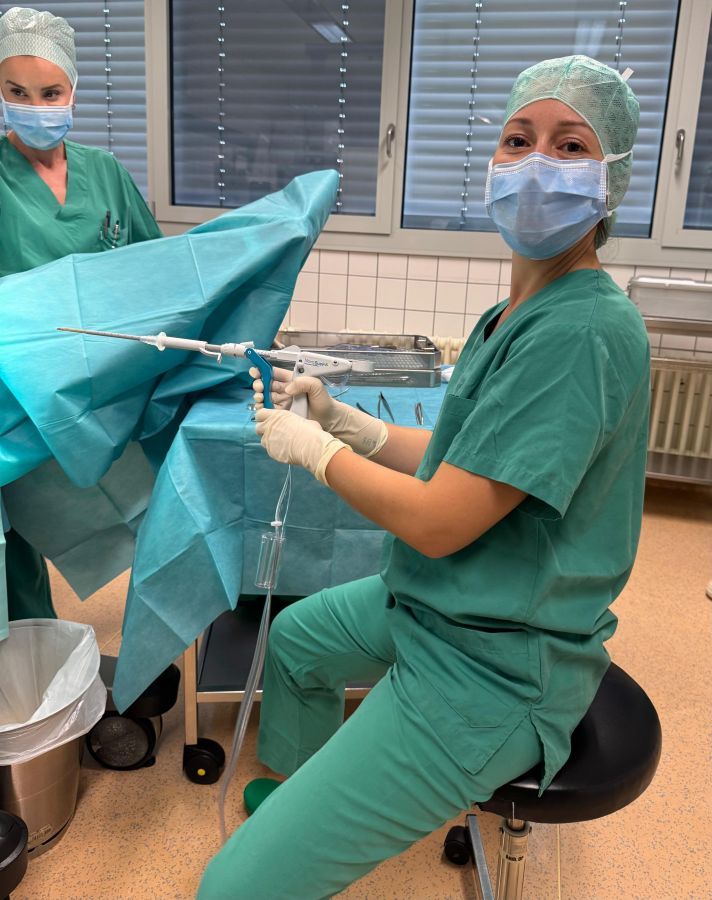
The use of state-of-the-art imaging techniques such as MRI or ultrasound helps to accurately map the individual anatomy and identify potential risks early on. During the procedure, highly precise, controlled instruments and techniques are used, enabling exact navigation within the confined space. The use of specialized safety systems—such as incision and bleeding management or the controlled removal of tissue—also helps mitigate risks.
The most important exclusion criteria are, above all, anatomically unfavorable findings that prevent a safe and controlled operation. In cases of severe adhesions, unclear findings, significant contamination, or insufficient visibility of the surgical site, an open or laparoscopic approach is generally safer. Similarly, severe anatomical anomalies, such as a significantly abnormal pelvic position or organ malformations, are exclusion criteria. The VNotes method is also unsuitable in cases of wounds or infections in the pelvic or abdominal cavity, uncontrolled bleeding, large tumors that limit the prospects for a safe procedure, or unclear diagnoses that require further diagnostic evaluation.
The risks associated with this procedure are similar to those of conventional surgeries and are considered standard surgical risks.
“Especially in cases of previous abdominal surgery, the risk of injury to the intestines is often lower, since access via the vagina is not performed blindly. In cases of prior abdominal incisions, a more cautious approach is taken: Instead of inserting the trocars directly “blind,” an open laparoscopic approach is usually used, in which the abdominal wall is opened under direct visualization to identify and avoid adhesions. Nevertheless, adhesions may still be present beneath the incision that are not always visible, which poses a risk. The VNotes procedure has been in use for quite some time. With the increase in laparoscopic surgeries in Germany over the past 10 to 15 years, the technique has increasingly become the standard. In the past, surgical treatment for women was primarily vaginal, while the laparoscopic method was introduced later. I myself did not learn laparoscopic hysterectomy until after completing my residency, after 2005. Understanding the advantages of both methods—vaginal and laparoscopic—has led us to select the most appropriate technique on a case-by-case basis, depending on the situation and the patient’s wishes. “Our goal is always to perform surgery as minimally invasive as possible and to tailor the treatment to each patient’s specific needs,” says Asst. Prof. Dr. Ermis.
Current long-term studies and clinical experience with the VNotes technique in the treatment of fibroids and pelvic organ prolapse show that the method is highly effective and results in high patient satisfaction.
Following minimally invasive procedures such as those using the VNotes technique—particularly for fibroids or pelvic organ prolapse—patients generally experience fewer restrictions compared to open surgical procedures. Nevertheless, certain precautions and guidelines for patients are necessary to ensure optimal healing and long-term functionality.
“For procedures performed through the vagina, there are generally no changes to the guidelines regarding behavior, particularly with regard to subsequent sexual intercourse or a planned pregnancy. After surgery, the same guidelines apply as with other procedures: For example, if the uterus has been removed, there are no restrictions regarding sex or family planning. The patient may experience less pain and find it easier to move, which aids recovery, but the recommendations remain the same. Even when the ovary is removed through the vagina, the vaginal incision must heal, which is essentially comparable to the healing process for surgical approaches through the abdominal wall. Therefore, there are no special restrictions or differences in post-operative care, regardless of whether the incision is inside the vagina or on the abdominal wall.”
It is important that patients take it easy for a few weeks after the procedure, avoid strenuous physical activity, and strictly follow the postpartum care guidelines. Particularly after pelvic floor surgery, patients should avoid intense strain on the pelvic region to support the healing of the ligaments and the adhesion of the tissue.
At the MIC and Myoma Center Rhein-Main at the Red Cross Clinic in Frankfurt am Main, the focus is on minimally invasive solutions such as the VNotes method and laparoscopic procedures, which preserve organ function and shorten recovery time. The empathetic care provided by an all-female team makes it one of the leading clinics in Germany. 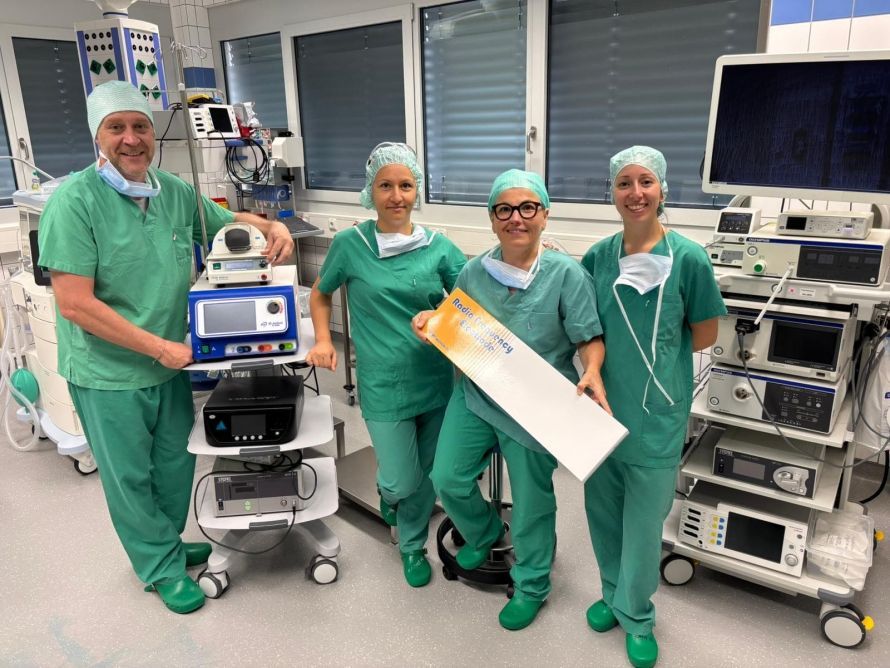
“At our center, we offer various procedures for treating pelvic organ prolapse. These include the VNotes method, which strengthens the body’s own structures without using mesh, as well as laparoscopic procedures that involve the insertion of mesh. Mesh can also be inserted through the vagina, for example, in older patients, where the mesh is secured to the cervix, or in younger women. In addition, there are procedures such as vaginal tightening, which do not involve the use of mesh. We always tailor the choice of procedure to each individual’s age, anatomy, and specific needs to minimize stress on the body and speed up recovery. While a wide variety of treatments exist in Germany, we distinguish ourselves through our very gentle, individually tailored approach. We always take care to avoid unnecessary procedures, such as complete removal of the uterus, unless they are necessary to shorten the recovery time. “Every procedure has advantages and disadvantages, but our goal is to find the best possible, least invasive solution for the patient,” emphasizes Asst. Prof. Dr. Ermis, adding:
“As far as I know, we are one of the few clinics in Germany with an all-female surgical team. In my view, this makes a great deal of sense. In terms of surgical procedures, we rank among the top ten in Germany for myomectomy. Since we do not offer obstetric services, we can focus entirely on surgical procedures. We also place special emphasis on the treatment of endometriosis, always carefully assessing which therapy is best suited for each individual patient. In the case of endometriosis cysts, it is not always necessary to remove them completely. Instead, we assess on a case-by-case basis whether a less invasive treatment, such as treatment with alcohol solutions, is sufficient. Excision or complete removal is not always the most sensible approach. Our focus is on preserving the organ whenever the patient wishes. It is also important to us to leave as few scars as possible and to perform surgeries without an abdominal incision. We are known for our particularly empathetic care and excellent patient support, which has earned us positive feedback. We also perform procedures without anesthesia—so-called office hysteroscopies—in which diagnostic hysteroscopy is used to identify findings and minor therapeutic lesions are removed without general anesthesia, thereby minimizing the physical strain on the body.”
Thank you very much, Assistant Professor Dr. Ermis, for the clear explanation!
Share this article
Expert Interviews
Read next
- Expert interview
Expert interview with Professor Dr Elmar Herbst, PhD
Oct 15, 2026
Patient-centred and personalised knee surgery
Read more - Expert interview
Cardiogeriatrics: Significance and benefits in the context of hospital reform
Sep 21, 2026
Cardiogeriatrics: Significance and benefits in the context of hospital reform
Read more - Expert interview
Expert Interview with Professor Dr. Amadeus Hornemann, MPH
Sep 18, 2026
Prof. Amadeus Hornemann on Precision Medicine in Gynecology: Modern Surgery, New Techniques, Better Quality of Life
Read more