Expert Interviews
Minimally Invasive Surgeries for: Hysterectomy, Myomectomy, Treatment of Pelvic Organ Prolapse — Expert Interview with Assoc. Prof. Dr. Ermis

Alexandra Pfitzmann ·
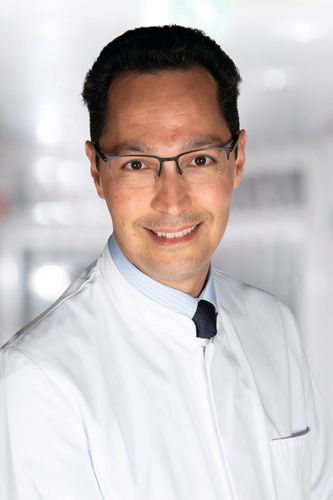
Assistant Professor Dr. med. Dr. Resmiye Ermis is an outstanding gynecologist, founder of the MIC and Myoma Center Rhein-Main, and Chief Medical Officer at the Red Cross Clinic within the Frankfurt Red Cross Hospitals. With her expertise and passion for minimally invasive surgery, she has made the center a leading facility for gynecological procedures. Under her leadership, the gynecology department has earned an excellent reputation based on thousands of successful surgeries performed using state-of-the-art techniques.
Asst. Prof. Dr. med. Dr. Ermis is a MIC-III certified surgeon and one of the few gynecologists in Germany to hold the highest certification from the Working Group for Gynecological Endoscopy (AGE). This underscores her outstanding position in minimally invasive surgery. The MIC and Myoma Center offers a wide range of specialized services, including laparoscopic removal of fibroids, hysterectomies, and various treatments for pelvic organ prolapse that preserve the uterus.
Assoc. Prof. Dr. med. Dr. Ermis works closely with other specialized departments at the Red Cross Clinics to ensure comprehensive care of the highest standard. Her innovative approaches, such as the introduction of morcellation in a bag for safe abdominal removals, have set new standards and are highly regarded far beyond the region. The center is distinguished not only by medical excellence but also by a friendly and supportive atmosphere that contributes to patient satisfaction.
Assoc. Prof. Dr. med. Dr. Ermis and her dedicated team are continuously committed to improving their patients’ quality of life by understanding individual needs and offering highly specialized, personalized treatment plans. Thanks to her high level of professional expertise, her commitment to research, and her role as an expert reviewer for the Hessian State Medical Association and Arbitration Board, Asst. Prof. Dr. med. Dr. Ermis is a highly regarded figure in the medical community, and it is no coincidence that she has been awarded the MIC III certificate for the third time—making her the only physician in Hesse to have received this distinction. The MIC and Myoma Center Rhine-Main is highly regarded by both patients and colleagues alike for its excellent patient care and outstanding treatment outcomes.
Our editorial team took the opportunity to speak with Assistant Professor Dr. med. Dr. Ermis and learned more about minimally invasive surgeries for hysterectomy or the removal of fibroids, as well as treatments for pelvic organ prolapse.

Gynecology encompasses a broad spectrum of medical specialties that deal with the health and diseases of the female reproductive system. Some of the most common procedures in this field include hysterectomy, myomectomy, and treatment for pelvic organ prolapse, all of which aim to relieve women of distressing symptoms and improve their quality of life.
“Fibroids are among the most common benign conditions affecting women. Some patients are even affected as young as 20. The ‘peak age’ for this, however, is between 40 and 50, though I have also operated on women over 60 for fibroids. So there’s no real respite, even after menopause has passed. And since fibroids calcify significantly, they can also cause pain by putting pressure on the ureters or surrounding organs and must be removed. Fortunately, fibroids don’t always cause symptoms, and fortunately, they don’t always need to be removed. However, fibroids that appear in one’s mid-20s and continue to grow should definitely be removed. “You shouldn’t wait until you’re 50–60 years old,” explains Asst. Prof. Dr. med. Dr. Ermis, highlighting a problem:
“One problem, however, is that ultrasound is no longer part of routine preventive care but is now only offered as a self-pay service. And so it happens that I sometimes see women in their 30s with massive fibroids in their abdomen. Because of the slow growth of the fibroids, patients hardly notice them—if at all—unless a fibroid presses against the uterine cavity and causes severe symptoms in the form of bleeding. But even then, neither general practitioners nor the patients themselves often pay much attention to it. And since fibroids are one of my areas of expertise, I see patients from near and far with a wide variety of fibroids. And when a young woman comes to see me with a 4–5 cm fibroid, I think to myself, “Finally, something small!” It would be wonderful if all rapidly growing fibroids in women between the ages of 40 and 50 could be removed and if fibroids weren’t downplayed. After all, every second or third woman in that age group is affected. In Africa, for example, the rate is even higher, with the result that women in their 30s are having hysterectomies performed en masse because they have no other options.”
Fibroids can cause various symptoms, including pain and difficulty conceiving.
“With fibroids, the patient herself decides whether to preserve or remove the uterus. Some patients want to definitively rule out the possibility of further fibroids and, if in doubt, do not want to undergo surgery again—in such cases, the uterus is removed, because a fibroid rarely occurs alone. But for a 30-year-old, I wouldn’t remove the entire uterus because of a 5–10 cm fibroid, even if she doesn’t want to have children. In this case, I would tend to take a wait-and-see approach. At this age, a hysterectomy can certainly disrupt hormonal balance, since the uterus also helps support blood flow to the ovaries to some extent. Several factors play a role in deciding between a total and a subtotal hysterectomy. “A total hysterectomy involves the removal of the entire uterus, including the cervix, whereas in a subtotal hysterectomy, the cervix is preserved,” explains Asst. Prof. Dr. med. Dr. Ermis.
When removing fibroids, doctors typically use various minimally invasive techniques aimed at gently removing the fibroids, shortening recovery time, and minimizing the rate of complications. The most commonly used methods are laparoscopy (abdominal endoscopy) and hysteroscopy (uterine endoscopy).
Laparoscopy is a minimally invasive procedure in which fibroids are removed through small incisions in the abdomen. A laparoscope—a thin tube equipped with a camera and light source—is inserted through one of the incisions to provide a clear view of the uterus. Using special instruments inserted through the other incisions, the fibroids can be precisely excised and removed. This technique is often used for larger fibroids or those located deep within the uterine muscle. The recovery time after laparoscopic fibroid removal is generally shorter than after open surgery, and the complication rate is lower. Patients can usually resume their normal activities after a few weeks.
Hysteroscopy is another minimally invasive technique used to remove fibroids that protrude into the uterine cavity. During this procedure, a hysteroscope—a thin, lighted instrument—is inserted through the vagina and cervix into the uterus. The fibroids are then removed using special surgical instruments inserted through the hysteroscope. This method is particularly gentle, as it does not require any incisions in the abdomen. Recovery time is often very short, and many patients can resume their normal activities within a few days. The complication rate for hysteroscopic procedures is also low, as the risks of infection or injury to neighboring organs are minimal.
The MYOBLATE™ RFA Procedure
“As an alternative to surgical removal of fibroids, we offer radiofrequency ablation of fibroids using MyoBlate. The procedure is minimally invasive. Targeted radiofrequency ablation alleviates symptoms, slows or halts the growth of fibroids, and reduces fibroid volume over time. The fibroids are treated under targeted ultrasound guidance during a procedure lasting approximately 20–30 minutes under anesthesia, with RF ablation performed using a probe inserted through the vagina (transvaginally or transcervically) and, if necessary, supplemented by laparoscopy,” says Asst. Prof. Dr. med. Dr. Ermis.
MYOBLATE™ RFA is a procedure performed using an RFA (radiofrequency ablation) system that is CE-certified in accordance with the European Medical Device Regulation (MDR) and is intended for the minimally invasive treatment of symptomatic uterine fibroids. It offers a low risk rate and excellent clinical outcomes, resulting in fewer symptoms during and after the procedure.
New at the MIC and Myoma Center Rhein Main: vNOTES technique (vaginal Natural Orifice Transluminal Endoscopic Surgery)
The vNOTES technique (vaginal Natural Orifice Transluminal Endoscopic Surgery), an innovative form of minimally invasive surgery, allows for procedures in the abdominal cavity without the need for incisions in the abdominal wall. This new surgical procedure is now also being performed at the MIC and Myoma Center Rhein Main. Access is gained exclusively through natural body orifices; in gynecological surgery, the vagina is typically used. Unlike conventional laparoscopy, which requires several small incisions in the abdomen, this method involves inserting the necessary instruments through the vagina, with the procedure performed under continuous visual monitoring. This procedure is suitable, among other things, for the removal of the uterus, fallopian tubes, or ovaries. The advantages include reduced postoperative pain, since there are no abdominal incisions, and thus a reduced need for pain medication. In addition, patients can be discharged from the hospital sooner, and the cosmetic outcome is significantly improved due to the absence of visible scars. Although this technique is promising, it has so far been used only sporadically in Germany.
It is no coincidence that many international patients also come to the MIC and Myoma Center Rhein-Main.
“We remove fibroids every day—sometimes 30 to 40 of them, ranging in size from 8 to 10 cm. In some cases, an abdominal incision is necessary if the fibroid is truly very large. I always try to keep the incision as small as possible, often in combination with a laparoscopy. This also reduces the duration of the surgery. But fibroids measuring 8–10 cm are already the standard size we operate on. Most of the fibroid removals we perform are minimally invasive, and only rarely—about 1–2 times a month—is a small abdominal incision required for removal. These are fibroids that have grown all the way to the navel. Fibroids can also be removed via hysteroscopy if they are located in the endometrium, beneath the endometrium, or have grown completely into the uterus. In such cases, patients naturally recover even more quickly. “The only thing is that you’ll need a little time to recover from the general anesthesia,” explains Asst. Prof. Dr. med. Dr. Ermis.
After a hysterectomy, patients should observe certain postoperative restrictions to ensure optimal healing and avoid complications.
First, patients should avoid physical exertion and heavy lifting. In the first six to eight weeks after surgery, it is important to avoid lifting heavy objects so as not to jeopardize healing of the surgical site. This is especially true for an abdominal hysterectomy, in which a larger incision is made in the abdomen. “Patients should refrain from sexual intercourse, bathing, and exercising for the first six weeks. In any case, after 2–3 days, you wouldn’t even be able to tell that a patient has had surgery, and she’ll already feel fit. Light walks are beneficial for recovery and can be gradually increased. The risks are comparable to those of other surgical procedures. There is a low risk of injury to the ureters, which primarily applies to surgeries in which the cervix was also removed. “We really have a very low complication rate and revision rate—almost zero—and nearly 100% of our patients are satisfied,” explains Asst. Prof. Dr. med. Dr. Ermis.
In women, the pelvic organs often prolapse due to weakening or damage to the pelvic floor. This area is responsible for supporting the pelvic organs, such as the uterus, bladder, and bowel.
Factors such as pregnancy, childbirth, hormonal changes (especially after menopause), obesity, or chronic coughing can weaken the pelvic floor and cause the organs to slip downward. This can lead to symptoms such as incontinence, a feeling of pressure, or pain. Prolapse surgery helps to return these organs to their original position.
“In a pelvic organ prolapse surgery, we insert a special mesh into the abdominal wall, which has the lowest complication rate. The goal is to strengthen the pelvic floor and alleviate the symptoms of organ prolapse. This mesh is attached to the vagina and the uterus; in the past, these meshes were always attached to the spine, which often resulted in back pain. In addition, our procedure can be performed laparoscopically, which allows the vagina to withstand stress and makes sexual intercourse possible without any problems after a recovery period. We also use vaginal meshes for older patients,” says Asst. Prof. Dr. med. Dr. Ermis.
After prolapse surgery, patients can support their recovery through rest, good hygiene, a balanced diet, and pelvic floor exercises. In the long term, the results are typically very positive, with a significant improvement in quality of life and a reduction in symptoms. Regular follow-up care and adherence to medical recommendations are crucial to ensuring optimal and lasting results.
Assoc. Prof. Dr. med. Dr. Ermis also offers some preventive advice: “Neither women nor men should lift heavy objects; they should engage in regular pelvic floor exercises and physical activity, ensure regular bowel movements, and, of course, maintain a healthy diet. What I would personally like to see is more empathy for patients, who unfortunately often feel lost,” and with that, we conclude our conversation.
Thank you very much, Assistant Professor Dr. med. Dr. Ermis, for this important insight into gynecology, with a special focus on myomectomy—a procedure that requires a high level of expertise!
Share this article
About the medical author
Alexandra Pfitzmann
Editor
Alexandra Pfitzmann – medical author: expert knowledge, professional articles and medical insights in the Leading Medicine Guide.
More about the medical author →Expert Interviews
Read next
- Expert interview
Cardiogeriatrics: Significance and benefits in the context of hospital reform
Sep 21, 2026
Cardiogeriatrics: Significance and benefits in the context of hospital reform
Read more - Expert interview
Expert Interview with Professor Dr. Amadeus Hornemann, MPH
Sep 18, 2026
Prof. Amadeus Hornemann on Precision Medicine in Gynecology: Modern Surgery, New Techniques, Better Quality of Life
Read more - Expert interview
Expert Interview with Professor Dr. Konstantinos Anagnostakos
Sep 15, 2026
Prof. Anagnostakos on Painful Knee Replacements
Read more