Fibroids are benign growths in the uterine muscle tissue that commonly affect women of childbearing age. Fibroid surgery is a treatment option when fibroids cause symptoms or other treatment options have been exhausted. In this article, you’ll learn everything about the surgical removal of fibroids: When is surgery necessary? What methods are available? What should patients keep in mind after surgery?
We answer these and other questions. You’ll also find a selection of specialists in fibroid surgery here.
What is fibroid surgery?
Fibroid surgery refers to the surgical procedure to remove fibroids from the uterus. Fibroids (also known as uterine fibroids) are benign tumors composed of muscle and connective tissue. These growths are hormone-dependent and often grow under the influence of estrogen. While many fibroids cause no symptoms, in some cases they can trigger severe symptoms such as pain, heavy bleeding, or pressure on neighboring organs. In such cases, surgery may be necessary. Fibroids are usually discovered incidentally as new ones develop over time or as symptoms arise.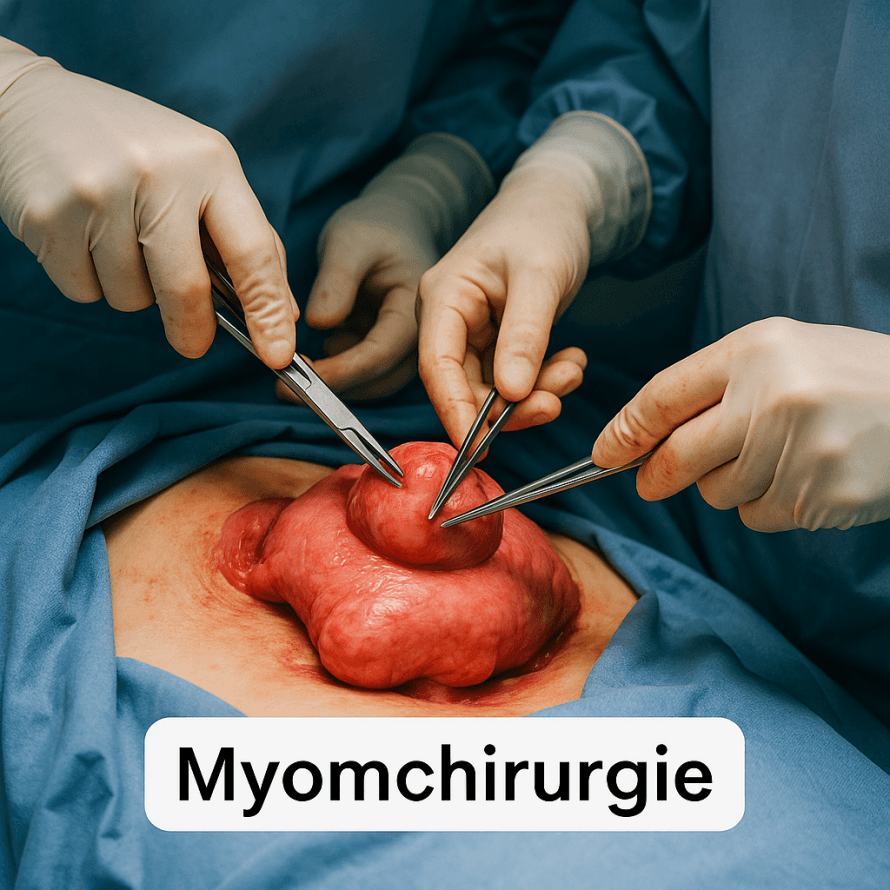
Surgical Removal of a Fibroid: A Precise Surgical Technique to Preserve the Uterus and Relieve Fibroid-Related Symptoms
When is fibroid surgery performed?
Depending on their location, fibroids may be embedded in the uterine wall, protrude into the uterine cavity, or grow on the outside of the uterus. Fibroid surgery is generally recommended when:
- Heavy bleeding occurs, leading to anemia.
- There is pain or a feeling of pressure in the lower abdomen.
- The ability to conceive is impaired, as fibroids can interfere with fertility.
- Fibroids grow large enough to press on surrounding organs such as the bladder or bowel.
- Other treatment options, such as medication or minimally invasive procedures, do not provide relief.
In rare cases, fibroids during pregnancy may also require surgical treatment if they cause severe symptoms or interfere with the baby’s development. It is important to assess on a case-by-case basis whether surgery is necessary. The best treatment strategy can be determined in consultation with a specialist in gynecology or obstetrics.
Fibroid Surgery: Myomectomy, Hysterectomy (Removal of the Uterus), Embolization
There are various surgical procedures for removing fibroids, depending on their size, location, and number. These include, among others, intramural fibroids, which are located within the muscular wall of the uterus; submucosal fibroids, which grow toward the uterine cavity; and pedunculated fibroids, which are connected to the uterus by a stalk of tissue. The most common methods are:
- Myomectomy: In this procedure, the fibroids are removed without removing the uterus itself. This is a preferred option, especially for women who wish to have children. There are various surgical approaches, including laparoscopic myomectomy (keyhole surgery), hysteroscopic myomectomy (through the vagina), or an abdominal incision (laparotomy). The choice of surgical approach depends on the location and size of the fibroids, as well as their number and size. In many cases, the goal of myomectomy is to preserve the uterus.
- Hysterectomy: This procedure involves removing the entire uterus. This method is used when there are many or very large fibroids and other treatment options are not feasible. A hysterectomy is a permanent solution, as fibroids can no longer develop after the procedure. It is primarily recommended when surgical removal of tissue is necessary and other procedures are no longer sufficient. However, pregnancy is no longer possible after a hysterectomy.
- Minimally invasive procedures: These include uterine artery embolization and focused ultrasound. In embolization, the blood vessels supplying the fibroids are blocked, causing the growths to shrink. Focused ultrasound uses heat to destroy the fibroids.
Procedure for Removing Fibroids
The procedure for a fibroid surgery depends on the chosen method. Typically, a myomectomy is performed under either general or regional anesthesia. In a laparoscopic myomectomy, a type of laparoscopy, several small incisions are made in the abdomen through which an endoscope and surgical instruments are inserted; in suitable cases, the procedure can also be performed on an outpatient basis. The fibroids are removed through these incisions, and the uterus is preserved.
Hysteroscopic myomectomy is performed through the vagina as a hysteroscopy, without any external incisions. In this procedure, a special instrument (hysteroscope) is inserted through the vagina and the cervix into the uterus to remove the fibroids.
A hysterectomy involves either an abdominal incision or laparoscopic removal of the uterus. This procedure generally takes longer and requires a longer recovery period.
What should patients keep in mind after fibroid surgery?
Postoperative care after fibroid surgery depends on the type of procedure. After a laparoscopic or hysteroscopic myomectomy, most women can go home after a few days. The healing process usually takes several weeks. Patients should keep the following in mind:
- Avoid physical exertion and heavy lifting during the first few weeks after surgery.
- Be on the lookout for possible complications such as fever, severe pain, or unusual bleeding, and consult a doctor if in doubt.
- Regular follow-up visits are important to monitor the healing process and ensure that no new fibroids develop.
With a hysterectomy, the recovery time is longer, and it may take several weeks for the patient to be fully recovered. Here, too, taking it easy is crucial.
Risks and Prognosis After Fibroid Surgery
As with any surgical procedure, there are certain risks associated with fibroid surgery. Possible complications include:
- Infections
- Bleeding
- Injury to adjacent organs such as the bladder or bowel
- Scarring in the uterus, which in rare cases can affect fertility
Despite these risks, myomectomy is a widely used and generally safe method for treating fibroids. Most women experience a significant improvement in their symptoms after surgery. Bleeding decreases, pain subsides, and pressure on the surrounding organs is reduced.
The prognosis after surgery depends on various factors, such as the number of fibroids and the type of procedure. After a myomectomy, there is a possibility that new fibroids may develop, especially in younger women. In addition, fibroids can recur over the years, particularly if hormonal influences persist. However, a complete cure is achieved in most cases, and many women are able to lead a symptom-free life after surgery.
Conclusion
Fibroid surgery offers women with symptomatic fibroids an effective way to relieve their symptoms and improve their quality of life. Whether surgery is necessary and which method is chosen depends on individual circumstances. It is important to seek detailed advice from a specialized gynecologist. Modern surgical techniques often allow for a quick recovery and minimally invasive treatments that are gentle on the body.
For patients who wish to have children, myomectomy is a good option in most cases, while hysterectomy is a permanent solution if pregnancy is no longer planned. Talk to your doctor to find the best treatment option for you and to relieve your symptoms.
FAQ
What happens during laparoscopic fibroid surgery?
During laparoscopic surgery, fibroids are removed through small incisions in the abdomen without opening the uterus. This method is particularly gentle and is suitable for many types of fibroids.
When is an abdominal incision necessary?
An abdominal incision is primarily used when there are many or very large fibroids, or when the size, location, and number of fibroids do not allow for a minimally invasive technique.
Can fibroids cause symptoms?
Yes, fibroids can cause symptoms such as bleeding, a feeling of pressure, or problems with neighboring organs like the bladder or bowel.
Is the uterus preserved during fibroid surgery?
In many cases, the uterus can be preserved, for example during a myomectomy or hysteroscopic removal. Removal of the uterus may be necessary only if there are large or numerous fibroids.

About the medical author
Sabine Schneider
Editor-in-Chief
Sabine Schneider – medical author: Explore expert articles and medical expertise in the Leading Medicine Guide.
More about the medical author →