
Obstetrics is a branch of gynecology. It deals with normal and pathological processes in the mother and child during pregnancy, childbirth, and the postpartum period.
What does the Department of Obstetrics focus on?
An important component of obstetrics is prenatal diagnostics, i.e., the examination of the unborn child in the womb. Using various non-invasive tests and procedures, doctors can detect chromosomal abnormalities at an early stage.
 Obstetrics supports women before, during, and after pregnancy @ motortion /AdobeStock
This is done, for example, through maternal blood tests or early ultrasound. If screening indicates a potential malformation, invasive tests and examinations may be necessary—such as amniocentesis or umbilical cord blood sampling.
Based on these test results, the expected course of each patient’s pregnancy can be estimated quite accurately.
Interdisciplinary collaboration among obstetricians is particularly important in complex cases, for example with:
- midwives
- Anesthesiologists
- Neonatologists
- Geneticists
- Psychologists
- Social workers
- Physical therapists and
- Nutritionists
This ensures the well-being of both mother and child.
Risk Factors in Obstetrics
In recent years, two risk factors in obstetrics have increased:
- On the one hand, more and more women are having children at an advanced age.
- On the other hand, there has been an increase in obesity among pregnant women.
This presents various challenges for healthcare professionals working in this field—primarily obstetricians and gynecologists, as well as midwives.
For mothers, these risks can manifest as hypertensive disorders of pregnancy (high blood pressure) and type 2 diabetes mellitus.
In the fetus, however, intrauterine (“within the uterus”) growth restriction and preterm birth are the predominant issues.
Early Pregnancy and Miscarriage
About 50 percent of all fertilized eggs do not develop into healthy pregnancies. In most cases, these pregnancies end unnoticed as early miscarriages, often manifesting as a delayed menstrual period.
Furthermore, approximately 15 percent of all clinically diagnosed pregnancies end in an early miscarriage (up to the 13th week of gestation). The incidence of miscarriage increases with advancing age.
Three or more consecutive miscarriages are referred to as “recurrent miscarriages.” While this may simply be a coincidental series of sporadic miscarriages, doctors must nevertheless investigate for specific (pathological) causes.
As early as the 4th week of pregnancy, a small gestational sac within the uterus is visible as a small black dot on a transvaginal ultrasound.
An embryo’s heartbeat can be detected as early as the 5th or 6th week of pregnancy. From this point on, regular checkups and prenatal care should take place.
 Pregnant woman with an ultrasound image @ Prostock-studio /AdobeStock
Important Maternal Conditions During Pregnancy
-
Metabolic disorders during pregnancy: Type 1 and Type 2 diabetes mellitus, thyroid disorders
-
Cardiovascular disorders: vena cava syndrome, which manifests as dizziness and shortness of breath, or thrombosis
-
Gastrointestinal disorders: Pregnancy-related nausea and vomiting of varying severity
-
Hematological disorders: Anemia
-
Isolated pregnancy-related thrombocytopenia: The platelet count in the blood falls significantly below the normal range
-
Diseases of the urinary tract: Asymptomatic bacteriuria, cystitis; the most common pathogens here are E. coli bacteria
- Hypertensive disorders of pregnancy: Recurrent blood pressure readings of >140/90 mmHg
Possible infections during pregnancy include:
- Rubella
- Parvovirus (ringelröteln)
- Herpes infection
- Cytomegalovirus (CMV)
- Toxoplasmosis
- Chlamydia
- Group B streptococci
- HIV and
- Hepatitis infections
Other Responsibilities in the Field of Obstetrics
Careful monitoring and the treatment of potential complications during pregnancy are important aspects of obstetrics.
A high-risk pregnancy is defined as:
- Advanced maternal age
- Impaired health of the mother
- A multiple pregnancy
- A compromised health condition of the child
In rare cases, complications such as premature placental abruption, blood group incompatibilities, or amniotic fluid abnormalities may occur.
The management and monitoring of labor, as well as the induction of labor when the due date has passed, also fall within the scope of obstetrics.
Over 40 percent of all pregnant women give birth after their due date. This encompasses everything from admission to the delivery room to pain management, if necessary, and the examination of the newborn.
Surgery may also be necessary: for example, in the form of a planned cesarean section (abdominal surgical delivery) or in the event of emergencies during labor (vaginal surgical delivery).
This may involve vacuum extraction, forceps delivery, or the use of a Kiwi suction cup. Such procedures may be necessary, for example, in cases of umbilical cord prolapse or labor arrest—such as due to weak contractions or cephalopelvic disproportion.
Postpartum care for the mother may also require (minor) surgical procedures, for example, in the case of a vaginal tear or perineal tear.
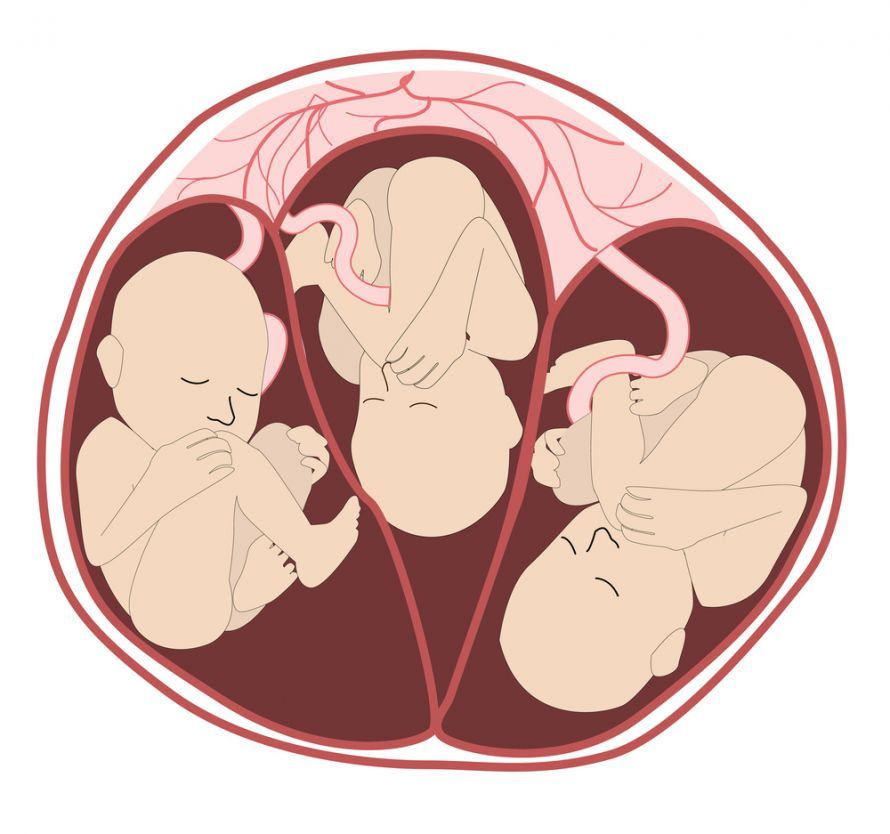 A multiple pregnancy is a high-risk pregnancy @ Анастасия Красавина /AdobeStock
When are doctors considered specialists in obstetrics?
In the Leading Medicine Guide, we present only selected, highly qualified medical experts and specialists with a high level of professional expertise.
All doctors listed in the field of obstetrics have completed several years of specialized training in gynecology and have extensive experience. They meet the strict admission criteria of the Leading Medicine Guide.

About the medical author
Dorina Marlen Heller
Editor
Dorina Marlen Heller – author: Explore expert medical articles in the Leading Medicine Guide.
More about the medical author →Sources
- Lasch, Lidia, und Sabine Fillenberg. Basiswissen Gynäkologie und Geburtshilfe. Berlin, Heidelberg: Springer Berlin Heidelberg, 2017. Print. Springer-Lehrbuch.
- Schneider, Henning, Peter-Wolf Husslein, und Karl-Theo Maria Schneider, Hrsg. Die Geburtshilfe. 5. Aufl. Berlin ; Heidelberg: Springer, 2016. Web. Springer Reference Medizin.