Expert Interviews
Cosmetic and Reconstructive Breast Surgery

Alexandra Pfitzmann ·
Aesthetic and reconstructive breast surgery combines medical precision with a deep understanding of form, function, and individual body aesthetics. The focus is on restoring or shaping the breast so that it looks natural and is functionally stable—whether following tumor surgery, injuries, congenital malformations, or for aesthetic reasons.
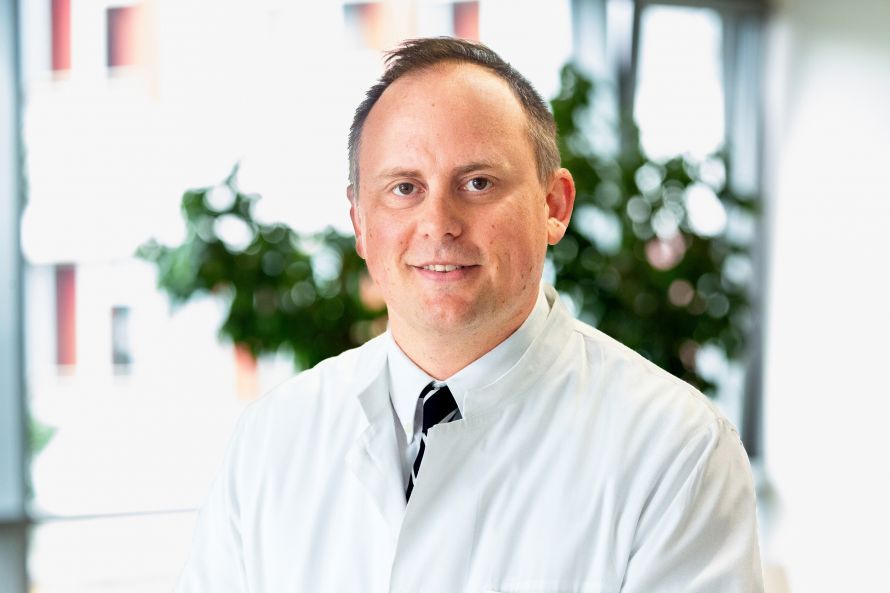
“Aesthetic and reconstructive breast surgery encompasses different patient groups that are, however, closely interrelated. Fundamentally, plastic surgery always deals with the restoration of form and function. In breast surgery, this means that both patients with reconstructive needs and those with aesthetic concerns are treated. Plastic surgeons must therefore be proficient in both areas. This connection is very evident in daily practice.
Through close collaboration with various gynecological centers and breast centers, many patients come to us after breast cancer treatment—either because they have already undergone surgery and now require reconstruction, or because their reconstruction is planned in advance in collaboration with the breast centers. In such cases, an oncoplastic decision is made as to whether the tumor resection and reconstruction should be performed in a single procedure or whether it makes more sense to first await the pathology results and perform the reconstruction in a second step.
Breast reconstruction employs techniques that are also used in aesthetic breast surgery. As a result, the two fields overlap both technically and practically, and both areas are part of our regular range of treatments,” explains Prof. Dr. Krämer at the start of our conversation.
Deciding on the appropriate reconstructive method is a complex process in which medical necessities, anatomical conditions, and personal expectations are carefully weighed against one another.
“The decision as to whether a breast is best reconstructed with an implant or with the patient’s own tissue depends on several factors: the initial oncological situation, the anatomy of the breast, the quality of the available tissue, possible radiation therapy, as well as the patient’s individual risk profile and wishes. Guidelines explicitly emphasize that each patient must be assessed individually and that her preference plays a central role. Implant-based reconstructions are particularly suitable when sufficient skin and soft tissue cover is available after tumor surgery and no radiation therapy is planned. They are often considered when a shorter surgery is desired, when patients are very slender and there is insufficient donor tissue available, or when additional scars on the abdomen, back, or thighs are to be avoided.
Autologous tissue, on the other hand, is particularly suitable for patients who have already undergone radiation therapy or are scheduled to receive it, whose skin and soft tissue cover is thin, scarred, or poorly perfused, and who desire a natural feel and natural aging behavior of the reconstructed breast tissue. In addition, autologous tissue eliminates risks such as capsular contracture or the need for later implant replacement. However, this requires that sufficient donor tissue be available—typically from the lower abdomen, thighs, or buttocks. Anatomical factors also play an important role: breast size, the shape of the rib cage, skin quality, scar patterns, any abdominal wall instability resulting from previous surgeries, and the desired symmetry with the opposite side. All these aspects must be carefully weighed.
For very slender patients, autologous tissue reconstruction can be difficult or impossible, as modern reconstructive procedures always require sufficient donor tissue. If this is lacking, the method is not an option—regardless of how advanced the technique is,” explains Prof. Dr. Krämer, adding regarding the nature of the implants:
“Today, silicone implants are used almost exclusively. In the past, saline implants were also used, and there were even models filled with soy. Over the years, however, silicone-based implants have proven to be the best compromise—both in terms of durability and stability as well as how they feel in the body. One exception is so-called expander implants, which are used when the skin and soft tissue envelope is too small after a mastectomy.
In this procedure, a flat implant is first inserted and gradually filled with saline solution over weeks and months to slowly stretch the tissue. Only then, in a second step, is the final silicone implant inserted. Today, the shape of the implant is the primary factor that can be customized. Depending on the desired result, a round or teardrop-shaped, anatomical implant can be chosen. Which shape is most suitable depends on the individual breast anatomy and is discussed together with the patient—her wishes are always the top priority.”
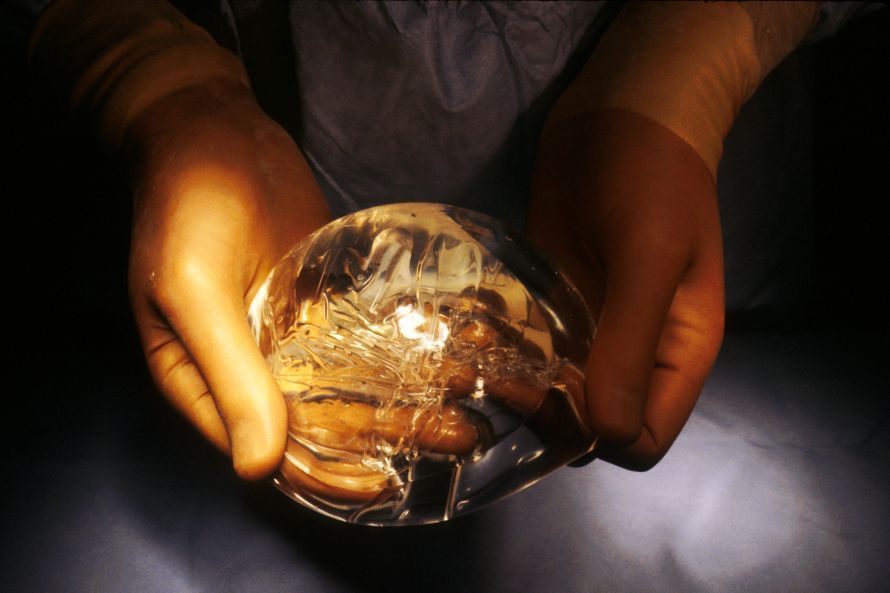
A natural, aesthetic result in reconstructive breast surgery is always achieved when shape, tissue quality, and functional stability are consistently considered together.
Regarding the longevity of the implants, Prof. Dr. Krämer predicts: “The probability of a significant problem occurring within ten to fifteen years is about 15 percent, which may then necessitate a follow-up procedure. This rule of thumb is intended above all to raise awareness that younger patients, in particular, are highly likely to require at least one additional surgery during their lifetime to replace implants or address complications. The causes of such follow-up procedures can vary.
Capsular fibrosis is the most common. The body naturally forms a capsule around the implant because it is a foreign body. Whether this capsule later causes symptoms depends on both individual factors and external influences and cannot be predicted. Some patients have their implants for twenty or twenty-five years without any problems, while others develop significant symptoms after just a few years. Unfortunately, statistical probabilities are of little help if you are personally affected—the individual course of the condition is always the decisive factor.”
Modern microsurgical techniques have fundamentally transformed breast reconstruction in recent years, as they enable a particularly natural shape, smooth tissue transitions, and long-term stability.
“Breast reconstruction today is no longer just about replacing volume, but about restoring a natural shape, projection, and inframammary fold; achieving good soft-tissue coverage; creating symmetry; and placing scars appropriately. Especially in the field of autologous tissue reconstruction, a great deal has changed in recent years. In the past, procedures were frequently used in which muscle tissue was harvested from the back or abdomen to reconstruct breast volume.
However, these techniques often led to functional limitations because important muscle structures were sacrificed. Further development led to the so-called perforator flap procedures, which are now considered the gold standard. The most important procedure is the DIEP flap (Deep Inferior Epigastric Perforator). In this procedure, a skin-fat island is harvested from the lower abdomen, and its supplying vessels are carefully dissected through the musculature without removing the muscle itself. The musculature remains completely or largely intact, which is a major functional advantage. Abdominal tissue is also particularly well-suited because its texture and malleability make it ideal for breast reconstruction.
If there is not enough tissue available on the abdomen—for example, in very slender patients—other donor sites can be used, such as the inner thigh or the lower gluteal region. Which site is suitable always depends on the individual’s anatomical conditions. However, there are also cases in which all autologous tissue options are ruled out. In such cases, the only options remaining are reconstruction with implants or, in rare situations, a return to older procedures in which muscle tissue from the back is used to achieve adequate soft-tissue coverage.
“Which method is appropriate must always be assessed within the overall context. This requires experience and a careful weighing of the pros and cons, which are discussed transparently during a personal consultation,” explains Prof. Dr. Krämer, going into more detail:
“In a flap procedure, a continuous block of tissue consisting of skin and fatty tissue is harvested and transferred to the breast. This means that a visible scar will result, the course of which is explained to the patient in detail beforehand. At the same time, care is taken to place the scar as inconspicuously as possible, for example on the inner thigh, as is also common with thigh lifts.
On the buttocks, the scar is placed in the natural crease below the buttocks, and on the abdomen, as low as possible in the bikini line area. Another option is reconstruction or volume enhancement using fat grafting (lipofilling). In this procedure, the patient’s own fat is harvested from an area where she already finds it bothersome—for example, the outer or inner thighs or the lower abdomen. The fat is then processed and injected into the breast. This method results in a very natural feel and is well-suited for improving contours or correcting asymmetries. Biologically, however, it is challenging, as not all transplanted fat reliably takes hold.
The survival rate depends on blood flow and the quality of the recipient tissue. Scarred or hardened tissue is less suitable, and the fat must not be injected under excessive pressure. It must be distributed evenly to prevent the formation of fat deposits that cannot take hold. An experienced reconstructive breast surgeon is well aware of these biological limitations. He knows that lipofilling cannot achieve arbitrarily large volumes in a single session and that realistic expectations are important. A fat graft cannot replace the volume of an implant or a large tissue block. As a rule, a single session cannot achieve an increase of more than about one cup size.
How much fat can be transplanted always depends on how much of the patient’s own breast tissue is available. The less initial tissue there is, the smaller the possible volume of fat. In aesthetic surgery—for a normal breast that simply needs to be made slightly larger—lipofilling can achieve significantly more than in a reconstructive setting, where there is often very little tissue available.”
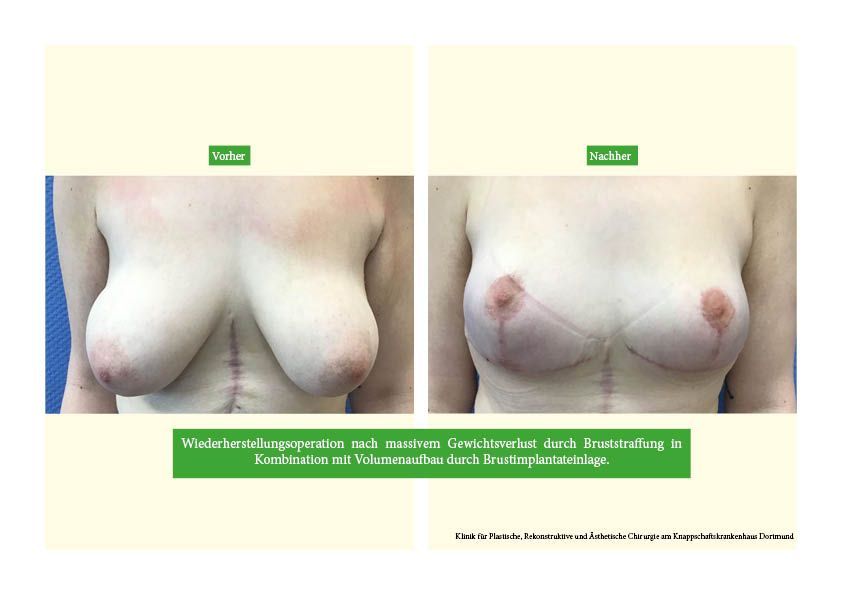
Modern free flap procedures are the gold standard for breast reconstruction. In this procedure, the body’s own skin and fat tissue, along with blood vessels, are transplanted using microsurgery. Thanks to precise vascular anastomoses, the tissue remains permanently perfused and adapts to changes in weight and age. Compared to implants or older muscle-harvesting techniques, there are fewer long-term complications or functional limitations, and even with irradiated or previously damaged tissue, free flap procedures offer a high degree of safety, stability, and a very natural shape.
Reconstructive procedures following tumor surgery follow a completely different surgical logic than aesthetically motivated breast surgeries, because their goal is not only to restore the external appearance but, above all, to restore tissue, function, and stability.
“For patients who have had cancer, symmetry between the affected and healthy breasts plays a central role. That is why it is important to clarify early on what the patient’s wishes are regarding the healthy breast. Should it remain unchanged, or should it be reduced in size or lifted to match the reconstructed side? These considerations must be incorporated into the reconstruction planning from the outset so that the desired outcome is realistically achievable.
Particularly in cases of very large natural cup sizes combined with limited available native tissue, certain reconstructive techniques—such as fat transfer—may not be sufficient to achieve the desired volume on the healthy side. In such cases, it is often discussed whether the healthy breast should be reduced or lifted later to achieve harmonious symmetry. Ideally, planning is done on an interdisciplinary basis, in collaboration with gynecology, breast surgery, and plastic surgery.
In the process, it is determined in advance how large the tumor is, how extensive the surgery must be, and whether breast-conserving surgery is possible or whether a subcutaneous mastectomy—that is, removal of the mammary gland—will be necessary. “The question of whether the skin and nipple can be preserved also influences the subsequent reconstruction,” says Prof. Dr. Krämer, adding:
“Whether reconstruction takes place during the same surgery or at a later date depends largely on the oncological situation. If the entire breast gland is removed but the skin is preserved, and if subsequent radiation therapy is necessary, an implant is often inserted first to serve as a space holder and keep the skin intact. This procedure prevents the tissue from shrinking and hardening during radiation therapy. Immediate reconstruction using the patient’s own tissue would be inadvisable in such cases, as even transplanted healthy tissue reacts to radiation and can harden or become distorted. Once radiation therapy is complete and the patient has recovered, a decision regarding the final reconstruction can be made at her own pace.
At that point, autologous tissue procedures such as the DIEP flap or other flap reconstructions are used. The previously inserted implant is removed and replaced with the patient’s own tissue, which remains permanently, has a natural shape, is soft, and follows the normal aging process. Whether prophylactic mastectomy is advisable always depends on the type of genetic mutation. Some mutations only slightly or moderately increase the risk of breast cancer, while others carry a dramatically increased risk. Depending on the individual risk profile, a decision is made together with the patient as to whether more frequent screening—such as mammograms, ultrasounds, or MRIs—is sufficient, or whether the risk is so high that removal of the entire breast appears medically advisable.
The patient’s wishes also play a major role in this decision. Some women with only a moderately increased risk nevertheless opt for prophylactic surgery because they want to reduce their personal risk as much as possible. Others prefer frequent checkups. Both approaches are possible, and the decision is always made on an individual basis.”
Reconstructive breast surgery is shaped by medical factors such as tissue loss, radiation damage, and functional requirements, whereas aesthetic procedures are based on predictable, symmetrical, and contouring techniques performed on healthy tissue. Although both fields use similar surgical principles, their goals, initial conditions, and surgical strategies differ fundamentally.
The journey through breast cancer is profoundly impactful not only medically but also emotionally. Many patients initially focus entirely on treatment and regaining physical stability—questions of aesthetics or potential reconstruction often take a back seat during this phase.
Prof. Dr. Krämer emphasizes: “Psychological aspects play a major role for many breast cancer patients. It is common for those affected to initially focus exclusively on their health and to be unwilling to engage emotionally or mentally with the possibility of reconstruction. During this phase, the focus is on physical stabilization and psychological recovery. To this end, breast centers offer psycho-oncological care, in which specially trained professionals accompany and support patients.
It is not uncommon for women to decide to undergo reconstruction only months or even a year after a mastectomy. Once the disease has been overcome and a stable physical and emotional state has been achieved, the desire often arises to reconnect with one’s own body image. This is precisely where plastic surgery comes in, working with the patient to discuss the appropriate reconstructive options.”
If scar healing, tissue quality, and individual risk factors are carefully taken into account, the results of breast reconstruction or aesthetic breast surgery can remain natural, soft, and symmetrical for many years—both in appearance and in how the body feels.
A certified breast center offers patients significantly greater structural and professional assurance than non-certified facilities. Certification requires that a certain number of breast cancer cases be treated each year, thereby ensuring a high degree of standardization.
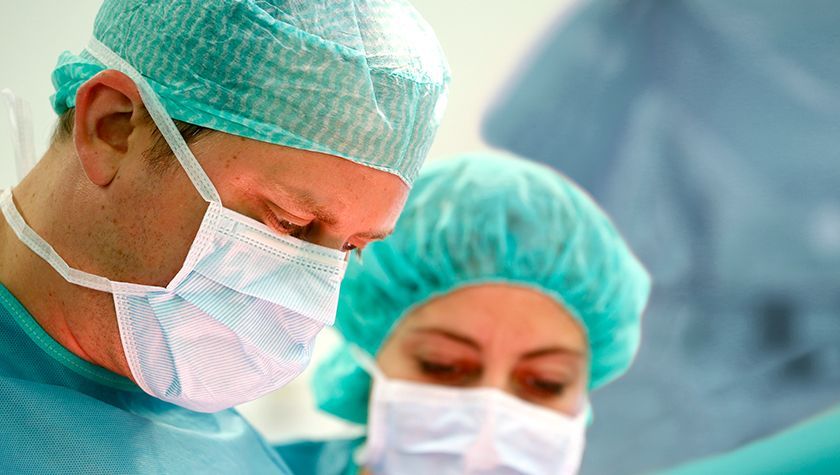
“This includes established interdisciplinary structures: gynecology, plastic surgery, oncology, radiation therapy, radiology, and pathology work closely together. This network is complemented by psycho-oncology, ‘breast care nurses,’ and—in cases with a corresponding risk profile—human genetics as well. This close integration ensures that diagnosis, treatment, follow-up care, and reconstruction are planned and carried out under one roof.
In collaboration with the Breast Center at the Knappschaft Kliniken Marienhospital Bottrop under Prof. Dr. Kolberg, these structures are fully in place. There, plastic surgery is not only performed at the patient’s request but is an integral part of the treatment team. In total, approximately 60 to 70 breast surgery procedures are performed annually at the two Plastic Surgery Clinics of the Knappschaft Kliniken in Gelsenkirchen-Buer and Dortmund that I direct, with reconstructive surgeries following breast cancer, reconstructive procedures following significant weight loss, and aesthetic surgeries each account for roughly equal shares.
The latter group includes aesthetic breast surgeries such as breast augmentation with implants or lipofilling, breast lifts, and breast reductions. It is essential that an experienced plastic breast surgeon has a firm command of all reconstructive techniques—because these procedures form the foundation for high-quality aesthetic results. Both areas follow the same surgical principles: shape, symmetry, volume, tissue quality, scar placement, stability, and a natural appearance. Aesthetic breast surgery is therefore by no means a purely cosmetic procedure, but rather requires a precise analysis of the individual’s anatomical conditions and a high level of technical expertise. Only in this way can a result be achieved that is both functionally and aesthetically satisfying,” emphasizes Prof. Dr. Krämer, concluding our conversation by stating:
“The greatest challenge lies in determining exactly what outcome each patient desires—in terms of shape, aesthetics, and the final appearance of the breast—through a personal consultation. These expectations must then be balanced against the realistic possibilities actually permitted by the patient’s anatomy, tissue, and the available surgical techniques. It is crucial to provide the patient with an honest and well-founded assessment from the outset regarding what outcome is achievable. This requires a great deal of experience: knowing one’s own limitations, understanding the limitations of the tissue, and being able to assess the limitations of the technique. It is precisely this combination that poses the real challenge for the surgeon.”
- Chief Physician of the Clinics for Plastic, Reconstructive, Aesthetic Surgery, and Hand Surgery (Knappschaft Clinics Gelsenkirchen-Buer and Dortmund)
- Board-certified specialist in Plastic & Aesthetic Surgery, with additional training in Hand Surgery and Emergency Medicine
- Specialist in Aesthetic & Reconstructive Breast Surgery
- Extensive expertise in microsurgical procedures, including nerve surgery
- Director of the Center for Severe Burn Injuries
- Areas of Focus: Reconstruction following tumors or accidents, hand surgery, post-bariatric body contouring surgery, aesthetic surgery
- Education, among others, at Hannover Medical School and the University of Pittsburgh Medical Center (USA); Professor at the University of Lübeck
- Combines scientific research with many years of surgical experience
Share this article
Expert Interviews
Read next
- Expert interview
Expert interview with Professor Dr Elmar Herbst, PhD
Oct 15, 2026
Patient-centred and personalised knee surgery
Read more - Expert interview
Cardiogeriatrics: Significance and benefits in the context of hospital reform
Sep 21, 2026
Cardiogeriatrics: Significance and benefits in the context of hospital reform
Read more - Expert interview
Expert Interview with Professor Dr. Amadeus Hornemann, MPH
Sep 18, 2026
Prof. Amadeus Hornemann on Precision Medicine in Gynecology: Modern Surgery, New Techniques, Better Quality of Life
Read more