Expert Interviews
Prof. Schäfers, M.D.: “Most heart valve surgeries have long been routine!”

Sabine Schneider ·
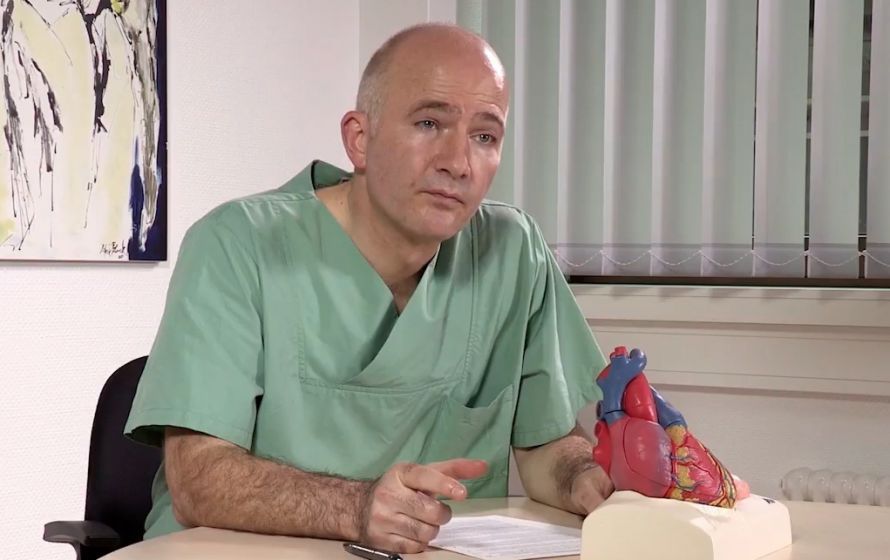
Leading Medicine Guide: Professor Schäfers, heart valve surgeries are among the most common treatments at your clinic. We have the impression that younger patients are increasingly undergoing aortic valve replacement. Are we mistaken?
Prof. Hans-Joachim Schäfers, M.D.: You’re mistaken, because aortic valve replacement is not actually more common among younger patients. Your observation is based on the fact that heart valve surgeries—especially in younger patients—are being monitored and discussed with increasing attention.
Leading Medicine Guide: And why is that?
Prof. Hans-Joachim Schäfers, M.D.: It’s because younger people today are less willing than in the past to take medications like Marcumar long-term. Marcumar is a potent blood-thinning medication that, while preventing blood clots, also causes side effects such as bruising or nosebleeds. In addition, alternatives such as reconstruction and the Ross procedure are increasingly being used today, and young people have less to fear from these than from traditional heart surgeries performed ten or twenty years ago.
Leading Medicine Guide: What exactly is a Ross procedure?
Prof. Hans-Joachim Schäfers, M.D.: The Ross procedure refers, for example, to the replacement of the diseased aortic valve with the body’s own healthy pulmonary valve. This is the heart valve between the right ventricle and the pulmonary artery. At our hospital, the Ross procedure is a routine procedure.
Valve Open, Valve Closed: High-Performance Valves
Leading Medicine Guide: And how do you proceed with the reconstruction of the patient’s own heart valves?
Prof. Hans-Joachim Schäfers, M.D.: Reconstruction as an alternative to aortic valve replacement is still a relatively new procedure. It is always necessary to determine which changes in the aorta and aortic valve are causing the leak. For example, in the case of an aortic aneurysm, the affected section is replaced with a section of synthetic tubular graft. The aortic valve is then adapted to the new shape. For specific congenital malformations, we develop strategies to achieve a configuration that is as close to normal as possible. In recent years, reconstructive procedures have been gradually developed that also allow for the treatment of other causes of leakage. The exact course of action is discussed with patients in advance, although the final decision is always made in the operating room.
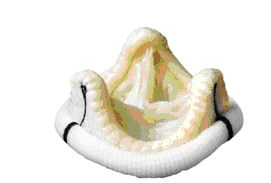
Leading Medicine Guide: It’s now possible to implant artificial heart valves into the heart via a catheter, isn’t it?
Prof. Hans-Joachim Schäfers, M.D.: Exactly. And since this is less invasive than open-heart surgery, this surgical method can be used especially in older patients. However, the longevity of catheter-delivered valves is, unfortunately, still unclear even today. I therefore recommend conventional replacement if the patient has a life expectancy of at least another ten years. There’s no need to be afraid of having an artificial heart valve implanted surgically: this procedure, which is now almost routine, has been performed using a method established for decades. The catheter-based procedure is less invasive, especially for older patients, and does not require general anesthesia. In such cases, cardiologists and cardiac surgeons work together to determine what is best for each individual patient.
Leading Medicine Guide: And how do you proceed in cases of congenital heart valve defects?
Prof. Hans-Joachim Schäfers, M.D.: A distinction is made between congenital and acquired heart valve defects. Approximately one in every hundred newborns is born with a heart valve defect, which can significantly reduce life expectancy. Aortic valve insufficiency also occurs in younger people; this is usually the result of a malformed valve. The young heart continues to grow over the years.
Leading Medicine Guide: What happens to the implanted heart valve? Will the young patient have to undergo surgery again in a few years?
Prof. Hans-Joachim Schäfers, M.D.: Typical prosthetic valves do not grow with the patient. As a result, they become too small as the body grows and must then be replaced. This surgery is not always straightforward. The situation is different with the Ross procedure and reconstruction mentioned earlier: after these procedures, the valves grow with the patient. If a child needs to have a heart valve implanted at a young age, it is important to keep an eye on the various growth phases. A child’s height doubles in the first three years, followed by an average growth of about six centimeters per year until puberty, when another major growth spurt begins. However, heart valves made from the patient’s own cells are currently still in the experimental stage. It is not yet clear whether they truly grow with the patient and last long enough. If that were the case, these heart valves would be good options for avoiding permanent surgical interventions. They do have one advantage, in any case: they are not rejected by the body.
Professor Dr. Schäfers, thank you for the in-depth insights into the amazing world of cardiac surgery and for the fascinating conversation!
Do you have any further questions on this topic? Then visit Prof. Schäfers on the Leading Medicine Guide! There, you’ll also have the opportunity to contact the heart valve specialist directly.
You can also find more information on heart valve reconstruction here.
Image sources: fotolia.com; psdesign1, me² Medical and Media Private Institute, University of Homburg/Saar
Share this article
Expert Interviews
Read next
- Expert interview
Expert interview with Professor Dr Elmar Herbst, PhD
Oct 15, 2026
Patient-centred and personalised knee surgery
Read more - Expert interview
Cardiogeriatrics: Significance and benefits in the context of hospital reform
Sep 21, 2026
Cardiogeriatrics: Significance and benefits in the context of hospital reform
Read more - Expert interview
Expert Interview with Professor Dr. Amadeus Hornemann, MPH
Sep 18, 2026
Prof. Amadeus Hornemann on Precision Medicine in Gynecology: Modern Surgery, New Techniques, Better Quality of Life
Read more